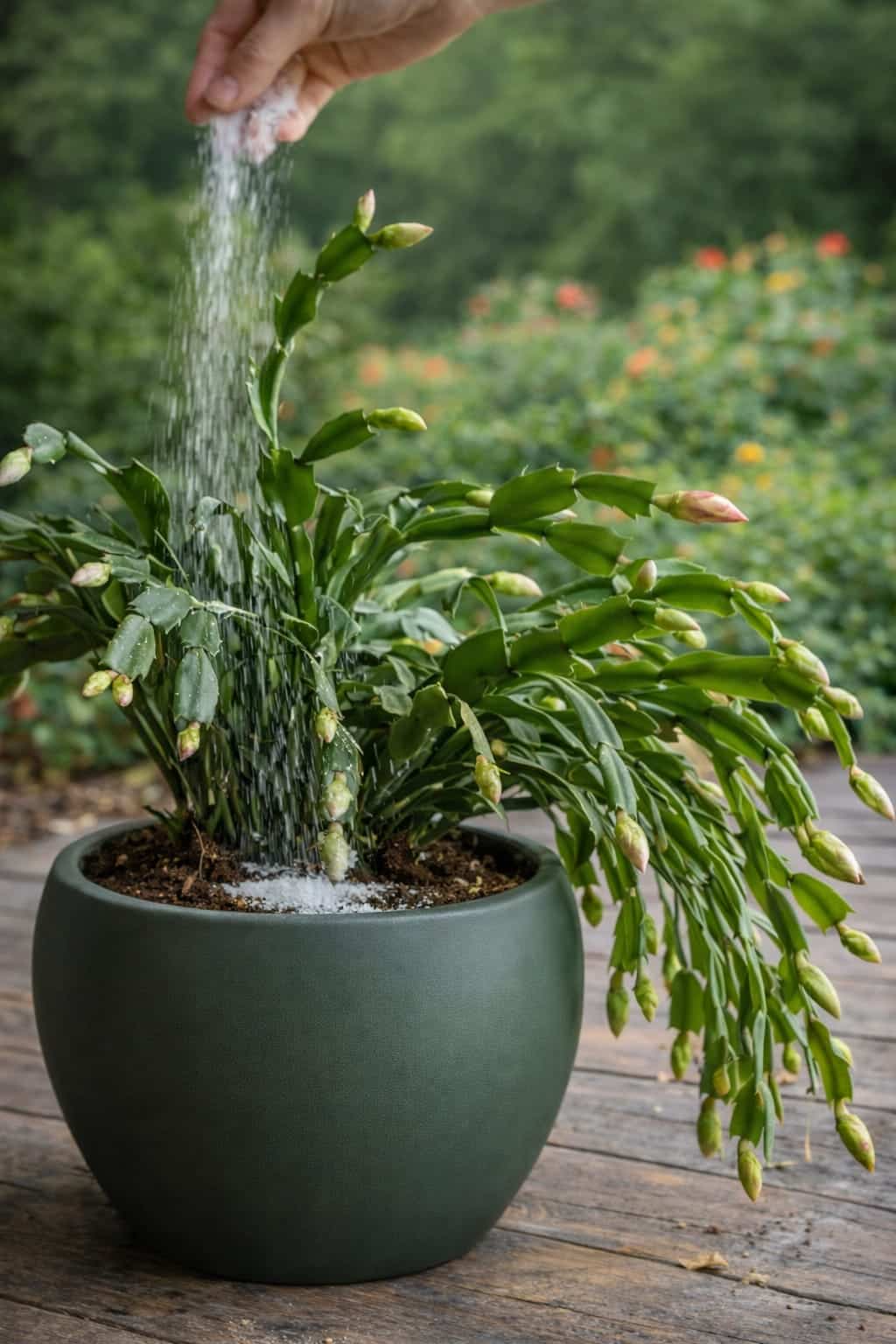
Watering Christmas Cactus Correctly
Christmas cactus likes more moisture than desert cactus, but it still needs good drainage. Water when the top inch of the potting mix begins to dry. Do not let the plant sit in soggy soil.
When watering, water thoroughly and let excess drain. Empty the saucer afterward. The roots should receive moisture, then have access to air as the mix begins drying again.
During active growth, the plant may need water more often. During the rest period before blooming, reduce watering slightly. During bloom, keep moisture consistent but not excessive.
Severe drying can cause shriveled segments and bud drop. Overwatering can cause root rot. Balance is key.
Best Soil for Christmas Cactus
Christmas cactus needs a loose, well-draining mix. A regular potting mix can work if it is amended with perlite, orchid bark, pumice, or coarse material to improve airflow.
The mix should hold some moisture but not become muddy. Remember, this plant is not a desert cactus, but it also does not want dense wet soil.
If your Christmas cactus stays wet for many days after watering, the soil may be too heavy. Repotting into a lighter mix can improve root health and growth.
Good soil is more important than any supplement. Epsom salt cannot fix compacted or waterlogged potting mix.
Choosing the Right Pot
A Christmas cactus should be grown in a pot with drainage holes. This is essential. Without drainage, excess water collects at the bottom and can rot the roots.
The pot should not be much larger than the root system. Christmas cactus often blooms better when slightly snug in its pot. A pot that is too large holds extra soil, and extra soil holds extra moisture.
Repot only when needed, usually every few years or when the potting mix has broken down. Repotting too often can disturb the plant and delay blooming.
If you use a decorative outer pot, make sure the inner pot drains fully after watering.
Fertilizing Christmas Cactus
Christmas cactus benefits from light feeding during active growth. After blooming ends and new growth begins, use a balanced houseplant fertilizer at half strength every few weeks during spring and summer.
Stop or reduce feeding as the plant approaches the bud-setting period. Too much fertilizer late in the season can encourage growth when the plant should be preparing to bloom.
Epsom salt can be used occasionally as a magnesium supplement, but it does not replace balanced fertilizer. If you use both, do not apply them at the same time. Keep the routine gentle.
Overfeeding can cause mineral buildup, weak growth, and bud problems. More fertilizer does not mean more flowers.
Can Epsom Salt Fix Pale Segments?
Epsom salt may help if pale growth is caused by magnesium deficiency, but pale segments can have many causes. Low light, root stress, old soil, overwatering, underwatering, and nutrient imbalance can all make the plant look weak.
If the plant is pale and stretched, it may need brighter light. If it is pale and soft, check the roots. If it is pale after months without feeding, balanced fertilizer may be needed.
Epsom salt should not be the first answer unless other care conditions are already correct.
New growth is the best place to look for improvement. Old segments may not change dramatically.
Can Epsom Salt Fix Brown or Corky Segments?
No. Brown, dry, corky, or damaged tissue will not turn green again. These marks may come from age, sunburn, physical damage, overwatering, or disease.
If only a few older lower segments are corky, it may be natural aging. If damage is spreading or soft, inspect the plant more carefully.
Trim severely damaged segments if needed. Use clean scissors or twist off damaged segments at the joint. Do not remove too much healthy growth at once.
Epsom salt supports future growth only if the plant needs magnesium. It does not repair old damage.
What to Do If the Plant Is Wilting
If a Christmas cactus wilts, first check the soil. If the soil is very dry, water thoroughly and let it drain. The plant may recover as it rehydrates.
If the soil is wet and the plant is wilting, root rot may be present. Remove the plant from the pot and inspect the roots. Healthy roots should be firm. Rotten roots may be brown, mushy, or foul-smelling.
Trim rotten roots and repot into fresh well-draining mix. Do not add Epsom salt to a rotting plant. Damaged roots cannot use supplements properly.
Wilting in wet soil is a warning sign. Treat the roots, not the symptoms.
Can You Use Epsom Salt on Christmas Cactus Cuttings?
It is better not to use Epsom salt on fresh cuttings. Cuttings need to callus first and then root in a lightly moist, well-draining medium. Strong minerals are unnecessary at this stage.
To propagate Christmas cactus, twist off a segment with two or three joined pads. Let the cut end dry for a day or two. Then place it in a light potting mix. Keep it slightly moist but not wet.
Once the cutting has rooted and begins new growth, light feeding can begin later. Epsom salt is not needed during early rooting.
Simple propagation conditions work best.
⚠️ Important: Never use Epsom salt on a plant with root rot or wet, soggy soil. Fix the roots and drainage first.
What to Do If You Used Too Much Epsom Salt
If you sprinkled a lot of Epsom salt onto the soil, remove as much as possible with a spoon. Do not mix it deeper into the pot.
If the pot has drainage holes, flush the soil with plain room-temperature water. Let the water drain completely. Do not leave the pot sitting in water afterward.
If the plant begins to wilt, brown, or decline, repot into fresh well-draining mix. Check the roots during repotting and remove any damaged roots.
After using too much Epsom salt, avoid all fertilizer and supplements for a while. Let the plant stabilize.
A Safe Seasonal Care Routine
After blooming, remove spent flowers and let the plant rest. Water lightly and keep it in bright indirect light.
During spring and summer, increase watering slightly as new growth appears. Feed lightly with balanced fertilizer. If needed, use a weak Epsom salt solution once every six to eight weeks, but only if the plant is healthy.
In late summer or early fall, reduce feeding and begin preparing for bud formation. Provide long nights and cooler temperatures. Keep watering moderate but not excessive.
Once buds appear, keep the plant stable. Avoid moving it, overwatering it, or experimenting with new treatments.
Common Mistakes to Avoid
- Sprinkling too much dry Epsom salt directly onto the soil – a diluted solution is safer.
- Using Epsom salt as complete fertilizer – it provides magnesium and sulfur only.
- Using it on wet soil or a plant with root rot – root problems must be fixed first.
- Expecting Epsom salt to force blooming – buds depend on light cycles, temperature, maturity, and care.
- Using supplements during bud formation and causing stress – stability is more important at that stage.
- Keeping the plant in dense soil – Christmas cactus needs moisture plus airflow.
- Moving the plant after buds form – sudden changes can cause bud drop.
Frequently Asked Questions
Is Epsom salt good for Christmas cactus?
It can be useful occasionally if the plant needs magnesium, but it should be used sparingly. It is not a complete fertilizer and should not be used heavily.
How much Epsom salt should I use?
Use half a teaspoon dissolved in one gallon of water. For small or sensitive plants, use a quarter teaspoon per gallon.
Can I sprinkle Epsom salt directly on the soil?
It is safer not to. Dry crystals can create concentrated spots. Dissolve Epsom salt in water first for a gentler application.
How often should I use Epsom salt?
Once every six to eight weeks during active growth is enough if needed. Many Christmas cactus plants do not need it at all.
Will Epsom salt make my Christmas cactus bloom?
Not by itself. Blooming depends mostly on long nights, cooler temperatures, bright indirect light, proper watering, and plant maturity.
Can Epsom salt stop bud drop?
No. Bud drop is usually caused by sudden changes in light, temperature, watering, location, or humidity. Keep care stable once buds form.
Can I use Epsom salt on cuttings?
It is better to avoid it on fresh cuttings. Let cuttings callus and root in a well-draining mix first.
What should I do if I used too much?
Remove visible crystals, flush the soil with plain water if the pot drains well, and avoid further supplements. Repot if the plant continues to decline.
🌿 Epsom salt is a gentle supplement, not a miracle bloom booster. Healthy green segments and abundant flowers come from bright indirect light, proper watering, well-draining soil, cooler nights, and long dark periods. Use Epsom salt rarely and always diluted – and let consistent seasonal care do the real work.