The ZZ plant is one of the most dependable indoor plants you can grow. Its thick upright stems, glossy oval leaves, and sculptural shape make it look fresh and elegant in almost any room. It can survive missed waterings, tolerate lower light better than many houseplants, and stay attractive for years with very little care.
But even a ZZ plant can begin to look tired. The leaves may lose their deep green shine. New growth may slow down. Stems may become thin, pale, or weak. The plant may sit in the same pot for months without producing fresh shoots. When this happens, many plant lovers look for a simple homemade way to give the plant a boost.
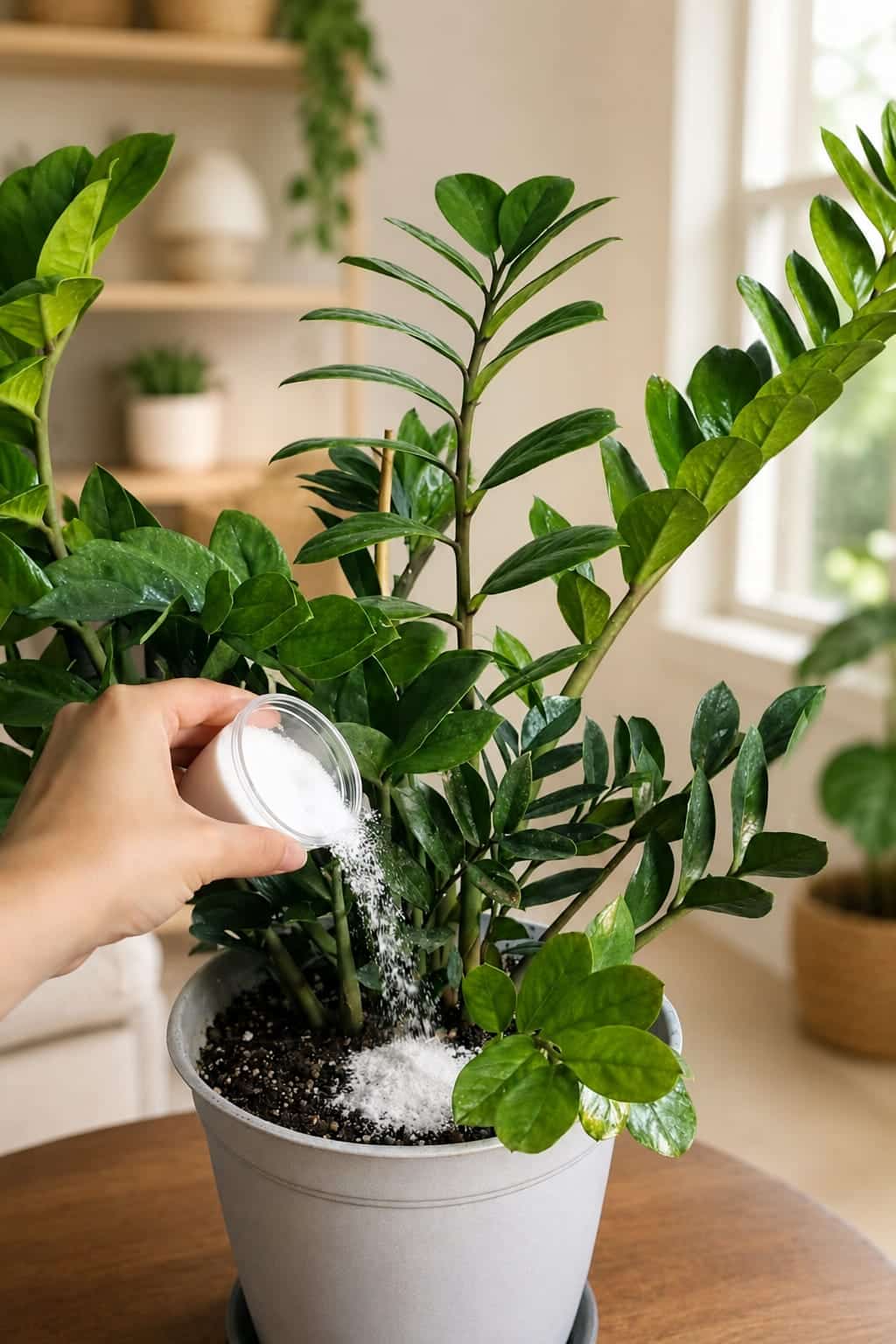
The image shows a ZZ plant while a white crystalline powder is being sprinkled onto the soil. This powder is often presented as Epsom salt, a common household ingredient used by some gardeners as a magnesium supplement. Epsom salt can be useful for certain plants in certain situations, but it must be used carefully, especially with a ZZ plant.
ZZ plants are not heavy feeders. They store water and energy in thick underground rhizomes, which means they prefer a simple, careful routine. They do not like soggy soil, excessive fertilizer, or frequent treatments. If too much Epsom salt is added directly to the pot, it can create mineral buildup and stress the roots instead of helping them.
The safest way to use Epsom salt for a ZZ plant is not to pour a heavy layer of dry crystals on the soil. The safer method is to dissolve a very small amount in water and apply it rarely, only when the plant is healthy, actively growing, and actually due for watering.
This guide explains how to use Epsom salt safely for a ZZ plant, when it may help, when to avoid it, and what care steps truly keep ZZ plants glossy, strong, and full of healthy new growth.
What Epsom Salt Does for Plants
Epsom salt is magnesium sulfate. It contains magnesium and sulfur, two nutrients that plants use in small amounts. Magnesium is important because it helps plants produce chlorophyll, the green pigment that allows leaves to use light. Sulfur also plays a role in plant growth and plant proteins.
This is why Epsom salt is sometimes used when a plant looks pale or weak. If a plant truly lacks magnesium, a small amount may support greener future growth. But the key word is “if.” Not every pale or slow-growing plant has a magnesium deficiency.
ZZ plants can become pale or slow for many reasons. Low light, overwatering, root stress, compacted soil, poor drainage, old potting mix, or seasonal slowdown can all affect growth. Epsom salt will not fix these problems.
Epsom salt is also not a complete fertilizer. It does not provide nitrogen, phosphorus, potassium, calcium, or the full range of trace nutrients. It should be treated as a specific mineral supplement, not as plant food.
Can Epsom Salt Help a ZZ Plant Grow?
Epsom salt may help a ZZ plant only if the plant is low in magnesium and otherwise growing in suitable conditions. If the plant has healthy roots, good drainage, proper light, and a stable watering routine, a very mild Epsom salt solution may support greener new growth.
However, Epsom salt will not force a ZZ plant to grow quickly. ZZ plants are naturally slow growers. They often pause for long periods, then suddenly send up new shoots when conditions are right. This is normal.
If your ZZ plant is not growing, the first thing to check is light. A ZZ plant can survive in low light, but it grows better in bright indirect light. A plant in a dark corner may stay alive but produce very little new growth.
The second thing to check is watering. ZZ plants store water in rhizomes and do not need frequent watering. If the soil stays wet, the roots and rhizomes can rot. A rotting ZZ plant cannot use nutrients properly, including magnesium.
Epsom salt may support a healthy plant, but it cannot rescue a plant with root rot or poor growing conditions.
🌿 Key reminder: Light and proper watering matter far more for ZZ plant growth than any supplement. Epsom salt is only a very occasional helper.
Why Sprinkling Dry Epsom Salt Can Be Risky
The image shows dry white crystals being poured directly onto the soil. This may look simple, but it is not the best method for potted ZZ plants. When dry crystals sit in one area, they can dissolve unevenly during watering. This creates concentrated spots in the soil.
Roots near those concentrated spots may receive too much magnesium sulfate at once. In a small indoor pot, minerals do not spread as freely as they would in a garden bed. This increases the risk of buildup.
Too much mineral buildup can cause brown leaf tips, root stress, poor water absorption, and slower growth. It can also make the soil less balanced over time.
ZZ plants are especially sensitive to overdoing care. They prefer restraint. A little neglect is often safer than too much watering, too much feeding, or too many homemade treatments.
If you want to use Epsom salt, dissolve it in water first. A diluted solution is gentler and more evenly distributed.
The Safest Epsom Salt Ratio for ZZ Plants
A safe beginner ratio is half a teaspoon of Epsom salt dissolved in one gallon of water. This is a mild mixture suitable for cautious use. For a small ZZ plant or a plant that is not actively growing, use even less: one-quarter teaspoon per gallon of water.
Stir until the crystals dissolve completely. Use room-temperature water. Cold water can shock roots, especially if the plant is indoors in a warm room.
Do not pour the entire gallon into one pot. Use only enough to water the plant normally. The rest can be discarded.
Never use a strong spoonful of Epsom salt in a small cup of water and pour it into the pot. That is too concentrated for a ZZ plant.
How Often Should You Use Epsom Salt on a ZZ Plant?
Epsom salt should be used rarely. Once every two to three months during active growth is more than enough if you choose to use it. Many ZZ plants do not need it at all.
Do not use Epsom salt every week. Do not use it every time you water. Do not use it as a regular fertilizer. ZZ plants are slow-growing and light-feeding, so repeated mineral applications can do more harm than good.
The best time to use a mild Epsom salt solution is during spring or summer, when the plant is actively growing. If the plant is not producing new growth, or if it is winter and light is low, skip the treatment.
A ZZ plant that is healthy, glossy, and stable does not need constant boosting. Simple care is usually better.
When Epsom Salt May Be Useful
Epsom salt may be useful if your ZZ plant looks slightly pale despite receiving proper light, correct watering, and good soil. It may also be considered if the plant has been in the same potting mix for a long time and you suspect minor nutrient depletion.
It may support future green growth when used gently during the growing season. The improvement, if any, will show in new leaves and new shoots, not in old damaged leaves.
Epsom salt may also be useful as part of a rare refresh routine for a mature plant that is healthy but growing slowly. But it should still be combined with good basic care.
The plant must have healthy roots. If the roots are damaged, supplements will not help because the plant cannot absorb them properly.
When You Should Avoid Epsom Salt
- Do not use if the soil is wet. ZZ plants should be watered only when the soil is dry or nearly dry. Adding any liquid to wet soil increases the risk of root rot.
- Do not use if the plant has yellowing leaves and damp soil. This often points to overwatering. The solution is to dry the plant out, inspect the roots if needed, and improve drainage.
- Do not use if the pot has no drainage holes. Without drainage, extra minerals and water can accumulate at the bottom of the pot.
- Do not use it on a newly repotted plant. Freshly disturbed roots need time to settle. Plain water and stable conditions are safer during the adjustment period.
- Do not use it if you have recently fertilized. Too many nutrients at once can stress the roots.
Step-by-Step: How to Use Epsom Salt Safely on a ZZ Plant
Step 1: Check the Soil First
Before using any treatment, check the soil moisture. ZZ plants should dry out well between waterings. Push your finger into the soil, or use a wooden stick to check deeper moisture. If the soil is still damp, wait.
Step 2: Prepare a Weak Solution
Dissolve half a teaspoon of Epsom salt in one gallon of room-temperature water. Stir until fully dissolved. For a small plant, use one-quarter teaspoon per gallon.
Step 3: Apply Only When the Plant Needs Water
Use the solution only when the soil is dry and the ZZ plant is due for watering. Pour gently onto the soil around the plant, not directly onto the stems.
Step 4: Let the Pot Drain Completely
If the pot has drainage holes, allow excess liquid to drain out fully. Empty the saucer afterward. Never let the plant sit in standing water.
Step 5: Wait and Observe
Do not repeat the treatment quickly. Watch the plant over several weeks. If it responds well, continue normal care. If the plant shows stress, stop using Epsom salt.
Continue to Page 2
Continue to page 2 for more details about this article and the key points many readers miss on the first page.