A peace lily is one of the most elegant indoor plants you can grow. Its deep green leaves, graceful shape, and white sail-like flowers make it look fresh, peaceful, and expensive even in a simple pot. When a peace lily is healthy, it can brighten a window, soften a living room, and make any indoor corner feel calmer and more alive.
But many peace lily owners eventually ask the same question: how can I keep my peace lily full, green, and blooming beautifully?
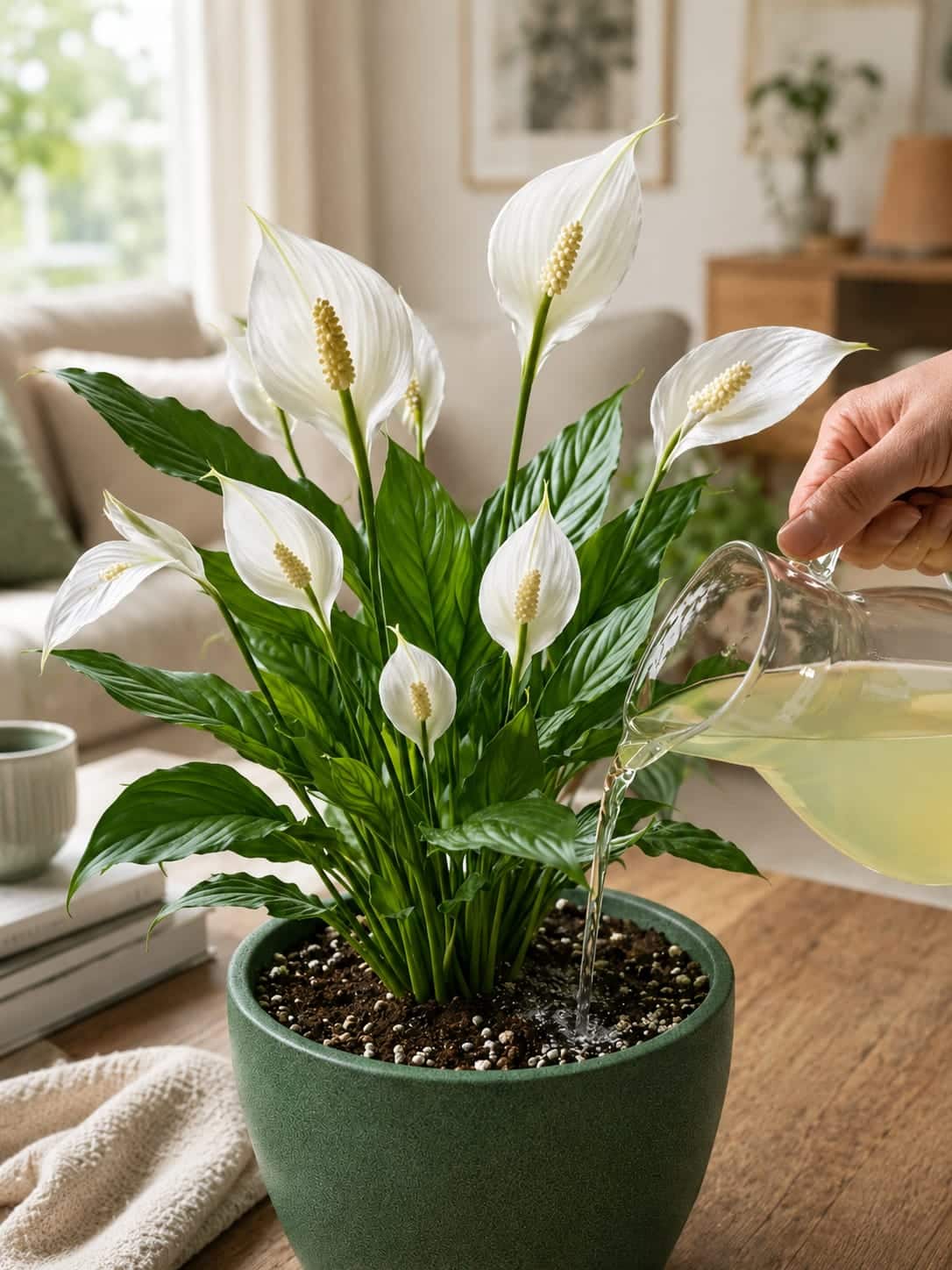
The image shows a lush peace lily with several white blooms while a pale golden liquid is being poured into the soil. This kind of liquid is often presented as rice water, one of the most popular natural plant-care tricks. Rice water is simple, inexpensive, and easy to prepare at home. It is often used as a gentle homemade plant tonic because it may contain small amounts of starches, minerals, and nutrients released from rinsed or soaked rice.
However, rice water must be used carefully. It is not a miracle bloom booster. It will not force a weak peace lily to produce flowers overnight. It will not fix root rot, poor drainage, low light, compacted soil, or overwatering. If used too often, too thick, or allowed to ferment too strongly, rice water can cause sour soil, mold, fungus gnats, and root stress.
The safest way to use rice water for a peace lily is as a mild occasional supplement, not as a regular replacement for plain water or balanced fertilizer. The plant still needs bright indirect light, proper watering, good drainage, moderate humidity, and healthy roots. Rice water can only support the routine when the basics are already right.
This guide explains how to use rice water safely for peace lily, when it may help, when to avoid it, and what care steps truly keep the plant green, full, and blooming beautifully.
What Rice Water Is
Rice water is the cloudy water left after rinsing or soaking rice. When rice is washed, some starch and tiny amounts of nutrients move into the water. This is why rice water often looks pale white, cream, or lightly yellow depending on the rice and soaking time.
Many gardeners use rice water as a natural plant tonic. The idea is that the mild starches and minerals may feed beneficial soil microbes and provide a small nutrient boost. For indoor plants, it is often used on foliage plants and flowering houseplants as a gentle homemade supplement.
But rice water is not a complete fertilizer. It does not provide a predictable balance of nitrogen, phosphorus, potassium, calcium, magnesium, and trace elements. It should not replace a proper fertilizer if the plant truly needs feeding.
Rice water is best understood as a light natural supplement. It may support soil life and mild growth, but it is not the main reason a peace lily blooms. A peace lily blooms because it has enough light, healthy roots, stable moisture, and enough balanced nutrition over time.
Can Rice Water Help a Peace Lily Bloom?
Rice water may support a peace lily indirectly, but it cannot directly force blooms. Peace lily flowers depend mostly on bright indirect light, plant maturity, root health, and stable care. If the plant is in a dark corner, rice water will not solve the problem. If the roots are rotting, rice water will not save them. If the plant is severely stressed, extra homemade liquid may make the situation worse.
Where rice water may help is in supporting a healthy plant that is already growing. A mild rice water rinse can add a small amount of organic material to the soil, which may encourage microbial activity. Healthy soil life can help roots function better, and stronger roots can support stronger foliage and future blooms.
But the effect is subtle. Rice water should be seen as a supportive step, not a bloom button. If you want more peace lily flowers, the first thing to improve is light. The plant needs bright indirect light to produce enough energy for blooming.
If your peace lily has rich green leaves but never flowers, move it closer to a bright window with filtered light. That change will usually matter more than any kitchen ingredient.
Why Peace Lilies Need Balanced Care
Peace lilies are tropical plants. They like warm indoor temperatures, moderate humidity, and soil that stays lightly moist but not soggy. They are famous for drooping when thirsty, but that does not mean they want wet soil all the time.
Their roots need both moisture and oxygen. If the potting mix stays wet for too long, roots can rot. Once roots are damaged, the plant may droop even though the soil is wet because rotten roots cannot absorb water properly.
This is why rice water must be used carefully. It adds moisture to the pot, just like regular water. If the soil is already damp, adding rice water can push the plant toward overwatering.
A peace lily grows best when you water based on soil condition, not based on a strict schedule. The top layer should begin to dry before watering again. The pot should have drainage holes so excess liquid can escape.
What the Image Suggests
The peace lily in the image looks healthy. It has glossy green leaves and several white blooms. This is important because homemade supplements are safest on plants that are already stable and growing well.
The pale liquid being poured into the pot looks like a mild homemade tonic, likely rice water. The plant appears to be receiving the liquid at soil level, which is the correct place. Rice water should not be poured over the leaves or flowers. It should go into the soil only, and only when the plant needs watering.
The image creates a simple and attractive message: a gentle natural liquid may help support a blooming peace lily. But the realistic message should be careful and balanced. Rice water may be useful occasionally, but the plant’s beautiful condition comes mainly from good light, correct watering, and healthy roots.
If your peace lily is already full and blooming like the plant in the image, rice water should be used lightly. Too much can disturb a good routine.
The Best Rice Water for Peace Lily
The safest rice water for peace lily is plain, unsalted, unseasoned rice rinse water. It should come from rice that has not been cooked with salt, oil, butter, spices, or broth.
To make a gentle rice water, place plain uncooked rice in a bowl and rinse it with clean water. Swirl the rice with your hand for a minute. The water will become slightly cloudy. Strain out the rice and keep the water.
This light rinse water is safer than thick, starchy boiled rice water. Boiled rice water can be too concentrated and may sour quickly in indoor pots. If you use boiled rice water, it must be diluted heavily and cooled completely before use.
For houseplants, mild is better. The rice water should look lightly cloudy, not thick like soup.
How to Make Rice Water Safely
Use half a cup of plain uncooked rice and two to three cups of water. Stir or swirl the rice for one to two minutes. Strain the water into a clean container.
For a peace lily, dilute this rice water with an equal amount of plain water before using it. This makes it gentler and reduces the risk of sour soil.
Use the mixture fresh. Do not leave it sitting for days at room temperature. Fresh rice water is much safer for indoor plants than old rice water that has started to smell sour or ferment.
If the rice water smells unpleasant, discard it. Healthy rice water should smell mild and clean. Sour, rotten, or alcoholic odors mean it is not suitable for your peace lily.
Can You Use Fermented Rice Water?
Fermented rice water is popular in some plant-care routines, but it is riskier for indoor peace lilies. Fermentation changes the liquid and can create a stronger smell. In indoor pots, fermented liquids may attract fungus gnats, encourage mold, or make the soil smell sour.
For outdoor garden plants, some people use fermented mixtures carefully. For indoor peace lilies, fresh diluted rice water is usually safer.
If you choose to use fermented rice water, it must be heavily diluted and used very rarely. But for most home plant owners, there is no need to ferment it. The risks are higher than the benefits.
A peace lily in a pot inside the home needs clean, gentle care. Fresh diluted rice water is the better choice.
How Often Should You Use Rice Water?
Rice water should not be used every time you water. For a peace lily, once every four to six weeks during active growth is enough. Some plants may do better with even less.
During spring and summer, when the plant is growing more actively, occasional rice water may be tolerated well. During winter, when growth slows and soil stays wet longer, it is better to skip rice water or use it very rarely.
Too much rice water can cause problems. The starches can feed microbes, but if used excessively, they may also encourage mold, odor, and fungus gnats. Indoor pots are small environments, and buildup happens faster than in outdoor soil.
Use rice water as a light treat, not as a main watering routine.
🌱 Gentle reminder: Rice water is an occasional supplement, not a replacement for good light, proper watering, and balanced feeding.
Step-by-Step Rice Water Routine for Peace Lily
Step 1: Check the Soil
Before using rice water, check the soil moisture. Touch the top inch of soil. If it is still damp, wait. Peace lilies like moisture, but they do not like soggy roots.
Only use rice water when the plant is already due for watering.
Step 2: Prepare Fresh Diluted Rice Water
Rinse plain uncooked rice in clean water and strain the cloudy liquid. Dilute the rice water with an equal amount of plain water. The final mixture should be light and thin.
Step 3: Apply to the Soil Only
Pour the diluted rice water slowly around the soil surface. Avoid pouring it onto the leaves, flowers, or crown of the plant. Wet flowers can age faster, and liquid sitting in the crown may encourage problems.
Step 4: Let the Pot Drain
If the pot has drainage holes, let the excess liquid drain completely. Empty the saucer afterward. Never let a peace lily sit in standing water.
Step 5: Wait Before Repeating
Do not use rice water again for at least four to six weeks. Continue regular care with plain water between treatments.
Continue to Page 2
Continue to page 2 for more details about this article and the key points many readers miss on the first page.