Anthuriums are among the most eye-catching flowering houseplants you can grow. Their glossy heart-shaped leaves, bright waxy spathes, and tall golden spadices give them a tropical look that instantly makes a space feel fresh and elegant. A healthy Anthurium can bloom for weeks at a time, and with the right care, it may produce flowers again and again throughout the year.
But many Anthurium owners eventually notice a problem. The leaves may still look green, but the plant stops blooming. The flowers may become smaller. The foliage may lose its deep shine. The plant may sit in the same pot for months without much new growth. When this happens, it is tempting to reach for a simple natural trick from the kitchen.
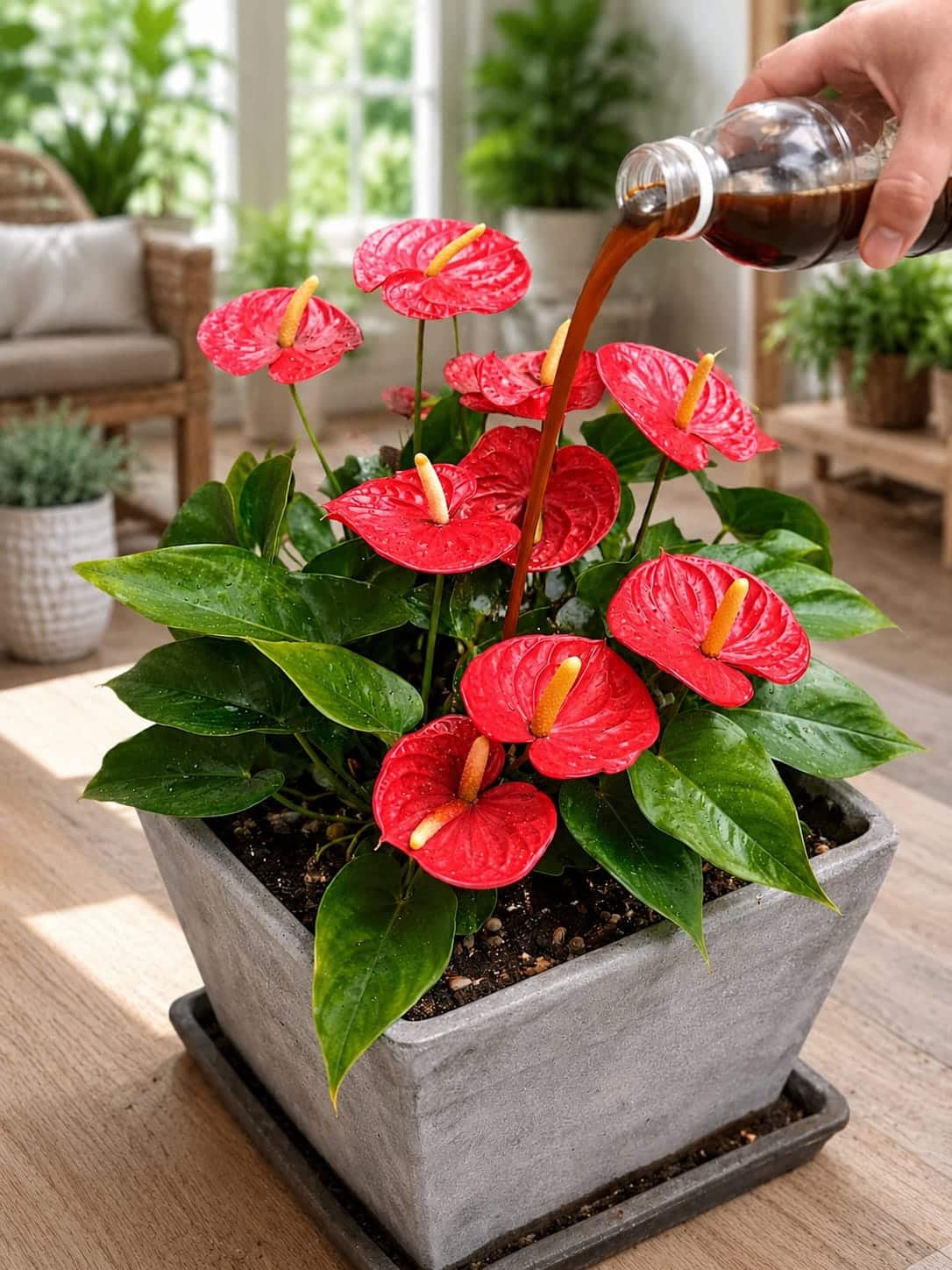
The image shows a beautiful red Anthurium while a dark brown liquid is being poured into the soil. This liquid looks like diluted coffee or coffee water, a popular homemade plant-care idea. Coffee water is often used by plant lovers because coffee contains organic compounds and small amounts of nutrients. It also has a slightly acidic nature, which makes people think it may help tropical plants that prefer a mildly acidic root environment.
However, coffee water must be used carefully. Anthuriums are sensitive to soggy soil, salt buildup, and strong homemade mixtures. Coffee is not a miracle fertilizer. It will not force blooms overnight. It will not fix root rot, low light, poor drainage, compacted soil, or a stressed plant. If used too often or too strong, coffee water can create sour soil, attract fungus gnats, encourage mold, and damage roots.
Used correctly, very diluted coffee water may be used as an occasional mild supplement for a healthy Anthurium. It should be weak, unsweetened, cooled, and applied only to the soil when the plant is already due for watering. It should never be poured over the flowers or leaves, and it should never replace proper Anthurium care.
This guide explains how to use coffee water safely for Anthurium, when it may help, when to avoid it, and what really encourages glossy leaves, strong roots, and beautiful long-lasting flowers.
Understanding Anthurium Care Before Using Coffee Water
Anthuriums are tropical plants, but they are not ordinary moisture-loving plants that want heavy wet soil all the time. Many popular indoor Anthuriums are epiphytic or semi-epiphytic in nature, meaning their roots are adapted to grow with plenty of air around them. In the wild, they often grow in loose organic material where water passes through quickly but humidity remains high.
This is why Anthuriums need an airy potting mix. Dense soil can suffocate the roots. If the potting mix stays wet for too long, roots may rot. Once roots are damaged, the plant cannot absorb water or nutrients properly, and the leaves and flowers begin to suffer.
A healthy Anthurium needs bright indirect light, warm temperatures, moderate to high humidity, consistent but careful watering, and balanced nutrition. Coffee water can only be a small optional addition after these basics are in place.
If an Anthurium is not blooming, the first thing to check is not coffee. The first thing to check is light. A plant kept in low light may survive, but it often produces fewer flowers. The second thing to check is the roots. If the roots are unhealthy, no homemade liquid will help until the root environment is corrected.
What Coffee Water Does for Plants
Coffee water is usually made from leftover plain brewed coffee diluted with water. Coffee contains small amounts of minerals and organic compounds, and it is mildly acidic. Some gardeners use it occasionally on plants that prefer slightly acidic conditions.
For Anthuriums, the idea behind coffee water is that a very weak mixture may slightly refresh the soil environment and add a tiny amount of organic material. It may also be appealing to people who want a low-cost natural plant routine.
But coffee water is not complete plant food. It does not provide a balanced nutrient profile in a predictable way. Anthuriums still need nitrogen, phosphorus, potassium, calcium, magnesium, and trace elements in proper amounts. Coffee water alone cannot provide all of that.
Coffee also contains compounds that can build up or affect the potting mix if used too often. Indoor pots are small environments. What seems harmless once can become a problem when repeated every week.
For this reason, coffee water should be treated as an occasional mild supplement, not a regular fertilizer and not a cure.
Can Coffee Water Help Anthurium Bloom?
Coffee water cannot directly make an Anthurium bloom. Anthurium blooms come from healthy roots, bright indirect light, plant maturity, stable moisture, and balanced nutrition. If those conditions are missing, coffee water will not solve the problem.
However, coffee water may support a healthy Anthurium indirectly if used very lightly. Since Anthuriums generally prefer a slightly acidic to neutral environment, a very diluted coffee rinse may be tolerated by a plant growing in a suitable airy mix. But the effect is subtle, not dramatic.
If your Anthurium has not bloomed for months, move it to brighter indirect light before trying any homemade treatment. A spot near a bright window with filtered sunlight can make a major difference. Anthuriums need enough light to produce energy for flowers.
If the plant is already blooming, like the Anthurium in the image, coffee water should be used carefully so you do not disturb a good routine. A healthy blooming plant does not need frequent experiments. It needs consistency.
🌸 Bloom secret: Bright indirect light is the real driver of Anthurium flowers. Coffee water is only a very occasional supplement, never a substitute for good light.
Why Strong Coffee Can Harm Anthuriums
Strong coffee is not safe to pour directly into an Anthurium pot. Coffee can be acidic, concentrated, and rich in organic compounds. In a small indoor container, too much can create soil imbalance and root stress.
If coffee is used undiluted, the root zone may become too acidic or too loaded with residue. This can interfere with root function and may cause yellowing leaves, brown edges, slowed growth, or sour-smelling soil.
Strong coffee may also contribute to fungus gnats if the soil stays damp. Gnats love moist organic matter. Anthuriums already need careful watering, so adding a rich organic liquid too often can create problems.
Never use sweetened coffee, flavored coffee, coffee with milk, cream, sugar, syrup, or artificial sweeteners. These ingredients can attract pests, feed mold, and damage the soil environment. Only plain black coffee, heavily diluted with water, should ever be considered.
The Safest Coffee Water Ratio for Anthurium
The safest coffee water for Anthurium should be very weak. A good beginner ratio is one part plain cooled black coffee to four or five parts water. For a sensitive plant, make it even weaker, using one part coffee to eight or ten parts water.
The final liquid should look like pale tea, not dark coffee. If it still looks strong, add more water.
Use only plain brewed coffee that has cooled completely to room temperature. Hot coffee can damage roots. Do not use instant coffee mixtures with sugar or additives. Do not use bottled coffee drinks. Do not use espresso-strength coffee unless it is diluted extremely heavily.
For one small Anthurium, you do not need much. A few ounces of diluted coffee water is enough. The goal is a gentle rinse, not a heavy feeding.
How Often Should You Use Coffee Water?
Coffee water should be used rarely. Once every six to eight weeks during active growth is enough for most Anthuriums, and many plants do not need it at all.
Do not use coffee water weekly. Do not use it every time you water. Do not use it as a regular fertilizer. Too much coffee can cause buildup, sour soil, fungus gnats, and root stress.
During spring and summer, when the plant is actively growing, a very diluted coffee-water application may be tolerated better. During winter or low-light periods, skip coffee water because the plant uses less moisture and nutrients.
If your Anthurium responds poorly, stop using coffee water immediately and return to plain water and balanced care.
Step-by-Step Coffee Water Routine for Anthurium
Step 1: Check the Soil First
Before using coffee water, check the potting mix. Anthuriums like moisture, but they do not like wet, heavy soil. The top inch of the mix should be starting to dry before watering again.
If the soil is still damp, wait. Never add coffee water to wet soil just because you want to feed the plant. Too much moisture is one of the fastest ways to damage Anthurium roots.
Step 2: Prepare a Weak Mixture
Use plain black coffee that has cooled completely. Mix one part coffee with at least four or five parts water. For a cautious first use, mix one tablespoon of coffee into half a cup of water, or make the mixture even weaker.
The liquid should be light brown, not dark. If it smells strong, dilute it more.
Step 3: Apply to the Soil Only
Pour the diluted coffee water gently onto the soil around the plant. Avoid splashing leaves, flowers, and stems. Do not pour it into the center of the plant.
Apply only enough to moisten the root zone lightly. Do not flood the pot.
Step 4: Let the Pot Drain
If the pot has drainage holes, let excess liquid drain completely. Empty the saucer afterward. Anthurium roots should not sit in standing water.
Step 5: Wait and Observe
Do not repeat the treatment quickly. Watch the plant over the next several weeks. If the leaves stay firm, the soil smells fresh, and the plant continues growing, it likely tolerated the weak mixture. If the soil smells sour or leaves yellow, stop using coffee water.
When Coffee Water May Be Useful
Coffee water may be useful for a healthy Anthurium that is actively growing and planted in an airy, well-draining mix. It may offer a mild occasional refresh when used very weakly.
It may also be considered if your plant is watered with hard tap water and you want a very gentle acidic rinse from time to time. However, filtered water or rainwater is usually a safer long-term option for sensitive tropical plants.
Coffee water may be useful after the plant has finished a blooming cycle and is producing new leaves, but only if the plant is stable and healthy.
The plant in the image looks strong, blooming, and glossy. That is the type of plant that may tolerate a very mild natural supplement. A sick Anthurium is not the right candidate for coffee water.
Continue to Page 2
Continue to page 2 for more details about this article and the key points many readers miss on the first page.