When You Should Avoid Coffee Water
- Do not use if your Anthurium is already struggling. If leaves are yellowing, stems are soft, or soil smells sour, diagnose the problem first.
- Do not use if the soil is wet – adding more liquid can worsen root stress.
- Do not use if fungus gnats are present – coffee can add organic material that may make gnats worse.
- Do not use if the pot has no drainage holes – drainage is essential because excess moisture and minerals must be able to leave the pot.
- Do not use coffee with milk, sugar, cream, flavoring, syrup, or sweetener – these are not safe for indoor plant soil.
Can Coffee Water Replace Fertilizer?
No. Coffee water cannot replace fertilizer. It does not provide balanced plant nutrition in a reliable way. Anthuriums need a measured supply of nutrients during active growth, especially if they are flowering repeatedly.
A diluted balanced houseplant fertilizer or a fertilizer formulated for flowering tropical plants is more dependable. Use it lightly and according to label directions. Anthuriums do not need heavy feeding, but they do benefit from gentle nutrition when actively growing.
If you use fertilizer, do not apply coffee water on the same day. Too many inputs at once can overload the potting mix and make it harder to understand how the plant is responding.
Use plain water most of the time, fertilizer occasionally, and coffee water rarely if you choose to use it.
The Real Secret to Anthurium Blooms
The real secret to Anthurium blooms is bright indirect light. Anthuriums can stay alive in lower light, but they bloom much better when they receive strong filtered brightness.
Place the plant near a bright window where it receives plenty of indirect light. Avoid harsh direct afternoon sun, which can scorch the leaves and flowers. Morning light or filtered light through a sheer curtain is usually ideal.
If your plant produces leaves but no flowers, light is usually the first thing to improve. Coffee water will not make up for a dark room.
Healthy roots are the second secret. Anthuriums need an airy potting mix and good drainage. If the roots cannot breathe, the plant will not bloom well.
Best Soil Mix for Anthurium
Anthuriums need a chunky, airy potting mix. Regular potting soil alone is often too dense. A better mix may include orchid bark, perlite, coco chips, peat or coco coir, and a small amount of high-quality potting mix.
The goal is to hold some moisture while allowing air to reach the roots. The mix should drain quickly but not dry out instantly.
If your Anthurium is planted in heavy soil that stays wet for many days, do not use coffee water. Repotting into a better mix is much more important.
A healthy Anthurium root system is the foundation for leaves and flowers. No homemade liquid can replace the right growing medium.
How to Water Anthurium Correctly
Water Anthurium when the top inch of the mix begins to dry. The plant likes consistent moisture, but it should never sit in soggy soil.
When watering, water thoroughly and let excess drain from the bottom. Empty the saucer. If the pot is inside a decorative outer container, make sure water is not collecting inside.
Do not water on a strict schedule. The plant may need more water in warm bright conditions and less in cool low-light conditions.
If the leaves droop and the soil is dry, water may be needed. If the leaves droop and the soil is wet, root stress may be the problem.
Humidity for Anthurium Health
Anthuriums appreciate moderate to high humidity. Dry indoor air can cause brown edges, dull leaves, and slower growth. Better humidity can help leaves stay glossy and flowers last longer.
You can increase humidity by grouping plants together, using a pebble tray, or placing a humidifier nearby. A bright bathroom or kitchen may also work well if there is enough light.
Do not try to increase humidity by keeping the soil constantly wet. Humidity around the leaves and moisture in the soil are different things. Wet soil can rot roots.
Healthy humidity supports the plant, but it must be balanced with airflow.
How to Keep Anthurium Leaves Glossy
Anthurium leaves are naturally glossy when clean and healthy. Dust can dull their shine and reduce their ability to absorb light. Wipe the leaves gently with a damp cloth every few weeks.
Do not wipe leaves with coffee. Coffee can leave residue, attract dust, and stain the leaf surface. Do not use oils, mayonnaise, milk, or heavy shine products either.
Plain water and a soft cloth are enough. Support each leaf with one hand while wiping with the other to avoid tearing.
Glossy leaves come from clean foliage, proper light, balanced moisture, and healthy roots.
Should Coffee Water Touch the Flowers?
No. Coffee water should not touch Anthurium flowers. The colorful part of the flower is a spathe, and it can be marked or damaged by residue. Coffee may stain the spathe or leave spots.
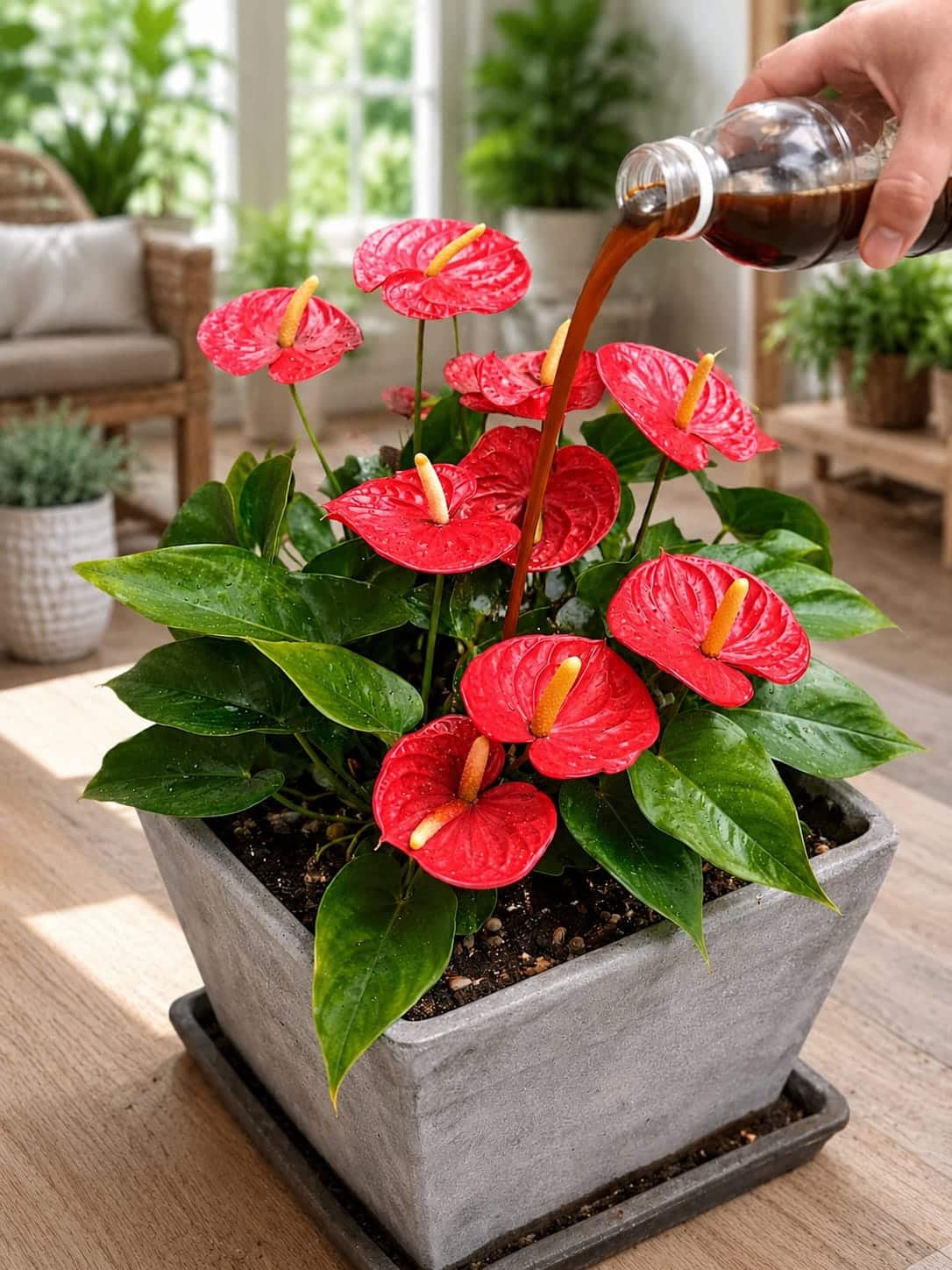
In the image, the liquid appears to be poured near the plant, but for real care it should go directly to the soil. Avoid pouring over flowers and leaves.
If coffee accidentally splashes on the flowers or leaves, wipe it off gently with plain water. Do not let it dry on the plant.
Anthurium flowers last longest when they are kept clean, dry, and protected from stress.
What to Do With Faded Anthurium Flowers
Anthurium flowers naturally fade over time. A bright red spathe may turn dull, greenish, brown, or dry as it ages. This is normal.
Once a flower is spent, cut the flower stem near the base with clean scissors. Removing faded blooms helps the plant direct energy toward new leaves and future flowers.
Do not pull flower stems roughly. This can damage the plant crown.
After trimming spent blooms, continue stable care. Do not try to force immediate new flowers with strong coffee water or fertilizer.
Can Coffee Water Fix Yellow Leaves?
No. Coffee water will not turn yellow leaves green again. Yellow leaves can happen from overwatering, underwatering, low light, root rot, cold stress, nutrient imbalance, or natural aging.
If one older leaf yellows slowly, it may simply be aging. If multiple leaves yellow at once, check soil moisture and roots.
If the soil is wet and leaves are yellowing, do not add coffee water. The plant may be overwatered. Adding more organic liquid can make things worse.
Remove yellow leaves once they are fully damaged, and focus on correcting the cause.
Can Coffee Water Fix Brown Tips?
Coffee water usually does not fix brown tips. Brown tips can be caused by dry air, inconsistent watering, hard water, fertilizer buildup, too much direct sun, or root stress.
If brown tips are caused by mineral buildup or overfertilizing, adding coffee water may not help. Flushing with plain water or repotting may be better.
Old brown tissue will not turn green again. You can trim brown edges carefully with clean scissors if needed.
To prevent new brown tips, improve humidity, use good-quality water, avoid overfertilizing, and keep watering consistent.
Can Coffee Water Cause Fungus Gnats?
Yes, coffee water can contribute to fungus gnats if used too often or if the soil stays damp. Fungus gnats are attracted to moist organic potting conditions. Coffee adds organic material, so overuse can create a more inviting environment.
To prevent gnats, use coffee water rarely and only on a plant that drains well. Let the top layer of potting mix begin to dry before watering again.
If gnats appear, stop using coffee water immediately. Allow the mix to dry more appropriately, use sticky traps, and remove decaying material from the soil surface.
A healthy Anthurium pot should smell fresh and earthy, not sour or fermented.
⚠️ Important: Always stop using coffee water if the soil smells sour, becomes moldy, or if you see fungus gnats. Fix moisture and drainage issues first.
Can Coffee Grounds Be Used Instead?
Used coffee grounds are often suggested for plants, but they are risky in indoor Anthurium pots. Coffee grounds can compact, hold moisture, grow mold, and attract fungus gnats if applied directly to the soil.
Anthuriums need airy potting mix. A layer of coffee grounds can reduce airflow and keep the surface wet. This is the opposite of what Anthurium roots need.
If you compost coffee grounds first, they may become part of a broader compost system. But fresh or used grounds should not be dumped into an indoor Anthurium pot.
Diluted coffee water is safer than coffee grounds, but even coffee water should be used rarely.
What to Do If You Used Too Much Coffee Water
If you used strong coffee or applied coffee water too often, stop immediately. Check the soil smell. If it smells sour, fermented, or unpleasant, the potting mix may be overloaded.
If the pot has drainage holes, flush the soil with plain room-temperature water and let it drain completely. Do this only if the plant is not already sitting in soggy soil.
If the plant continues to yellow, wilt, or smell bad, repot into fresh airy Anthurium mix. Inspect the roots and trim any rotten sections with clean scissors.
After repotting, use plain water only for several weeks. Let the plant stabilize before applying any fertilizer or homemade treatment.
A Simple Anthurium Bloom Routine
Place the Anthurium in bright indirect light. Keep it warm and away from cold drafts. Use an airy potting mix with orchid bark, perlite, and moisture-retaining organic material.
Water when the top inch of the mix begins to dry. Let the pot drain fully. Keep humidity moderate to high, but do not keep the soil soggy.
Feed lightly during active growth with a balanced houseplant fertilizer. Remove faded flowers when they decline. Wipe leaves with plain water to keep them glossy.
Use coffee water only rarely, in a very diluted form, and only if the plant is healthy and due for watering.
Common Mistakes to Avoid
- Pouring strong coffee into the pot – coffee must be heavily diluted.
- Using sweetened coffee, coffee with milk, or flavored coffee – these can harm the soil and attract pests.
- Using coffee water too often – once every six to eight weeks is enough if used at all.
- Applying coffee water to wet soil – Anthurium roots need air and can rot in soggy conditions.
- Pouring coffee over flowers and leaves – apply to soil only.
- Using coffee water as fertilizer – it is not complete plant food.
- Relying on coffee instead of improving light – bright indirect light is the true bloom driver.
Frequently Asked Questions
Is coffee water good for Anthurium?
Very diluted plain coffee water can be used occasionally on a healthy Anthurium, but it is not necessary. Proper light, airy soil, correct watering, and balanced feeding are more important.
How much coffee should I use?
Use one part plain cooled black coffee mixed with at least four or five parts water. For a sensitive plant, dilute it even more.
Can coffee water make Anthurium bloom?
Not directly. Anthurium blooms depend mainly on bright indirect light, healthy roots, humidity, and balanced nutrition.
Can I pour coffee on Anthurium leaves?
No. Coffee can leave residue and spots. Apply diluted coffee water only to the soil.
Can I use coffee with sugar or milk?
No. Only plain black coffee should be used. Sugar, milk, cream, and flavorings can attract pests and damage the potting mix.
How often can I use coffee water?
Use it rarely, about once every six to eight weeks during active growth, and only when the plant is due for watering.
Are coffee grounds good for Anthurium?
Fresh coffee grounds are not recommended in indoor Anthurium pots. They can compact, hold moisture, mold, and attract fungus gnats.
What should I do if the soil smells sour after coffee water?
Stop using coffee water. Flush with plain water if the pot drains well, or repot into fresh airy mix if the smell continues or the plant declines.
🌿 Coffee water is a gentle occasional supplement, not a miracle cure. For glossy leaves and long-lasting Anthurium blooms, focus on bright indirect light, airy soil, careful watering, and balanced feeding. Use coffee water rarely and always diluted – and let consistent care do the real work.