A Christmas cactus in full bloom is one of the most beautiful sights in indoor gardening. Its arching green stems, soft segmented leaves, and bright pink, red, white, orange, or purple flowers can turn a simple windowsill into a living display. When a Christmas cactus is happy, it can bloom heavily, spilling flowers over the edge of the pot like a colorful waterfall.
But many plant owners struggle to get that kind of display. Their Christmas cactus may grow plenty of green segments but produce only a few flowers. Buds may appear and then drop before opening. The plant may bloom one year and then refuse the next. When this happens, it is easy to search for a simple trick that might help the plant flower again.
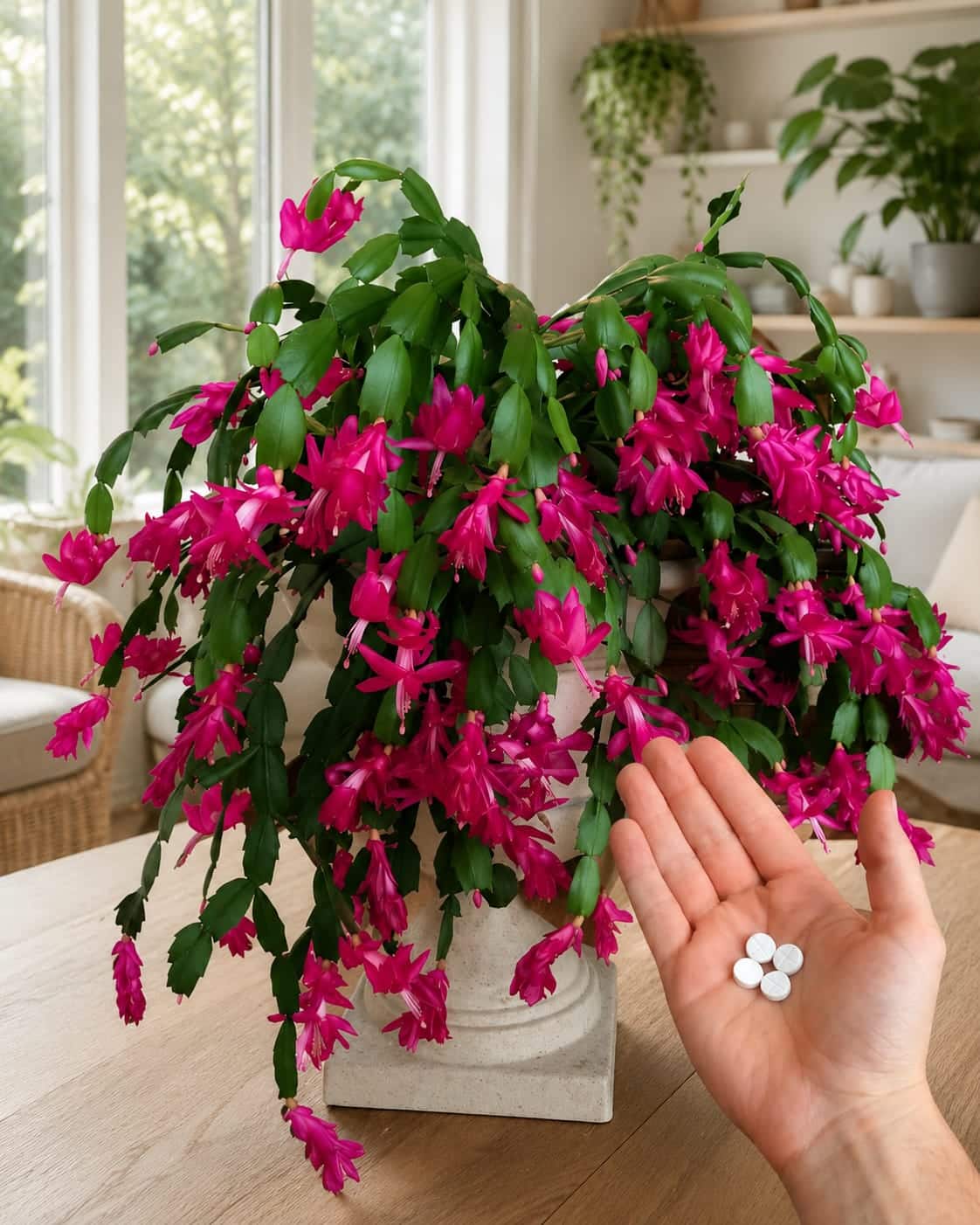
The image shows a lush Christmas cactus covered in bright pink flowers, with a hand holding small white tablets nearby. This kind of visual usually suggests the popular “aspirin water” plant trick. Aspirin water is often used by gardeners as a mild stress-support treatment because aspirin contains acetylsalicylic acid, which is related to salicylic acid, a compound involved in plant stress responses.
However, aspirin should be used carefully. It is not a magic bloom pill. It will not force a Christmas cactus to flower overnight. It will not replace the correct light cycle, cool nights, proper watering, drainage, humidity, or balanced feeding. If used too often or too strongly, aspirin water can stress the plant rather than help it.
The safest way to use aspirin for a Christmas cactus is to dissolve a very small amount in a large amount of water and apply it rarely, only when the plant is healthy and already due for watering. The tablets should not be pushed directly into the soil. A concentrated tablet sitting in one spot can irritate roots and disturb the potting mix.
This guide explains how to use aspirin water safely for Christmas cactus, when it may help, when to avoid it, and what actually encourages a Christmas cactus to grow fuller and bloom beautifully year after year.
What Aspirin Water Is
Aspirin water is made by dissolving a plain aspirin tablet in water and using the diluted liquid on plants. Some gardeners use it after transplanting, pruning, mild stress, or environmental changes. The idea is that a weak aspirin solution may support the plant’s natural stress response.
For a Christmas cactus, aspirin water should be treated as an optional support step, not as fertilizer and not as a bloom trigger. It does not provide the full nutrition the plant needs. It does not contain balanced nitrogen, phosphorus, potassium, calcium, magnesium, and trace elements.
A Christmas cactus blooms because its seasonal needs are met. It needs bright indirect light during growth, cooler nights and long dark periods before blooming, careful watering, healthy roots, and stable conditions once buds form. Aspirin water cannot replace any of these.
Used correctly, aspirin water may support a healthy plant that has experienced mild stress. Used incorrectly, it can create unnecessary root stress and make a good plant-care routine less stable.
Can Aspirin Water Make a Christmas Cactus Bloom?
Aspirin water cannot directly make a Christmas cactus bloom. The real bloom trigger for Christmas cactus is environmental. The plant usually forms buds when days become shorter, nights become longer, and temperatures are slightly cooler.
If your Christmas cactus is not blooming, the first thing to check is its light cycle. In the weeks before bloom time, the plant usually needs about 12 to 14 hours of uninterrupted darkness each night. If it sits in a room with bright lamps on late at night, it may not receive the dark period it needs to set buds.
The second thing to check is temperature. Cooler nights can encourage bud formation. A Christmas cactus kept in a warm room all night may not bloom as heavily as one that experiences a gentle nighttime temperature drop.
The third thing to check is plant health. Weak roots, soggy soil, poor drainage, and low light can all reduce blooming. Aspirin water may support a mildly stressed plant, but it cannot override poor growing conditions.
So the honest answer is this: aspirin water may be used as a small supportive routine, but the real bloom secret is correct seasonal care.
🌸 Bloom secret: Long, uninterrupted nights and slightly cooler temperatures are far more important for Christmas cactus flowering than any supplement.
Why You Should Not Put Aspirin Tablets Directly Into the Soil
The tablets in the image may make the method look simple: place a few tablets near the plant and wait for flowers. But this is not the safest way to use aspirin on a Christmas cactus.
A tablet placed directly in the pot dissolves unevenly. The soil around the tablet may become too concentrated while the rest of the pot receives little or none. Fine Christmas cactus roots can be sensitive to concentrated materials in the soil.
Another issue is that tablets often contain inactive ingredients, binders, coatings, or fillers. These are not plant nutrients. Leaving tablets in the soil may add unnecessary residue to the potting mix.
The safer method is to dissolve a small amount of plain aspirin in a large amount of water, stir well, and apply only a small portion when the plant is ready for watering. Dilution reduces the risk of root irritation and spreads the mixture more evenly.
For potted plants, especially indoor plants, gentle dilution is always safer than direct tablet placement.
The Safest Aspirin Water Ratio for Christmas Cactus
A cautious ratio is one plain aspirin tablet dissolved in one gallon of water. For a smaller or sensitive Christmas cactus, use half a tablet per gallon instead. The mixture should be weak.
Do not dissolve a full aspirin tablet in a small cup of water and pour it into the pot. That is too concentrated for most houseplants. A Christmas cactus has fine roots and does not need a strong solution.
Use only plain aspirin. Do not use pain relievers that are not aspirin. Do not use tablets combined with caffeine, cold medicine, sleep aids, flavoring, sweeteners, or other active ingredients.
After mixing, use only enough solution to water the plant normally. Do not pour the entire gallon into one pot. Any leftover solution can be discarded.
The goal is a mild treatment, not a strong dose.
How Often Should You Use Aspirin Water?
Aspirin water should be rare. For a Christmas cactus, one application during a mild stress period is usually enough. If repeated, wait at least six to eight weeks, and only use it during active growth when the plant is healthy.
Do not use aspirin water weekly. Do not use it every time you water. Do not use it as a regular bloom booster.
Christmas cactus responds best to stability. Constant changes in watering, feeding, light, and homemade treatments can cause stress, especially when buds are forming.
If your Christmas cactus is already covered in buds or flowers, avoid experimenting. During the blooming period, consistency is more important than adding new treatments. Sudden changes may cause bud drop.
When Aspirin Water May Be Useful
Aspirin water may be useful after mild stress, such as moving the plant, light pruning, repotting recovery, or a short period of inconsistent watering. It may also be used after the plant has finished blooming and is entering a new growth phase.
It may support a Christmas cactus that is healthy but slightly tired after a heavy flowering season. In that case, the plant may benefit from stable care, bright indirect light, careful watering, and possibly one very weak aspirin-water application.
It may also be useful if the plant has been disturbed during propagation or division, but only after the cuttings or divisions have settled. Fresh cuttings do not need aspirin water immediately.
The plant should have firm green segments, a healthy root system, and a pot that drains properly. Aspirin water should never be used as a rescue treatment for a rotting plant.
When You Should Avoid Aspirin Water
- Do not use if the soil is wet. Christmas cactus roots need oxygen. Adding more liquid to wet soil can increase the risk of root rot.
- Do not use if the plant is dropping buds. Bud drop is usually caused by sudden changes in temperature, watering, location, humidity, or light. Adding a new treatment may create more stress.
- Do not use if the plant has soft, limp, or mushy segments while the soil is damp. This may mean root rot. The correct response is root inspection and fresh soil, not aspirin.
- Do not use if the pot has no drainage holes. Any watering treatment becomes risky when excess liquid cannot escape.
- Do not use as a replacement for fertilizer. It does not provide balanced nutrition.
Step-by-Step: How to Use Aspirin Water Safely
Step 1: Check the Soil
Before using aspirin water, touch the potting mix. The top inch should be starting to dry. If the mix is still wet, wait. Christmas cactus likes moisture more than desert cactus, but it should not sit in soggy soil.
Step 2: Prepare a Weak Solution
Dissolve one plain aspirin tablet in one gallon of room-temperature water. For a cautious first use, dissolve half a tablet in one gallon instead. Stir until fully dissolved.
Step 3: Apply to the Soil Only
Pour a small amount of the solution onto the soil around the plant. Do not pour it over the flowers or buds. Do not spray it onto the segments. Apply only enough to water the plant lightly.
Step 4: Let the Pot Drain
If the pot has drainage holes, allow excess liquid to drain completely. Empty the saucer afterward. The roots should never sit in standing water.
Step 5: Return to Normal Care
Do not repeat the treatment quickly. Watch the plant for several weeks. If the plant remains firm and healthy, continue with normal care. If it declines, stop using aspirin water and check the roots, soil, and watering routine.
The Real Secret to Christmas Cactus Flowers
The real secret to Christmas cactus blooms is the right seasonal rhythm. This plant needs a growing season, a rest period, and then the right conditions to set buds.
During spring and summer, the plant grows new green segments. During this time, it needs bright indirect light, gentle watering, and light feeding. This helps it build the energy needed for future flowers.
In late summer or autumn, the plant begins preparing for bloom. This is when cooler nights and longer darkness become important. The plant should receive long, uninterrupted nights for several weeks. If a lamp shines on it every evening, bud formation may be reduced.
Once buds form, the plant should be kept stable. Do not move it repeatedly. Do not suddenly change watering. Do not expose it to drafts. Do not apply strong treatments. Stability helps buds open successfully.
Continue to Page 2
Continue to page 2 for more details about this article and the key points many readers miss on the first page.