A peace lily is one of the most graceful indoor plants you can grow. Its deep green leaves, elegant upright shape, and soft white blooms make it look calm, fresh, and beautiful in almost any room. When a peace lily is healthy, it can become the centerpiece of a windowsill, living room table, office corner, or bedroom plant collection.
But when a peace lily begins to slow down, it can be frustrating. The leaves may lose their shine. The plant may stop blooming. New growth may appear smaller. The white flowers may fade quickly. When this happens, many plant lovers start searching for a simple homemade trick to bring the plant back to life.
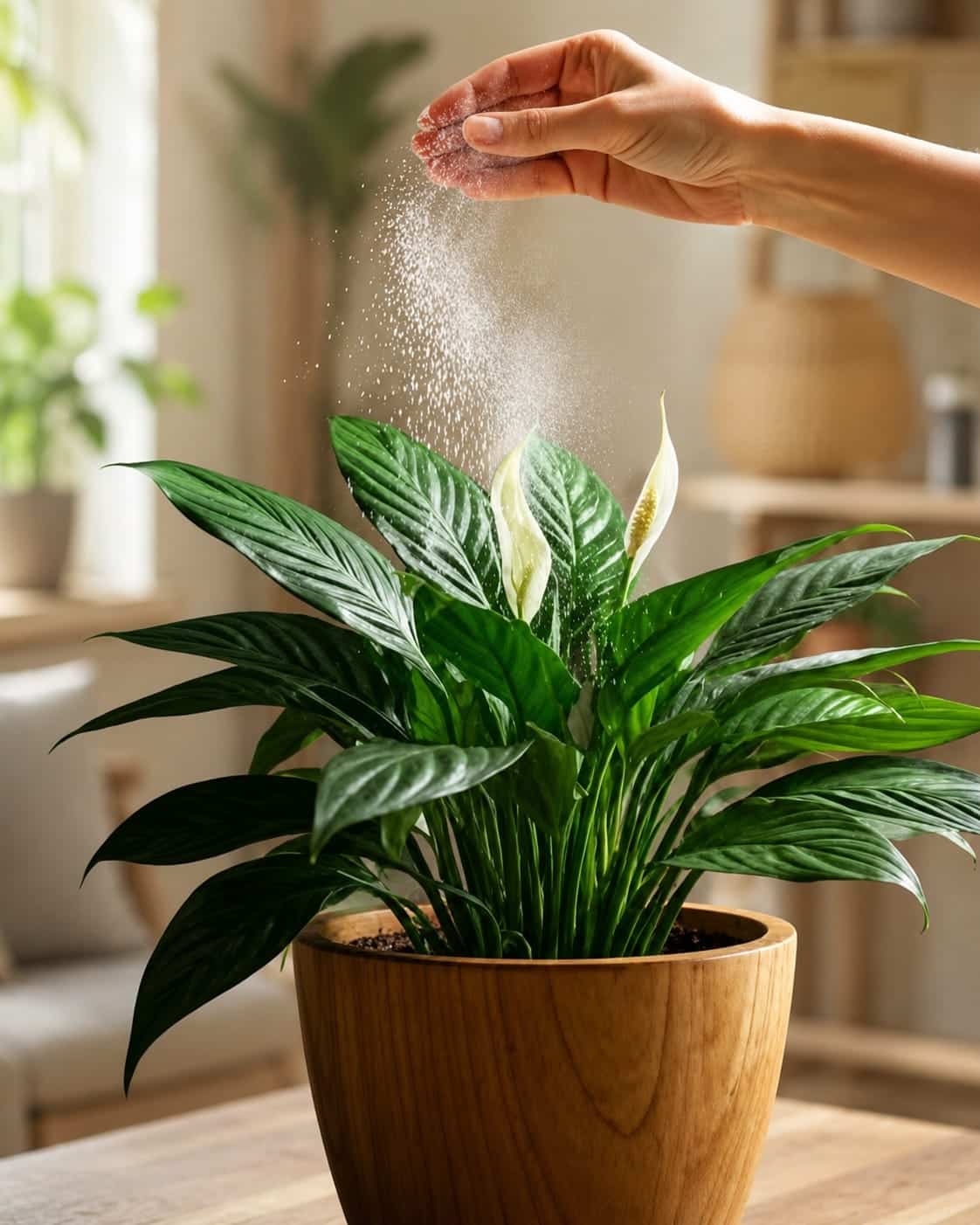
The image shows a healthy peace lily while a white granular ingredient is being sprinkled over the plant. This kind of image is often connected with sugar, salt, or another white household powder. Because sugar is one of the most common “plant energy” tricks shared online, many people wonder whether sprinkling sugar on a peace lily can make it greener, fuller, and more likely to bloom.
The honest answer is this: sugar should be used very carefully around houseplants. A peace lily does not need sugar sprinkled directly onto its leaves or soil. In fact, too much sugar can attract fungus gnats, ants, mold, bacteria, and unwanted soil problems. It can also disturb the root environment and make a struggling plant worse.
However, a very weak sugar-water solution may sometimes be used as an occasional stress-support routine for certain plants, but only with caution. It should never replace proper light, correct watering, drainage, humidity, fresh soil, or balanced fertilizer. Sugar is not real plant food in the same way fertilizer is. Plants make their own sugars through photosynthesis when they receive enough light. If a peace lily is not getting enough light, adding sugar to the soil will not solve the real problem.
This guide explains what sugar can and cannot do for a peace lily, why dry sugar should not be sprinkled directly into the pot, how to use a very mild sugar-water routine if you choose to try it, and what care steps truly help a peace lily grow glossy leaves and beautiful white blooms.
What Sugar Does in Plant Care
Sugar is a source of simple carbohydrates. In human food, sugar provides quick energy. This is why many people assume that adding sugar to plant soil will “feed” the plant. But plants do not eat sugar the same way humans do.
Plants create their own sugars inside their leaves through photosynthesis. They use light, water, and carbon dioxide to make energy. This natural process is what fuels growth, roots, leaves, and flowers. A peace lily with good light and healthy leaves can make the energy it needs.
When sugar is added to soil, the plant does not simply absorb it and become stronger. Instead, sugar mostly feeds microbes in the soil. In some cases, this may briefly increase microbial activity. But if too much sugar is added, it can create an unhealthy environment. The soil may become sticky, sour, moldy, or attractive to pests.
This is especially important for indoor peace lilies because they grow in a small pot. A garden bed has more soil volume, more airflow, and more natural organisms to balance organic materials. A houseplant pot is a tiny closed environment. What you add stays concentrated around the roots.
Can Sugar Make a Peace Lily Bloom?
Sugar cannot directly make a peace lily bloom. Peace lily blooms depend mainly on bright indirect light, plant maturity, healthy roots, stable watering, and balanced nutrition. If a peace lily is not blooming, the first thing to check is light.
Peace lilies can survive in lower light, but they usually bloom better in brighter indirect light. A plant kept far from a window may produce leaves but few or no flowers. Adding sugar to the soil will not replace the light the plant needs to make energy.
Healthy roots are another major factor. If the roots are damaged from overwatering, compacted soil, or poor drainage, the plant will not bloom well. Sugar water cannot repair rotten roots. In fact, adding sugar to wet soil can make microbial problems worse.
Balanced feeding also matters. A peace lily may benefit from a gentle houseplant fertilizer during active growth. Sugar does not provide nitrogen, phosphorus, potassium, calcium, magnesium, or trace minerals in the balanced way the plant needs.
So, sugar is not a bloom button. The real bloom secret is proper growing conditions.
Why Sprinkling Dry Sugar on a Peace Lily Is Risky
The image shows a white powder being sprinkled above the plant. If that powder is sugar, this is not the safest method. Dry sugar should not be poured over peace lily leaves, flowers, or soil.
When sugar lands on leaves, it can leave sticky residue. Sticky leaves attract dust and may interfere with the clean surface the plant needs for healthy light absorption. If the sugar gets wet, it can create a film that encourages mold or pests.
When sugar lands on the soil, it can dissolve unevenly. Some parts of the pot may receive a concentrated amount while other areas receive none. This can feed microbes in one spot and create sour or moldy patches.
Sugar on the soil surface may also attract ants, fungus gnats, fruit flies, and other insects. Indoors, this can become a serious nuisance very quickly.
A peace lily should not be treated like a dessert. If sugar is used at all, it must be heavily diluted in water and used rarely.
⚠️ Important: Never sprinkle dry sugar directly onto peace lily leaves, flowers, or soil. It can attract pests, mold, and rot.
The Safest Sugar Water Ratio for Peace Lily
If you want to try sugar water, keep it extremely weak. A cautious ratio is one-quarter teaspoon of plain white sugar dissolved in one quart of water. Stir until the sugar is completely dissolved.
For an even safer first attempt, use only a tiny pinch of sugar in one quart of water. The water should not feel sticky. It should not smell sweet. It should look like plain water.
Do not use honey, syrup, brown sugar, molasses, sweet drinks, soda, juice, or flavored liquids. These can attract pests and create soil problems even faster than plain sugar.
Use sugar water only on a healthy plant that is already due for watering. Never add it to wet soil. Never pour it over the leaves or flowers.
After using sugar water once, wait at least two months before considering it again. Many peace lilies do not need it at all.
How Often Should You Use Sugar Water?
Sugar water should be used rarely, if at all. For a peace lily, once every two to three months is the absolute maximum cautious routine. Even that may be unnecessary.
Do not use sugar water weekly. Do not use it every time you water. Do not use it as fertilizer. Frequent sugar water can create sticky soil, sour smells, mold, fungus gnats, and root stress.
If your peace lily is healthy, glossy, and blooming, skip sugar water. Healthy plants do not need extra sweet treatments. They need consistency.
If your peace lily is struggling, diagnose the real problem first. A weak plant usually needs better light, corrected watering, improved drainage, fresh soil, or root inspection—not sugar.
When Sugar Water May Be Considered
A very weak sugar-water solution may be considered only when the peace lily is mildly stressed but still healthy. For example, if the plant has recently finished blooming and looks slightly tired, one extremely weak application may be used as a gentle soil-microbe support.
It may also be considered after a temporary stress period, such as a move to a new location, as long as the plant has firm leaves, healthy roots, and soil that drains well.
But even in these cases, sugar water is optional. Plain water and proper care are usually enough. If the plant is not producing enough energy, the better solution is more bright indirect light, not sugar in the pot.
Use sugar water only when the plant is stable. Do not use it as emergency medicine.
When You Should Avoid Sugar Water
- Do not use if the soil is wet. A peace lily in wet soil does not need more liquid. Adding sugar to wet soil can feed unwanted microbes and make the pot smell sour.
- Do not use if fungus gnats are present. Fungus gnats thrive in moist organic soil, and sugar can make the environment even more attractive to them.
- Do not use if the plant has mold on the soil surface. Mold means the pot is already too damp or poorly ventilated.
- Do not use if the plant has root rot. Rotten roots need trimming, fresh soil, and better drainage.
- Do not use if the pot has no drainage holes. Without drainage, moisture and organic residue can build up dangerously.
Step-by-Step: How to Use Sugar Water Safely
Step 1: Check the Soil
Touch the top inch of soil. If it is still damp, do nothing. Wait until the soil begins to dry. Peace lilies like consistent moisture, but they do not like soggy roots.
Step 2: Make a Very Weak Mixture
Dissolve one-quarter teaspoon of plain white sugar in one quart of room-temperature water. Stir until fully dissolved. The mixture should be very weak.
Step 3: Apply to Soil Only
Pour a small amount around the soil surface. Do not pour it onto the leaves, flowers, or crown of the plant. Do not soak the pot heavily.
Step 4: Let the Pot Drain
If the pot has drainage holes, allow excess liquid to drain completely. Empty the saucer afterward. A peace lily should not sit in standing water.
Step 5: Watch the Plant
Observe the plant for several weeks. If the soil smells sour, gnats appear, or mold develops, stop using sugar water immediately and return to plain water.
The Real Secret to Peace Lily Blooms
The real secret to peace lily blooms is bright indirect light. Peace lilies are often sold as low-light plants, but low light usually means survival, not heavy flowering.
If your peace lily has healthy leaves but no blooms, move it closer to a bright window. Avoid harsh direct afternoon sun, which can scorch the leaves. A spot with filtered light, morning light, or strong indirect brightness is ideal.
The plant also needs healthy roots. Blooms require energy, and roots support the entire plant. If the roots are suffocating in wet soil, the plant will focus on survival instead of flowers.
Balanced nutrition helps too. During spring and summer, a diluted balanced houseplant fertilizer can support growth and flowering better than sugar water.
How to Water a Peace Lily Correctly
Peace lilies like moisture, but they should not be watered blindly. Water when the top inch of soil begins to dry. If the leaves droop and the soil is dry, the plant probably needs water.
When watering, water thoroughly until excess drains from the bottom. Then empty the saucer. This gives the roots moisture without leaving them sitting in stagnant water.
If the leaves droop while the soil is wet, do not water again. This may indicate root stress or rot. A drooping peace lily does not always mean thirst.
Correct watering is more important than any homemade ingredient.
Continue to Page 2
Continue to page 2 for more details about this article and the key points many readers miss on the first page.