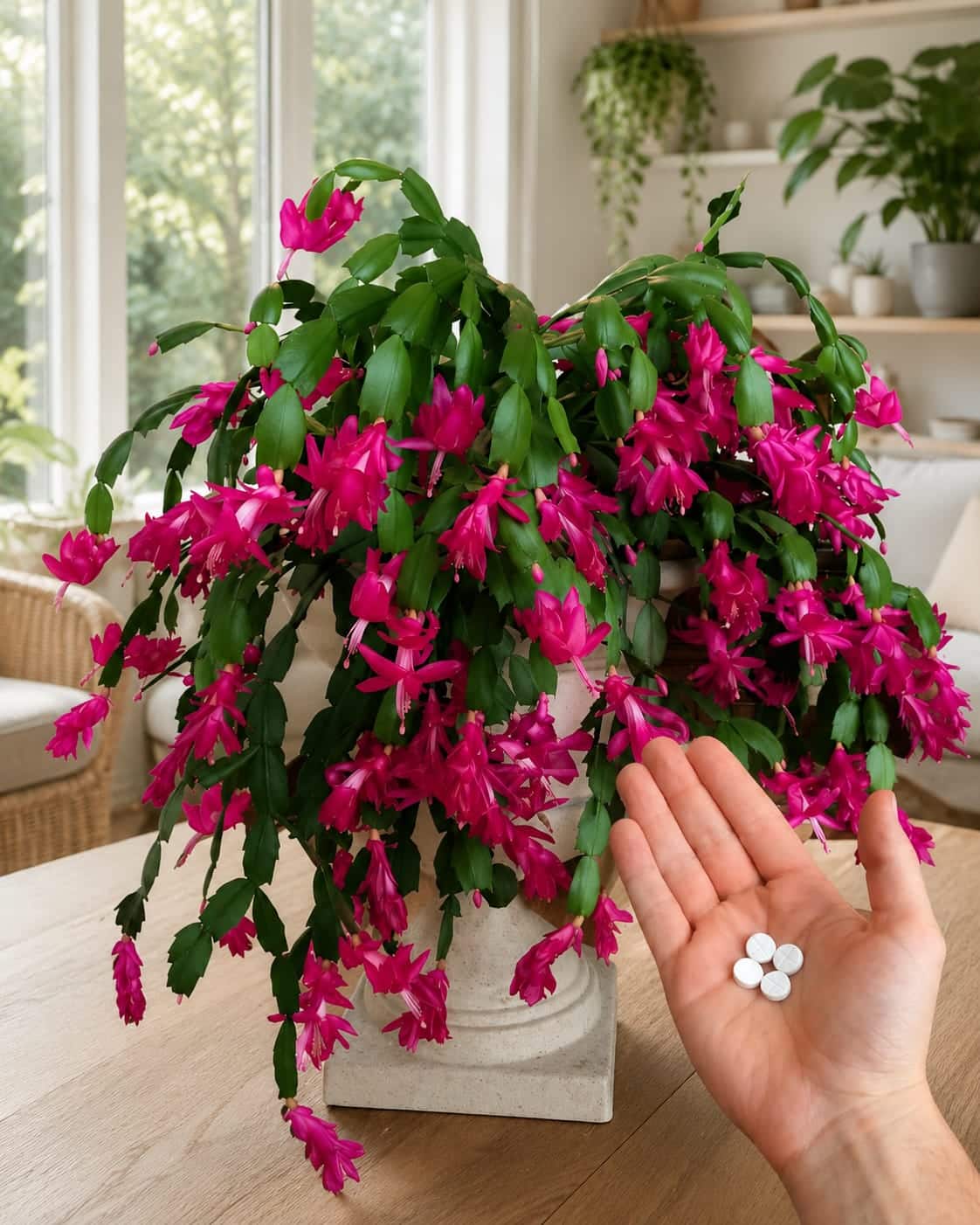
How Much Darkness Does a Christmas Cactus Need?
To encourage blooming, a Christmas cactus often benefits from 12 to 14 hours of darkness each night for several weeks. This darkness should be uninterrupted. Even room lighting can interfere if it is bright and frequent.
You can place the plant in a room that naturally gets dark at night, or you can cover it lightly in the evening and uncover it in the morning. Make sure there is airflow and that the cover does not trap too much heat or moisture.
During the day, the plant should still receive bright indirect light. The combination of bright days and long dark nights helps signal the plant to prepare buds.
This dark cycle is far more important for blooming than aspirin water.
Cool Nights and Bud Formation
Cooler nights also help Christmas cactus form buds. A nighttime temperature around 55°F to 65°F can encourage blooming. The plant should not freeze, and it should not be exposed to icy drafts, but a gentle cool period can be helpful.
If the plant is kept in a very warm room day and night, it may produce fewer buds. Moving it to a cooler bright room in the weeks before bloom time can help.
Once buds appear, avoid sudden temperature changes. A cold draft from a window or door can cause buds to drop. Heat from radiators or vents can also stress the plant.
Balanced coolness is helpful. Sudden stress is not.
Best Light for Christmas Cactus
Christmas cactus grows best in bright indirect light. It does not need harsh direct sun all day. In fact, strong direct sun can cause the green segments to turn reddish, purple, or scorched.
A bright east-facing window is often ideal. A north-facing window can work if it is bright. A south or west window may need a sheer curtain to soften intense sun.
If the plant grows long, weak, and pale, it may need more light. If the segments look burned or red from sun stress, move it slightly back from the window.
Good light during the growing season helps the plant build energy. Without that energy, flowering will be weaker.
How to Water Christmas Cactus Correctly
Christmas cactus is not a desert cactus, but it still needs drainage. It likes a lightly moist growing mix, not a waterlogged one.
Water when the top inch of soil begins to dry. When you water, water thoroughly and let excess drain. Empty the saucer so the plant does not sit in water.
During active growth, it may need water more often. During the rest period before blooming, reduce watering slightly, but do not let the plant shrivel severely.
Once buds appear, keep watering consistent. Letting the plant dry too much or keeping it too wet can both cause bud drop.
Best Soil for Christmas Cactus
Christmas cactus needs a loose, well-draining potting mix. Regular potting soil can work if amended with perlite, orchid bark, pumice, or coarse material to improve airflow.
The mix should hold some moisture but should not become heavy or muddy. If the soil stays wet for many days after watering, it is too dense.
A good mix protects the roots and makes watering easier. If the roots are healthy, the plant can support more growth and blooms.
Aspirin water cannot fix poor soil. If the soil is compacted or sour-smelling, repotting is the better solution.
Choosing the Right Pot
A Christmas cactus should be in a pot with drainage holes. This is essential. Without drainage, water collects at the bottom and can rot the roots.
The plant often blooms better when slightly snug in its pot. A pot that is too large holds extra soil, and extra soil holds extra moisture. This can delay blooming and increase the risk of root problems.
Repot only when needed, usually every few years or when the potting mix has broken down. Repotting too often can disturb the plant and may delay flowering.
If you use a decorative outer pot, remove the inner pot for watering and let it drain before placing it back.
Feeding Christmas Cactus
Christmas cactus benefits from light feeding during active growth. After blooming has finished and new growth begins, you can feed with a balanced houseplant fertilizer at half strength every few weeks during spring and summer.
Stop or reduce feeding before the bud-setting period. Too much fertilizer late in the season may encourage new green growth instead of flowers.
Aspirin water is not fertilizer. It does not replace balanced feeding. If you use both fertilizer and aspirin water, do not apply them on the same day.
More feeding does not always mean more flowers. Gentle, seasonal feeding is safer than constant fertilizing.
What to Do After Flowering
After the flowers fade, allow the plant to rest. Remove spent flowers gently. Reduce watering slightly for a short rest period, but do not let the plant dry to the point of severe shriveling.
After resting, return the plant to bright indirect light and resume normal watering as new growth appears. This is a good time to support the plant with light feeding.
If you want to use aspirin water, after flowering and during recovery is safer than during active bud formation. Use only a weak solution and only if the plant is due for watering.
The plant’s next bloom cycle begins with the care it receives after the previous flowers fade.
Why Christmas Cactus Buds Drop
Bud drop is common and frustrating. A plant may form many buds, then lose them before they open. This usually happens because of stress.
Common causes include moving the plant after buds form, sudden temperature changes, drafts, overwatering, underwatering, low humidity, or changes in light. A plant that is turned or relocated repeatedly may also drop buds.
Strong treatments can also disturb the plant. If buds are already forming, do not experiment with aspirin tablets, strong fertilizer, coffee water, rice water, or other tricks.
Once buds appear, the best care is calm and consistent. Keep the plant in the same place, maintain even moisture, and avoid sudden changes.
Can Aspirin Water Stop Bud Drop?
No. Aspirin water is not a reliable fix for bud drop. Bud drop is usually caused by environmental stress, not by lack of aspirin.
If buds are dropping, check whether the plant was moved, exposed to drafts, allowed to dry too much, kept too wet, or placed near heat. These are much more likely causes.
Adding aspirin water during bud drop may make the situation worse if it changes the moisture level or adds stress to the root zone.
The best response to bud drop is stability. Correct the care gently and avoid additional experiments.
Can Aspirin Water Help a Weak Christmas Cactus?
Aspirin water may support a mildly stressed plant, but it cannot rescue a severely weak Christmas cactus. If the plant is shriveled, limp, yellowing, or dropping segments, diagnose the cause first.
If the soil is dry and the plant is shriveled, it may need water. If the soil is wet and the plant is limp, the roots may be damaged. If the plant is pale, it may need better light. If the soil is old and compacted, it may need repotting.
A weak plant does not always need treatment. Often it needs simpler, better basic care.
Use aspirin water only after the plant is stable and only in a very diluted form.
Can Aspirin Water Be Used on Cuttings?
It is better not to use aspirin water on fresh Christmas cactus cuttings. Cuttings need to callus first and then root in a lightly moist, well-draining mix. Strong or unnecessary liquids can increase the risk of rot.
To propagate Christmas cactus, twist or cut a section with two or three joined segments. Let the cut end dry for a day or two. Then place it in a light potting mix and keep it slightly moist, not wet.
Once the cutting has rooted and begins growing, it can be treated like a young plant. Even then, aspirin water is not necessary.
Simple propagation is safer than adding extra treatments too early.
⚠️ Important: Never use aspirin water on a plant with root rot, wet soggy soil, or active bud drop. Fix the roots and conditions first.
What to Do If You Used Too Much Aspirin
If you placed aspirin tablets directly in the soil, remove them if they are still visible. If they have already dissolved, avoid adding more treatments.
If the pot has drainage holes and the soil is not already soggy, flush the soil with plain room-temperature water and let it drain completely. This may help reduce concentrated residue.
If the plant begins to wilt, yellow, or smell sour, repot into fresh well-draining mix and check the roots. Trim any rotten roots with clean scissors.
After using too much aspirin, return to plain water and stable care. Do not add fertilizer or other homemade remedies until the plant recovers.
How to Keep a Christmas Cactus Fuller
A full Christmas cactus develops from healthy branching. After flowering, you can lightly prune the plant to encourage more branching. Twist off one or two segments from the ends of long stems. New growth may branch from those points.
Do not prune heavily right before the bloom period, because buds form at the segment tips. Pruning at the wrong time can remove future flowers.
Light pruning after flowering helps shape the plant and can create a fuller look over time. The removed segments can also be propagated into new plants.
Full growth depends on bright indirect light, good roots, and time.
How to Keep Flowers Vibrant
Flower color and quality depend on plant health, light, temperature, and stability. Provide bright indirect light, avoid hot direct sun, and keep the plant away from drafts.
During bloom, water consistently. Do not let the pot become bone dry, but do not keep it soggy. Maintain moderate humidity if indoor air is dry.
Avoid moving the plant once buds form. Many Christmas cactus plants are sensitive to sudden changes during the flowering stage.
Aspirin water is not needed for vibrant flowers if the plant is already blooming well. Stability is more important.
Common Mistakes to Avoid
- Putting aspirin tablets directly into the soil – dissolve in plenty of water first.
- Making the solution too strong – a full tablet in a small cup of water is too concentrated.
- Using aspirin water too often – it is not a regular fertilizer or bloom booster.
- Using it during bud drop – bud drop needs stability, not extra treatments.
- Ignoring the dark period – Christmas cactus needs long nights to set buds.
- Overwatering – the plant likes moisture, but soggy soil can rot the roots.
- Moving the plant after buds form – sudden changes can cause flowers and buds to fall.
Frequently Asked Questions
Is aspirin good for Christmas cactus?
Aspirin water can be used occasionally as a mild stress-support treatment, but it is not necessary for most Christmas cactus plants. Proper seasonal care matters much more.
Can aspirin make Christmas cactus bloom?
No. Aspirin cannot force blooming. Blooms depend mostly on long dark nights, cooler temperatures, bright indirect light, healthy roots, and stable care.
How much aspirin should I use?
Use one plain aspirin tablet dissolved in one gallon of water. For a sensitive plant, use half a tablet per gallon.
Can I put aspirin tablets directly into the soil?
No. It is safer to dissolve aspirin in water first. Tablets in the soil can dissolve unevenly and create concentrated spots around roots.
How often can I use aspirin water?
Use it rarely. One application during mild stress is usually enough. If repeated, wait at least six to eight weeks.
Can aspirin water stop bud drop?
No. Bud drop is usually caused by changes in light, temperature, watering, humidity, or location. Stability is the best solution.
Can I use aspirin water on cuttings?
It is better not to. Christmas cactus cuttings should callus first and root in a lightly moist, well-draining mix without extra treatments.
What should I do if I used too much aspirin?
Remove visible tablets, flush the soil with plain water if the pot drains well, and return to simple care. Repot if the plant declines or the soil smells sour.
🌿 Aspirin water is a gentle occasional supplement, not a miracle bloom trick. For a Christmas cactus full of vibrant flowers, focus on bright indirect light, long dark nights, cool temperatures, careful watering, and stable care. Use aspirin only rarely and always diluted – and let seasonal rhythm do the real work.