Snake plants are some of the most beautiful and dependable indoor plants you can grow. Their upright sword-shaped leaves, bold green patterns, and bright yellow edges make them look modern, clean, and elegant in almost any room. They tolerate missed waterings, average indoor humidity, and lower light better than many houseplants, which is why they are loved by beginners and experienced plant owners alike.
But even a strong snake plant can slow down. It may stop producing new baby shoots. The leaves may look dull. The soil may seem tired. The plant may stay alive for months but show very little fresh growth. When this happens, many plant lovers search for a simple natural ingredient that can support the plant without using strong chemical products.
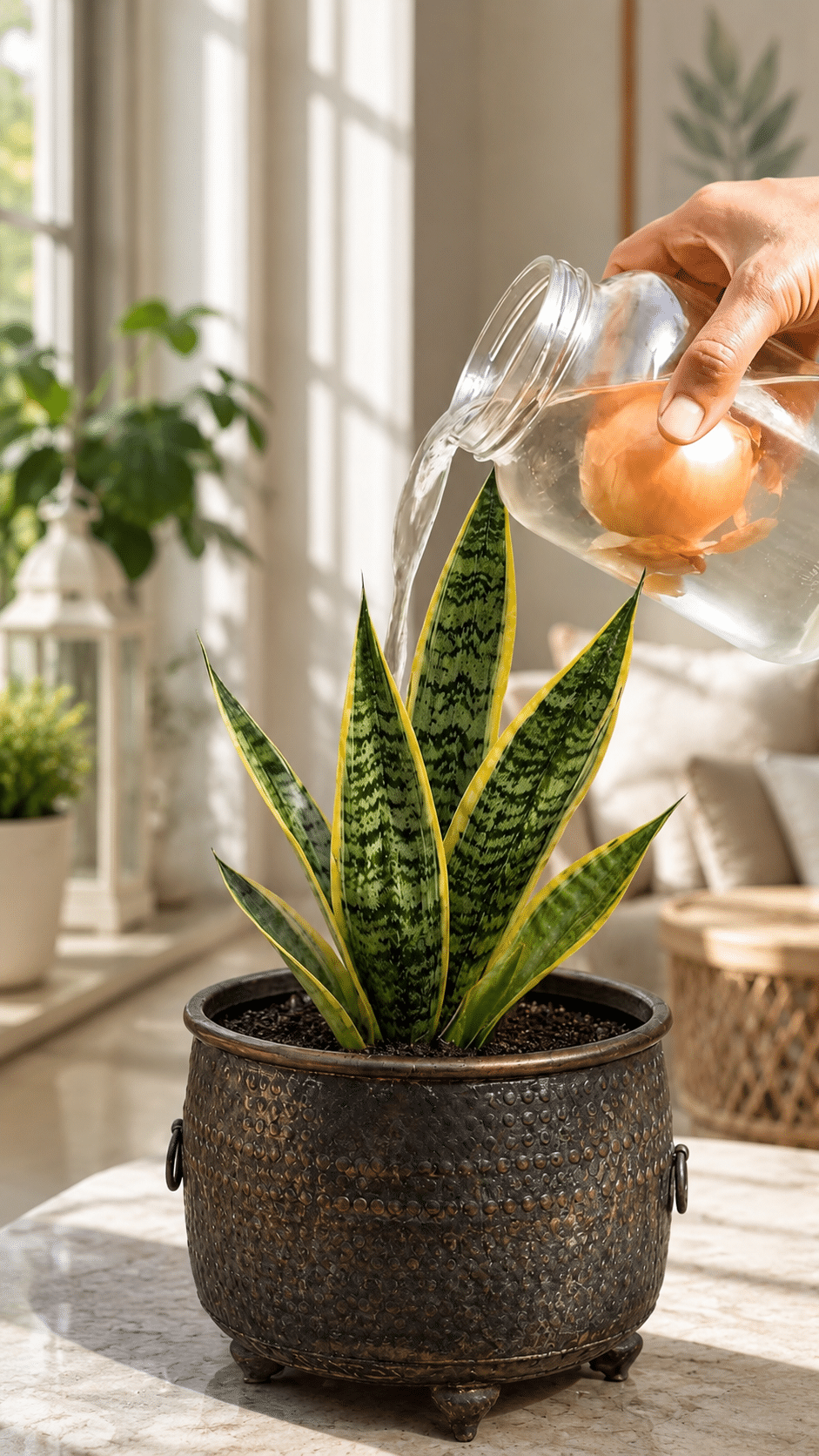
The image shows a snake plant being watered with a clear liquid from a jar containing an onion. This suggests onion water, a popular homemade plant-care trick. Onion water is often used because onion contains sulfur compounds, natural plant-supporting substances, and small traces of minerals. Many gardeners believe it can help refresh the root zone, support plant strength, and discourage some minor soil problems when used correctly.
However, onion water must be used carefully. It is not a miracle growth booster. It will not instantly create baby shoots. It will not fix root rot, poor drainage, low light, compacted soil, or overwatering. If used too strong or too often, onion water can smell bad, attract fungus gnats, encourage mold, or irritate stressed roots.
The safest way to use onion water for snake plants is to make a very mild infusion, strain it well, dilute it, and apply it only when the plant is already due for watering. It should never replace proper light, fast-draining soil, a pot with drainage, or a careful watering routine.
This guide explains how onion water may help a snake plant, how to prepare it safely, when to use it, when to avoid it, and what truly encourages strong roots, fuller leaves, and more baby shoots.
Why Snake Plants Need a Careful Root Routine
Snake plants are tough, but their roots and rhizomes need the right conditions. Under the soil, a snake plant has thick rhizomes that store water and energy. These rhizomes are the reason snake plants can survive dry periods. They are also the source of new baby shoots, often called pups.
When the rhizomes are firm and healthy, the plant can produce new growth. When the rhizomes are stressed, soft, or rotting, growth slows or stops completely. This is why root care matters more than any single homemade ingredient.
Snake plants do not like soil that stays wet for too long. They need a potting mix that drains quickly and allows air to reach the roots. They also need a pot with drainage holes. Without drainage, water collects at the bottom and can rot the roots, even if the top of the soil looks dry.
Any natural liquid, including onion water, must fit into this dry-friendly routine. If onion water is added too often, it can make the soil too wet. If onion pieces are left in the pot, they can rot. The goal is to support the root zone gently, not overload it.
What Onion Water Can Do for Snake Plants
Onion contains natural sulfur compounds. Sulfur is involved in plant growth and general plant processes. Onion also has a strong smell and natural compounds that some gardeners use as a mild pest-deterrent support.
When onion is soaked in water, some of its compounds move into the liquid. This creates onion water, a mild homemade infusion that may support the soil environment when used carefully.
For snake plants, onion water may help as a gentle root-zone refresh. It may support microbial activity in the soil and may discourage some minor unwanted organisms on the soil surface. It may also be useful as part of a simple natural care routine for a healthy plant that is actively growing.
But onion water is not fertilizer. It does not provide a complete balance of nitrogen, phosphorus, potassium, calcium, magnesium, and trace nutrients. It cannot replace a proper diluted cactus or succulent fertilizer when feeding is actually needed.
Think of onion water as a light optional tonic. It may support a healthy snake plant, but it cannot rescue a plant that is struggling from bad soil, wet roots, or low light.
Can Onion Water Make a Snake Plant Grow Faster?
Onion water cannot force a snake plant to grow fast. Snake plants are naturally slow to moderate growers indoors. They may sit still for months, then suddenly produce new shoots during warmer, brighter conditions.
If a snake plant is not growing, the first thing to check is light. Snake plants can survive in low light, but they grow much better in bright indirect light. A plant kept in a dark corner may stay alive for years without producing many new leaves or pups.
The second thing to check is watering. A snake plant that is watered too often may stop growing because the roots are stressed. The soil should dry out between waterings. If the lower soil remains damp, wait before watering again.
The third thing to check is soil. Dense potting soil can hold too much water and suffocate the rhizomes. A fast-draining cactus or succulent mix is much safer.
Onion water may support growth only if these basic conditions are already correct. It is not the main reason a snake plant grows. Light, roots, and watering are far more important.
Can Onion Water Encourage Baby Shoots?
Baby shoots come from underground rhizomes. If those rhizomes are healthy and have enough stored energy, they may send up new pups. If they are weak, rotting, or sitting in poor soil, pups are unlikely.
Onion water may support the soil environment lightly, but it does not directly create pups. New shoots appear when the plant has enough light, warmth, root health, and time.
If your goal is more baby shoots, move the snake plant to brighter indirect light. Keep it warm. Use a fast-draining mix. Let the soil dry between waterings. Keep the plant in a pot that is slightly snug but not severely crowded.
A mild onion-water treatment may be used occasionally as a support step, but it should not be the main strategy. The best pup stimulant is a healthy rhizome system.
🌱 Pup secret: Healthy rhizomes, bright indirect light, and proper watering matter far more for new snake plant pups than any kitchen ingredient.
Why Onion Pieces Should Not Be Left in the Pot
The jar in the image contains an onion, but the onion itself should not be placed directly into the snake plant soil. This is very important.
Raw onion is organic food material. If it is buried or left on damp soil, it can begin to rot. Rotting onion smells strong and unpleasant. It can attract fungus gnats, fruit flies, ants, or mold. It can also create sour pockets in the potting mix.
Snake plants need a clean, airy, dry-friendly root zone. Leaving onion pieces around the base of the plant can do the opposite. It can add moisture and decay where the roots need oxygen.
The safer method is to soak onion in water, remove the onion completely, dilute the liquid, and use only the strained water. This gives you a mild infusion without leaving rotting scraps in the pot.
Never bury onion slices in a snake plant pot. Never leave onion pieces on the soil overnight. Never add chopped onion directly to the root zone.
The Safest Onion Water Recipe for Snake Plant
To make onion water safely, use a small amount of fresh onion and plenty of water. The mixture should be mild, not strong.
Cut one small slice of onion or use a few pieces of onion peel. Place it in a jar with two cups of clean water. Let it sit for one to two hours. The water should become lightly infused. It should not smell overpowering.
Remove the onion completely. Strain the water if needed so no onion pieces remain. Then dilute the onion water with another two cups of plain water. This makes the mixture gentler for the roots.
Use the onion water fresh. Do not let it sit for days. If it smells sour, rotten, or fermented, throw it away. Fresh mild onion water is safer than old strong onion water.
The final liquid should be clear or only slightly tinted and should have a mild onion smell, not a harsh odor.
How to Apply Onion Water Correctly
Use onion water only when the snake plant is already due for watering. This is the most important rule. If the soil is still damp, do not apply it.
Check the soil deeper than the surface. The top may feel dry while the lower part of the pot is still moist. Use your finger, a wooden stick, or a moisture meter. If the deeper soil is damp, wait.
When the soil is dry, pour a small amount of diluted onion water onto the soil around the plant. Do not pour it into the center of the leaf rosette. Do not soak the leaves. Do not flood the pot.
Let the pot drain completely. Empty the saucer afterward. Snake plants should never sit in standing water.
After using onion water, return to plain water for normal care. Onion water should be occasional, not routine at every watering.
How Often Should You Use Onion Water?
Onion water should be used rarely. Once every six to eight weeks during active growth is enough. For many snake plants, even that may be unnecessary.
Do not use onion water every week. Do not use it every time you water. Do not use it during winter if the plant is not actively growing. In low light or cooler weather, snake plants use less water, so extra organic treatments can stay in the soil too long.
Spring and summer are the safest seasons for mild homemade tonics. This is when the plant has more light and warmth and is more likely to use moisture efficiently.
If the plant shows any sign of stress after onion water, stop using it. Signs include yellowing, soft leaves, sour soil smell, fungus gnats, or mold.
When Onion Water May Help
Onion water may help when the snake plant is healthy, stable, and actively growing. It may be useful as a mild soil refresh during the growing season.
It may also be helpful if the soil surface seems tired but not rotten, or if you want a gentle natural support after cleaning and improving the plant’s routine.
A snake plant that has firm leaves, dry-friendly soil, good drainage, and bright indirect light is the best candidate for onion water. A healthy plant can tolerate a mild tonic better than a stressed plant.
Onion water should be used as a finishing touch, not as emergency medicine.
When You Should Avoid Onion Water
- Do not use if the soil is wet – adding any liquid to wet soil can increase the risk of rot.
- Do not use if the plant has yellow leaves with soft bases – this may indicate overwatering or rhizome rot.
- Do not use if the pot smells sour – sour soil means the root environment is already unhealthy.
- Do not use if fungus gnats are present – organic liquids can make gnat problems worse if the soil stays moist.
- Do not use if the pot has no drainage holes – snake plants need drainage, especially when any homemade liquid is used.
- Do not use old onion water, fermented onion water, or strong onion water that smells unpleasant.
The Real Secret to Fuller Snake Plants
The real secret to a fuller snake plant is strong light and healthy rhizomes. Snake plants tolerate low light, but they grow better in bright indirect light. If you want more leaves and pups, give the plant more brightness.
Place the snake plant near a bright window. Morning sun is usually gentle and helpful. Strong afternoon sun can scorch leaves if the plant is not used to it, so increase light gradually.
Light gives the plant energy. The leaves use that energy to support the roots and rhizomes. When the rhizomes are full of stored energy, they are more likely to send up new shoots.
No homemade tonic can replace light. Onion water may support the plant slightly, but it cannot make up for a dark room.
Best Soil for Snake Plants
Snake plants need fast-draining soil. This is one of the most important care rules. A dense soil mix can stay wet too long and cause root or rhizome rot.
A cactus or succulent mix is a good base. You can improve it with perlite, pumice, coarse sand, lava rock, or small bark chips. The mix should feel loose and airy, not heavy and muddy.
When watered, the soil should drain quickly. It should not remain wet for many days. If your snake plant soil stays damp too long, repotting may help more than any natural treatment.
Onion water should only be used in soil that drains properly. In dense wet soil, onion water can make problems worse.
Continue to Page 2
Continue to page 2 for more details about this article and the key points many readers miss on the first page.