The peace lily, also known by many people as Moses cradle, is one of the most graceful indoor plants you can keep at home. Its deep green leaves, elegant white blooms, and calm tropical look make it perfect for living rooms, bedrooms, offices, shelves, and bright indoor corners. It looks delicate, but it is actually a resilient plant when its basic needs are understood.
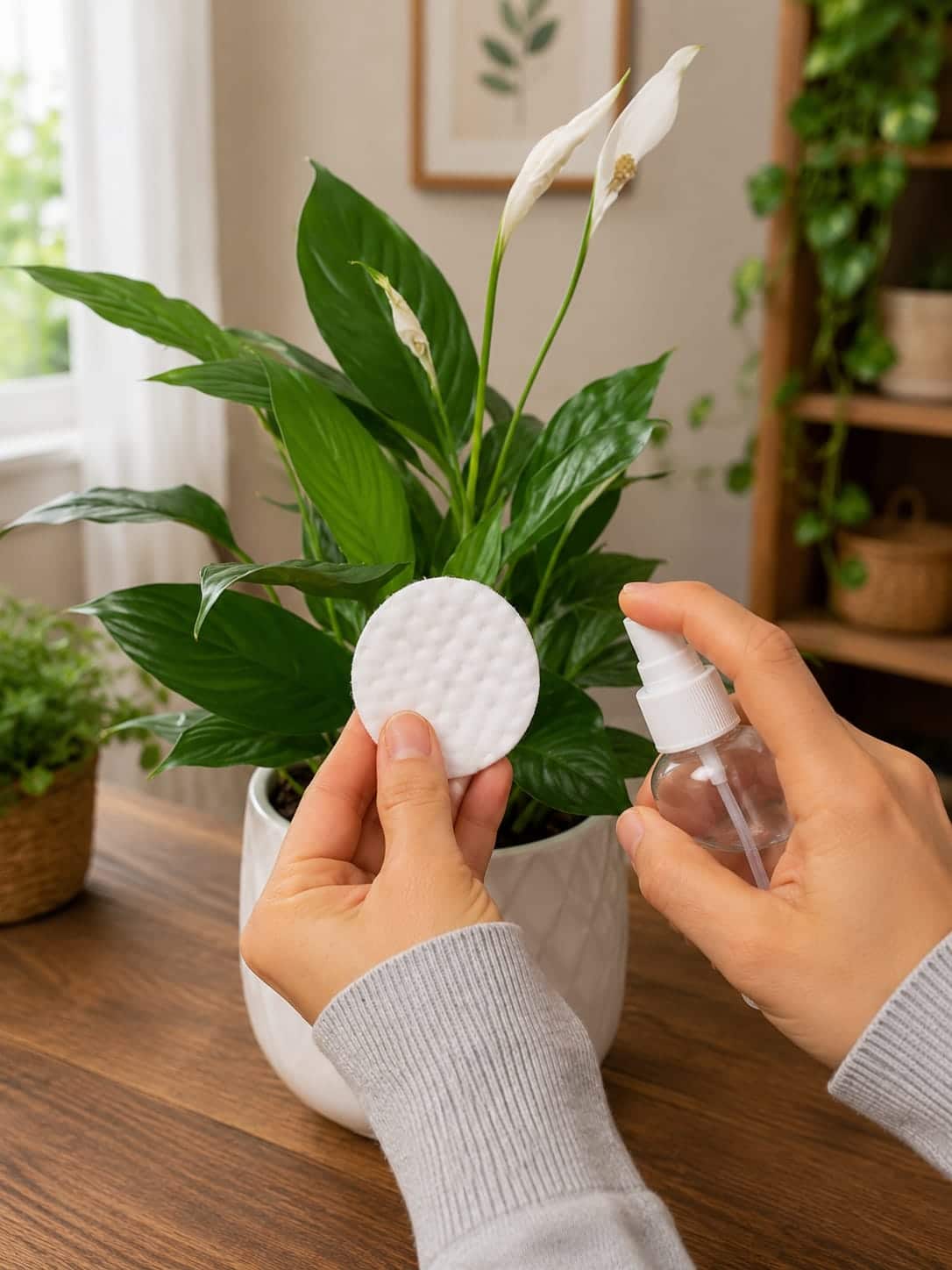
The image shows a beautiful peace lily with glossy leaves and white flowers while someone prepares a soft cotton pad and a small spray bottle. This simple scene points to one of the most important peace lily care habits: keeping the leaves clean. Many people focus only on watering and light, but clean leaves matter too. Dust can build up on the leaf surface, making the plant look dull and reducing its ability to absorb light properly.
A peace lily does not need complicated care. It does not need constant feeding, strong homemade mixtures, or daily attention. The ideal routine is simple: place it where it receives enough bright indirect light, water when the soil begins to dry, keep the leaves clean, and avoid extreme conditions. With this easy routine, your peace lily can stay fresh, green, elegant, and more likely to bloom indoors.
Why Peace Lilies Are So Loved Indoors
Peace lilies are popular because they bring beauty without demanding too much. Their leaves are wide, smooth, and glossy. Their white spathes rise above the foliage and create a soft, clean look that fits many home styles. They can make a room feel calmer and more natural without taking up too much space.
Another reason people love peace lilies is that they communicate clearly. When they are thirsty, they often droop dramatically. After watering, they usually lift again. This makes them easier to understand than many plants that show stress more slowly.
However, this does not mean they should be ignored until they collapse. A peace lily grows best with steady care, not repeated stress. If you wait until the plant wilts every time before watering, the leaves may weaken over time. The goal is to water when the soil is partly dry, before the plant becomes severely droopy.
Peace lilies are also flexible with indoor light. They can tolerate medium light, but they bloom better and grow fuller when they receive bright indirect light. A plant kept in a dark corner may survive, but it may produce fewer flowers and slower leaf growth.
The Leaf-Cleaning Step Most People Forget
The cotton pad and spray bottle in the image show a very useful care step: gently cleaning the leaves. Peace lily leaves are broad, which means they collect dust easily. Dust may seem harmless, but it can make the plant look tired and reduce the amount of light reaching the leaf surface.
Clean leaves look shinier, healthier, and more alive. They also help the plant use light more efficiently. Since indoor plants already receive less light than outdoor plants, every clean leaf matters.
You do not need a fancy product. A soft cloth, cotton pad, or microfiber towel with plain room-temperature water is usually enough. Lightly spray the pad or cloth, then wipe each leaf gently from base to tip. Support the leaf with your other hand so you do not bend or tear it.
Avoid soaking the plant with leaf sprays. Avoid oily leaf shine products. They may make leaves look glossy for a short time, but they can leave residue and attract more dust. Plain water is safer and more natural.
How Often Should You Clean Peace Lily Leaves?
Clean the leaves every two to four weeks, depending on how dusty your home is. If the plant is near an open window, heater, kitchen, or busy room, dust may collect faster. If the leaves still look glossy and clean, you can wait longer.
You can also rinse the plant gently in the shower every now and then. Use lukewarm water, not cold or hot water. Let the pot drain completely afterward. Do not leave water sitting in the saucer.
For everyday maintenance, wiping is usually better than frequent showering because it gives you a chance to inspect the leaves closely. While cleaning, look for yellowing, brown tips, pests, dust, or sticky residue. Early signs are easier to fix than advanced problems.
Best Light for a Peace Lily
Peace lilies prefer bright indirect light. This means the room should be bright, but the plant should not sit in harsh direct afternoon sun. Direct strong sun can burn the leaves, causing brown patches or faded areas.
A good location is near an east-facing window, where morning light is gentle. A north-facing window can also work if the room is bright. Near a south or west window, place the peace lily a little away from the glass or use a sheer curtain to soften the sunlight.
If your peace lily has dark green leaves but rarely blooms, it may need more light. If the leaves are pale, scorched, or curling, the light may be too strong. The best light is bright enough to read comfortably during the day but not so harsh that the leaves feel hot.
Peace lilies can survive in lower light, but blooming usually depends on better brightness. If you want more white flowers, improving light is often more effective than adding homemade plant food.
How to Water Peace Lilies Correctly
Peace lilies like evenly moist soil, but they do not like sitting in water. This balance is important. The soil should not be constantly soggy, but it also should not stay completely dry for too long.
Check the top inch of soil with your finger. If it feels dry, water the plant. If it still feels moist, wait. When you water, pour slowly until water drains from the bottom of the pot. Then empty the saucer after a few minutes.
Do not water on a strict calendar without checking the soil. A peace lily in bright light may need water more often than one in low light. A plant in a warm room may dry faster than one in a cool room. A small pot dries faster than a large one.
If your peace lily droops badly, water it thoroughly and let it recover. But try not to let this happen every time. Repeated wilting can stress the plant.
Why Drainage Is Essential
A peace lily pot should have drainage holes. Without drainage, extra water sits at the bottom of the pot and can suffocate the roots. This can lead to root rot, yellow leaves, and a bad smell from the soil.
If you love decorative pots, use them as outer covers. Keep the plant in a nursery pot with drainage holes inside the decorative pot. When watering, remove the inner pot, let it drain fully, then place it back.
Good drainage is more important than any plant trick. Even a resilient peace lily can decline if its roots remain wet for too long.
Best Soil for Peace Lilies
Peace lilies grow well in a light, moisture-retentive potting mix that still drains properly. A regular indoor potting mix can work, but adding perlite or orchid bark can improve airflow around the roots.
The soil should hold some moisture but should not become heavy and muddy. If water sits on the surface for a long time, the mix may be too compacted. If the soil smells sour, it may be staying too wet.
A good peace lily mix can include indoor potting soil, perlite, coco coir or peat, and a little bark. This gives the roots moisture and oxygen at the same time.
Continue to Page 2
Continue to page 2 for more details about this article and the key points many readers miss on the first page.