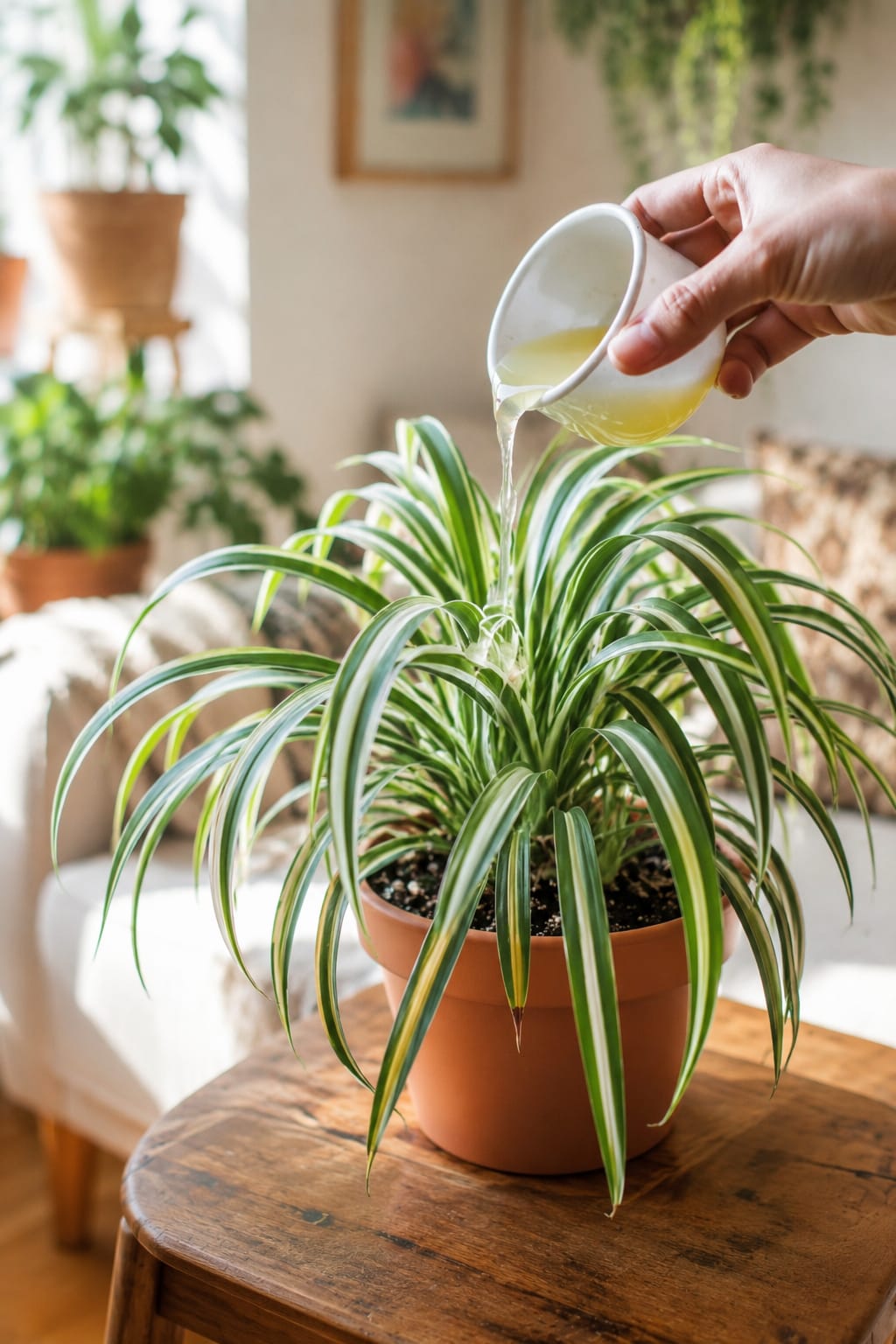
Spider plants are some of the easiest and most cheerful houseplants to grow indoors. Their long arching leaves, green-and-white stripes, and soft cascading shape make them perfect for shelves, hanging baskets, windowsills, plant stands, and bright corners. A healthy spider plant can make a room feel fresh, clean, and full of life. It is also one of the most rewarding plants for beginners because it grows quickly, produces baby plantlets, and usually forgives small care mistakes.
One simple plant-care idea many people enjoy is using a gentle natural liquid tonic for spider plants. This can be made from mild kitchen-based ingredients such as diluted rice water, banana peel water, or a very weak compost-style plant tea. The goal is not to flood the plant with heavy fertilizer. The goal is to give the plant a light support while keeping the soil healthy, airy, and balanced.
Spider plants grow best when their roots are not too wet, their leaves receive bright indirect light, and the soil drains well. A natural liquid can be helpful only when it is mild, strained, diluted, and used occasionally. If the liquid is too strong, sticky, fermented, or used too often, it can attract fungus gnats, create mold, or make the soil sour. The safest routine is simple: use a weak natural liquid once in a while, then return to normal watering with plain water.
Why Spider Plants Respond Well to Gentle Care
Spider plants are fast-growing, adaptable, and naturally resilient. They form thick white roots that store water and nutrients. These roots help the plant survive short dry periods, but they can also suffer if the pot stays wet for too long.
Because spider plants grow actively in good light, they can respond nicely to light feeding during spring and summer. A gentle natural tonic may support leaf color, root activity, and steady growth when the rest of the care routine is correct.
But the word “gentle” matters. Spider plants do not need strong homemade mixtures. They do not need sticky liquids, sugar, milk, thick fruit pulp, or daily feeding. They need balance.
What Natural Liquid Can Be Used?
A safe natural liquid for spider plants should be thin, diluted, and free from solid pieces. Good options include mild rice water, diluted banana peel water, or very weak compost tea. Each option should be strained well before use.
The liquid should look light and watery, not thick or cloudy like paste. It should not smell sour, rotten, alcoholic, or fermented. If it smells bad, do not use it on indoor plants.
For spider plants, diluted rice water is often one of the safest choices because it is mild and easy to prepare. Banana peel water can also be used, but only in a weak, strained form.
A Simple Mild Rice Water Recipe
Rice water is the cloudy water left after rinsing or soaking rice. It contains small traces of starch and minerals. It is not a complete fertilizer, but it can be used occasionally as a mild plant tonic.
To make a gentle rice water mix:
- Add 1 tablespoon of uncooked rice to 1 cup of clean water.
- Swirl or soak for 10 to 20 minutes.
- Strain out all rice grains.
- Dilute the cloudy water with 3 to 4 cups of clean water.
- Use only when the spider plant is already due for watering.
Do not use thick rice water. Do not use cooked rice water with salt, oil, spices, or seasoning. Plain and diluted is best.
A Simple Mild Banana Peel Water Recipe
Banana peel water is popular because banana peels contain potassium and small amounts of other minerals. However, it must be used carefully indoors because organic liquids can attract pests if too strong.
To make a mild banana peel water:
- Use a small piece of clean banana peel.
- Soak it in 2 cups of water for a few hours.
- Strain the liquid completely.
- Dilute it with 2 to 4 more cups of clean water.
- Use a small amount on soil that is ready for watering.
Do not use banana peel water that has fermented for days. Strong fermented liquids may smell bad and disturb indoor soil.
How Often to Use a Natural Liquid Tonic
Use a natural liquid tonic only once every 4 to 6 weeks during active growth. Spring and summer are the best seasons because spider plants are growing faster and can use light nutrition more effectively.
Do not use it every week. Do not use it every time you water. Indoor pots are small, and repeated organic liquids can build up in the soil. This can lead to fungus gnats, mold, sour smells, or root stress.
During fall and winter, reduce or stop natural tonics. The plant grows more slowly and usually needs less moisture and nutrition.
When Not to Use It
Do not use any natural liquid tonic if the plant is already stressed from wet soil or root problems. Adding more liquid to a struggling plant can make the problem worse.
Avoid natural tonics if you notice:
- Soil staying wet too long
- Fungus gnats
- Mold on the soil
- Sour smell from the pot
- Soft or rotting roots
- Yellowing from overwatering
- A pot without drainage holes
In these cases, fix the watering and soil first. A tonic cannot solve poor drainage.
The Best Light for Spider Plants
Spider plants grow best in bright indirect light. This helps them produce strong leaves, clear stripes, and healthy baby plantlets. They can tolerate lower light, but growth may become slower and the white variegation may look less bright.
A bright window with filtered light is ideal. Morning sun is usually gentle and helpful. Harsh afternoon sun can burn the leaves, especially the white-striped parts.
If the leaves look pale, stretched, or weak, the plant may need more light. If the tips burn and the leaves bleach, the light may be too strong.
Watering Spider Plants Correctly
Spider plants like soil that becomes partly dry between waterings. They do not want to sit in wet soil all the time. Their thick roots store moisture, so they can handle short dry periods better than constant sogginess.
Water when the top inch of soil feels dry. When watering, pour slowly until water drains from the bottom. Then empty the saucer. Do not leave the pot sitting in water.
If using a natural liquid, apply it as part of a normal watering day, not in addition to regular watering. The plant should not receive extra liquid when the soil is already damp.
Signs Your Spider Plant Needs Water
A thirsty spider plant may look slightly droopy, dull, or curled. The soil will feel dry, and the pot may feel lighter than usual.
After watering, the plant should perk up again. If it does not recover and the soil stays wet, the issue may be root stress rather than thirst.
Always check the soil before watering. Spider plants are forgiving, but repeated overwatering can damage their roots.
Signs of Overwatering
Overwatering is one of the most common spider plant problems. Watch for:
- Yellow leaves
- Soft mushy base
- Wet soil for many days
- Brown spots near the crown
- Fungus gnats
- Bad smell from soil
- Root rot
If these signs appear, stop watering. Remove the plant from the pot if needed, trim rotten roots, and repot into fresh airy soil.
The Best Soil for Spider Plants
Spider plants prefer a loose, well-draining indoor potting mix. The soil should hold some moisture but still allow air to reach the roots.
A good mix may include:
- Quality indoor potting soil
- Perlite
- Coco coir
- Fine orchid bark
- A small amount of compost
If the soil is too heavy, add more perlite or bark. If the soil dries too quickly, add a little coco coir. The goal is balance.
Why Drainage Holes Matter
Drainage holes are essential. Without them, water collects at the bottom of the pot and can rot the roots. This is especially risky when using any liquid tonic.
If you love decorative pots without drainage, keep the spider plant inside a plastic nursery pot with holes, then place it inside the decorative pot. After watering, remove extra water from the outer pot.
Healthy roots need oxygen. Drainage protects that oxygen supply.
Brown Tips on Spider Plants
Brown tips are very common on spider plants. They can be caused by dry air, inconsistent watering, mineral-heavy tap water, fertilizer buildup, direct sun, or old leaf age.
A natural liquid tonic will not repair brown tips. Once a tip turns brown, it will stay brown. You can trim it with clean scissors if you want a neater look.
To prevent more brown tips, water consistently, avoid overfeeding, use filtered water if your tap water is harsh, and keep the plant away from strong direct sun.
Should You Use Tap Water?
Spider plants can be sensitive to minerals and chemicals in some tap water. If your plant develops many brown tips even with good care, try using filtered water, rainwater, or water left out overnight.
This is not always necessary, but it can help in areas with hard water.
When using rice water or banana peel water, make sure the base water is clean and safe for plants.
Feeding Spider Plants Properly
A natural liquid tonic is not a complete fertilizer. Spider plants still benefit from a balanced houseplant fertilizer during active growth.
Use a diluted balanced fertilizer at half strength once every 4 to 6 weeks in spring and summer. Do not fertilize during winter if the plant is not actively growing.
Do not use fertilizer and natural tonic on the same day. Space them apart to avoid overfeeding.
How to Combine Fertilizer and Natural Tonic
A simple schedule works best. For example, use diluted houseplant fertilizer one month, then use a mild natural liquid tonic the next month. Keep the rest of the watering routine plain.
If the plant is already growing well, you may not need both. Spider plants are not heavy feeders. Too much feeding can cause brown tips or salt buildup.
Less is usually safer than more.
Cleaning Spider Plant Leaves
Spider plant leaves can collect dust, especially indoors. Dust makes the plant look dull and reduces light absorption.
Use a soft damp cloth to gently wipe leaves. Because spider plant leaves are narrow and numerous, you can also rinse the plant lightly in the sink or shower. Use lukewarm water and let the pot drain well afterward.
Clean leaves help the plant look brighter and healthier.
How to Encourage Baby Spider Plants
Spider plants are famous for producing baby plantlets on long arching stems. These plantlets make the plant look full and decorative.
To encourage babies, provide bright indirect light, a slightly snug pot, consistent watering, and light feeding during active growth.
A plant that is too young may not produce babies yet. Give it time. Mature spider plants usually produce more plantlets when they are healthy and receiving enough light.
Continue to Page 2
Continue to page 2 for more details about this article and the key points many readers miss on the first page.