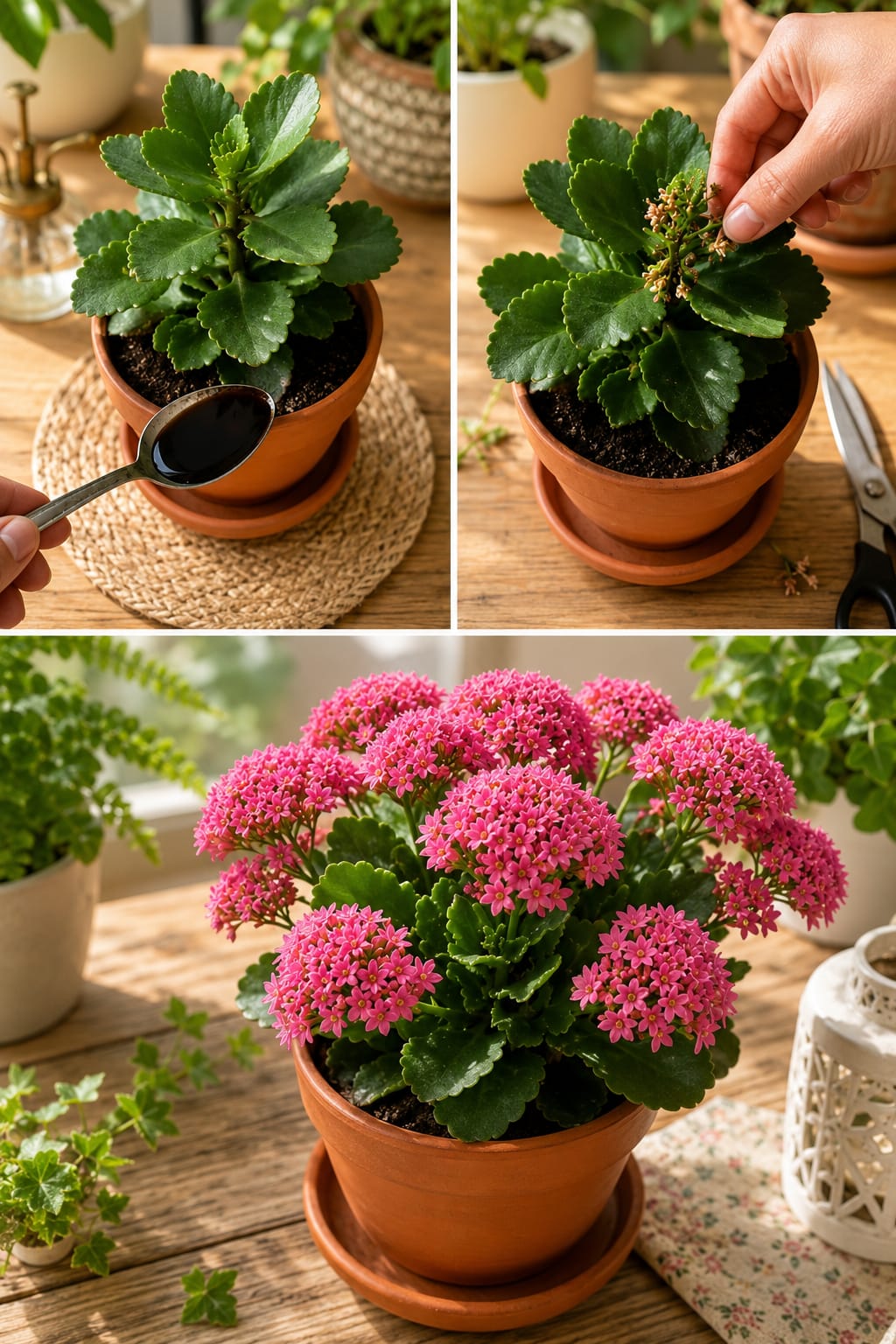
Kalanchoe is one of the most cheerful flowering houseplants you can grow indoors. Its thick glossy leaves, compact shape, and clusters of tiny colorful flowers make it perfect for windowsills, shelves, bright kitchen corners, office desks, patios, and sunny indoor displays. When a kalanchoe is healthy, it can bloom in beautiful bunches of pink, red, orange, yellow, white, or coral flowers, often lasting for weeks with the right care.
One simple plant-care idea that many people enjoy is using a gentle dark liquid tonic to support kalanchoe growth and blooming. This kind of liquid may look like a homemade plant tea, diluted compost extract, worm casting tea, or a very weak organic fertilizer. The idea is to give the plant a mild boost while keeping the roots healthy. But because kalanchoe is a succulent, this trick must be used carefully. Kalanchoe leaves store water, and the roots do not like staying wet for too long.
The dark liquid trick should never be strong, sticky, oily, sugary, or used too often. A kalanchoe does not need heavy feeding. It needs bright light, fast-draining soil, careful watering, airflow, and a rest period to bloom again. A gentle liquid tonic can support growth only when the basic care routine is already correct.
Why Kalanchoe Needs Careful Feeding
Kalanchoe is a succulent plant. That means it stores moisture in its thick leaves and stems. Unlike many tropical houseplants, it does not want constantly damp soil. Its roots prefer a dry-down period between waterings.
Because of this, any liquid tonic must be used lightly. Too much liquid can make the soil wet for too long. Too much organic material can attract fungus gnats, mold, or create a sour smell in the pot. A strong fertilizer can burn the roots or cause soft weak growth.
The best kalanchoe routine is gentle and dry-friendly. Feed lightly, water carefully, and give the plant plenty of bright light.
What Is the Dark Liquid Trick?
The dark liquid trick usually refers to pouring a small amount of dark plant-safe liquid around the soil. The liquid may be made from diluted compost tea, worm casting tea, or a weak organic houseplant fertilizer. It may also be a mild plant tonic prepared from natural materials.
The color itself does not matter. A liquid being dark does not automatically mean it is good for plants. What matters is whether it is diluted, clean, plant-safe, and used at the right time.
For kalanchoe, the safest dark liquid should be:
- Very diluted
- Thin and watery
- Free from solids
- Not fermented strongly
- Not sticky or sugary
- Used only when the soil is dry enough for watering
- Applied rarely during active growth
Best Dark Liquid Options for Kalanchoe
If you want to use a dark liquid tonic, choose something mild and plant-safe. The safest options are usually commercial organic plant foods diluted well, worm casting tea, or very weak compost tea.
Good options include:
- Diluted worm casting tea
- Very weak compost tea
- Diluted organic succulent fertilizer
- Diluted balanced houseplant fertilizer
- Filtered water with a small amount of plant-safe tonic
Always dilute more than you think you need. Kalanchoe does not require strong feeding.
What Not to Use
Do not use random dark liquids from the kitchen. Some liquids may seem natural but can harm the plant.
Avoid:
- Coffee used directly and often
- Cola or sugary drinks
- Tea with sugar or milk
- Cooking water with salt
- Oil mixtures
- Thick fermented liquids
- Molasses water
- Vinegar mixtures
- Cleaning liquids
- Unknown dark solutions
Kalanchoe roots need clean, dry-friendly conditions. Sticky or sour liquids can quickly create problems in a small indoor pot.
How to Make a Gentle Worm Casting Tea
Worm casting tea is one of the safer natural options when made weakly. It can provide mild nutrients and support soil life without being too harsh.
A simple method:
- Add 1 teaspoon of worm castings to 2 cups of clean water.
- Stir gently.
- Let it sit for 30 minutes to 2 hours.
- Strain well so no thick particles remain.
- Dilute the liquid with another 2 cups of water.
- Use a small amount only when the kalanchoe needs watering.
The mixture should be light, watery, and mild. It should not smell rotten.
How Often to Use the Dark Liquid
Use the dark liquid only once every 6 to 8 weeks during active growth. Spring and summer are the best times. If the kalanchoe is blooming strongly, feeding lightly can help support the plant, but do not overdo it.
Do not use the tonic every week. Do not use it every time you water. Indoor pots do not have the same natural flushing as outdoor soil, so nutrients and organic residue can build up.
During winter, use little or no tonic unless the plant is actively growing in strong light.
When Not to Use It
Do not use any dark liquid tonic if the plant is stressed from wet soil, root rot, or poor light. Feeding a stressed succulent often makes things worse.
Avoid using it if you see:
- Soft mushy stems
- Yellow lower leaves
- Wet soil for many days
- Fungus gnats
- Mold on the soil
- Sour smell from the pot
- Brown mushy roots
- Weak stretched growth
Fix light, soil, and watering first. A tonic cannot repair poor growing conditions.
The Best Light for Kalanchoe
Kalanchoe needs bright light to stay compact and bloom well. It can tolerate some direct morning sun, but harsh afternoon sun behind hot glass may scorch the leaves.
A bright windowsill is ideal. East-facing windows are often excellent. South or west windows can work if the plant is protected from intense heat.
Low light causes weak, stretched growth. The plant may grow taller, lose its compact shape, and produce fewer flowers.
How Light Affects Blooming
Kalanchoe is a short-day plant. This means it often needs long nights and shorter days to trigger blooming. Bright light during the day helps the plant stay strong, but it also needs a period of darkness to set flower buds.
To encourage reblooming, give the plant bright light during the day and about 12 to 14 hours of darkness at night for several weeks. Avoid placing it near lamps that stay on late in the evening.
Once buds appear, keep the plant in bright indirect light and maintain steady care.
Watering Kalanchoe Correctly
Kalanchoe should dry out between waterings. This is one of the most important care rules. The top soil should be dry, and the pot should feel lighter before you water again.
When watering, soak the soil thoroughly until water drains from the bottom. Then empty the saucer. Do not water again until the soil dries.
Small frequent sips can keep the top soil damp and encourage shallow roots. A deep watering followed by a dry period is usually better.
How to Use the Dark Liquid on Watering Day
Only use the dark liquid when the plant is already due for watering. The soil should be dry enough, not wet.
Pour a small amount around the outer soil area, not directly into the crown of the plant. Keep the liquid away from the thick leaf cluster to reduce the risk of rot.
Let the pot drain fully. If the liquid collects in the saucer, empty it right away.
Signs Your Kalanchoe Needs Water
A thirsty kalanchoe may show slightly softer leaves, dry soil, and a lighter pot. The leaves may lose a little firmness, but they should not become mushy.
If the soil is completely dry and the leaves feel slightly less plump, water thoroughly.
Do not wait until the plant is severely shriveled every time. But do allow the soil to dry properly.
Signs of Overwatering
Overwatering is the most common kalanchoe problem. Watch for:
- Yellow leaves
- Soft mushy stems
- Leaves dropping easily
- Soil staying wet too long
- Blackened stem base
- Sour smell
- Root rot
- Mold or fungus gnats
If these signs appear, stop watering and stop using tonics. Check the roots and repot into dry fresh succulent mix if needed.
The Best Soil for Kalanchoe
Kalanchoe needs fast-draining soil. Regular potting soil can hold too much moisture if used alone. A succulent or cactus mix is usually better.
A good mix can include:
- Cactus or succulent soil
- Perlite
- Pumice
- Coarse sand
- Small bark chips
- A small amount of regular potting mix
The mix should drain quickly and feel light, not muddy.
Why Drainage Holes Are Essential
A kalanchoe pot must have drainage holes. Without drainage, water collects at the bottom and suffocates the roots. This is especially dangerous when using any liquid tonic.
If you use a decorative pot without holes, keep the plant in a plastic nursery pot with holes and place it inside the decorative pot. After watering, remove extra water from the cover pot.
Good drainage prevents most root problems.
Choosing the Right Pot
Kalanchoe grows well in terracotta because terracotta allows moisture to evaporate faster. This helps prevent soggy soil. Plastic or ceramic pots can also work, but you must be more careful with watering.
Choose a pot only slightly larger than the root ball. A pot that is too large holds extra wet soil, which can lead to rot.
A snug pot often helps kalanchoe stay compact and bloom better.
Deadheading Old Flowers
Removing old flower clusters helps keep the plant tidy and encourages fresh growth. Once the flowers fade, turn brown, or dry out, pinch or cut the old bloom stem with clean scissors.
Do not pull hard on the plant. Cut cleanly above a healthy leaf node.
Deadheading makes the plant look fresher and helps it redirect energy.
Pruning for a Fuller Plant
Kalanchoe can become leggy if it does not get enough light or if old stems are left too long. Pruning helps keep the plant compact.
After blooming, trim long stems back slightly. This encourages branching and creates a fuller shape. Use clean scissors and avoid cutting too much at once.
Place the plant in brighter light after pruning so new growth stays strong.
Propagating Kalanchoe
Kalanchoe is easy to propagate from stem cuttings. Cut a healthy stem and let the cut end dry for a day or two. Then place it in dry succulent soil.
Wait a few days before watering lightly. Too much moisture before roots form can cause rot.
Keep the cutting in bright indirect light until new growth appears.
Feeding Kalanchoe Properly
Kalanchoe does not need heavy feeding. During spring and summer, use a diluted succulent fertilizer once every 6 to 8 weeks. If using a dark liquid tonic, do not use fertilizer on the same day.
Too much fertilizer can cause soft, weak, leafy growth instead of compact flowering growth.
Feed lightly and focus on bright light first.
Can the Dark Liquid Replace Fertilizer?
A homemade dark liquid tonic is not always a complete fertilizer. It may contain some nutrients, but the amounts are usually unknown. A balanced succulent fertilizer gives more predictable nutrition.
If your kalanchoe is healthy and blooming, it may not need much extra feeding at all. If you want reliable results, use a diluted plant fertilizer instead of relying only on homemade mixtures.
The dark liquid should be optional, not the main care method.
Cleaning Kalanchoe Leaves
Kalanchoe leaves can collect dust. Dust blocks light and makes the plant look dull. Use a soft dry or slightly damp cloth to wipe the leaves gently.
Do not leave water sitting in the leaf centers. Moisture trapped between thick leaves can encourage rot.
Clean leaves help the plant look glossy and healthy.
Humidity Needs
Kalanchoe does not need high humidity. Normal indoor humidity is usually fine. In very humid rooms, be extra careful with watering and airflow.
Unlike peace lilies or ferns, kalanchoe prefers drier air. Do not mist it often. Wet leaves and humid stagnant air can cause fungal problems.
Good airflow helps keep the plant healthy.
Temperature Needs
Kalanchoe likes warm indoor temperatures. Keep it away from cold drafts, freezing windows, and air conditioners. Cold stress can damage leaves and slow growth.
It also dislikes being placed directly above heaters where the air is extremely hot and dry.
A stable warm room with bright light is best.
How to Encourage Reblooming
To make kalanchoe bloom again, focus on light and darkness. After the first bloom cycle, remove old flowers and give the plant a rest. Then provide short-day conditions.
For several weeks, give the plant bright light during the day and long darkness at night. Keep it away from artificial light in the evening.
Once buds form, return it to a bright display spot and water carefully.
Common Reasons Kalanchoe Does Not Bloom
If your kalanchoe grows leaves but no flowers, check these causes:
- Not enough bright light
- No long dark nights
- Too much fertilizer
- Overwatering
- Plant is still immature
- Old flowers were not removed
- Room light stays on late at night
A dark liquid tonic will not fix a missing bloom cycle if the plant does not receive the right light rhythm.
Common Pests
Kalanchoe can attract mealybugs, aphids, scale, spider mites, and fungus gnats. Check under leaves, around stems, and near flower clusters.
Fungus gnats often appear when soil stays too wet or organic liquids are used too often. If gnats appear, stop using tonics and let the soil dry more between waterings.
Treat pests early before they spread to other plants.
Using the Dark Liquid After Pests
Do not use a homemade liquid tonic while the plant has pests. Organic liquids can make pest problems worse if the soil stays damp.
First isolate the plant and treat the pest problem. Once the plant is clean, stable, and growing again, you can return to a light feeding routine if needed.
Plant health comes before plant tonics.
Decor Ideas for Kalanchoe
Kalanchoe is a wonderful decor plant because it is compact, colorful, and easy to place. Its flowers add instant brightness without taking up much space.
Try these styling ideas:
- Place a pink kalanchoe on a bright kitchen windowsill.
- Use a terracotta pot for a warm natural look.
- Display several colors together on a plant shelf.
- Place it in a white ceramic pot for clean modern decor.
- Use it as a small centerpiece on a coffee table during bloom.
- Pair it with succulents for a low-care display.
Its bright flower clusters make it perfect for cheerful indoor styling.
Best Places to Display Kalanchoe
Place kalanchoe where it receives bright light. A sunny windowsill, bright shelf, enclosed porch, or patio table can work well.
Indoors, give it the brightest spot you can without burning the leaves. Outdoors, protect it from heavy rain and harsh midday heat.
A blooming kalanchoe looks especially beautiful near a window where the flowers catch the light.
Continue to Page 2
Continue to page 2 for more details about this article and the key points many readers miss on the first page.