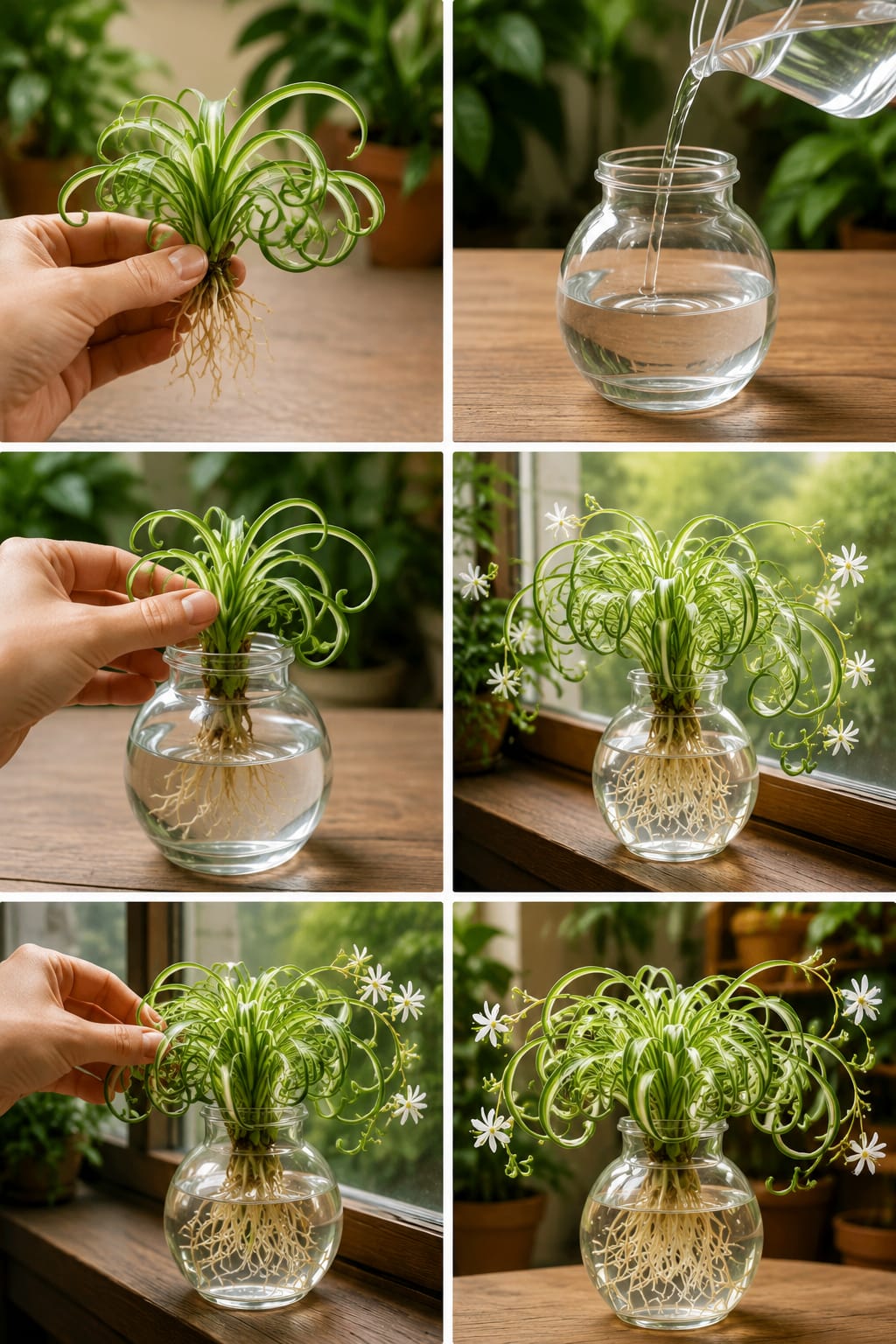
Curly spider plants are some of the most charming houseplants you can grow indoors. Their soft green-and-white striped leaves twist, curl, and arch in a playful way that makes them look fuller and more decorative than many ordinary foliage plants. When grown in a small clear water jar, the plant becomes even more beautiful because you can see the clean white roots spreading through the water. This creates a simple, fresh, and modern display that works well on windowsills, desks, kitchen counters, shelves, bathroom ledges, and small plant corners.
Growing a curly spider plant in water is also a relaxing project for beginners. You do not need a large pot, complicated soil mix, or expensive tools. A healthy baby spider plant, a clean glass jar, fresh water, and bright indirect light are enough to create a lovely indoor plant display. The key is to keep the water clean, protect the roots from rot, and give the plant enough light to maintain its curled shape and bright variegation.
This method works especially well with spider plant babies, also called plantlets or pups. These small baby plants often grow from long stems on a mature spider plant. Once they have small roots or root bumps, they can be placed in water and grown as a decorative water plant. Over time, the roots become longer, fuller, and more visible, creating a beautiful natural look inside the jar.
Why Curly Spider Plants Look So Good in Water
Curly spider plants have a naturally decorative shape. Their leaves do not simply grow straight outward. They twist, curl, loop, and fall in soft spirals. This makes the plant look like a small green fountain. When the plant sits in a clear glass jar, the curled leaves rise above the rim while the white roots hang below in the water.
This contrast is what makes the display special. The leaves bring movement and texture. The roots add an organic, clean, almost sculptural look. The glass jar keeps everything simple and minimal.
A water-grown curly spider plant is perfect for anyone who likes low-mess indoor gardening. There is no soil spilling on the table, and the plant can be moved easily from one bright spot to another.
Can Spider Plants Really Grow in Water?
Yes, spider plants can grow in water for a long time, especially when started from young plantlets. They root easily, which is one reason they are popular with beginners. A spider plant baby can produce roots in water and continue growing if the water is changed regularly and the plant receives enough light.
However, water growing is different from soil growing. In soil, the roots receive air pockets, minerals, and support from the potting mix. In water, the roots depend on clean water, oxygen, and occasional light feeding. If the water becomes dirty, stagnant, or low in oxygen, the roots can rot.
So the goal is simple: keep the water fresh and the jar clean.
Best Plant Part to Use
The best part to use is a healthy spider plant baby. Choose one with a firm center, bright leaves, and small visible roots. A plantlet with roots will settle faster in water than one with no roots at all.
Look for these signs:
- Fresh green-and-white curled leaves
- No yellow or mushy base
- Small white root bumps or roots
- Firm crown
- No pests on the leaves
- No brown soft areas
A strong baby plant gives you the best chance of success.
Choosing the Right Jar
A small clear glass jar is ideal. It should be wide enough to hold the plant without crushing the leaves, but narrow enough to support the crown above the water. The roots should sit in the water, while the leafy crown should stay dry.
Good jar options include:
- Small round glass jars
- Mini bulb vases
- Recycled spice jars
- Small mason jars
- Clear decorative vases
- Glass yogurt jars
A clear jar lets you watch root growth and check water quality. This makes care much easier.
Clean the Jar First
Before adding the plant, wash the jar well. Dust, soap residue, or food residue can affect the water and roots. Use warm water and rinse thoroughly.
If the jar was used for food, make sure it has no smell left inside. A clean jar keeps the water fresher and reduces the risk of bacteria or algae.
Let the jar dry or rinse it with clean water before filling.
Best Water to Use
Spider plants can be sensitive to minerals and chemicals in some tap water. If your tap water is very hard, the leaf tips may turn brown over time. Filtered water, rainwater, or water left out overnight can be gentler.
Good water choices include:
- Filtered water
- Rainwater
- Distilled water with occasional weak fertilizer
- Tap water left out overnight
Use room-temperature water. Very cold water can shock the roots.
Step 1: Fill the Jar
Fill the jar with clean water. The water level should be high enough to cover the roots but not so high that the crown sits underwater. The crown is the central area where the leaves meet the roots. If this part stays wet constantly, it can rot.
A good rule is to keep only the roots submerged. The leaves and base should remain above the waterline.
If the plant has very short roots, use a jar with a narrow opening to hold the plant in place.
Step 2: Place the Plantlet
Gently place the curly spider plant baby into the jar. Let the roots hang into the water. Adjust the leaves so they rest naturally over the rim.
Do not push the crown deep into the jar. Do not pack anything around the base. The plant should sit lightly and have airflow around the center.
If needed, you can use small clean pebbles to hold the roots down, but do not bury the crown.
Step 3: Choose the Right Light
Place the jar in bright indirect light. This is one of the most important steps. Curly spider plants need good light to keep their color and shape. Too little light can make the leaves weak, pale, and less curly.
A bright windowsill with filtered light is ideal. Morning sun can be helpful, but harsh afternoon sun can heat the water and burn the leaves.
Avoid placing the jar in a dark corner. The plant may survive, but it will not look full and fresh.
Step 4: Change the Water Regularly
Clean water is the secret to growing spider plants in jars. Change the water every 5 to 7 days. If the water becomes cloudy sooner, change it right away.
When changing water, rinse the jar and gently rinse the roots. Do not scrub the roots. Just remove any slime or old residue with clean water.
Fresh water gives the roots oxygen and prevents bad smells.
Step 5: Watch the Roots
Healthy spider plant roots are usually white, cream, or light tan. They should feel firm, not mushy. Over time, they may grow longer and thicker inside the jar.
If roots become brown, slimy, or smelly, trim the damaged parts with clean scissors and refresh the water. A clean jar and fresh water often solve the problem early.
Root watching is one of the joys of water growing. It lets you see the plant’s progress every week.
How Often Should You Feed a Water-Grown Spider Plant?
Water alone can keep a spider plant alive for a while, but it does not provide many nutrients. For long-term growth, use a very weak liquid houseplant fertilizer occasionally.
Use fertilizer at one-quarter strength once every 4 to 6 weeks during spring and summer. Do not add strong fertilizer to a small jar. Too much fertilizer can burn roots and cause algae growth.
After fertilizing, change the water after a few days to prevent buildup.
Do Not Overfeed
Spider plants are not heavy feeders. A small water jar has limited space, so nutrients can build up quickly. If the leaf tips turn brown or the water smells strange, reduce feeding.
Plain fresh water should be used most of the time. Fertilizer is only a small support during active growth.
Less is safer than more.
How to Prevent Algae
Algae may appear as green film inside the jar, especially if the jar receives direct sun. Algae is not always dangerous, but it makes the display look dirty and can compete for oxygen.
To prevent algae:
- Keep the jar out of harsh direct sun
- Change water weekly
- Wash the jar regularly
- Use weak fertilizer only occasionally
- Do not place the jar in hot light
If algae appears, wash the jar and refresh the water.
How to Keep Leaves Curly
Curly spider plants naturally have curled leaves, but good care helps the curls stay attractive. Bright indirect light is important. Weak light can make new leaves longer, softer, and less defined.
Good humidity and steady water also help. If the plant dries out or sits in poor conditions, the leaves may brown at the tips or lose their neat shape.
Rotate the jar every week so all sides receive light.
Brown Tips on Curly Spider Plants
Brown tips are common on spider plants. They can happen from hard tap water, fertilizer buildup, dry air, too much direct sun, or inconsistent care.
To reduce brown tips:
- Use filtered or rested water
- Avoid strong fertilizer
- Keep the plant in bright indirect light
- Change water often
- Avoid hot direct sun
- Trim brown tips if needed
Once a tip turns brown, it will not turn green again. You can trim it neatly with clean scissors.
Yellow Leaves in Water
Yellow leaves can mean the plant is stressed. In water culture, yellowing may happen from dirty water, low light, root rot, or too much fertilizer.
Check the roots first. If they are firm and clean, improve light and refresh the water. If roots are mushy, trim damaged roots and clean the jar.
Remove yellow leaves at the base so the plant stays tidy.
Can the Plant Stay in Water Forever?
A spider plant can live in water for a long time with good care, but it may grow more vigorously in soil. Water growing is excellent for display, propagation, and small indoor decor. Soil growing is often better for long-term large growth and baby production.
If the plant becomes too large for the jar, you can move it to soil. Choose a small pot with drainage and a light potting mix.
Water-grown roots may need time to adjust to soil, so keep the soil lightly moist at first.
How to Move a Water-Grown Spider Plant to Soil
If you decide to plant it in soil, choose a pot with drainage holes. Use a light mix with potting soil and perlite. Place the roots gently into the soil and cover them lightly.
Keep the soil slightly moist for the first couple of weeks while the roots adapt. Do not let it become soggy. After the plant adjusts, water when the top inch dries.
Bright indirect light will help the plant settle faster.
Best Soil Mix After Water Growing
A good soil mix for curly spider plants should be light and airy. It should hold some moisture but drain well.
A simple mix can include:
- 2 parts indoor potting mix
- 1 part perlite
- 1 part coco coir or fine bark
This keeps roots healthy and prevents waterlogging.
How to Propagate More Curly Spider Plants
If you have a mature curly spider plant, it may produce baby plantlets on long stems. These babies can be rooted in water just like the first one.
Wait until the baby has small root bumps. Cut it from the stem with clean scissors, then place it in a jar of water. Keep the crown above the waterline.
Within a few weeks, roots should grow longer.
Decor Ideas for Water-Grown Curly Spider Plants
A curly spider plant in a water jar is beautiful because it looks light and clean. It works well in many decor styles.
Try these ideas:
- Place it on a sunny kitchen windowsill
- Use a small round jar on a wooden desk
- Display it in a bathroom with natural light
- Group several jars together on a shelf
- Use clear glass for a modern look
- Place it beside books and candles on a side table
- Use a vintage jar for cottage-style decor
The visible roots make the display feel fresh and natural.
Best Rooms for This Display
Curly spider plants in water jars work well in rooms with bright indirect light. Good places include kitchens, bathrooms with windows, bedrooms, offices, sunrooms, and living rooms.
A bathroom can be especially good because spider plants enjoy moderate humidity. Just make sure there is enough light.
A dark bathroom without windows is not suitable unless you use a grow light.
Using a Grow Light
If your home does not have enough natural light, a small grow light can help. Place the plant near the light for several hours per day. The light should be bright but not hot.
Grow lights are useful for offices, apartments, and rooms with small windows.
Good light keeps the plant compact and attractive.
Temperature Needs
Curly spider plants like normal indoor temperatures. Keep them away from cold drafts, heaters, and hot direct sun through glass.
Because the plant is growing in water, temperature changes affect the roots quickly. Very cold water can slow growth, while hot water can damage roots.
Keep the jar in a stable, comfortable room.
Continue to Page 2
Continue to page 2 for more details about this article and the key points many readers miss on the first page.