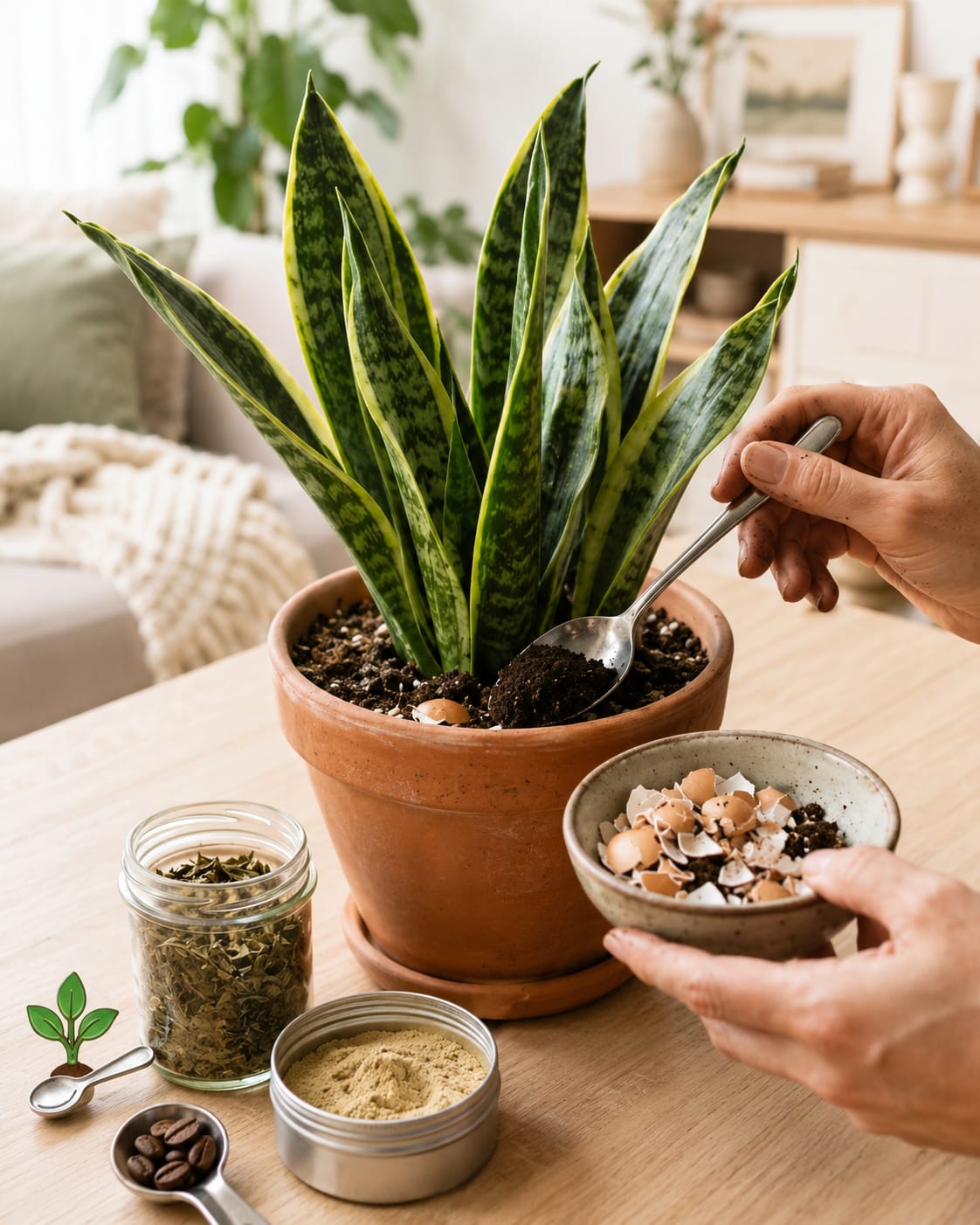
Snake plants are some of the easiest indoor plants to grow, but they still need the right soil conditions to stay strong, upright, and healthy. Their thick sword-like leaves store water, which means they do not need frequent watering. What they need most is a dry, airy, well-draining root zone. When the soil becomes old, compacted, too wet, or low in minerals, the plant can slow down, lean, yellow, or develop weak new growth.
A simple natural soil booster can help refresh the top layer of the pot and support healthier growth when used correctly. Ingredients like crushed eggshells, a small amount of used coffee grounds, dried tea leaves, compost powder, or a gentle organic mix can improve the soil slowly. The key is moderation. Snake plants do not like rich, wet, heavy soil. Natural amendments should be added lightly and mixed into the surface, not piled thickly around the plant.
This guide explains how to use natural soil boosters safely for snake plants, how often to apply them, what mistakes to avoid, and how to combine them with proper watering, light, and drainage. The goal is not to force fast growth. The goal is to create a healthier root environment so the plant can grow steadily and stay beautiful indoors.
Why Snake Plants Need Careful Soil Support
Snake plants, also known as Sansevieria or Dracaena trifasciata, grow from thick underground rhizomes. These rhizomes store moisture and energy. Because of this, the plant can survive dry periods very well. But the same storage system makes it sensitive to soggy soil.
If the soil stays wet for too long, the roots and rhizomes can rot. This is one of the most common reasons snake plants fail indoors. A natural soil booster should never make the pot wetter or heavier. It should support the soil while keeping it loose.
Healthy snake plant soil should feel gritty, airy, and quick-draining. It should not feel muddy, sour, or compacted.
What a Natural Soil Booster Can Do
A gentle natural soil booster can improve the surface layer of the soil and add small amounts of minerals or organic matter. This can help old soil feel fresher and support slow, steady growth.
Depending on what you use, a natural booster may help with:
- Improving soil texture
- Adding mild nutrients
- Supporting root health
- Reducing compacted topsoil
- Encouraging beneficial soil activity
- Refreshing tired potting mix
But natural boosters are not magic. They work best when the snake plant already has good light, drainage, and correct watering.
Best Natural Ingredients for Snake Plants
Some natural ingredients can be useful in small amounts. Others can create problems if used heavily. The best choices are dry, mild, and easy to mix into the top layer of soil.
Crushed Eggshells
Crushed eggshells contain calcium. Calcium can support plant structure, but eggshells break down slowly. They are not an instant fertilizer. For snake plants, eggshells should be washed, dried, and crushed very finely before use.
Large eggshell pieces can sit in the soil for a long time and may look messy. Fine powder blends better and is easier to use.
Used Coffee Grounds
Used coffee grounds can add organic matter, but they must be used carefully. Wet coffee grounds can become compacted, hold moisture, and attract fungus gnats. For snake plants, only use a tiny amount of fully dried used coffee grounds.
Never cover the soil with a thick layer of coffee grounds. That can block airflow and keep the pot too damp.
Dried Tea Leaves
Dried tea leaves can add light organic material, but they should be used sparingly. Like coffee grounds, wet tea leaves can mold if piled on the soil.
Use only dry leaves and mix them lightly into the top layer. Avoid sweetened tea or tea with milk.
Compost Powder
A small amount of mature compost or worm castings can be useful. These are gentler than many kitchen scraps and can support soil health. Use only a thin sprinkle.
Too much compost can make the soil too rich and moisture-retentive for a snake plant.
Cinnamon Powder
Cinnamon is often used by plant lovers as a dry surface dusting for cuttings or soil. It should be used lightly. It is not a complete fertilizer, but it can be part of a dry-care routine.
Do not overuse it or bury large amounts in the soil.
A Simple Natural Soil Booster Mix
For a gentle snake plant soil refresh, you can make a very small dry mix:
- 1 teaspoon finely crushed dry eggshell powder
- 1/2 teaspoon fully dried used coffee grounds
- 1 teaspoon worm castings or mature compost
- Optional pinch of cinnamon
This amount is enough for a medium pot. For a small pot, use half. For a large pot, use slightly more, but still keep the layer thin.
Mix the ingredients together and sprinkle lightly over the soil surface. Then loosen the top inch of soil and blend it in gently.
How to Prepare Eggshells Safely
Eggshells should be cleaned before adding them to plant soil. Dirty shells can smell bad or attract pests.
Follow these steps:
- Rinse the eggshells well.
- Remove any egg residue.
- Let the shells dry completely.
- Crush them into small pieces.
- Grind them into a fine powder if possible.
- Store in a dry jar until needed.
The finer the powder, the easier it is to mix into soil.
How to Prepare Coffee Grounds
Used coffee grounds must be dried before using them for snake plants. Spread them on a plate or tray and let them dry fully. Stir them occasionally so no damp clumps remain.
Once dry, store them in a jar or small container. If they smell sour or show mold, do not use them.
Dry coffee grounds are safer than wet grounds because they are less likely to compact immediately or grow mold on the soil surface.
How to Apply the Soil Booster
Start by checking the soil. If the soil is wet, wait. Do not add organic material to wet soil. The pot should be slightly dry before application.
Use a spoon or your fingers to loosen the top inch of soil. Sprinkle a small amount of the dry booster mix around the plant, keeping it away from the center crown. Gently mix it into the top layer. Do not dig deeply near the roots.
After applying, wait until the plant actually needs water before watering. Do not water immediately unless the soil is already dry.
How Often to Use It
Use a natural soil booster only occasionally. For snake plants, once every 2 to 3 months during active growth is enough. Active growth usually happens in spring and summer.
Do not apply it every week. Snake plants are slow growers and do not need constant feeding. Too much organic material can make the soil heavy and increase the risk of rot.
In fall and winter, reduce or stop adding soil boosters unless the plant is still actively growing in a warm bright room.
Why You Should Not Add Too Much
More does not mean better. Too much coffee, compost, tea, or eggshell powder can disturb the soil balance. It can hold extra moisture, attract gnats, or create surface mold.
Snake plants prefer lean soil. They do not need the rich feeding routine of heavy tropical plants.
A small amount used occasionally is safer than a large amount used often.
Best Soil Mix for Snake Plants
A natural booster works best when the main soil mix is already correct. If the potting mix is dense and wet, a small sprinkle of eggshell or coffee will not fix the problem.
A good snake plant soil mix can include:
- 2 parts cactus or succulent soil
- 1 part perlite
- 1 part pumice or coarse sand
- A small amount of orchid bark
- A small amount of compost, optional
The soil should drain quickly and dry between waterings.
Why Drainage Matters More Than Fertilizer
Snake plants usually suffer more from too much water than too little food. Many people try to feed a struggling snake plant when the real issue is poor drainage.
If the leaves are yellow, soft, or mushy at the base, do not add any booster. Check the roots first. The plant may be overwatered or rotting.
Healthy roots come before feeding.
Choosing the Right Pot
Use a pot with drainage holes. This is essential. Decorative pots without holes can trap water at the bottom, even if the top looks dry.
Terracotta pots are excellent for snake plants because they allow moisture to evaporate faster. Ceramic or plastic pots can also work if the soil is well-draining and watering is controlled.
Choose a pot that is only slightly larger than the root ball. A huge pot holds too much soil and too much water.
Watering After a Soil Boost
Water only when the soil is dry. Stick your finger into the soil or use a wooden stick to test moisture. If the top few inches are dry, water deeply and let extra water drain away.
Do not leave water in the saucer. Empty it after watering.
If the soil is still damp, wait. Snake plants can handle dryness much better than soggy roots.
Signs Your Snake Plant Needs Water
- Soil is dry several inches down
- Leaves look slightly wrinkled
- Pot feels very light
- Leaf edges curl inward slightly
- Leaves lose some firmness
Water thoroughly when the plant is dry, then let it dry again before the next watering.
Signs of Overwatering
- Yellow leaves
- Mushy leaf bases
- Soft rhizomes
- Wet soil for many days
- Bad smell from soil
- Fungus gnats
- Leaves falling over
- Black or brown root rot
If these signs appear, stop watering and do not add natural boosters. Remove the plant, inspect the roots, cut away rot, and repot into fresh dry soil.
Best Light for Snake Plants
Snake plants tolerate low light, but they grow best in bright indirect light. Better light helps the plant use water more efficiently and produce stronger leaves.
Place the plant near a bright window, but avoid harsh direct afternoon sun if the plant is not used to it. Morning sun is usually safe.
In low light, water less often because the soil dries more slowly.
Can Natural Boosters Make Snake Plants Grow Faster?
They can support growth, but they will not create instant results. Snake plants are naturally slow to moderate growers indoors. Growth depends on light, temperature, root health, pot size, and watering.
If your snake plant is not growing, check the basics first. It may need more light, warmer conditions, better soil, or a slightly larger pot.
A booster is only a small part of the care routine.
How to Refresh Old Soil Without Repotting
If your snake plant is healthy but the topsoil looks old, you can refresh it gently. Remove the top half inch of old soil. Replace it with fresh cactus mix and a small amount of natural booster.
This is useful when the plant does not need a full repot but could use a cleaner surface layer.
Do not disturb the roots too much. Snake plants prefer stability.
When Full Repotting Is Better
Sometimes a surface booster is not enough. Full repotting is better if:
- The soil is compacted and stays wet
- The plant is rootbound and pushing out of the pot
- The pot has no drainage holes
- The roots smell bad
- The plant has root rot
- The soil has heavy fungus gnat activity
- The plant keeps leaning or falling over
Repot into fresh gritty soil and a draining pot.
Using Tea Leaves Safely
Dried tea leaves should be used sparingly. Add only a pinch to the soil booster mix. Avoid flavored tea with sugar, milk, or artificial ingredients.
Tea leaves can hold moisture, so do not use them in a thick layer.
If you notice mold or gnats after adding tea leaves, stop using them and remove the top layer of soil.
Using Compost Safely
Compost is useful, but snake plants do not need much. A thin sprinkle of mature compost or worm castings is enough.
Do not use unfinished compost in indoor pots. It can smell, attract pests, or continue breaking down in the pot.
Use only mature, clean, mild compost.
Should You Use Banana Peels?
Banana peels are popular in plant hacks, but they are not ideal to place directly in snake plant pots. They can rot, attract pests, and create odor.
If you want to use banana peels, compost them first. Finished compost is safer than raw kitchen scraps.
For snake plants, clean and dry soil amendments are better than wet food scraps.
Should You Use Eggshell Water?
Eggshell water is often suggested, but it is usually mild and slow. If you use it, make sure it does not smell and do not overwater with it.
For snake plants, powdered dry eggshell mixed into the soil surface is easier to control than frequent eggshell water.
Remember that snake plants need dry periods, so any liquid treatment should be used carefully.
How to Avoid Fungus Gnats
Fungus gnats appear when the topsoil stays damp and organic material is present. Since natural boosters often include organic matter, watering control is important.
To prevent gnats:
- Let the soil dry between waterings.
- Use gritty soil.
- Do not apply wet coffee or tea.
- Remove dead leaves from the soil.
- Use a thin layer of dry mineral top dressing if needed.
- Keep the plant in brighter light.
If gnats appear, stop adding organic boosters until the problem is solved.
Continue to Page 2
Continue to page 2 for more details about this article and the key points many readers miss on the first page.