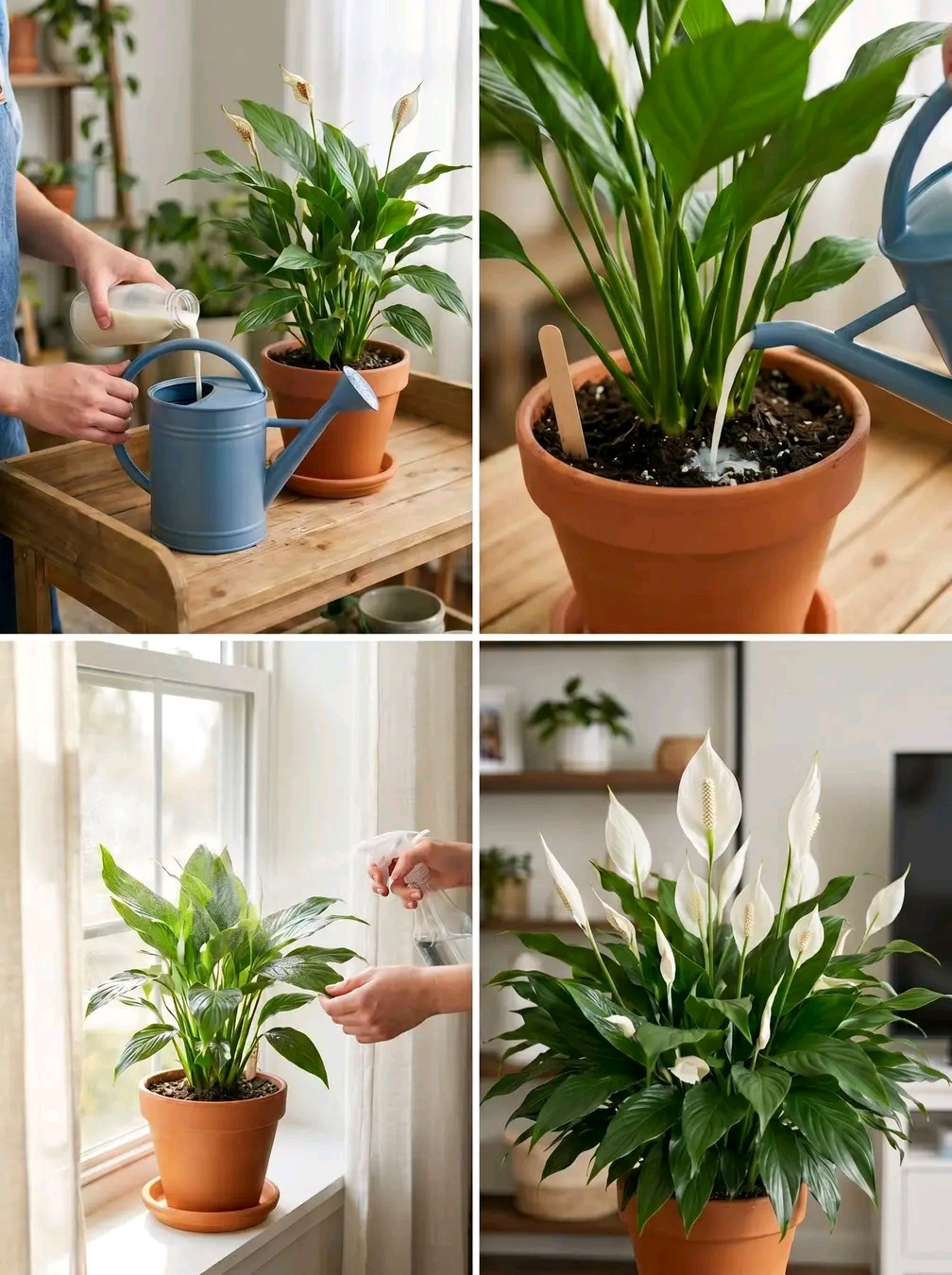
Peace lilies are among the most elegant indoor plants you can grow at home. Their deep green leaves, soft white flowers, and calm tropical shape make them perfect for living rooms, bedrooms, offices, bright bathrooms, plant shelves, and cozy corners. A healthy peace lily can make any room feel fresh, clean, and peaceful.
One simple natural plant-care idea that many houseplant lovers talk about is using diluted milk water for peace lilies. This trick is often used as a gentle homemade tonic to support leaf shine, soil freshness, and healthy-looking growth. Milk contains small amounts of calcium, protein, sugars, and minerals, which is why some gardeners like testing it in very diluted amounts. But peace lilies are sensitive to overwatering, sour soil, and root stress, so this method must be used carefully.
The most important rule is simple: milk should never be poured straight onto a peace lily. Full-strength milk can spoil in the soil, smell bad, attract fungus gnats, encourage mold, and damage roots. If used at all, it should be diluted heavily with water and applied only rarely. It should never replace normal watering, proper light, fresh soil, or balanced fertilizer.
This guide explains how to use diluted milk water safely for peace lilies, how often to apply it, when to avoid it, how to encourage more white blooms, how to keep leaves glossy, how to prevent root rot, and how to style peace lilies beautifully indoors.
What Is the Peace Lily Milk Water Trick?
The peace lily milk water trick is a mild homemade plant-care method where a very small amount of milk is mixed with clean water and applied to the soil or used as a gentle leaf-cleaning solution. The goal is not to feed the plant heavily. The goal is to use a diluted mixture as an occasional natural support.
Peace lilies do not need strong homemade mixtures. They grow best with bright indirect light, consistent moisture, good drainage, moderate humidity, and light feeding during active growth. Milk water can only be a small extra step. It cannot fix poor care.
Important Safety Notes Before Using Milk Water
- Never use full-strength milk on peace lilies.
- Never use sweetened milk, flavored milk, chocolate milk, or spoiled milk.
- Do not pour milk water into soggy soil.
- Do not use milk water weekly.
- Do not leave milk residue on leaves in direct sun.
- Do not use it if fungus gnats or mold are present.
- Do not use it on a peace lily with root rot.
- Always dilute heavily with clean water.
Milk can spoil. This is the biggest risk. If the potting mix smells sour after using it, stop immediately and flush the soil with plain water or repot if needed.
Safe Milk Water Ratio for Peace Lilies
The safest ratio is very weak. A peace lily does not need a strong mixture.
- 1 tablespoon plain milk
- 1 cup clean water
For a larger watering can, use:
- 1/4 cup plain milk
- 1 liter clean water
This mixture should look watery, not thick. If it looks creamy, it is too strong. A pale diluted mix is safer for indoor plants.
How to Apply Milk Water Safely
- Check the soil first. It should be slightly dry on top, not wet.
- Mix plain milk with clean water using a weak ratio.
- Stir well.
- Pour slowly around the outer soil area.
- Avoid pouring directly into the crown where stems meet.
- Let excess liquid drain fully.
- Empty the saucer after watering.
- Use plain water for the next several waterings.
Do not soak the pot. Use only enough to lightly moisten the soil when the plant actually needs water.
How Often Should You Use Milk Water?
Use diluted milk water only once every 6 to 8 weeks during active growth. Spring and summer are the best times. Do not use it during winter unless the plant is actively growing in a warm, bright room.
Plain water should be used most of the time. Milk water is not a regular fertilizer and should not become part of every watering session.
When Not to Use Milk Water
- When the soil is already wet
- When the plant has yellow leaves from overwatering
- When the pot has no drainage holes
- When the soil smells sour
- When mold is growing on the soil surface
- When fungus gnats are flying around the pot
- When the plant is newly repotted
- When the plant is weak or root-rotted
If your peace lily is struggling, fix the main problem first. Milk water can make root problems worse if the soil is already unhealthy.
Can Milk Water Make Peace Lilies Bloom?
Diluted milk water alone will not force a peace lily to bloom. Peace lily flowers depend mostly on light, root health, plant maturity, and balanced feeding. If your peace lily is not blooming, the first thing to check is light.
Peace lilies can survive in low light, but they usually bloom better in bright indirect light. A plant sitting in a dark corner may grow leaves but produce few or no flowers.
How to Encourage More White Blooms
- Move the plant to bright indirect light.
- Keep soil evenly moist but not soggy.
- Use a pot with drainage holes.
- Feed lightly during spring and summer.
- Remove old spent flowers.
- Keep leaves clean so they can absorb light.
- Avoid cold drafts.
- Do not overwater.
A healthy peace lily with good light has a much better chance of producing fresh white blooms.
Best Light for Peace Lilies
Peace lilies prefer bright indirect light. They can tolerate lower light, but flowering often slows down. Direct hot sun can burn the leaves, so filtered light is best.
A bright east-facing window is excellent. A north-facing window can work if it is bright. South or west-facing windows may need a sheer curtain to soften the sunlight.
Correct Watering Routine
Peace lilies like lightly moist soil. Water when the top inch of soil feels dry. Pour water slowly until it drains from the bottom, then empty the saucer.
Do not let the plant sit in water. Soggy roots can lead to yellow leaves, soft stems, and root rot.
Signs Your Peace Lily Needs Water
- Leaves begin to droop slightly.
- The top inch of soil feels dry.
- The pot feels lighter than usual.
- The leaves look less firm.
Peace lilies often droop dramatically when thirsty, but it is better not to let them wilt too often. Repeated wilting can weaken the plant over time.
Signs of Overwatering
- Yellow leaves
- Soft stems
- Sour-smelling soil
- Fungus gnats
- Mold on the soil
- Brown leaf tips with wet soil
- Drooping even though soil is wet
If the plant is drooping while the soil is wet, do not add more water or milk water. Check the roots and drainage.
Best Soil for Peace Lilies
Peace lilies need soil that holds moisture but still drains well. Heavy compacted soil can stay wet too long and suffocate the roots.
Simple Peace Lily Soil Mix
- 2 parts indoor potting mix
- 1 part perlite
- 1 part coco coir or peat moss
- A small amount of orchid bark, optional
This mix keeps the roots moist but airy. Healthy roots are the real secret behind glossy leaves and white blooms.
Best Pot for Peace Lilies
Always use a pot with drainage holes. A decorative outer pot is fine, but the inner pot must drain. Peace lilies do not like sitting in standing water.
Choose a pot only slightly larger than the root ball. A pot that is too large holds extra wet soil and increases the risk of root rot.
How to Use Milk Water as a Leaf Cleaner
Some people use diluted milk water to wipe leaves for a soft natural shine. This must be done carefully because residue can attract dust if the mixture is too strong.
Leaf Wipe Method
- Mix 1 teaspoon milk with 1 cup water.
- Dip a soft cloth into the mixture.
- Wring it out well.
- Wipe the leaves gently.
- Use a second cloth with plain water to remove residue.
- Let the leaves dry in indirect light.
Do not leave sticky milk residue on leaves. Clean leaves should feel fresh, not coated.
How to Keep Peace Lily Leaves Glossy
- Wipe dust with a damp cloth every 2 to 3 weeks.
- Use filtered water if your tap water is harsh.
- Keep the plant away from direct hot sun.
- Avoid overfertilizing.
- Keep humidity moderate.
- Trim brown tips with clean scissors.
Peace lily leaves naturally shine when the plant is healthy and clean. You do not need heavy leaf shine products.
Brown Tips on Peace Lilies
Brown tips are common. They can come from inconsistent watering, dry air, fertilizer buildup, hard water, too much sun, or root stress. Milk water will not automatically fix brown tips.
How to Reduce Brown Tips
- Use filtered or rested water.
- Keep soil evenly moist.
- Do not let the plant sit in water.
- Avoid strong fertilizer.
- Increase humidity slightly.
- Keep away from hot direct sun.
- Flush the soil occasionally with plain water.
Yellow Leaves on Peace Lilies
Yellow leaves can happen for many reasons. Older leaves naturally yellow and die. But several yellow leaves at once may mean overwatering, poor drainage, low light, cold stress, or root problems.
Before adding any homemade tonic, check the soil and roots. If the soil is wet and sour, milk water can make the problem worse.
Continue to Page 2
Continue to page 2 for more details about this article and the key points many readers miss on the first page.