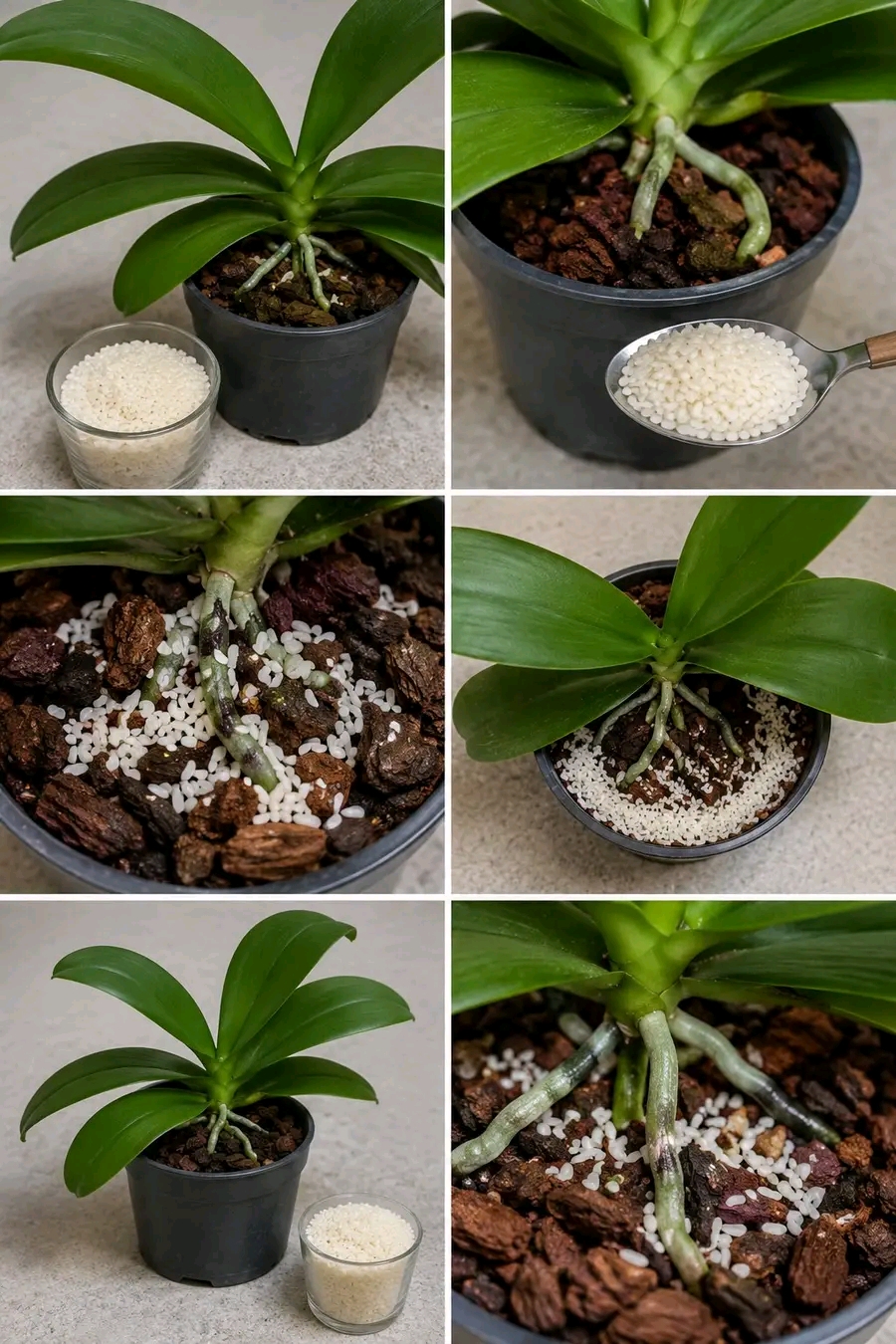
Orchids are among the most elegant indoor plants for homeowners who want glossy green leaves, graceful flower spikes, sculptural roots, and a refined decorative look that feels premium even in a simple pot. A healthy orchid can instantly upgrade a windowsill, living room table, bedroom shelf, home office corner, balcony display, apartment plant area, commercial interior, luxury home staging setup, or premium indoor plant collection. Its thick green leaves, visible roots, and long-lasting blooms create a clean tropical style that looks delicate, expensive, and peaceful when the plant is cared for correctly.
One plant-care idea that often attracts attention is adding small white rice grains around the orchid root zone. The idea is usually presented as a simple natural trick for supporting root strength, greener leaves, and future blooms. Rice is easy to find, inexpensive, and familiar, so many people assume it must be safe for plants. However, orchids are not ordinary houseplants growing in regular soil. Their roots need air, fast drainage, clean bark, and controlled moisture. Because of this, raw rice or rice-based treatments must be handled carefully.
The safest way to understand this method is as an optional homemade soil-surface experiment, not a miracle orchid fertilizer. Rice may slowly release some organic material as it breaks down, and rice water may contain small traces of nutrients, but raw rice can also create mold, attract fungus gnats, hold moisture, ferment, and make the orchid medium sour if it is used heavily. A small decorative sprinkle may look harmless, but too much rice around exposed orchid roots can create exactly the kind of damp organic residue orchids dislike.
Orchids grow best when their roots are firm, airy, and clean. If the plant already has healthy roots and proper orchid bark, a tiny amount of rice-based care may not cause immediate harm, but it is usually less reliable than a weak orchid fertilizer. If the orchid is stressed, has mushy roots, sits in old decomposed bark, or stays wet too long, rice should be avoided. The first priority should always be root health, not viral plant hacks.
Understanding Orchid Roots Before Using Rice
Most common indoor orchids, especially Phalaenopsis orchids, have thick roots covered with a sponge-like layer called velamen. This layer absorbs moisture and helps the root handle the wet-and-dry rhythm orchids naturally experience. When the roots are hydrated, they often appear green. When they are dry, they may look silvery or pale. This visible change helps growers know when the plant is ready for water.
Because orchid roots are adapted to airflow, they should not be buried in heavy soil or covered with thick organic material. Bark, charcoal, pumice, perlite, and loose sphagnum moss are common orchid media because they create air pockets. The roots need moisture, but they also need oxygen. If organic material breaks down and fills the spaces between bark pieces, the root zone becomes compacted and wet, which can lead to rot.
Rice grains may seem small, but if they stay damp in the orchid pot, they can soften and decompose. This process may create a sticky surface and feed microbes. In outdoor compost, that may be normal. Inside a small orchid pot, it can become a problem. Orchids do not like sour, stagnant root conditions. Any rice method should be used lightly, and only with full awareness of the risks.
What the White Grains Might Be Doing
The small white grains may be raw rice placed around the bark. Some people use raw rice because they believe it slowly feeds the plant. In reality, raw rice does not act like a balanced fertilizer. It contains mostly starch and small amounts of other nutrients, but those nutrients are not immediately available to the orchid. The rice must break down first, and that breakdown can invite mold or pests if the pot stays damp.
The white grains may also be cooked rice, though cooked rice is much riskier. Cooked rice spoils quickly, becomes sticky, attracts insects, and can create odor. Cooked rice should not be placed in orchid pots. It is better suited for composting than for direct use around delicate roots.
Some growers may confuse rice grains with slow-release fertilizer pellets or perlite. Slow-release fertilizer pellets are usually designed to release nutrients gradually, while perlite is a drainage material. Rice is neither of those. Before adding anything white around orchid roots, the material should be identified clearly. Unknown white grains, powders, or pellets should never be used around orchids.
Rice Water Versus Rice Grains
Rice water is different from raw rice grains. Rice water is the cloudy water left after rinsing or soaking rice. Some gardeners use it as a mild homemade tonic. It may contain starches and tiny amounts of minerals, but it is still unpredictable. If rice water is fresh and heavily diluted, it may be less risky than leaving raw rice grains in the pot. Even then, it should be used rarely and allowed to drain fully.
Fermented rice water is stronger and riskier for orchids. Fermentation can create acidity, odor, and microbial activity that may not be suitable for the root zone. Some outdoor gardeners use fermented plant liquids, but orchids in small indoor pots are more sensitive. If a rice liquid smells sour, it should not be poured onto orchid roots.
Raw rice grains remain in the pot and continue changing over time. That is the main risk. They may swell, soften, mold, or attract gnats. Rice water drains away more easily, but it can still leave starch residue. For orchids, a weak orchid fertilizer is usually cleaner and more predictable than either rice grains or rice water.
Can Rice Help Orchids Bloom?
Rice does not directly force orchids to bloom. Orchid blooming depends mostly on root health, light, maturity, temperature rhythm, and gentle feeding. A plant with strong roots and enough bright indirect light is far more likely to produce flower spikes than a plant treated with rice but kept in poor conditions.
If an orchid has healthy leaves but no flowers, the first thing to check is light. Many orchids fail to rebloom indoors because they are kept too far from a bright window. They may survive, but they do not receive enough energy to create a flower spike. Better filtered light often helps more than homemade ingredients.
Some orchids also need stable care and a slight change in temperature to initiate spikes. A gentle drop in night temperature can encourage blooming in Phalaenopsis orchids, but the plant should never be chilled harshly. A rice sprinkle cannot replace these natural blooming signals. It may be part of a plant-care story, but it is not the real bloom trigger.
Risks of Adding Raw Rice to Orchid Pots
The first risk is mold. Rice is organic and starchy. When it stays damp, it can grow mold on the surface. Mold may not always kill the plant immediately, but it indicates that the pot surface is too moist and rich in organic material. This is not ideal for orchid roots.
The second risk is fungus gnats. Fungus gnats are attracted to damp organic material. A pot with rice grains, old bark, and moisture can become inviting to them. Once gnats appear, they can be annoying indoors and may indicate that the root zone is staying too wet.
The third risk is sour medium. As rice breaks down, it may contribute to odor and microbial imbalance. Orchids need clean airflow around their roots. A sour-smelling pot is a warning sign that the medium needs attention. The fourth risk is moisture retention. Rice can swell and hold water, which may keep the root surface damp longer than needed.
When Rice Should Be Avoided Completely
Rice should be avoided if the orchid has mushy roots, yellowing leaves, wrinkled leaves from root loss, sour-smelling bark, fungus gnats, mold, algae-heavy medium, or a pot that stays wet too long. These are signs that the root environment is already struggling. Adding rice can make the problem worse.
Rice should also be avoided in humid rooms where orchid bark dries slowly. If the medium remains damp for many days after watering, extra organic material is not helpful. It should also be avoided in orchids planted in dense moss that never dries. Moss already holds moisture, and rice can increase the risk of stagnation.
Cooked rice, flavored rice, salted rice, rice mixed with oil, or rice from the kitchen after cooking should never be used in an orchid pot. Salt, oil, seasoning, and cooked starch can harm roots and attract pests. Only plain raw rice is even worth discussing, and even plain raw rice should be used very cautiously.
A Safer Way to Test the Rice Method
If someone still wants to test this method, the safest approach is to use only a tiny amount and keep it away from the crown. A few grains on the surface are far safer than a thick layer. The rice should not cover roots heavily or fill spaces between bark pieces. It should never be pushed deep into the pot where it can stay damp and hidden.
The orchid should be healthy before testing. Roots should be firm, the bark should smell clean, and the pot should drain freely. After adding a small amount, watch the pot closely. If there is mold, smell, gnats, or sticky residue, remove the rice immediately and flush the pot with clean water.
This method should not be repeated often. Rice is not a complete fertilizer. If the plant needs nutrition, use a weak orchid fertilizer instead. The safest plant-care routines are usually simple and predictable.
Better Ways to Feed Orchids
A balanced orchid fertilizer used weakly during active growth is usually the best feeding method. Orchids do not need heavy fertilizer. A quarter-strength or half-strength solution may be enough, depending on the product and growing conditions. Feeding weakly helps reduce root burn and salt buildup.
Fertilizer should be applied when the plant is actively growing leaves or roots. If the plant is resting, in low light, or recovering from root damage, feeding should be reduced. Extra nutrients are useful only when the plant can use them. A weak plant with damaged roots needs recovery, not more food.
Plain water should be used between fertilizer applications to rinse the medium. This helps prevent mineral buildup. If bark becomes old and decomposed, repotting is more important than fertilizing. Fresh airy bark can improve root health dramatically.
Best Light for Orchid Growth
Bright indirect light is essential for orchid health and future blooms. A window with filtered light, a bright balcony protected from direct harsh sun, or a well-lit indoor spot can support strong leaves and roots. Too little light may keep the plant alive but prevent blooming. Too much direct sun can scorch the leaves.
Orchid leaves can give clues. Very dark green leaves may suggest low light. Yellow-green leaves or burned patches may suggest too much direct sun. A healthy medium green color often indicates a better balance. If the orchid is not blooming, improving light should come before adding rice or other homemade treatments.
Place the orchid where it receives steady filtered brightness. Avoid cold drafts, hot radiator air, and strong afternoon sun. Stable placement helps the plant build energy over time.
Watering Orchids Correctly
Watering should follow the condition of the roots and medium. If roots look silvery and the bark feels dry, the orchid may be ready for water. If roots are still green and the medium is damp, wait. Orchids prefer a wet-and-dry rhythm, not constant moisture.
When watering, let water flow through the pot and drain completely. Never leave the orchid sitting in water. If the pot is inside a decorative cover pot, remove standing water after watering. This is especially important if any homemade material has been added, because stagnant liquid can become sour.
Do not pour water into the crown of the plant. Water trapped in the crown can cause crown rot. Direct water to the root zone and bark, then allow the plant to drain and dry with good airflow.
Repotting for Root Health
Orchids usually need repotting when the medium breaks down, smells sour, stays wet too long, or no longer supports good airflow. Old bark can look dark, soft, and compacted. When this happens, roots may struggle even if watering is careful.
To repot, remove old medium gently, trim dead or mushy roots with clean tools, and place the orchid into fresh bark or a suitable orchid mix. The crown should sit above the medium, and roots should be supported but not suffocated. A clear pot with drainage holes can help monitor moisture and root condition.
After repotting, avoid strong fertilizer or homemade treatments for a while. Let the roots settle. If the plant has lost many roots, focus on humidity, bright indirect light, and careful watering. Root recovery takes time.
Keeping Orchid Leaves Clean
Orchid leaves should be kept clean and dust-free. Clean leaves absorb light better and make the plant look more elegant. Wipe leaves gently with a soft damp cloth. Avoid oily leaf shine products because they can leave residue and attract dust.
If rice dust, starch, or any homemade liquid splashes onto leaves, wipe it away. Residue can dry into marks and reduce the polished look. The crown should stay dry after cleaning. Moisture trapped between leaves can be dangerous.
Healthy orchid decor depends on clean leaves, firm roots, tidy bark, and a stable pot. A plant can look premium even without blooms if the foliage and root zone are clean.
Indoor Styling and Display Ideas
An orchid with glossy leaves and visible roots can look beautiful in a simple black nursery pot placed inside a decorative ceramic cover pot. A clear inner pot is practical because it allows root monitoring, while the outer pot creates the luxury look. White, stone, black, terracotta, and neutral ceramic containers all pair well with orchid foliage.
In a living room, an orchid can sit on a side table near filtered light. In a bedroom, it can create a calm spa-like feeling. In a home office, it adds elegance without taking much space. On a balcony, it can look fresh and tropical if protected from harsh sun, wind, and cold.
For commercial interiors, orchids are often used in reception areas, salon counters, boutique displays, staged homes, and hotel-style spaces. In these settings, cleanliness matters. Rice grains that mold or smell would reduce the professional look. Controlled watering and proper fertilizer are better for premium displays.
Continue to Page 2
Continue to page 2 for more details about this article and the key points many readers miss on the first page.