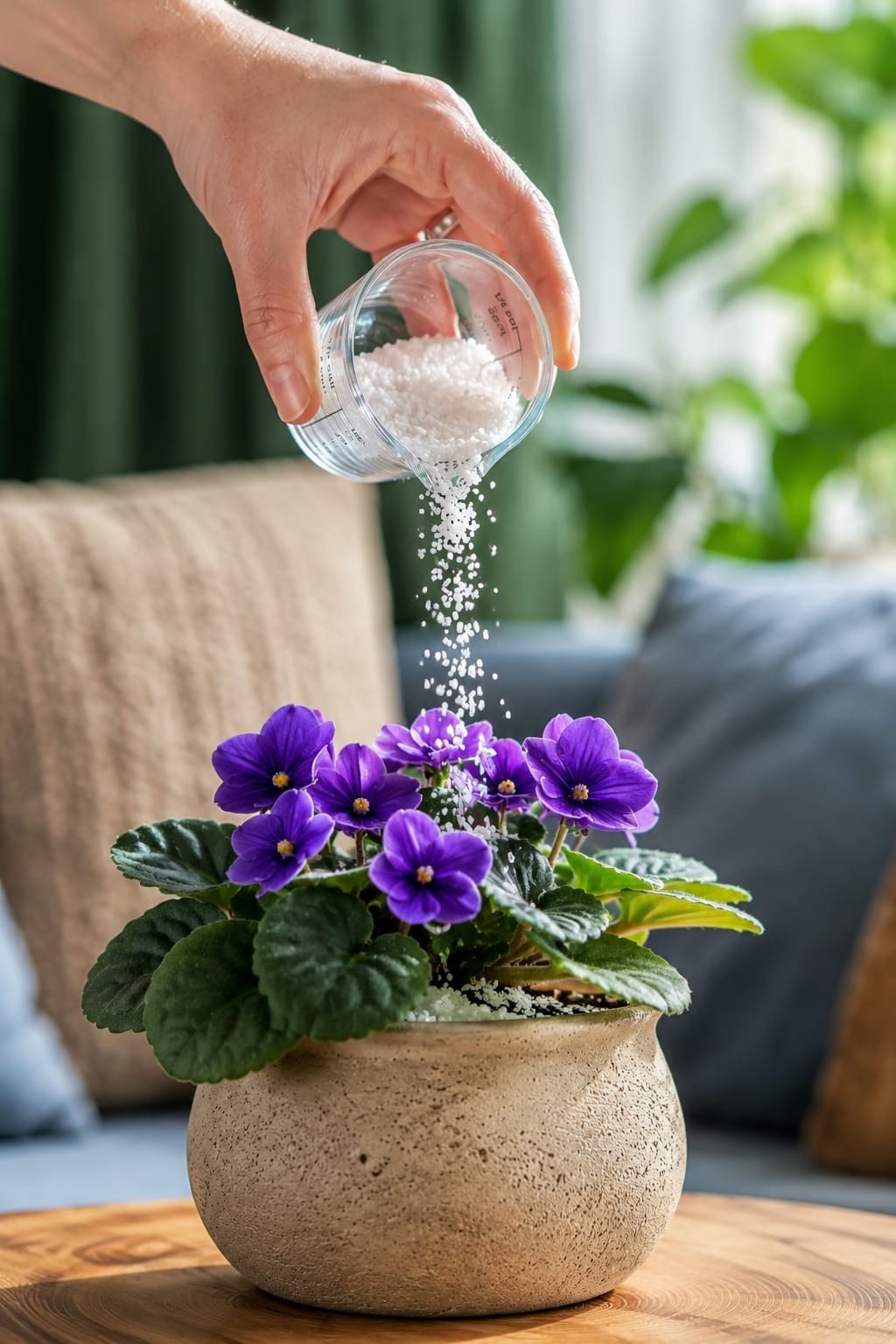
African violet is one of the most charming indoor flowering plants for homeowners who want soft green leaves, rich purple blooms, compact growth, and a colorful decorative display that fits beautifully on coffee tables, windowsills, plant shelves, bedroom corners, home offices, bright kitchens, apartment plant stands, and cozy indoor garden spaces. Its velvety foliage and small bright flowers create a gentle old-fashioned beauty that feels warm, nostalgic, and elegant, especially when the plant is placed in a textured ceramic pot or a natural-toned decorative planter.
Many plant lovers become curious when they see small white crystals being sprinkled around an African violet. The method is often presented as a simple plant-care trick for stronger blooms, healthier leaves, and fuller growth. The white crystals may be Epsom salt, slow-release fertilizer, perlite, decorative mineral granules, or another plant-care product. Because many white materials look similar, the ingredient must be identified before use. African violets are delicate plants with sensitive leaves and fine roots, so using the wrong white crystals can cause leaf spotting, root burn, mineral buildup, soil imbalance, or moisture problems.
The safest way to understand this method is to treat it as an optional support step, not a miracle bloom booster. African violets bloom best when they receive bright indirect light, a light airy potting mix, careful watering, steady warmth, gentle humidity, and mild feeding with a fertilizer made for blooming houseplants. If the plant is already stressed by soggy soil, cold drafts, low light, or overfeeding, adding white crystals will not solve the real problem. In some cases, it can make the plant decline faster.
Understanding African Violet Care First
African violets are compact flowering plants with soft, fuzzy leaves that grow in a low rosette. Their blooms can appear in shades of purple, violet, pink, white, blue, and mixed colors. They are loved because they can flower indoors for long periods when conditions are steady. However, they are more sensitive than many common houseplants. Their leaves do not like rough handling, cold water, strong sun, heavy fertilizer, or powdery residue.
The plant’s fuzzy leaves are one of the main reasons this white-crystal method needs caution. Unlike glossy peace lily or pothos leaves, African violet leaves can hold dust, moisture, and particles. If crystals or powder land on the foliage and become damp, they may leave marks or create spots. This is why any product should be placed carefully on the soil surface, away from the leaves and crown.
The crown is the center of the plant where new leaves and flower stems emerge. This area should stay clean and dry. If crystals collect in the crown or moisture sits there, rot can develop. African violets need gentle care around the crown because damage in that area can affect the whole plant.
What the White Crystals Might Be
The white crystals may be Epsom salt, which is magnesium sulfate. Epsom salt can provide magnesium and sulfur in small amounts, but it is not a complete fertilizer. African violets do not need heavy magnesium treatments unless there is a specific deficiency. Too much Epsom salt can create mineral buildup and root stress. If it is used at all, it is usually safer to dissolve a tiny amount in water and apply it rarely, not sprinkle large crystals directly around the plant.
The crystals may also be slow-release fertilizer granules. Some fertilizers are white or pale and are designed to release nutrients gradually. If that is the case, the label matters. African violets prefer gentle feeding, and too much fertilizer can burn their fine roots. Fertilizer should never be piled close to the crown or sprinkled onto leaves. It should be used according to instructions and at a cautious rate.
The white material may be perlite. Perlite is a lightweight white mineral used to improve drainage and airflow in potting mix. It is generally safe in African violet soil and is often included in African violet mixes. However, perlite is not fertilizer. It helps the soil structure, but it does not feed the plant. If the goal is better root health, adding perlite during repotting is more useful than sprinkling it on top.
The crystals may also be decorative stones or unknown granules. Unknown products should not be used. Table salt, sugar, scented bath salts, cleaning crystals, baking soda, and unknown white pellets can harm plants. African violets are too delicate for guessing. If the product is not clearly plant-safe, avoid it.
Why Direct Sprinkling Can Be Risky
Directly sprinkling crystals over an African violet can be risky because the plant’s leaves catch particles easily. White crystals can sit in the leaf hairs and become difficult to remove. If the crystals dissolve with water, they may create concentrated spots on the leaf surface. This can lead to pale marks, brown patches, or damaged tissue.
Another risk is concentration near the roots. If fertilizer crystals or Epsom salt collect in one small area, they may dissolve into a strong pocket of minerals. Fine African violet roots can burn from concentrated fertilizer salts. A gentle diluted solution is usually safer than dry crystals placed heavily on the soil.
A third risk is moisture trapping. Some materials hold moisture on the soil surface. African violets like evenly moist soil, but they dislike soggy conditions. A thick layer of crystals, powder, or granules can hide soil moisture and make watering harder to judge. Clean soil care is better than a messy surface treatment.
Best Light for African Violet Blooms
African violets need bright indirect light to bloom well. They do not need harsh direct sun, and strong sunlight can burn the leaves. A bright east-facing window, a filtered windowsill, or a grow light can work beautifully. If the plant has many leaves but few flowers, low light is often the reason. Improving light usually helps more than adding white crystals.
The leaves can give clues. If the plant stretches upward or leaves grow long and pale, it may need more light. If the leaves become yellow, bleached, or scorched, the light may be too strong. A balanced African violet has compact leaves and steady flower buds.
For indoor decor, African violets look beautiful on small tables near filtered light. Purple blooms stand out against neutral pots, wood surfaces, cream fabrics, and soft indoor backgrounds. The plant should be close enough to light for blooming, but not pressed against cold glass or exposed to direct hot sun.
Watering African Violets Correctly
Watering is one of the most important parts of African violet care. The soil should stay lightly moist, but never soggy. Many growers prefer bottom watering because it keeps water off the fuzzy leaves and crown. To bottom water, place the pot in a shallow container of water and let the soil absorb moisture from below. After a short time, remove the pot and allow it to drain fully.
If watering from the top, use room-temperature water and aim at the soil, not the leaves. Cold water on African violet leaves can cause spotting. Water sitting in the crown can cause rot. This is why careful watering matters more than most plant hacks.
If crystals have been added to the soil surface, watering can dissolve them. This may be safe or harmful depending on what they are. If they are fertilizer or Epsom salt, the solution may become too concentrated. If the product is unknown, watering can move harmful material into the root zone. Always identify the ingredient before watering over it.
Best Soil for African Violets
African violets grow best in a light, airy potting mix. A proper African violet mix often includes peat moss or coco coir, perlite, and vermiculite. The goal is moisture retention with oxygen around the roots. Heavy garden soil should not be used because it can compact and stay wet too long.
Perlite is useful because it improves drainage and airflow. If the plant is struggling in dense soil, repotting into a better mix may help more than adding crystals on top. Fresh airy soil supports the fine root system and helps the plant absorb water evenly.
The pot should have drainage holes. African violets often grow well in smaller pots because they bloom better when slightly snug. A pot that is too large can hold too much wet soil around the roots. Good pot size and good soil are more important than decorative surface treatments.
Feeding African Violets Safely
African violets benefit from gentle, regular feeding during active growth and blooming. A fertilizer made for African violets or blooming houseplants is usually the safest option. It should be diluted according to instructions, and many growers use a weak solution rather than a strong one. Overfeeding can cause leaf damage, root burn, and fewer blooms.
If the white crystals are fertilizer, they should be used carefully. They should not be poured directly onto leaves or piled near the crown. If the plant is already in fertilized potting mix, extra feeding may not be needed immediately. Too much nutrition can be just as harmful as too little.
Epsom salt should not replace fertilizer. It does not provide the full nutrient balance that African violets need. If the plant needs feeding, use a balanced product designed for flowering houseplants. If magnesium is truly needed, use it lightly and rarely.
Humidity and Temperature
African violets prefer steady indoor warmth. They dislike cold drafts, sudden temperature changes, and chilly windowsills. A comfortable room temperature is usually ideal. Keep the plant away from heating vents, air-conditioning drafts, and cold glass in winter.
Moderate humidity can help the plant stay fresh, but wet leaves should be avoided. A humidity tray can be used by placing pebbles and water beneath the pot, making sure the pot does not sit directly in water. Grouping plants can also raise humidity slightly.
High humidity with poor airflow can create fungal problems. The plant should have gentle air movement and a clean crown. If white crystals or powder are used, avoid conditions where they become damp and stuck in the plant’s center.
How to Apply Any White Product More Safely
If the product is plant-safe and you still want to use it, apply it lightly and only to the soil surface. Keep it away from the crown and leaves. Do not create a thick layer. A tiny amount is safer than a heavy sprinkle. African violets respond better to gentle care than dramatic treatments.
If the product is meant to dissolve, consider dissolving it separately in water at a weak rate instead of placing crystals directly onto the soil. This creates a more even application and reduces the chance of root burn. Use room-temperature water and avoid wetting the leaves.
After applying anything new, watch the plant for several days. If leaves spot, curl, yellow, or wilt, stop using the product. If the soil surface develops crust or mold, remove the top layer and return to plain water care.
Common Mistakes With African Violets
One common mistake is getting the leaves wet with cold water. This can create spots. Another mistake is placing the plant in direct sun, which can scorch the foliage. A third mistake is overwatering, which can rot the roots and crown. A fourth mistake is using heavy soil that holds too much moisture.
A fifth mistake is overfeeding. African violets are small plants with fine roots, so strong fertilizer can cause damage. A sixth mistake is sprinkling unknown powders or crystals over the plant. Many white materials look harmless but can be harmful. A seventh mistake is ignoring light. Without enough bright indirect light, the plant may not bloom well no matter what is added.
An eighth mistake is letting old flowers and dead leaves remain around the crown. These can trap moisture and encourage problems. Regular grooming keeps the plant healthy and attractive.
Cleaning and Grooming African Violets
African violet leaves should not be wiped harshly like glossy houseplant leaves. Their fuzzy surface needs gentle cleaning. Dust can be removed with a soft brush, a dry makeup brush, or a gentle puff of air. If crystals land on the leaves, brush them away carefully when dry. Avoid rubbing wet powder into the leaf hairs.
Remove faded flowers by pinching or cutting them near the base of the flower stem. Remove old yellow leaves carefully. Keeping the center open and clean helps new growth and flower buds develop. A tidy African violet looks more elegant and blooms more beautifully.
If the plant becomes lopsided, rotate it regularly so light reaches all sides. This helps maintain a balanced rosette shape. A compact symmetrical African violet makes a lovely indoor decor feature.
Indoor Decor and Styling Ideas
African violets are perfect for cozy indoor styling because they stay compact and flower beautifully in small spaces. A single violet in a textured beige pot can look charming on a coffee table, side table, or windowsill. Purple blooms pair beautifully with warm wood, cream textiles, natural stone, and soft neutral decor.
For a more colorful display, group several African violets in different bloom colors. Purple, pink, white, and blue varieties can create a cheerful indoor flower corner. Keep each plant in its own pot so watering and care remain easy. A collection looks best when the leaves are clean, the flowers are fresh, and the pots are coordinated.
In home offices, bedrooms, and apartment spaces, African violets add color without taking much room. They are also excellent for shelves under grow lights. Their compact size makes them easy to style in modern interiors, cottage decor, and classic home settings.
Continue to Page 2
Continue to page 2 for more details about this article and the key points many readers miss on the first page.