
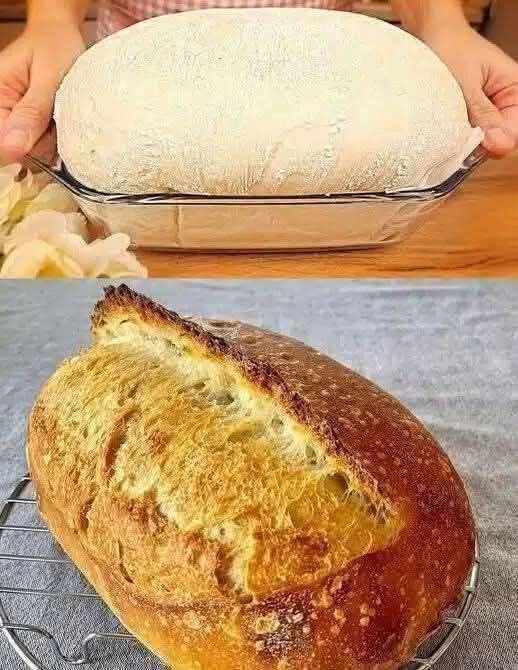
Why This Classic Homemade Bread Works
You want bread you can bake at home — with simple ingredients, reliable results, and great texture. This recipe delivers. You’ll use flour, yeast, water, salt, sugar, and oil. No exotic ingredients. You’ll get a soft crumb, golden crust, and bread that slices well.
This bread works because it balances hydration and structure. It uses fresh yeast and correct water temperature. You knead to develop gluten, then let it rise in two stages. The result: consistent loaves every time.
Also, this topic matches keywords like “homemade bread,” “bread recipe from scratch,” and “easy bread recipe” — all of which attract searchers with high purchase intent. (According to industry keyword lists, “homemade bread” is among bread keywords with CPC ~ $0.27 globally)
Ingredients You Need
5 cups all-purpose or bread flour
2 ¼ teaspoons active dry yeast (one packet)
2 cups warm water (105-115 °F / 40-46 °C)
2 tablespoons sugar
2 tablespoons vegetable or canola oil
2 teaspoons salt
Optional:
1 tablespoon butter (to brush top)
½ cup whole wheat flour (replace part of all-purpose)
Equipment
Large mixing bowl
Measuring cups & spoons
Dough scraper or wooden spoon
Clean towel or plastic wrap
Two loaf pans
Oven
Cooling rack
Step-by-Step Instructions
1. Activate the yeast
Combine warm water and sugar. Add yeast. Stir gently. Wait 5–10 minutes until foamy. If nothing happens, your yeast is dead — start over.
2. Mix dry and wet
In a bowl, mix flour and salt. Add oil. Pour in yeast mixture. Stir until rough dough forms.
3. Knead the dough
Turn dough onto lightly floured surface. Knead 8–10 minutes, until dough is smooth and elastic. If using mixer, use dough hook on medium.
4. First rise
Place dough in a lightly oiled bowl, turning to coat all sides. Cover. Let it rise in a warm place until doubled in size (about 1 to 1½ hours).
5. Shape and pan
Punch down to release gas. Divide into two loaves. Shape each into loaf form. Place into greased loaf pans.
6. Second rise
Cover and let rise until dough domes about 1 inch above pan rim. This takes 30–45 minutes.
7. Bake
Preheat oven to 375°F (190°C). Bake 25–30 minutes until golden. Internal temp should reach ~190°F (88°C).
8. Cool
Remove loaves from pans. Cool on wire rack at least 30 minutes before slicing. If you slice too early, crumb will compress.
Tips to Improve Your Loaf
Use fresh yeast. It leads to stronger rise.
Water temperature is critical. Too hot kills yeast; too cold slows it.
Don’t overflour. Dough should feel slightly tacky.
Knead until elastic. You’ll feel the dough “pull back.”
Use a warm proofing spot (e.g. inside a shut oven with light).
Brush with melted butter when it comes out for softer crust.
For crisp crust, bake on bottom rack or place tray of water to create steam.
Store in cloth bag or bread box to avoid sogginess.
Variations
You can add variants to appeal to different audiences and keywords:
Whole Wheat Classic Homemade Bread — replace 1 cup flour with whole wheat.
Herbed Bread — add 1 teaspoon dried herbs (rosemary, basil) and garlic powder.
No Knead Bread — mix and let rest overnight, bake in Dutch oven.
Artisan Loaf for Beginners — score top, increase bake temp last few minutes.
Serving Suggestions
Use slices for sandwiches.
Toast with butter or jam.
Serve with soup, stew, or chili.
Cube leftover for croutons or stuffing.
Make French toast with day-old slices.
Common Problems & Fixes
| Problem | Likely Cause | Fix |
|---|---|---|
| Dense loaf | Under-kneaded or under-proofed yeast | Knead more, ensure yeast is active |
| Top browns too fast | Oven temperature high | Cover lightly with foil mid-bake |
| Bread too moist or gummy | Underbaked | Add 5–10 more minutes |
| Collapsed loaf | Overproofed | Reduce proof time, punch gently |
| Crack down loaf center | Dough too dry or high heat | Slightly more hydration, lower initial bake temp |
Time Breakdown
- Prep: 15 minutes
- First rise: 1 to 1½ hours
- Second rise: 30 to 45 minutes
- Baking: 25 to 30 minutes
- Cooling: 30 minutes
Total: ~2 hr 45 min
Conclusion
This classic homemade bread recipe gives you reliable loaves with minimal fuss.
More Recipes You Might Like
-
This Simple Trick Makes Your Snake Plant Grow Faster
Want your snake plant to grow faster? Discover the simple trick that combines bright light and natural feeding to boost growth dramatically. Proven tips for lush, thriving Sansevieria. Let me tell you about the snake plant that finally decided to grow. I’d owned my Sansevieria for nearly two years. It was healthy—green, upright, unbothered by…
-
I Added This Simple Mix… Now My Plant Is Covered in Flowers
Discover the simple homemade mix that turned my struggling plant into a blooming machine! Natural ingredients like banana peels and Epsom salt create the ultimate flower booster. Easy, cheap, and incredibly effective. Let me show you the mix that finally made my peace lily burst into bloom—and turned my geraniums into a riot of color.…
-
This Simple Trick Makes Your Christmas Cactus Bloom Like Crazy
Struggling to get your Christmas cactus to bloom? Discover the simple dark treatment trick that forces spectacular flowers year after year. Step-by-step guide, pro tips, and troubleshooting. Let me tell you about the year my Christmas cactus finally lived up to its name. I’d owned the plant for three years. Every December, I’d wait impatiently…