
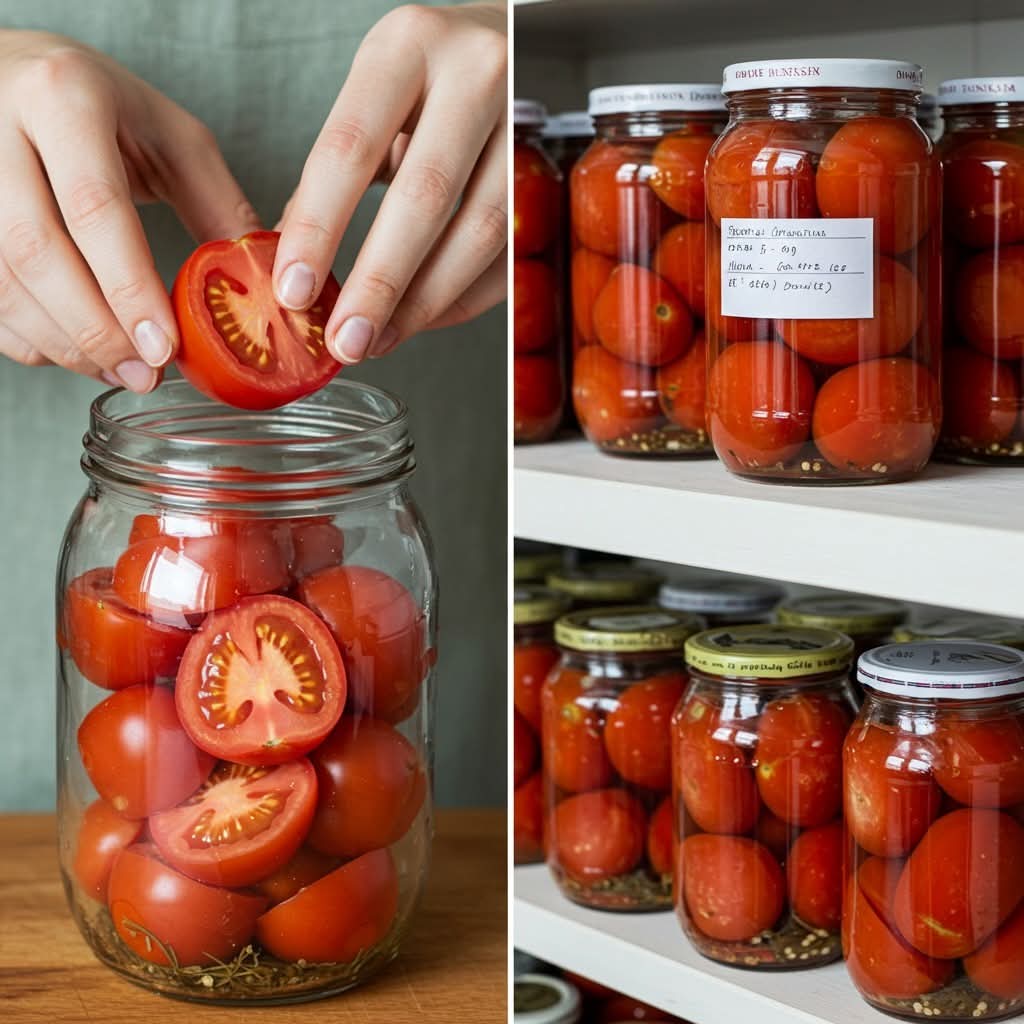
Imagine walking into your pantry in the middle of winter and opening a jar to find ripe, fresh-flavored tomatoes — still vibrant and ready for sauces, soups, or stews. That’s exactly the promise of the so-called “infallible method” to store tomatoes for up to two years without using vinegar.
This technique, though rarely discussed in mainstream canning guides, circulates in traditional and homesteading circles. It’s claimed to preserve tomatoes by creating the ideal conditions to slow spoilage, relying on strict hygiene, dryness, oxygen control, and storage environment rather than acidification with vinegar.
In this article, we’ll explore:
What the method claims to do and how it works
The detailed step-by-step process
Potential pitfalls and risks
Scientific insights and practical considerations
How to use the preserved tomatoes
Whether this method is truly reliable
Let’s dive in.
Why “No Vinegar” Storage? The Appeal & Challenges
The Appeal
Vinegar is commonly used in pickling and preservation because its acidity suppresses microbial growth. However, vinegar can alter flavor and texture. For many, preserving tomatoes without vinegar promises a more “fresh tomato” taste, particularly for heirloom varieties where subtle flavor differences matter.
Also, in regions or practices where vinegar is not readily available or desired, a vinegar-free method offers an alternative.
The Challenges & Caveats
However, completely omitting acid in preserving a low-acid food like tomato raises safety concerns:
Tomatoes are borderline acidic; unless their pH is lowered, bacterial and fungal growth is more possible.
Oxygen and moisture are the classic enemies of long-term preservation.
Spoilage, mold, or botulism risk increases if the environment is not tightly controlled.
Thus, this method demands precision, cleanliness, and ideal storage conditions. It’s not a casual technique.
The Science Behind Long-Term Preservation (Without Vinegar)
To understand why this method claims to work, here are the principles:
Minimal moisture: Water is essential for microbial growth. Ensuring that tomatoes are extremely dry (on surface and in the container) helps slow spoilage.
Exclusion of oxygen: Many spoilage organisms require oxygen. If jars are tightly sealed and perhaps vacuumed, oxygen can be minimized.
Sterilization & hygiene: Eliminating existing microorganisms by sterilizing jars, lids, and working surfaces reduces starting contamination.
Enzyme inactivation: Some guides suggest briefly blanching tomatoes to reduce internal enzymatic activity that would degrade texture or flavor over time.
Cool, stable storage: Microbial and chemical reactions slow dramatically at low, stable temperatures (ideally 10-13 °C or so).
When all these factors are well under control, you can push the shelf life much further than typical methods.
Step-by-Step: How to Preserve Tomatoes for 2 Years (Vinegar-Free Method)
Below is a consolidated protocol based on reported practices from homesteading sources. Use it only if you’re comfortable with the risks and are vigilant about hygiene and storage.
1. Select the Right Tomatoes
Choose firm, blemish-free, fully ripe tomatoes (not overripe or soft).
Avoid those with cracks, bruises, or signs of disease.
Uniform size is helpful for packing and consistency.
2. Wash, Dry Thoroughly & (Optional) Blanch
Washing & Drying:
Rinse the tomatoes under clean water to remove dirt, dust, or residues.
Pat them completely dry with clean towels.
It’s critical: even a small moisture film can breed mold or bacteria.
Optional Blanching:
Some versions of this method suggest a short blanch: 30–45 seconds in boiling water, then an immediate cold (ice water) bath.
The aim is to inactivate some enzymes that contribute to spoilage or softening over time.
After blanching, dry again thoroughly.
3. Sterilize Jars & Lids
Use glass canning jars and lids rated for preservation.
Boil the jars and lids in water (fully submerged) for 10 minutes (or otherwise follow sterilization guidelines) to kill residual microbes.
Let them dry (inverted or on a rack) in a clean, dust-free area.
4. Pack the Tomatoes Carefully
Gently place the tomatoes into the sterilized jars.
Pack them tightly, but avoid crushing them.
Leave about ½ inch (≈ 1.3 cm) of headspace at the top.
Avoid trapping air pockets—use a sterilized utensil to nudge them and release bubbles.
5. Seal & (If possible) Vacuum
Place sterilized lids on the jars and screw the bands finger-tight.
Some practitioners recommend using a vacuum-sealing mechanism (if available for jars) before final sealing, to draw out as much air as possible.
The goal is to minimize oxygen inside.
6. Label & Store in Ideal Conditions
Label each jar with the date of sealing and variety (if desired).
Store jars in a cool, dark, dry environment.
Ideal temperature: around 10–13 °C (50–55 °F) with minimal fluctuations.
Avoid direct sunlight, heat, and high humidity.
How to Monitor & Use Your Preserved Tomatoes
Monitoring
Check periodically for swollen lids, bulging seals, off smells, or visible mold.
If a jar looks compromised, discard it—don’t risk consuming it.
Use the “first in, first out” principle: use older jars first.
When You Open a Jar
The texture may have softened over time, which is often acceptable for cooking uses (sauces, soups).
Drain or press gently if there’s excess liquid.
Use in cooked dishes rather than fresh slices (just in case texture is altered).
Potential Pitfalls & Safety Concerns
Because this method departs from standard acidification practices, you must be extra cautious:
Botulism risk: Low-acid foods stored without sufficient acidity or sterilization pose a risk of Clostridium botulinum.
Mold & yeast: If any tiny moisture or contamination is present, fungal growth can occur.
Enzyme degradation & texture loss: Over time, tomatoes may soften or degrade in quality.
Temperature fluctuations: A warm heat spike could trigger spoilage.
Seal failures: If jars do not maintain vacuum, oxygen ingress can degrade the contents.
Because of these risks, many food safety experts would recommend more conventional, tested methods like canning with acid or pressure canning.
Comparison with Conventional Methods of Tomato Preservation
Let’s contrast this method with more standard, safer techniques:
| Method | Acidification / Sterility | Shelf Life | Suitable Uses | Risks |
|---|---|---|---|---|
| Vinegar pickling / acidifying to pH < 4.6 | Yes | Months to a year | Fresh use, cold dishes, general use | Changes flavor, less “fresh tomato” taste |
| Boiling water bath canning (with added acid or tomato juice) | Yes | 1–2 years | Sauces, salsas, whole/halved tomatoes | Lower risk if done properly |
| Pressure canning (for low-acid foods) | Inactivated microbes | 1–2 years | Whole tomatoes, sauces (if acidity uncertain) | Needs proper equipment and training |
| Freezing / dehydration | None (relies on low temp or water removal) | Several months | Soups, sauces, powders | Texture changes, freezer space needed |
The vinegar-free long-term storage method attempts to push beyond these by relying on perfect control of moisture, oxygen, and sterilization — but it carries more inherent risk.
Tips to Improve Success if You Try It
Use the sturdiest tomatoes possible; heirloom varieties with thicker skins might fare better.
Perform a trial batch first (e.g., a few jars) and check results after months.
Combine techniques: e.g., slightly acidify (with tomato juice or lime) if you’re uneasy about full “no vinegar” status.
Monitor storage temperature continuously — a cellar or root cellar is ideal.
Add food-safe desiccants (silica gel packets for food use) in the storage area (not inside jars) to reduce ambient humidity.
Use only jars known for preserving (mason, canning jars) and quality lids.
Uses for Your Long-Stored Tomatoes
Even though texture may soften, these stored tomatoes can shine in many dishes:
Tomato sauces (marinara, pasta sauce)
Soups & stews
Salsas & marinades
Cooking bases for chili, curry, shakshuka
Tomato paste or concentrate (press and simmer)
Because fresh slicing may no longer look ideal, integrating them into cooked dishes is best for flavor and consistency.
Realistic Expectations & What You Should Know
The claim “2 years” should be taken cautiously; many users say “up to” 2 years with strict control.
Some degree of softening is almost inevitable — that’s why cooked use is safer.
There is limited peer-reviewed scientific research validating this exact method. Much of it comes from anecdotal or traditional sources.
If you ever smell off odors, gas release, or see mold, discard immediately.
In safety critical settings (e.g., for children, immunocompromised persons), conventional tested methods are safer.
Sample Blog Outline / Suggested Article Structure
(If you plan to present this method on your own blog, here’s a structure you might use.)
Introduction: The dream of storing fresh-tasting tomatoes for years
Why conventional methods use acids & why some want to avoid vinegar
The underlying science: moisture, oxygen, enzymes
Step-by-step method
Monitoring & safety
Risks, pitfalls, and what can go wrong
Comparison with standard preservation techniques
Tips & enhancements to increase success
How to use preserved tomatoes in recipes
Realism & caveats
Personal or anecdotal testimonies (if available)
Final thoughts: is it worth trying?
Final Thoughts: Should You Try It?
The vinegar-free, long-term tomato preservation method is fascinating — a blend of traditional wisdom, careful handling, and patience. If executed perfectly under ideal conditions, it may deliver months (or possibly years) of preserved tomatoes that taste closer to fresh.
However, because it diverges from widely tested food safety protocols, it’s not without risk. If you’re enthusiastic about experimentation, start with a small batch you can monitor. For regular annual preservation, you might still rely on tried-and-true methods (canning, acidification, freezing) for reliability, while using this method for specialty jars or varieties.
More Recipes You Might Like
-

Strawberry Cream Cheese Icebox Cake: The No-Bake Dessert That Steals the Show
Discover the easiest, most elegant strawberry cream cheese icebox cake! Layers of graham crackers, creamy cheesecake filling, and fresh strawberries come together in this no-bake masterpiece. Perfect for summer entertaining. Let me tell you about the dessert that looks like you spent hours in the kitchen but actually takes about 15 minutes to assemble. I…
-

3 Ingredient Pineapple Ice Cream (5 Minutes)
Discover the easiest, healthiest ice cream you’ll ever make! Just 3 ingredients—frozen pineapple, almond milk, and Greek yogurt—create a creamy, tropical treat in 5 minutes. No machine, no sugar added! Let me tell you about the ice cream that made me a convert—no churning, no heavy cream, no sugar, and done in five minutes. I…
-

BBQ Cauliflower Bites: Crispy, Sticky, and Irresistible
Discover the best BBQ cauliflower bites—crispy baked cauliflower coated in sticky, sweet, smoky BBQ sauce. A vegan, gluten‑free appetizer that rivals chicken wings. Easy oven or air fryer recipe! Let me tell you about the appetizer that converted my meat‑loving friends into cauliflower believers. I first made BBQ cauliflower bites for a game day party,…