
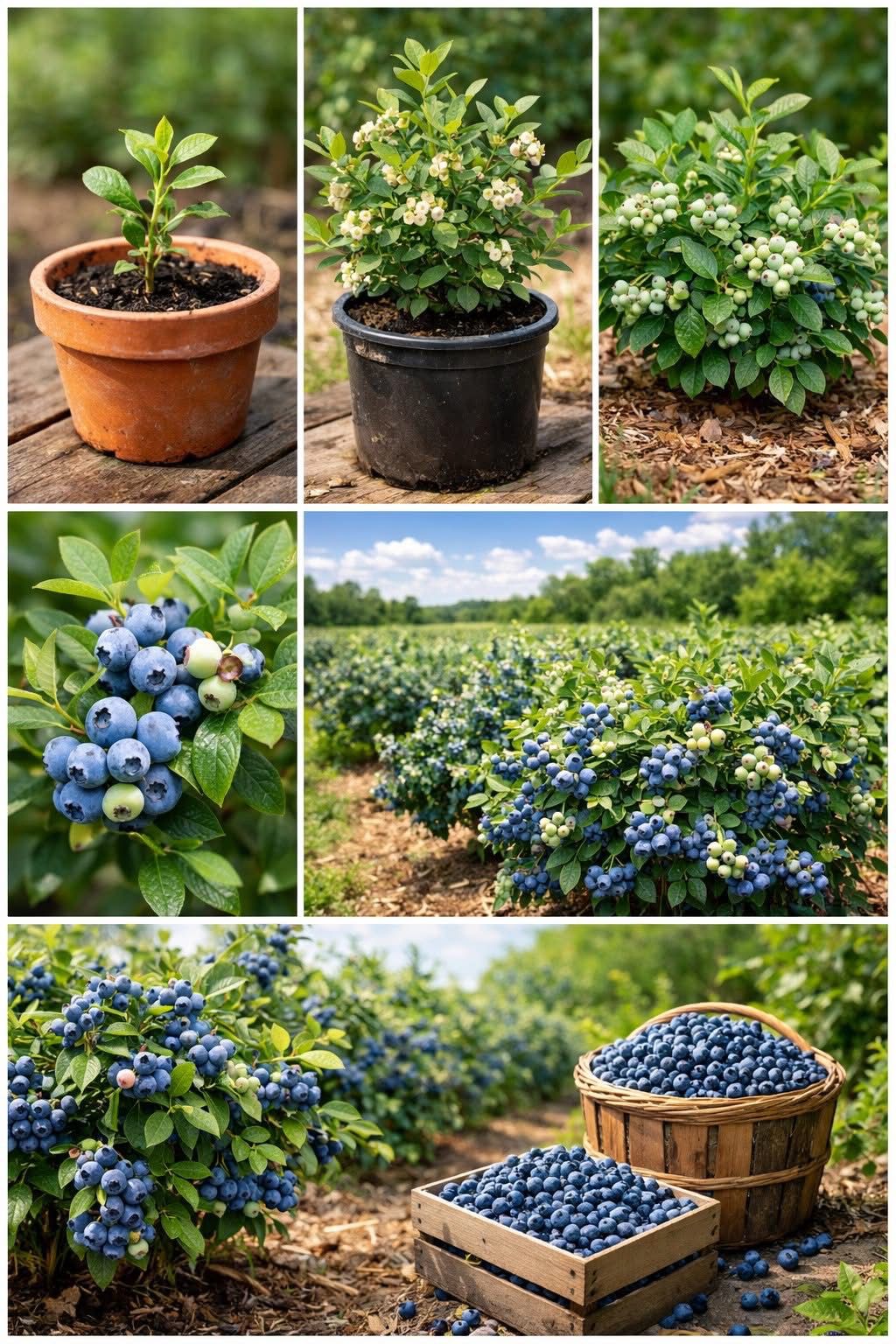
Meta Description: Discover the scientifically proven method to maximize your blueberry harvest. From foliar sprays to photoselective films, learn how to double your yield and grow the juiciest berries ever.
Imagine stepping into your backyard and picking handful after handful of plump, sweet blueberries—more than you can eat, bake, or freeze. For most home gardeners, a good blueberry harvest is satisfying, but an overwhelming harvest feels like magic. What if it wasn’t magic, but science?
Recent agricultural research has uncovered a combination of techniques that can dramatically increase blueberry yields—in some cases, by over 1,000% in young plants . This isn’t just about fertilizer; it’s a holistic method involving targeted nutrition, light management, and precision timing. Here is the ultimate guide to growing more blueberries than you ever thought possible.
The Foundation: It Starts with the Soil (and pH Fanaticism)
Before we get to the advanced tricks, we must address the non-negotiable foundation. Blueberries are ericaceous plants, meaning they are genetically programmed to thrive in acidic conditions. If your soil pH is off, nothing else you do will matter.
The Golden Range: 4.5 to 5.5
Blueberries require a soil pH between 4.5 and 5.5 . At this level, roots can efficiently absorb iron and other micronutrients. Above 5.5, plants become chlorotic (yellow leaves) and stunted.
· Testing: Test your soil a full year before planting if possible .
· Adjusting: To lower pH, incorporate powdered sulfur into the soil at least six months before planting . For raised beds, use a mix of peat moss, pine bark, and aged compost to create the ideal acidic medium .
The Organic Matter Imperative
Blueberries crave soil with high organic matter—ideally 3% to 5% or more . This ensures good drainage while retaining the moisture their shallow roots need.
· The Raised Bed Hack: If your native soil is heavy clay or alkaline, don’t fight it. Build raised beds. You can fill the bottom third with rotting logs and sticks (a technique called Hügelkultur) to create long-term organic matter and fungal networks, then top it with an acidic soil mix .
The “Yield Explosion” Method: Key Techniques That Double Harvests
Once your soil is perfect, it’s time to implement the advanced protocols that researchers are using to achieve record-breaking yields.
- Strategic Foliar Feeding: The Polyamine Power
Recent studies have shown that specific foliar sprays applied at precise times can trigger massive biochemical responses in blueberry plants.
The Science: A 2025 study published in Frontiers in Plant Science found that applying the polyamines Putrescine (Put) and Spermidine (Spd) to blueberry leaves resulted in an 80% increase in fruit yield .
· How it works: These compounds regulate cell division and expansion, enhance photosynthesis, and improve nutrient uptake.
· The Method:
· Timing is Everything: Apply during the fruit development stage (not just at bloom) .
· The Mix: Use a foliar spray of 1 mM Putrescine.
· The Results: This single application led to:
· 34% increase in fruit firmness
· 31% increase in anthocyanins (the healthy antioxidants)
· 43% increase in leaf Nitrogen levels
The Boron and Calcium Boost: Another study confirmed that preharvest foliar sprays of boric acid and calcium chloride not only increased yield (up to 3.73 Mt/ha) but also significantly extended the storage life of the fruit by slowing decay . Add these to your foliar program for firmer, longer-lasting berries.
- Manipulating Light with Photoselective Films
Here is a technique that sounds like science fiction but is grounded in hard data: using colored films to supercharge photosynthesis.
The Science: A 2025 study in Georgia tested “photoselective devices” on young blueberry plants. The results were staggering. Cultivar ‘Meadowlark’ saw a yield increase of 1,170% under Opti-Gro film compared to the control . ‘Keecrisp’ yields jumped by over 1,000% .
· Why it works: These films alter the spectrum of light reaching the plants, increasing the electron transport rate and quantum yield of photosystem II—in plain English, it makes photosynthesis vastly more efficient.
· Home Grower Application: While commercial films are expensive, home growers can mimic this by using reflective mulches (like silver plastic) or even strategically placed white panels to bounce light up into the lower canopy of the bushes, ensuring no leaf is left in the dark.
- Mulch Management: The Weed Mat Revolution
We know mulch is good, but a long-term study revealed a specific strategy that pushed yields up by an average of 41% .
The Method: Researchers placed weed mat (landscape fabric) over existing organic mulches (like sawdust or compost). This combination was superior to weed mat alone or mulch alone .
· Why it works: The organic mulch underneath feeds the soil life and maintains acidity, while the weed mat on top prevents weeds, warms the soil earlier in spring, and conserves moisture perfectly.
· The Action: If you have mature bushes mulched with wood chips or sawdust, consider laying down permeable landscape fabric over that mulch layer to create this ideal environment.
Precision Pollination: Don’t Leave it to Chance
You can have the most vigorous plants in the world, but if the flowers aren’t pollinated, you won’t get fruit. With modern, intensive production methods, standard pollination often falls short.
The Buzz on Bumblebees
Blueberries are one of the few crops that benefit from “buzz pollination” (sonication), where bees vibrate the flower to release pollen. Bumblebees are masters of this, while honeybees are not .
· Intensive Production Needs: As farms have intensified, the number of flowers per hectare has increased by 35%. To pollinate these extra flowers, you need up to 8 bumblebee hives per hectare instead of the standard 3-5 .
· For the Home Garden: Attract native bumblebees by planting companion flowers nearby (like oregano and thyme) and avoiding all pesticides . If you have a large patch, you can purchase managed bumblebee hives for the flowering period.
Variety Selection and Spacing for Maximum Yield
Not all blueberry bushes are created equal. To truly overload your harvest, you need the right genetics and the right spacing.
Choose High-Yield, Compatible Cultivars
· For Massive Yields: Look for varieties known for productivity. ‘Berkeley’ and ‘Coville’ are noted for “very high yields” . ‘Bluecrop’ is a standard midseason producer that is consistent and reliable .
· The Cross-Pollination Rule: While many blueberries are self-fertile, they produce significantly larger harvests when cross-pollinated with a different variety. Plant at least two, preferably three, different cultivars that bloom at the same time .
High-Density Planting
To maximize space, consider high-density systems. In a home garden, you can plant Southern Highbush as close as 2.5 to 4 feet apart within the row, as long as you maintain vigorous pruning and irrigation . This competition can sometimes lead to higher early yields per square foot.
The Maintenance Schedule for Peak Production
Here is a seasonal checklist to keep your plants in “overdrive” mode.
Spring (Bud Swell & Bloom)
· Action: Apply an acid-specific organic fertilizer (like Espoma Holly-tone) . Apply bumblebee hives or ensure native habitat is intact. Apply first foliar spray of Putrescine as buds break .
Early Summer (Fruit Development)
· Action: This is the critical window. Apply the second foliar spray of Putrescine/Spd . Ensure plants get 1-2 inches of water per week via drip irrigation . Lay reflective mulch or weed mat if not already down.
Late Summer (Post-Harvest)
· Action: Test soil. This is the time to add sulfur if pH has crept up. Apply a layer of composted pine bark or sawdust (the organic base for your weed mat system) .
Winter (Dormancy)
· Action: Prune aggressively. Remove up to 1/3 of the oldest stems (those over 5-6 years old) at the base. Remove twiggy growth. A good bush should have 4-6 strong new canes and plenty of space for light penetration .
Troubleshooting: Protecting Your Record Harvest
A heavy yield attracts attention—from pests.
· Birds: The #1 threat. Use plastic-free netting pulled taut over a frame to prevent entanglement .
· Spotted Wing Drosophila: This small fruit fly can ruin a harvest. Monitor with traps, and practice strict sanitation (pick up all dropped fruit).
· Nutrient Deficiencies: If leaves turn red or yellow, check your pH immediately. If pH is good, a foliar feed of fish emulsion or kelp can provide a quick fix.
Conclusion: Your Blueprint for Abundance
Growing more blueberries than you can eat is not about luck; it is about executing a system. It starts with fanatical soil pH management, is amplified by precision foliar feeding with polyamines, and is protected by smart mulching and pollination strategies.
By adopting this method—treating your blueberry patch as a high-tech, living ecosystem—you aren’t just growing berries. You are engineering an environment where abundance is the only possible outcome. Get ready to freeze, bake, and gift more blueberries than you ever thought possible.
Frequently Asked Questions (FAQ)
Q: How many pounds of blueberries can I get from one mature bush?
A: A fully productive, well-maintained bush (around 7 years old) can yield between 5 and 15 pounds of fruit per year, depending on the variety and growing conditions .
Q: Can I use this “method” if I only have one bush on a patio?
A: Absolutely. Focus on the container method: use a large pot (at least 20L) with peat-free ericaceous compost . Apply the foliar Putrescine sprays during fruit development, and hand-pollinate the flowers with a soft brush to mimic the buzz of a bumblebee.
Q: Is it worth growing blueberries in containers?
A: Yes, especially if your garden soil is alkaline. While container plants may not live as long as field plants, they can be highly productive if given the right acidic potting mix, consistent water, and regular feeding with a liquid ericaceous fertilizer .
Q: Do I really need two different bushes to get fruit?
A: You will get fruit with just one plant, as most are self-fertile. However, the fruit set and berry size are significantly larger when you have two different varieties planted nearby for cross-pollination .
Q: What is the best mulch for blueberries?
A: Organic, acidic mulches are best. Composted pine bark, pine needles, or sawdust are excellent choices . Avoid mushroom compost or manures, as they are too alkaline. For maximum yield, consider placing weed mat over these organic mulches .
More Ideas You Might Like
-

Strawberry Cream Cheese Icebox Cake: The No-Bake Dessert That Steals the Show
Discover the easiest, most elegant strawberry cream cheese icebox cake! Layers of graham crackers, creamy cheesecake filling, and fresh strawberries come together in this no-bake masterpiece. Perfect for summer entertaining. Let me tell you about the dessert that looks like you spent hours in the kitchen but actually takes about 15 minutes to assemble. I…
-

3 Ingredient Pineapple Ice Cream (5 Minutes)
Discover the easiest, healthiest ice cream you’ll ever make! Just 3 ingredients—frozen pineapple, almond milk, and Greek yogurt—create a creamy, tropical treat in 5 minutes. No machine, no sugar added! Let me tell you about the ice cream that made me a convert—no churning, no heavy cream, no sugar, and done in five minutes. I…
-

BBQ Cauliflower Bites: Crispy, Sticky, and Irresistible
Discover the best BBQ cauliflower bites—crispy baked cauliflower coated in sticky, sweet, smoky BBQ sauce. A vegan, gluten‑free appetizer that rivals chicken wings. Easy oven or air fryer recipe! Let me tell you about the appetizer that converted my meat‑loving friends into cauliflower believers. I first made BBQ cauliflower bites for a game day party,…