
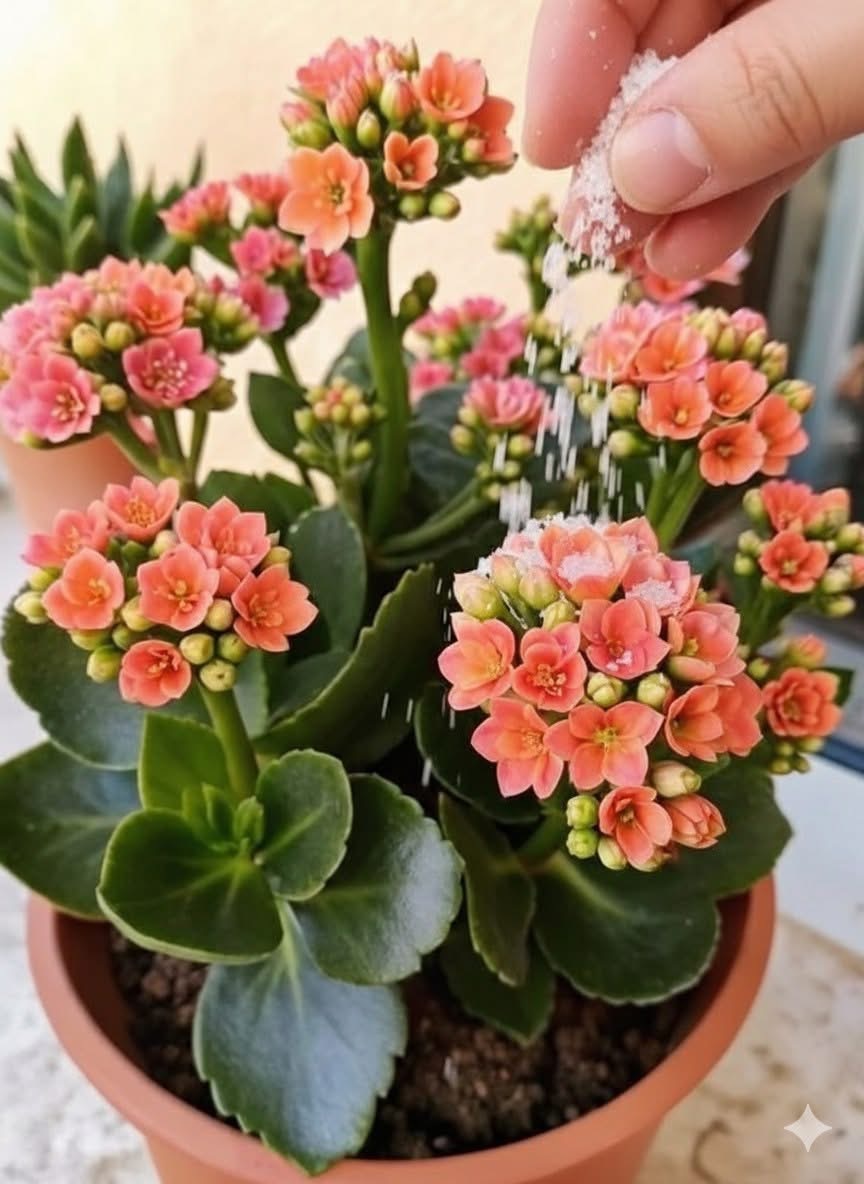
How I Encouraged Kalanchoe Blooms Using a Simple Sugar Feeding Trick 🌸✨
A Natural Fertilizer Hack for Bigger, Brighter Indoor Flowers
🌿 Meet the Beautiful Kalanchoe
If you grow Kalanchoe blossfeldiana, you already know how stunning it can be when it’s covered in clusters of vibrant blooms. This popular indoor flowering plant is loved for its bright pink, red, orange, yellow, and white flowers — and for being relatively low-maintenance.
But here’s the problem most plant lovers face:
Your kalanchoe grows healthy leaves…
It looks green and strong…
But it refuses to bloom again.
I was in the exact same situation. My plant was alive, but the flowers had disappeared. That’s when I tried a simple sugar feeding trick — and the results surprised me.
Today I’ll share:
How I used sugar water as a natural plant booster
Why it may help encourage blooms
How to do it safely
Mistakes to avoid
Extra indoor plant care tips for more flowers
Let’s dive in 🌸
Why Kalanchoe Stops Blooming
Before we talk about the sugar trick, we need to understand why kalanchoe plants stop flowering.
Kalanchoe is a short-day plant, meaning it needs:
Proper light exposure
A rest period
Balanced nutrients
Mild stress to trigger blooming
When any of these are off, your plant focuses on leaves instead of flowers.
Common reasons your kalanchoe won’t bloom:
Too much nitrogen fertilizer
Not enough light
Overwatering
No dark period
Nutrient depletion in soil
That last one is important.
After blooming, kalanchoe becomes nutrient-hungry. If the soil is exhausted, the plant lacks the energy to produce new flower buds.
That’s where this natural feeding method comes in.
The Simple Sugar Feeding Trick I Used 🍬🌿
This method is incredibly simple and budget-friendly.
🌱 Ingredients:
1 teaspoon white sugar
1 liter (4 cups) room-temperature water
That’s it.
🪴 How I Applied It:
Dissolved the sugar completely in water
Used it to water the soil (not the leaves)
Applied once every 3–4 weeks
Only during active growth season (spring & early summer)
Within weeks, I noticed:
Stronger stems
Healthier foliage
Small bud formation starting
And eventually — blooms.
Why Sugar Water May Help Plants 🌸
Now, let’s be clear: plants make their own sugar through photosynthesis.
So why add sugar?
Here’s the science-based idea:
Sugar can:
Support beneficial soil microbes
Improve microbial activity in potting mix
Enhance nutrient breakdown
Provide a temporary energy boost in depleted soil
Healthy soil microbes = better nutrient absorption.
Better nutrient absorption = stronger flowering potential.
This method works best when:
Soil is poor
Plant is recovering
You’re not overusing chemical fertilizers
It’s not magic — but it can help when used carefully.
Important: When NOT to Use Sugar Water ❌
Sugar feeding is a supplement, not a replacement for proper plant care.
Do NOT use it if:
Your plant has root rot
The soil is constantly wet
There are fungus gnats
You already fertilize heavily
Too much sugar can:
Attract pests
Cause mold growth
Disturb soil balance
Moderation is everything.
The Right Light for Maximum Blooms ☀️
No feeding trick works without proper lighting.
Kalanchoe needs:
Bright indirect sunlight
4–6 hours of strong light daily
Some direct morning sun
If your plant sits in a dark corner, sugar won’t fix it.
For reblooming, try this trick:
Give your kalanchoe 14 hours of darkness daily for 6 weeks.
This mimics natural blooming cycles and stimulates flower bud formation.
Proper Watering for Flowering Success 💧
Overwatering is the #1 bloom killer.
Kalanchoe is a succulent. That means:
Let soil dry completely between waterings
Use well-draining potting mix
Ensure pot has drainage holes
Roots must breathe.
Sugar water works best in dry, healthy soil — not soggy conditions.
The Best Soil for Kalanchoe Blooms 🌿
Use:
Cactus or succulent mix
Added perlite or sand
Fast-draining blend
Heavy soil suffocates roots and reduces flowering.
Healthy roots = more blooms.
Extra Natural Bloom Boosting Tips 🌸
If you want even better results, combine sugar feeding with:
🌼 1. Banana Peel Tea
Rich in potassium — supports flowering.
🌿 2. Epsom Salt Spray (Occasionally)
Provides magnesium for greener leaves.
🌞 3. Controlled Stress
Slight dryness before watering can encourage blooming.
How Long Before You See Results?
With proper care:
Bud formation: 3–6 weeks
Full blooms: 6–10 weeks
Patience is key.
Kalanchoe does not bloom constantly year-round without proper light cycles.
Common Mistakes That Stop Blooming
Avoid these:
Too much nitrogen fertilizer
Keeping lights on all night
Never pruning after blooms fade
Large oversized pots
Constant feeding
Pruning tip:
After flowers fade, cut stems back to encourage branching.
More branches = more future blooms.
Is Sugar the Best Fertilizer for Kalanchoe?
No.
The best fertilizer for kalanchoe is:
Balanced 10-10-10 fertilizer
Or bloom booster higher in phosphorus
Sugar is simply a natural supplement, not a complete plant food.
Use it occasionally — not weekly.
Frequently Asked Questions
Can sugar kill plants?
Yes, if overused. It can promote fungus and pests.
Can I use brown sugar?
White sugar dissolves cleaner. Stick with small amounts.
How often should I feed sugar water?
Once every 3–4 weeks maximum.
Does this work for other indoor plants?
It may help some flowering houseplants, but not all.
My Honest Results 🌸
After combining:
Sugar feeding (light use)
Proper sunlight
Reduced watering
14-hour dark cycle
My kalanchoe produced a fresh wave of colorful blooms.
The trick wasn’t just the sugar — it was correcting overall plant care.
The sugar simply supported recovery.
Final Thoughts: The Real Secret to More Kalanchoe Flowers
If your kalanchoe isn’t blooming, ask yourself:
Is it getting enough light?
Is the soil exhausted?
Am I overwatering?
Does it get darkness at night?
The simple sugar feeding trick can encourage healthier soil activity and support bloom production — but only when used wisely.
Healthy soil.
Balanced light.
Proper watering.
Occasional feeding.
That’s the real formula for stunning indoor flowers 🌸✨
If you’d like, I can also create:
A viral Facebook caption
A Pinterest-optimized version
A YouTube description
A shorter 1,000-word version
Or a version with stronger affiliate keyword targeting
Just tell me 💚