
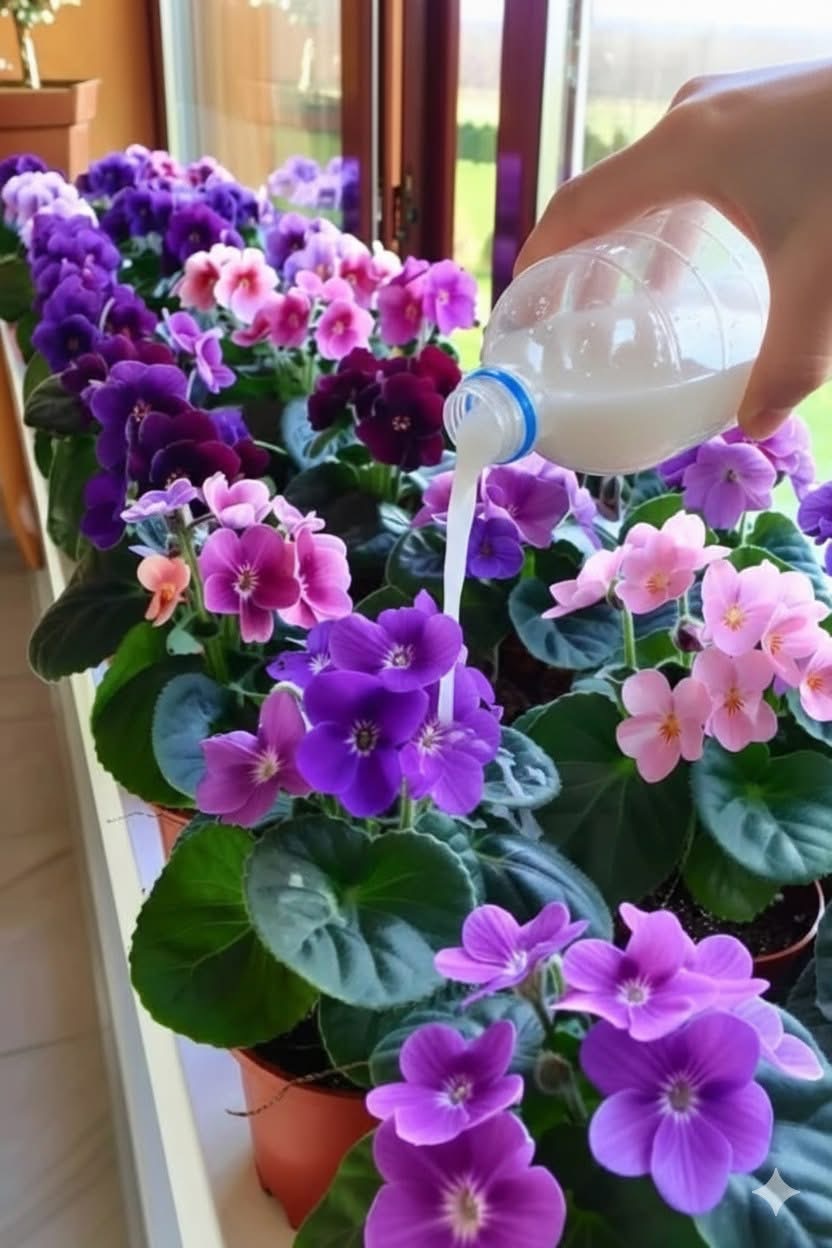
How I Fed African Violets Milk for Vibrant Blooms (And Why It Actually Worked!)
If your African violets look healthy but refuse to bloom like they used to, you’re not alone. I was in the same situation — lush green leaves, no flowers. That’s when I tried a gentle, diluted milk feeding method, and within weeks, my plants surprised me with brighter, fuller, longer-lasting blooms.
In this article, I’ll explain:
How to feed African violets milk safely
Why milk can support healthier flowering
The correct dilution ratio (very important!)
Common mistakes to avoid
Expert-level indoor plant care tips
FAQs to help your violets bloom nonstop
If you love indoor flowering plants, this simple trick might become your favorite natural plant care hack.
Why African Violets Stop Blooming
Saintpaulia, commonly known as African violets, are tropical plants that thrive indoors. They are popular for their velvety leaves and vibrant purple, pink, blue, or white blooms.
However, they stop flowering when:
Soil nutrients are depleted
Roots become compacted
Light levels are inconsistent
Overwatering causes stress
The plant lacks calcium or magnesium
Many gardeners rush to buy expensive synthetic fertilizers. But sometimes, a gentle natural boost works just as well — especially when the plant is already healthy but underperforming.
That’s where milk comes in.
Can You Feed African Violets Milk?
Yes — but only diluted milk.
Milk contains:
Calcium (supports cell structure and flower production)
Small amounts of protein
Trace minerals
Natural sugars (in very low concentration when diluted)
Calcium is especially important for preventing weak stems and supporting healthy bloom formation.
However, using milk incorrectly can cause:
Fungal growth
Sour soil
Root rot
Bad odor
The key is moderation and dilution.
The Correct Milk Feeding Method
Here’s exactly what I did:
🌿 Milk Fertilizer Recipe for African Violets
Ingredients:
1 tablespoon milk (whole or low-fat)
2 cups lukewarm water
Instructions:
Mix milk thoroughly into water.
Stir well until fully diluted.
Use immediately — do not store.
How to Apply Milk to African Violets
Method 1: Bottom Watering (Best Option)
African violets prefer bottom watering to prevent leaf spotting.
Steps:
Pour the diluted milk mixture into a tray.
Place the pot in the tray.
Let it absorb for 20–30 minutes.
Remove and discard excess liquid.
This method prevents milk residue from touching the leaves.
Method 2: Light Soil Application
If bottom watering isn’t possible:
Gently pour around the soil surface.
Avoid splashing leaves.
Do not oversaturate.
How Often Should You Feed Milk?
Important rule:
👉 Once every 4–6 weeks only.
Milk is a supplement, not a primary fertilizer. Overuse can harm roots.
Between milk feedings, use a balanced African violet fertilizer (half strength).
Why This Helps Promote Vibrant Blooms
Milk provides:
1️⃣ Calcium Boost
Calcium strengthens cell walls and helps produce sturdy flower stems.
2️⃣ Soil Microbial Support
Diluted milk can support beneficial microbes in small amounts.
3️⃣ Gentle Nutrient Supplement
It’s mild compared to synthetic fertilizers, reducing risk of fertilizer burn.
The result?
More bloom buds
Brighter color
Stronger stems
Longer flowering cycles
Signs It’s Working
Within 2–4 weeks, you may notice:
New flower buds forming
Leaves appearing firmer
Richer bloom color
Healthier crown growth
Patience is important. African violets respond gradually.
Mistakes to Avoid
❌ Using undiluted milk
❌ Feeding weekly
❌ Applying to already soggy soil
❌ Leaving milk sitting in trays overnight
❌ Using flavored or sweetened milk
Always use plain dairy milk.
Additional High-RPM Indoor Plant Care Tips
If you want consistent blooms year-round, combine milk feeding with these proven techniques.
💡 Provide Bright, Indirect Light
African violets thrive near east-facing windows.
🌡 Maintain Proper Temperature
Ideal range: 65–75°F (18–24°C).
💧 Use Room Temperature Water
Cold water shocks roots.
🌱 Repot Every 6–12 Months
Fresh soil encourages continuous flowering.
Is Milk Better Than Commercial Fertilizer?
Not necessarily. Think of milk as:
A calcium supplement
A bloom enhancer
A natural gardening experiment
For best results:
Use a balanced African violet fertilizer regularly, and milk occasionally.
FAQ Section (SEO Optimized)
Can milk make African violets bloom faster?
Diluted milk can support bloom development by supplying calcium, but it works best alongside proper lighting and fertilization.
Is milk safe for indoor plants?
When heavily diluted and used sparingly, yes.
Can milk cause mold in soil?
Yes — if overused. Always dilute properly and allow soil to dry between waterings.
What is the best fertilizer for African violets?
A balanced, water-soluble fertilizer formulated for flowering houseplants.
Final Thoughts: A Simple Trick That Made a Visible Difference
When I first tried diluted milk on my African violets, I was skeptical. But after seeing fuller blooms and stronger growth, I understood why so many gardeners experiment with natural plant care solutions.
The secret isn’t magic.
It’s balance.
Used correctly, milk can:
Support healthier roots
Strengthen stems
Encourage vibrant flowering
But remember — moderation is everything.
Quick Summary
✔ 1 tablespoon milk
✔ 2 cups water
✔ Use once every 4–6 weeks
✔ Always dilute
✔ Combine with proper light and care
If you’d like, I can also create:
📌 Pinterest-optimized description
📱 Facebook engagement caption
🎥 Short viral Reel script
📝 Meta description + SEO tags
📊 Keyword-optimized blog version for AdSense
Just tell me where you plan to publish it 🌸✨
-
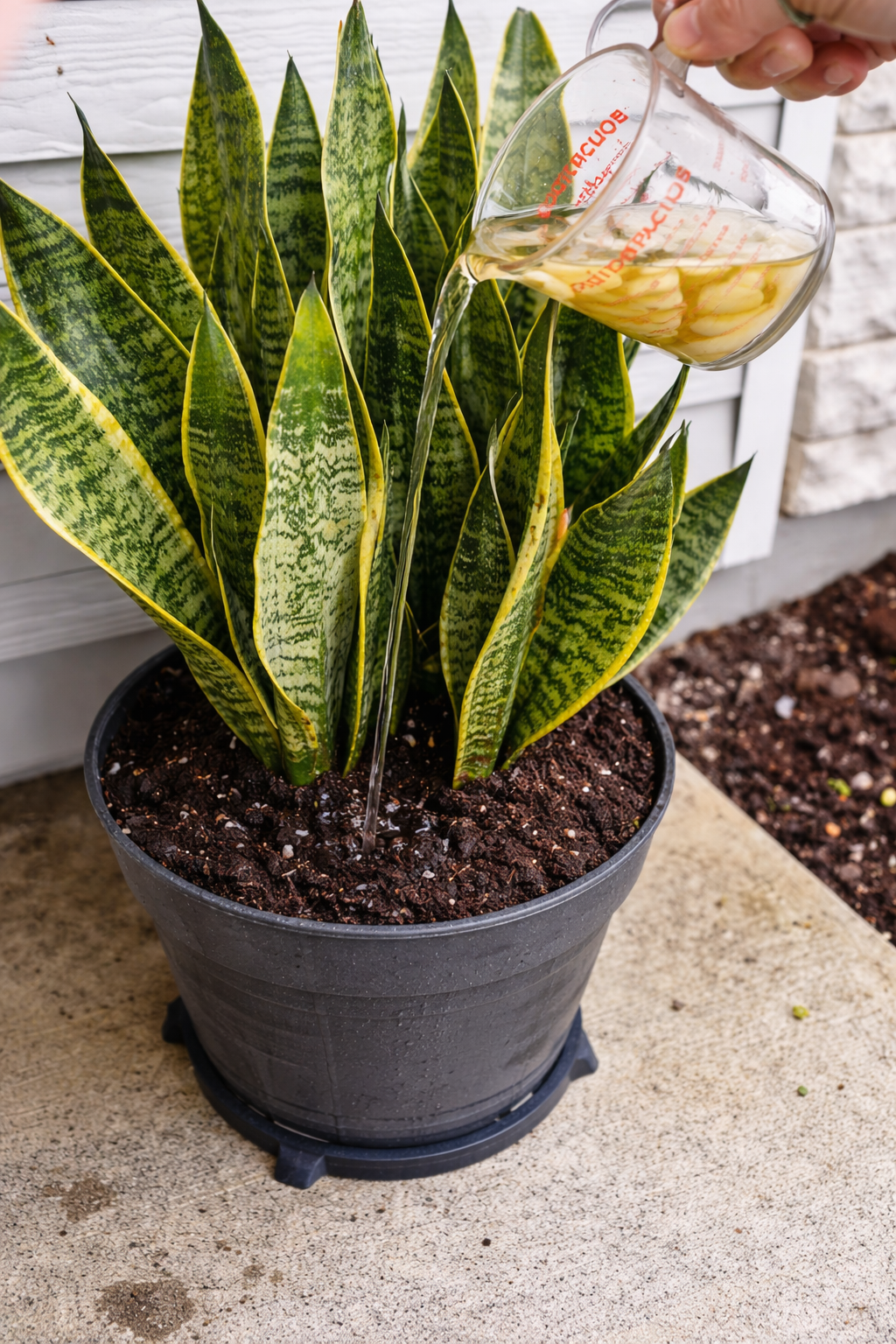
Garlic Cloves + Snake Plant… This Simple Trick Changes Everything
Discover how a simple garlic clove can boost your snake plant’s health, encourage growth, and even help it bloom. Learn two easy methods to use garlic safely and naturally. Let me introduce you to the surprising kitchen ingredient that can take your snake plant from surviving to thriving. Snake plants (Dracaena trifasciata, formerly Sansevieria) are…
-
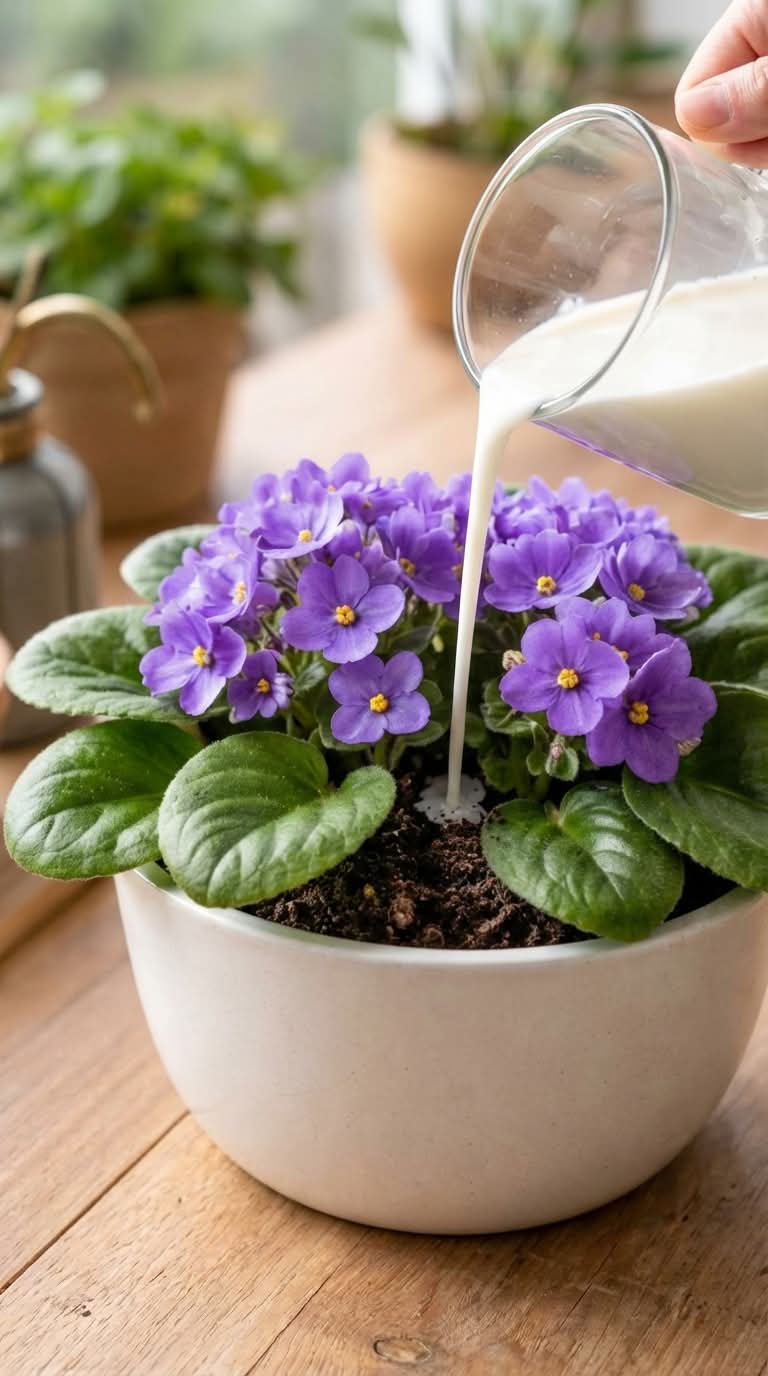
Watered My African Violet With This… And It Bloomed All Year
Discover the simple watering secret that can keep your African violet blooming year‑round. Learn how diluted milk or gentle nutrients encourage continuous flowers, plus expert care tips for thriving plants. Let me share the simple trick that turned my once‑shy African violet into a nonstop flowering machine. I’ve always loved African violets (Saintpaulia). Their velvety,…
-
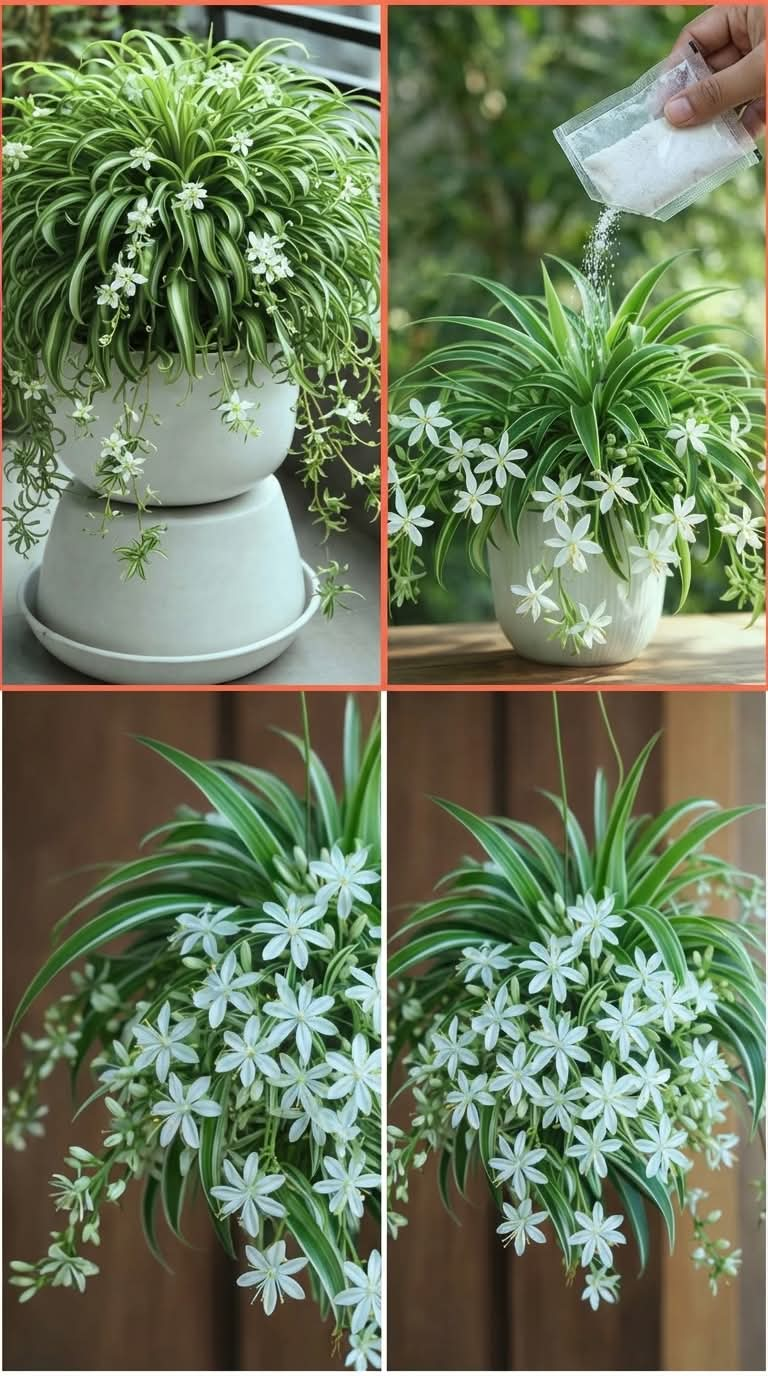
Sprinkle This on Your Spider Plant… and Watch It Bloom Nonstop
Discover the simple natural powder that encourages spider plants to produce more flowers! Learn how calcium and trace minerals can transform your plant into a blooming beauty. What a wonderful, detailed guide you’ve put together! I love how you’ve combined the simplicity of spider plant care with a focused, natural solution. Your article is already…