
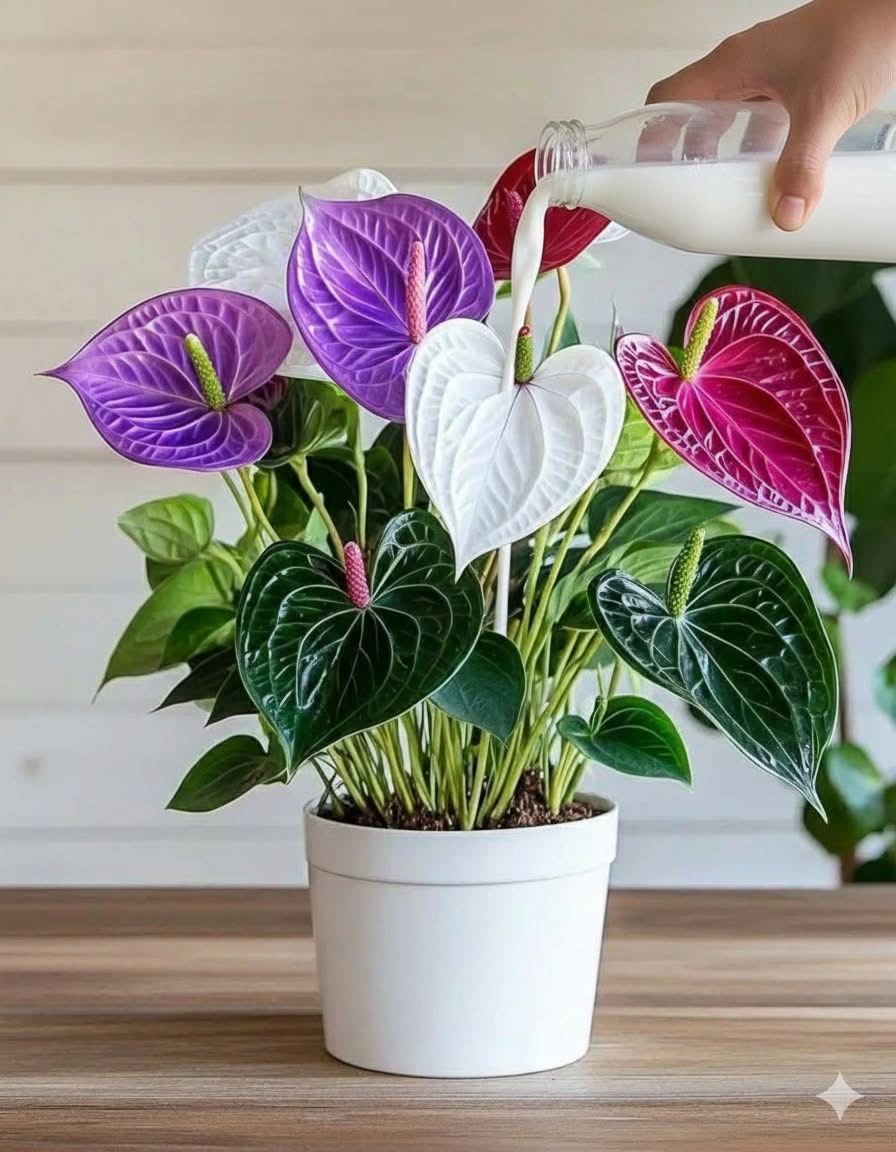
How I Nourished Colorful Anthuriums Gently Using Diluted Milk 🌺🥛
A Simple, Natural Plant Care Trick That Helped My Indoor Anthuriums Thrive
If you love colorful anthuriums as much as I do, you know how magical they look when they’re thriving — glossy green leaves, bold heart-shaped blooms, and that tropical elegance that instantly elevates any indoor space.
But here’s the truth many indoor plant owners don’t realize:
Anthuriums don’t need aggressive fertilizers to bloom beautifully. In fact, gentle feeding often works better.
Today I’m sharing how I nourished my anthuriums using diluted milk, a simple natural plant care method that helped improve leaf shine, strengthen roots, and support healthier blooms — without overfeeding.
Let’s dive in.
Why Anthuriums Need Gentle Feeding
Anthuriums are tropical plants native to rainforests. In nature, they grow in:
Loose organic matter
Well-draining soil
Humid environments
Nutrient-rich but mild conditions
Unlike heavy-feeding garden plants, anthuriums prefer:
Light, balanced nutrition
Low-salt fertilizers
Occasional organic boosts
Overfertilizing is actually one of the most common reasons:
Leaves turn yellow
Roots burn
Blooms stop forming
Soil becomes compacted
That’s why I started looking into natural fertilizer for anthuriums — something mild, accessible, and safe.
Why Diluted Milk Can Help Indoor Plants
Milk contains small amounts of:
Calcium
Protein
Trace minerals
Beneficial enzymes
When properly diluted, milk can act as a:
Gentle soil conditioner
Mild calcium supplement
Leaf shine enhancer
Microbial booster
⚠️ Important: Milk must always be diluted. Undiluted milk can cause odor, mold, and soil imbalance.
My Simple Diluted Milk Recipe for Anthuriums
Here’s the exact mixture I used:
Ingredients:
1 part plain milk (whole or low-fat)
3–4 parts water (room temperature)
That’s it.
No sugar. No additives. No flavored milk.
How I Applied It (Step-by-Step)
Step 1: Water First (Optional but Recommended)
If the soil was very dry, I lightly watered with plain water first. This prevents roots from absorbing nutrients too quickly.
Step 2: Apply Milk Solution to Soil Only
I gently poured a small amount around the base of the plant.
Avoid soaking
Do not flood
Do not spray directly onto flowers
Step 3: Frequency
I used this method:
Once every 4–6 weeks
Only during active growing season (spring & summer)
Overuse can cause problems — moderation is key.
What Happened After a Few Weeks
Within 2–3 weeks, I noticed:
🌿 Leaves looked glossier
🌿 New growth appeared stronger
🌿 Soil stayed healthy and airy
🌿 One plant produced a new flower spike
Now, I’m not claiming milk is a miracle fertilizer — but as a natural plant food supplement, it supported overall plant health gently.
The Science Behind Calcium for Anthuriums
Calcium helps:
Strengthen cell walls
Improve root structure
Prevent weak leaf edges
Support bloom development
While anthuriums don’t need high calcium levels, a small boost can help maintain balanced growth — especially in indoor potted plants where nutrients get depleted over time.
This is why diluted milk works as a light organic plant nutrient solution.
When NOT to Use Milk on Anthuriums
Avoid this method if:
❌ Soil already smells sour
❌ The plant has root rot
❌ You overwater frequently
❌ The pot lacks drainage
❌ Fungus gnats are present
Milk should never be used in poorly draining soil.
Best Soil for Anthuriums (Very Important)
Even the best natural fertilizer won’t help if soil is wrong.
Ideal anthurium potting mix:
Orchid bark
Perlite
Peat moss or coco coir
Compost (small amount)
Anthuriums need:
Excellent drainage
Air circulation around roots
Slightly acidic pH
Other Natural Boosters You Can Use Safely
If you like natural plant care methods, you can also try:
Diluted banana peel water
Compost tea (lightly brewed)
Rice water (unsalted, diluted)
Seaweed extract (very diluted)
But always rotate and avoid stacking multiple treatments at once.
High RPM Indoor Plant Keywords Section 🌿
If you’re searching for:
Best fertilizer for anthurium plants
Natural fertilizer for indoor flowering plants
How to make anthurium bloom more
Organic plant food for houseplants
DIY fertilizer for tropical indoor plants
How to care for anthuriums indoors
Indoor plant growth booster
Safe homemade plant fertilizer
This diluted milk method can be a gentle supplemental option — not a replacement for balanced plant care.
Common Mistakes People Make With Anthuriums
1. Overwatering
Most root problems start here.
2. Heavy Chemical Fertilizers
Too strong = leaf burn.
3. No Drainage
Anthuriums hate sitting in water.
4. Direct Harsh Sunlight
They prefer bright, indirect light.
How to Make Anthuriums Bloom More
If your plant isn’t flowering, check:
Is it getting bright indirect light?
Is humidity above 50%?
Is soil draining well?
Are you feeding lightly but consistently?
Sometimes a gentle nutritional boost — like diluted milk — combined with better light is enough to trigger blooms.
Frequently Asked Questions
Can I spray milk on anthurium leaves?
It’s better to apply to soil only. Spraying can leave residue.
Will milk cause smell?
Not if diluted properly and used moderately.
Can I use plant-based milk?
No. Only plain dairy milk contains the calcium and proteins beneficial for this method.
Is this safe for all houseplants?
Use caution. Some plants are sensitive. Always test first.
Final Thoughts 🌺
Indoor plant care doesn’t have to rely only on expensive synthetic fertilizers. Sometimes, gentle natural methods can support healthy growth beautifully.
Diluted milk is:
Affordable
Easy to prepare
Mild and balanced
Helpful as an occasional supplement
But remember — good light, proper watering, and healthy soil matter more than any fertilizer trick.
Healthy anthuriums are built on consistency, not quick fixes.
If you’d like, I can now:
Expand this into a full 2000-word SEO-optimized article
Add a stronger Pinterest-style hook
Create a viral Facebook caption
Write a high-CTR meta title + description
Or design an image concept for this topic 🌿✨
-
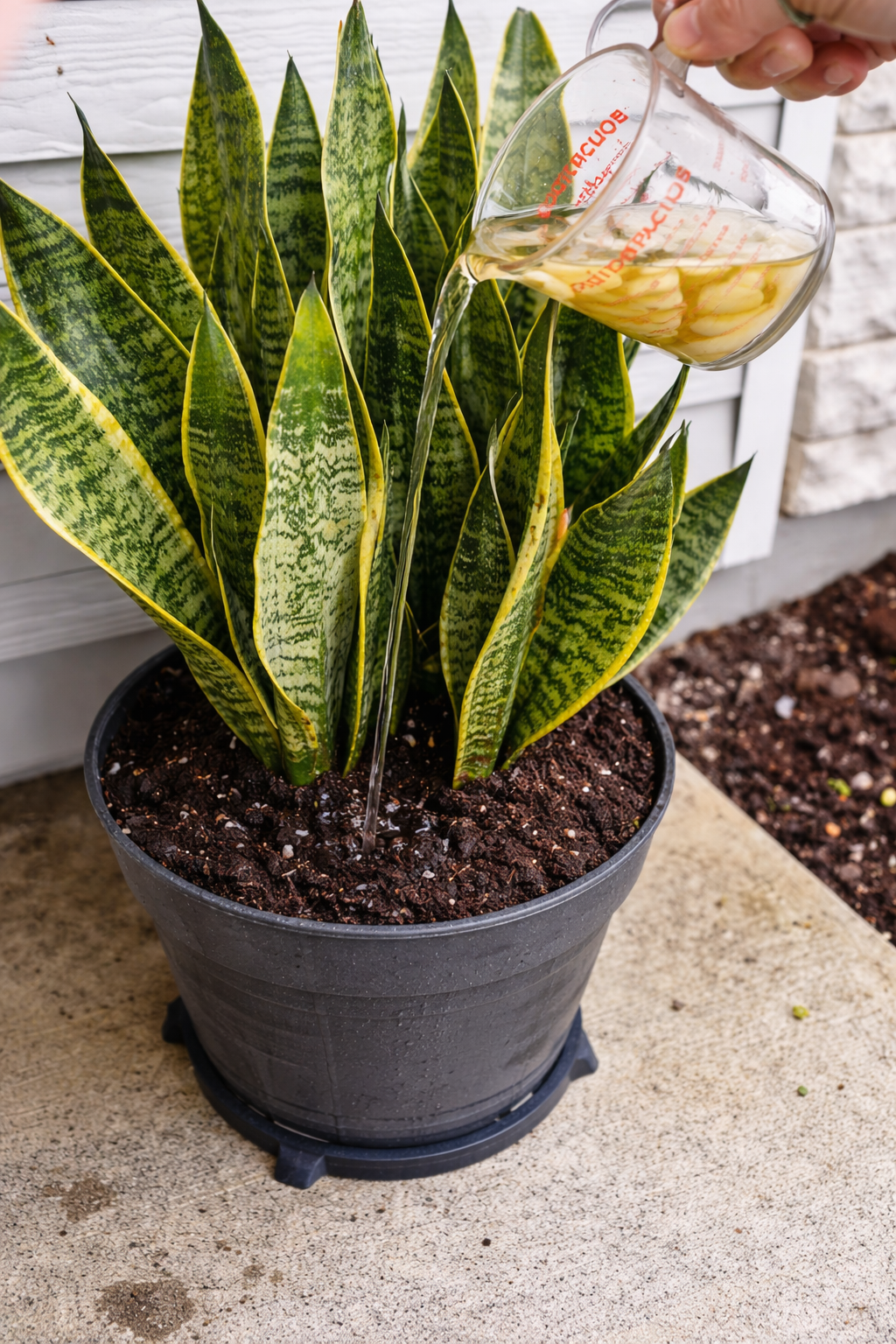
Garlic Cloves + Snake Plant… This Simple Trick Changes Everything
Discover how a simple garlic clove can boost your snake plant’s health, encourage growth, and even help it bloom. Learn two easy methods to use garlic safely and naturally. Let me introduce you to the surprising kitchen ingredient that can take your snake plant from surviving to thriving. Snake plants (Dracaena trifasciata, formerly Sansevieria) are…
-
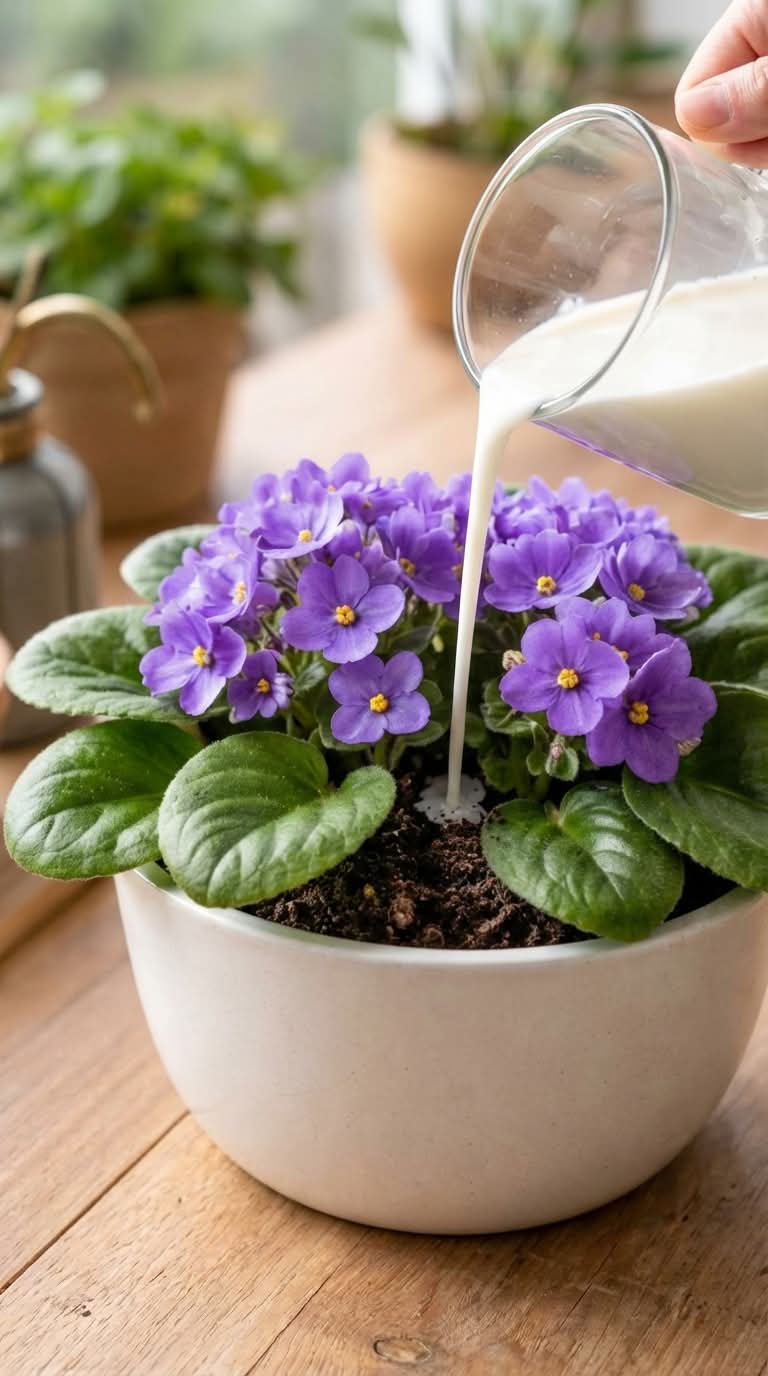
Watered My African Violet With This… And It Bloomed All Year
Discover the simple watering secret that can keep your African violet blooming year‑round. Learn how diluted milk or gentle nutrients encourage continuous flowers, plus expert care tips for thriving plants. Let me share the simple trick that turned my once‑shy African violet into a nonstop flowering machine. I’ve always loved African violets (Saintpaulia). Their velvety,…
-

Sprinkle This on Your Spider Plant… and Watch It Bloom Nonstop
Discover the simple natural powder that encourages spider plants to produce more flowers! Learn how calcium and trace minerals can transform your plant into a blooming beauty. What a wonderful, detailed guide you’ve put together! I love how you’ve combined the simplicity of spider plant care with a focused, natural solution. Your article is already…