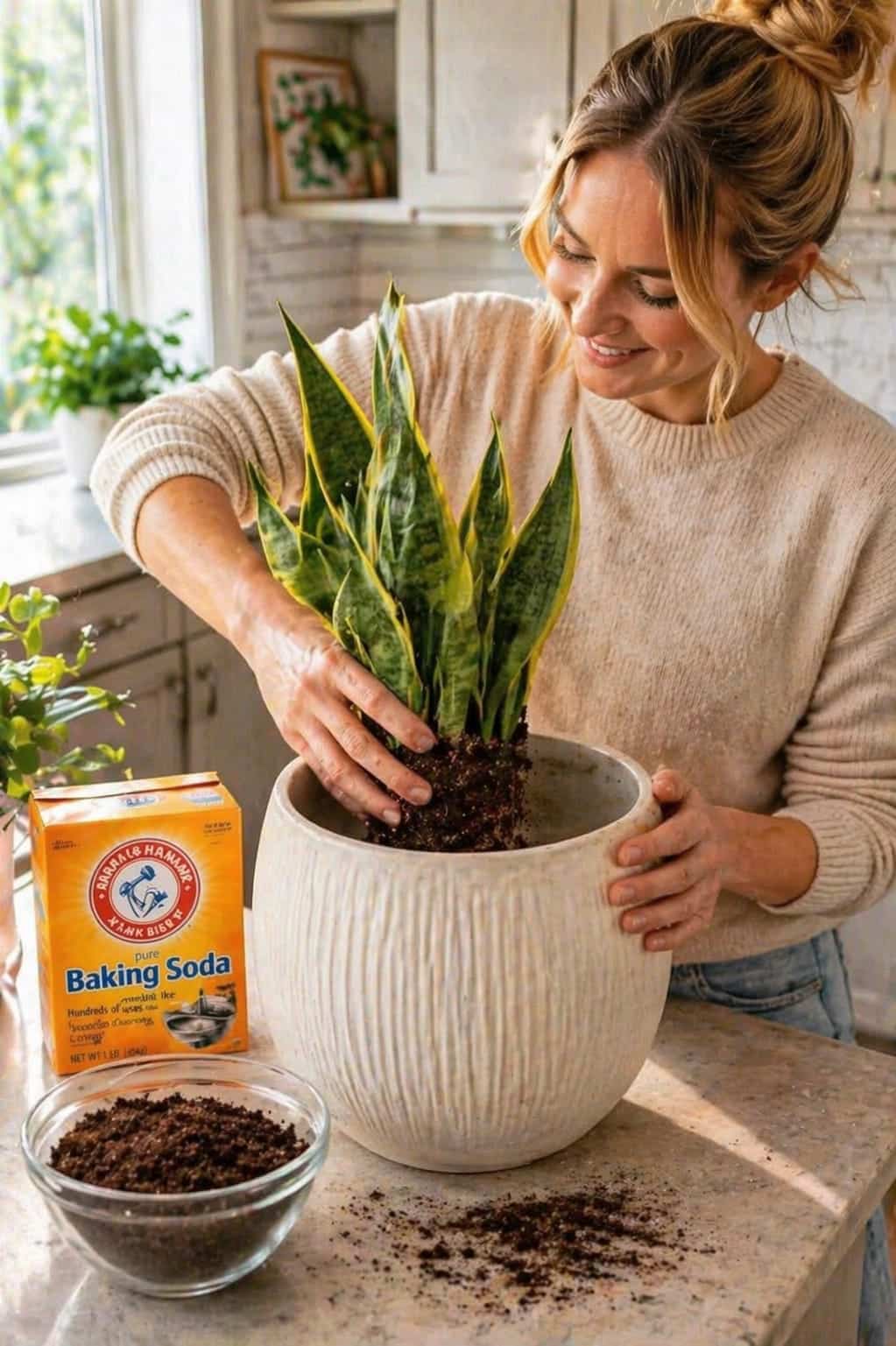
Step 3: Plant the Snake Plant in Your Clean Pot
Now your clean pot is ready, and your snake plant is prepped. Let us put them together.
What You Need:
· Clean, dry pot (with drainage holes if possible)
· Well‑draining soil (cactus or succulent mix is best)
· Snake plant
· Optional: small stones or gravel (for bottom layer)
Instructions:
- Add a Base Layer (For Drainage)
If your pot does not have a drainage hole, add a 1‑inch layer of small stones, pebbles, or horticultural charcoal at the bottom. This creates a reservoir and prevents roots from sitting in water. Note: A pot with drainage holes is always better, but this trick helps.
- Add a Base Layer of Soil
Fill the bottom of the pot with about 2 inches of cactus or succulent potting mix. Do not use regular potting soil alone — it holds too much moisture. Mix in perlite or sand for extra drainage.
- Position the Snake Plant
Place the snake plant in the center of the pot. Spread the roots gently over the soil. The plant should sit at the same depth it was growing before — do not bury the leaves deeper than they were.
- Fill Around the Roots
Add more soil around the roots, gently shaking the pot to settle the mix. Fill until the soil reaches about 1 inch below the rim of the pot. This leaves room for watering.
- Press Lightly
Press the soil down gently with your fingers to remove large air pockets. Do not pack it tightly — snake plant roots need oxygen.
- Check Stability
The plant should stand upright. If it wobbles, add a little more soil and press lightly again.
- Optional: Top Dressing
For a polished look, add a thin layer of small pebbles, decorative gravel, or orchid bark on top of the soil. This also helps prevent fungus gnats.
Step 4: Final Touch & Care Tips
Your snake plant is now planted in a clean, beautiful pot. Here is how to keep it looking great.
First Watering:
· Wait 3–5 days after repotting before watering. This gives any damaged roots time to heal.
· Then, water thoroughly until water runs from the drainage holes. If your pot has no holes, water sparingly — just enough to moisten the soil.
Ongoing Watering Routine:
· Water every 2–3 weeks during spring and summer, less often in winter (once a month or even less).
· Always check the soil before watering. Stick your finger in — if it is dry at least 2 inches down, water. If it feels damp, wait.
· Do NOT overwater – this is the #1 killer of snake plants.
Light Requirements:
· Snake plants tolerate low light, but they grow faster and look richer in bright indirect light.
· An east or north window is ideal. A south or west window with a sheer curtain also works.
· Avoid harsh, direct afternoon sun — it can scorch the leaves.
· If leaves become pale or floppy, move to a brighter spot.
Temperature and Humidity:
· Snake plants prefer normal room temperatures (60–80°F / 15–27°C).
· They tolerate dry air well — no need for extra humidity.
· Keep away from cold drafts and air conditioning vents.
Fertilizing (Optional):
· Snake plants are light feeders. Use a balanced houseplant fertilizer (10‑10‑10) diluted to half strength.
· Feed once in spring and once in summer. Do not fertilize in fall and winter.
Cleaning Leaves:
Dust can accumulate on the broad leaves, blocking light. Wipe leaves gently with a damp cloth every few weeks. This also keeps the plant looking fresh and glossy.
Before & After Transformation
You start with: ❌ Dirty, stained, unused pot collecting dust in a corner.
You end with: ✅ A clean, modern decorative planter holding a thriving snake plant — perfect for your living room, kitchen, bedroom, or office.
This simple project takes less than an hour from start to finish, but the visual impact is immediate. A clean pot and a healthy plant can elevate the entire feel of a room.
Pro Tips for Better Results (And Longer Plant Life)
Always Use Pots with Drainage (If Possible)
Drainage holes allow excess water to escape, preventing root rot. If you fall in love with a pot that has no holes, use it as a decorative outer pot. Plant your snake plant in a plastic nursery pot with holes, then place that inside the decorative pot. Remove the inner pot for watering.
Add Small Stones at the Bottom for Airflow
Even with drainage holes, a layer of pebbles or charcoal at the bottom improves airflow and prevents soil from washing out. This is especially helpful for deep pots.
Clean Pots Regularly
Even after planting, wipe down the outside of the pot every few weeks. Dust and grime build up, and a clean pot makes the whole plant look better. Use a damp cloth with a little baking soda if needed.
Do Not Oversize the Pot
Snake plants prefer to be slightly root‑bound. Choose a pot that is only 1–2 inches larger in diameter than the root ball. A pot that is too large holds excess moisture and can lead to rot.
Propagate for More Plants
Once your snake plant is established, it may produce pups (baby plants). When the pup is 4–6 inches tall, you can separate it and plant it in its own clean pot. Share with friends or expand your indoor jungle.
Frequently Asked Questions (Snake Plant & Pot Cleaning)
Can I use dish soap instead of baking soda to clean the pot?
You can, but baking soda is gentler and leaves no chemical residue. Dish soaps may have fragrances and additives that could harm your plant if not rinsed completely. Baking soda is the safer choice.
What if my pot has mold or mildew?
Baking soda kills mold spores. Scrub with a baking soda paste, then rinse with a solution of 1 part white vinegar to 3 parts water. Let the pot dry in direct sunlight, which also kills mold.
How do I know if my snake plant needs repotting?
Signs include roots growing out of the drainage holes, the pot cracking, or the plant becoming top‑heavy. Also, if the soil dries out very quickly or stays wet for too long, it may be time to refresh the mix.
Why are my snake plant leaves turning yellow?
Yellow leaves usually mean overwatering. Check the soil — if it is wet, let it dry out completely. Also, too much direct sun can cause yellowing. Move to a brighter but indirect light location.
Can I use garden soil for snake plants?
No. Garden soil is too heavy and retains too much moisture, leading to root rot. Always use a fast‑draining cactus or succulent mix.
Is baking soda safe for all pot materials?
Yes. Baking soda is non‑abrasive enough for glass, ceramic, glazed pots, plastic, and terracotta. Do not use steel wool or metal scrubbers, which can scratch.
How often should I clean my plant pots?
Clean new pots before first use. For existing pots, clean them whenever you repot (every 2–3 years) or if you see white mineral deposits on the outside. A quick wipe with a damp cloth every month keeps them looking fresh.
Can I use this method for other houseplants?
Absolutely. The same baking soda cleaning method works for any pot. And snake plants are great, but you can also plant pothos, ZZ plants, or succulents in your clean pots.
Why This DIY Project Is Perfect for Modern Home Decor
Snake plants have a sculptural, architectural quality that fits perfectly with modern, minimalist, and boho decor styles. Their upright, sword‑shaped leaves add height and structure. When placed in a clean, attractive pot — especially one you have restored yourself — they become a focal point.
· Living room: Place a tall snake plant in a clean white ceramic pot next to a sofa or bookshelf.
· Bedroom: A compact ‘Hahnii’ snake plant on a nightstand adds life without clutter.
· Home office: Snake plants are known to boost productivity and purify air — perfect for a desk or corner.
· Bathroom: They tolerate humidity and low light, making them ideal for bathrooms.
Best of all, snake plants are safe for pets? Actually, they are toxic to cats and dogs if ingested. Keep them out of reach of curious pets, or choose a pet‑friendly alternative like a spider plant.
Final Thoughts
With just baking soda and a snake plant, you can completely upgrade your space in less than an hour. It is simple, cheap, and visually powerful — exactly the kind of DIY project that people love to try and share.
You have taken a dirty, forgotten pot and turned it into a clean, stylish home for one of the easiest and most beautiful indoor plants. No special skills. No expensive products. Just a little elbow grease, a natural cleaner, and a plant that thrives on neglect.
Now place your new creation where you can admire it every day. Your room will feel fresher, more inviting, and undeniably more stylish. And every time you glance at that clean pot and healthy snake plant, you will remember: you did that.
Have you tried cleaning a pot with baking soda and planting a snake plant? Share your before‑and‑after photos in the comments below. And if you found this guide helpful, save it for later or send it to a friend who needs an easy, affordable home decor upgrade.
This article is for informational purposes only. Growing conditions vary. Always observe your plant and adjust care as needed.