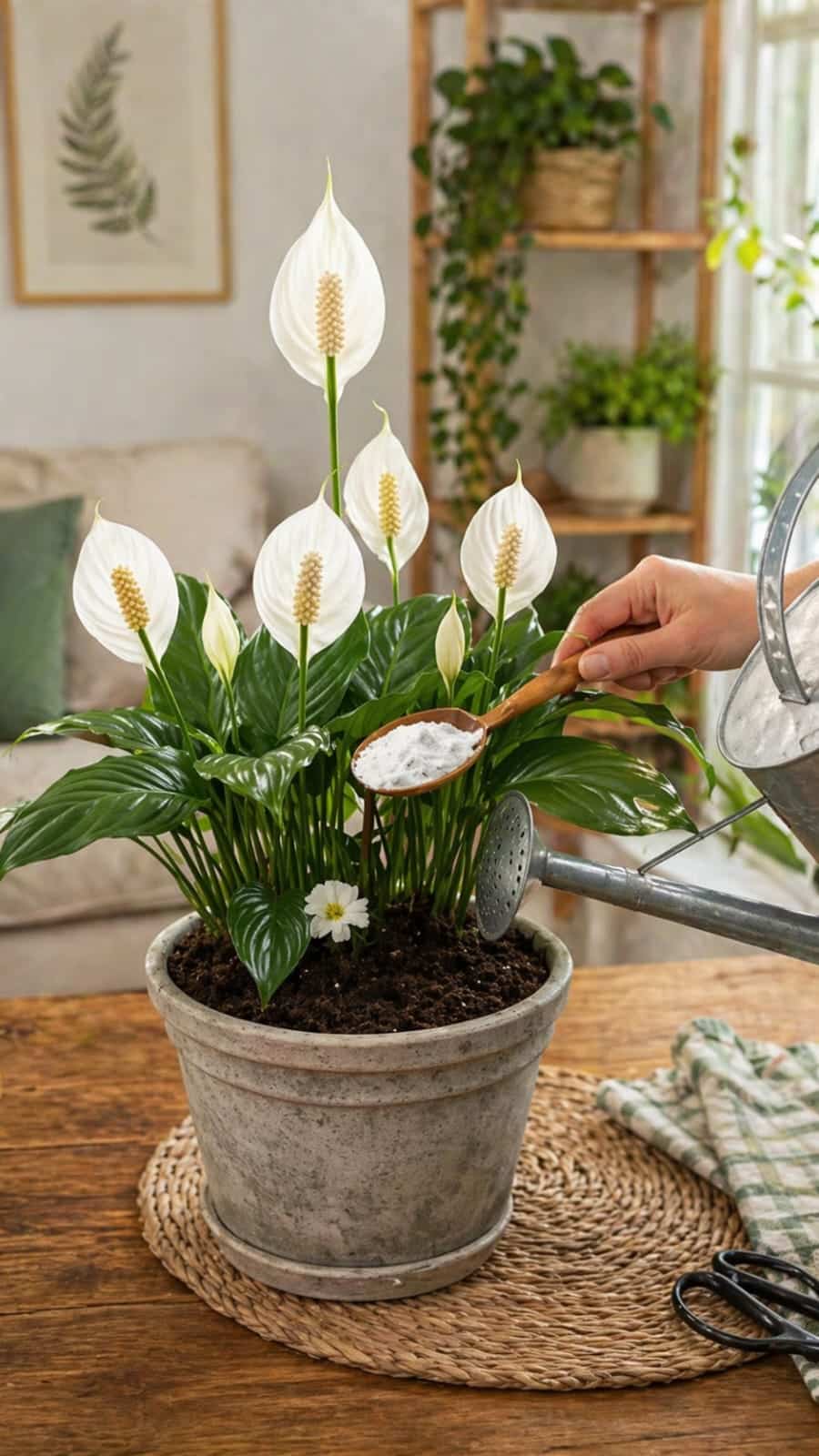
Peace lilies are one of the most rewarding houseplants you can grow. Their deep green leaves bring a calm, tropical feel to any room, and their graceful white blooms make them look far more demanding than they really are. But while peace lilies are known for being beginner‑friendly, many owners eventually notice the same problem: the plant survives, but it does not seem to truly thrive.
The leaves may stay green enough, but growth slows down. Blooms become rare. The plant starts looking tired instead of lush.
The good news is that peace lilies usually do not need anything complicated. In most cases, one simple change in care can make a noticeable difference.
In this guide, you will learn the easy tip that helps peace lilies grow fuller and bloom more, along with the essential care habits that keep these elegant plants healthy year‑round. Whether you are a first‑time peace lily owner or have been growing them for years, these practical steps will transform your plant from surviving to thriving.
The Easy Tip: Remove Old Blooms and Damaged Leaves Regularly
One of the easiest ways to encourage better peace lily growth is to trim away spent blooms and yellowing or damaged leaves. This simple habit takes just a few minutes a week, but its impact on your plant’s health and appearance is profound.
Why This Works
Peace lilies are constantly balancing their energy. They invest resources into maintaining old flowers and struggling leaves, even when those parts are no longer contributing to the plant’s vitality. By removing what is old and no longer useful, you help redirect that energy into:
· Fresh leaves – New, healthy foliage emerges faster.
· Stronger roots – Underground growth supports the whole plant.
· New bloom development – The plant can focus on producing those elegant white spathes.
This does not force blooming overnight, but it supports the kind of healthy growth pattern that makes future blooms much more likely. It also instantly improves the plant’s appearance, making it look tidier and more vibrant.
How to Do It Properly
· Use clean, sharp scissors or pruning shears. Sterilize with rubbing alcohol to prevent spreading disease.
· Cut spent flower stalks as close to the base as possible. Do not leave stubs.
· Remove any leaves that are fully yellow, brown, or damaged. Cut them at the stem.
· Do not remove more than 20–25% of the plant at once to avoid shock.
· Make this a weekly habit during active growth (spring and summer).
Why Peace Lilies Sometimes Stop Blooming
Before you can fix the problem, it helps to understand why peace lilies stop blooming in the first place. Most often, it is not a disease or a pest – it is a simple mismatch between the plant’s needs and its environment.
The Most Common Reasons:
· Too little light – Peace lilies tolerate low light but need bright indirect light to bloom.
· Inconsistent watering – Going from bone dry to soaking wet stresses the roots.
· Old, compacted soil – Potting mix breaks down over time and loses nutrients.
· Lack of fertilizer – Blooming uses energy; without nutrients, the plant cannot produce flowers.
· Root crowding – While peace lilies like to be slightly root‑bound, extreme crowding limits growth.
· Low humidity – Brown leaf tips and slow growth often indicate dry air.
The good news is that every one of these issues has a simple solution. Start with the easy tip (removing old growth), then address the underlying care factors.
Give It the Right Light (The #1 Bloom Trigger)
If you want your peace lily to grow well and bloom more often, light is one of the most important factors. Peace lilies can tolerate lower light, which is why they are so popular indoors, but tolerance is not the same as thriving.
For the Best Results, Place Your Peace Lily In:
· Bright indirect light – An east‑facing window is ideal.
· A spot near a window with filtered sun – A south or west window with a sheer curtain works well.
· A room that stays bright for much of the day – North‑facing windows can work if they are very bright.
Signs of Light Issues:
· Too little light: Dark green leaves, long stems reaching toward light, no blooms.
· Too much harsh direct sun: Scorched, yellow, or brown patches on leaves.
If your peace lily has not bloomed in over a year, move it closer to a window. You may see new flower buds within 4–6 weeks.
Continue to Page 2
Continue to page 2 for more details about this article and the key points many readers miss on the first page.