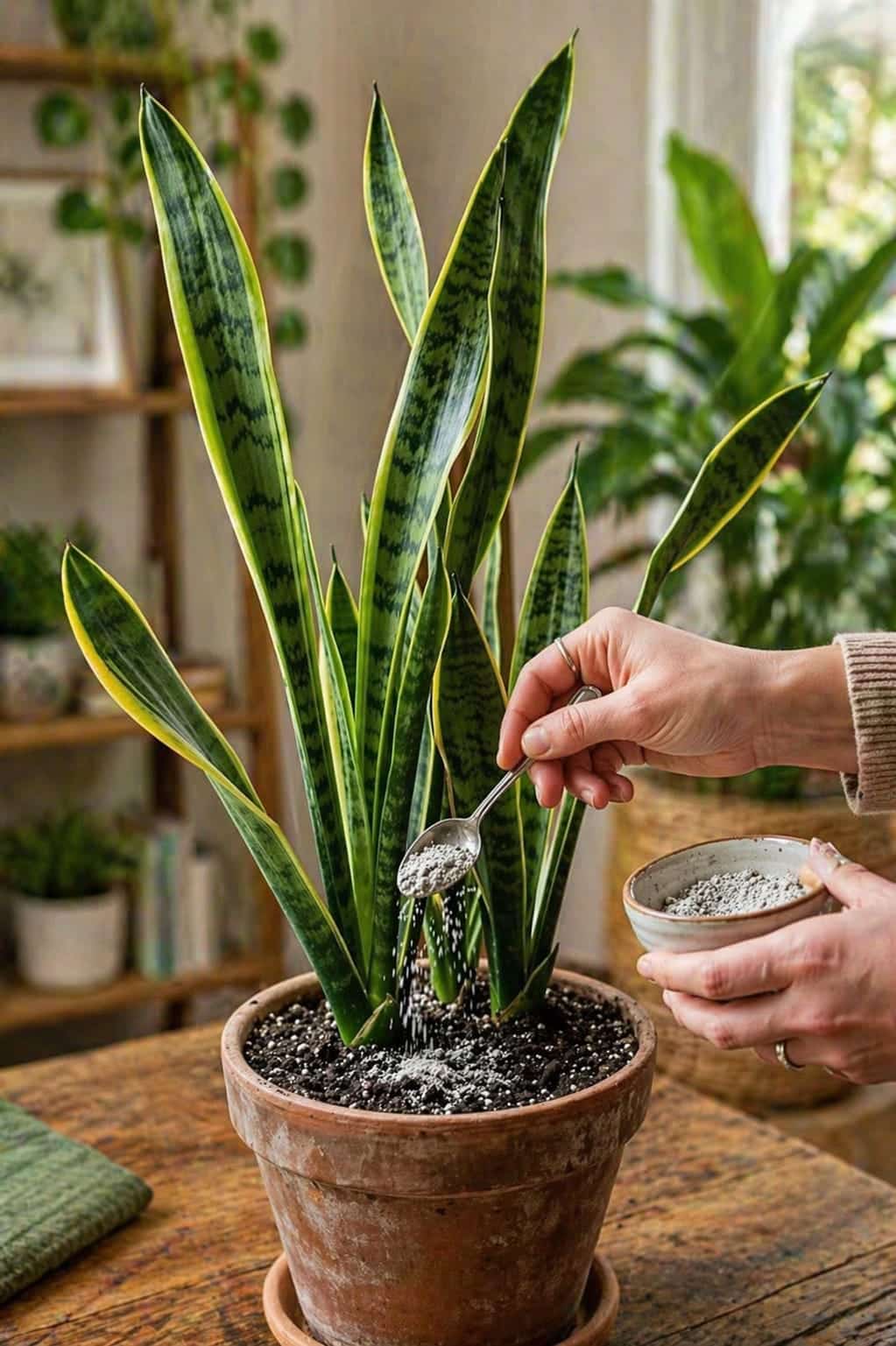
Snake plants are already known as some of the toughest houseplants you can grow. They tolerate missed waterings, low attention, and less‑than‑perfect conditions better than most indoor plants. But if you want yours to grow stronger, stay healthier, and possibly produce more pups over time, soil quality matters more than many people realize.
That is why so many gardeners talk about using ash. A light dusting of the right kind of ash is often shared as a simple home gardening trick for improving soil and supporting stronger roots. It sounds easy, inexpensive, and natural — which is exactly why it has become so popular.
But like most plant hacks, the truth is in how you use it.
In this guide, you will learn why people add ash to snake plant soil, what kind of ash is safe, how to apply it correctly, and — most importantly — the proven care habits that actually make snake plants grow stronger, fuller, and more resilient.
Why People Add Ash to Snake Plant Soil
Wood ash has been used in gardens for generations. When you burn clean, untreated wood, the resulting ash contains minerals that were in the wood, including:
· Potassium (K) – An essential nutrient that supports overall plant health, water regulation, and disease resistance.
· Calcium (Ca) – Important for cell wall structure and root development.
· Trace elements – Magnesium, phosphorus, and micronutrients in smaller amounts.
These nutrients can help support plant health when used carefully. Potassium is especially valued because it plays a role in overall vigor, root strength, and stress tolerance. That is why ash sometimes gets described as a “natural booster” for houseplants.
For snake plants, the appeal makes sense. They prefer a well‑draining, mineral‑friendly environment and do not need heavy feeding. A very small amount of the right soil amendment can sometimes be enough to refresh tired potting mix.
However, snake plants are not heavy feeders. They grow slowly and prefer moderation. Too much of anything — even something natural — can create problems.
Why Snake Plants Need Caution with Ash
Even though ash can be useful, snake plants are not heavy feeders. They grow slowly and prefer moderation. Too much of anything — even something natural — can create problems.
Ash is alkaline. Most wood ash has a pH between 9 and 11, while snake plants prefer slightly acidic to neutral soil (pH 6.0–7.0). If too much ash is added, it can:
· Disrupt nutrient balance – High pH can lock out essential nutrients like iron and manganese, causing yellowing leaves.
· Create salt buildup – A white crust on the soil surface is a sign of excess.
· Irritate roots – Sudden pH changes can damage delicate root hairs.
· Stress the plant instead of helping it – Instead of stronger growth, you may see slowed growth or leaf tip burn.
That is why the “more is better” approach does not work here. For snake plants, a tiny pinch is plenty.
What Kind of Ash Is Safest for Snake Plants
If you decide to use ash in plant care, it should only be:
· Clean – No dirt, debris, or foreign matter.
· Untreated – From natural wood only.
· From natural wood – Hardwoods like oak, maple, or hickory are best.
What to Avoid:
· Charcoal briquettes – Contain binders, accelerants, and chemicals.
· Painted or treated wood – Contains heavy metals and toxins.
· Treated lumber – Pressure‑treated wood has arsenic and other harmful compounds.
· Burned trash, cardboard, or paper – Inks, glues, and plastics release toxic residues.
· Synthetic fire logs – Often made from wax and sawdust with additives.
Those materials can contain chemicals or residues that should never go into plant soil. When in doubt, skip the ash. It is not worth the risk.
How to Use Ash Safely on a Snake Plant (Step‑by‑Step)
If you want to try this method, think tiny amount, not heavy layer. Follow these steps for the safest application.
Step 1 – Check Your Plant’s Health
Only use ash on a snake plant that is already healthy — firm leaves, proper watering, good light. Do not add ash to a plant with root rot, yellowing leaves, or obvious stress.
Step 2 – Choose the Right Ash
Use only clean, untreated wood ash. Sift it through a fine mesh strainer to remove large chunks and charcoal pieces.
Step 3 – Sprinkle a Light Dusting
For a 6‑inch pot, use no more than ½ teaspoon of ash. Sprinkle it lightly over the soil surface. Do not pile it up against the stems.
Step 4 – Water Lightly
Water the plant normally (if the soil is due for watering). The water will carry the ash down into the root zone. If the soil is already wet, skip the ash for now.
Step 5 – Do Not Repeat Often
Once every 3–4 months is plenty. Snake plants do not need frequent applications. Overusing ash leads to salt buildup and pH imbalance.
What to Watch For After Application:
· Good signs: No change, or slightly improved leaf color over several weeks.
· Bad signs: White crust on soil, leaf yellowing, leaf tip burn, or slowed growth. If you see these, flush the soil with plain water to remove excess ash.
A little goes a long way. For most indoor snake plants, this is something you would try only occasionally, not as a regular weekly feeding routine.
When Ash May Be More Helpful (Specific Situations)
A small amount of ash may be more useful when:
· The plant is in older potting mix – After a year or two, soil becomes depleted.
· The soil is very depleted – If you have not repotted in 2+ years and growth has slowed.
· Growth has slowed but the plant is otherwise healthy – Ash can provide a mild potassium boost.
· You are refreshing the soil during repotting season – Mix a tiny pinch into fresh cactus mix.
It is not a cure for major problems like:
· Root rot
· Overwatering
· Severe low light
· Pests (mealybugs, spider mites)
· Damaged or mushy roots
If those are the real issue, ash will not solve them. Fix the underlying problem first.
Continue to Page 2
Continue to page 2 for more details about this article and the key points many readers miss on the first page.