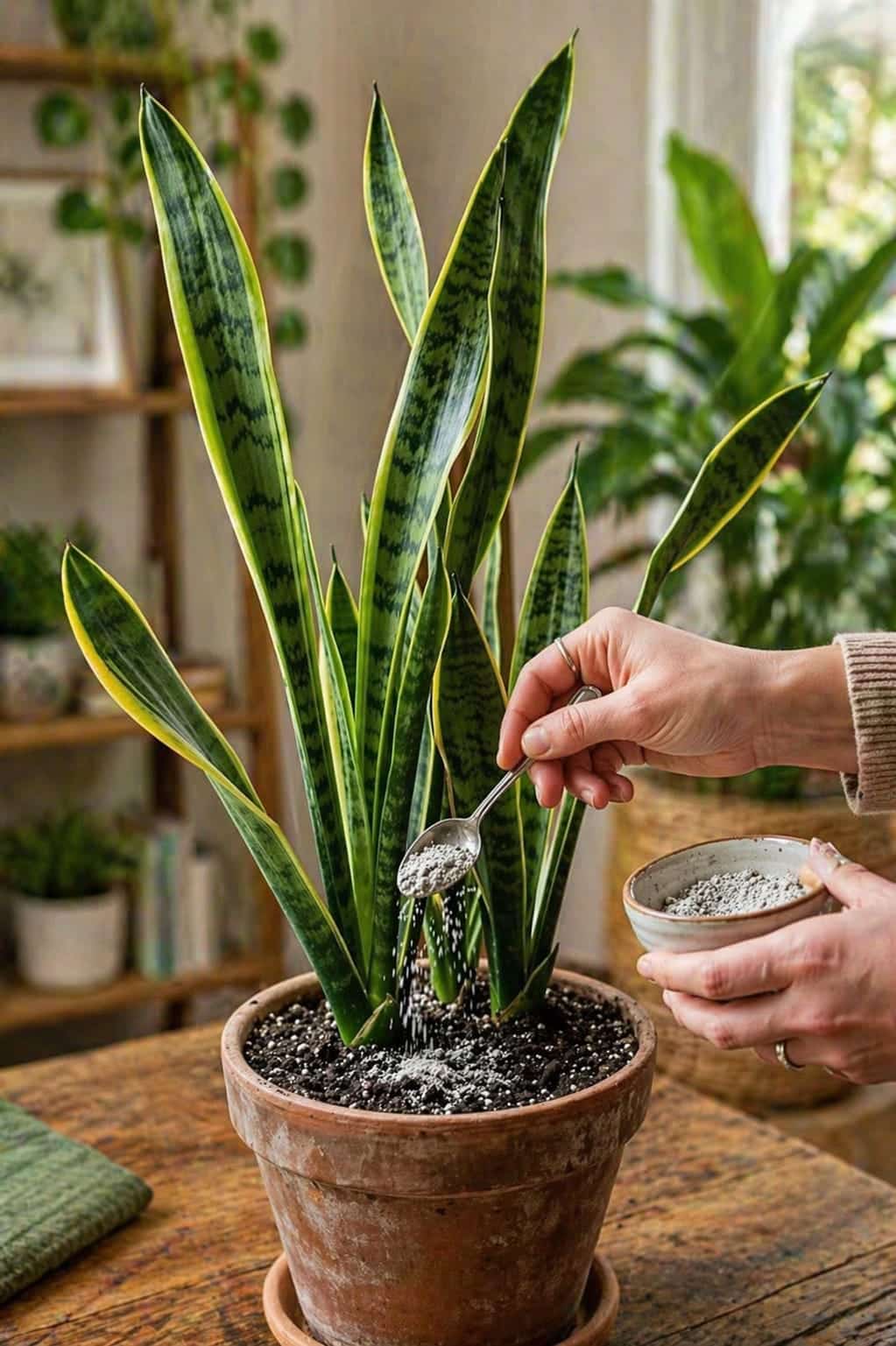
What Actually Makes Snake Plants Grow Stronger (The Real Secrets)
If you want real long‑term results, focus on the basics first. These are the proven factors that turn a surviving snake plant into a thriving one.
- Bright Indirect Light
Snake plants tolerate low light, but stronger growth usually comes from brighter conditions. An east window or a south/west window with a sheer curtain is ideal. Without enough light, no amount of ash will help.
- Proper Watering (Dry Between)
Let the soil dry completely between waterings. Stick your finger in — if it feels dry at least 2 inches down, water. In most homes, this means every 2–4 weeks in spring/summer and once a month or less in winter. Constant moisture is one of the fastest ways to weaken the plant.
- Fast‑Draining Soil
Use a mix made for succulents or cacti, or add perlite and coarse sand to regular potting soil (2 parts soil, 1 part perlite, 1 part sand). Heavy soil holds too much moisture and leads to root rot.
- Pot with Drainage Holes
This matters more than most people think. Without drainage, water sits at the bottom, roots rot, and the plant declines. Always use a pot with holes.
- Light Feeding Only When Needed
Snake plants do not need frequent fertilizer, but an occasional balanced feeding during active growth (spring and summer) can help. Use a cactus or succulent fertilizer diluted to half strength, once every 6–8 weeks.
Signs Your Snake Plant Is Doing Well (Without Any Hacks)
A healthy snake plant usually shows:
· Upright, firm leaves – No flopping, wrinkling, or soft spots.
· Strong green color – Rich, vibrant, not pale or yellow.
· Steady new leaf growth – Fresh leaves emerging from the center.
· Baby pups forming near the base – New shoots appear over time.
· No mushy or collapsing sections – The plant feels solid.
Those signs come from consistent care more than from any one ingredient. If you see pups, your care routine is working.
Common Mistakes with the Ash Trick (And How to Avoid Them)
If people run into problems, it is often because they:
Use Too Much Ash
Fix: A pinch is enough. A tablespoon is far too much.
Use Ash Too Often
Fix: Once every 3–4 months is plenty. Ash is not a regular fertilizer.
Apply It to Already Stressed Plants
Fix: Fix root rot, overwatering, or light issues first. Ash will not cure stress.
Use the Wrong Type of Ash
Fix: Only use clean, untreated wood ash. No charcoal, treated wood, or trash.
Ignore the Real Problem (Poor Drainage or Overwatering)
Fix: Ash cannot fix soggy soil. Repot into fresh cactus mix and water correctly.
The hack itself is not always the issue. The overuse usually is. When used correctly and sparingly, ash can be a harmless supplement. When overused, it causes problems.
A Better Mindset for Snake Plant Care
The healthiest snake plants are rarely the ones getting dramatic treatments every few days. They are usually the ones with:
· Stable light – Consistent bright indirect light.
· Careful watering – Dry between waterings.
· Airy soil – Fast‑draining cactus mix.
· Minimal stress – No sudden moves, no overhandling.
· Occasional gentle support – A light feeding once in a while.
That is why even a simple ash trick works best when it is just one small part of a bigger good‑care routine. Ash is a supplement, not a solution.
Frequently Asked Questions (Ash for Snake Plants)
Can I use fireplace ash on my snake plant?
Yes, if the wood was clean, untreated, and burned completely. Avoid ash from painted, pressure‑treated, or composite wood. Also avoid ash from charcoal briquettes.
How often should I add ash to my snake plant?
At most, once every 3–4 months. Less is better. Most snake plants never need ash if they are repotted regularly with fresh soil.
What are the signs of too much ash?
White crust on soil surface, leaf yellowing, leaf tip burn, slowed growth, or a sudden decline in health. If you see these, flush the soil with plain water.
Can I mix ash with water and pour it on?
Yes, but it is easier to overdo. Mix 1 teaspoon of ash per gallon of water, let it settle, and use only the clear liquid. This reduces the risk of pH spikes. Even then, use sparingly.
Is ash better than fertilizer for snake plants?
No. Ash provides potassium and calcium but lacks nitrogen and phosphorus. A balanced fertilizer is more complete. Ash is an occasional supplement, not a replacement.
Will ash help my snake plant grow faster?
Only if the plant was deficient in potassium. In most cases, improving light and watering will have a much bigger effect on growth speed.
Can I use ash on other houseplants?
Some plants (like ferns and calatheas) are sensitive to alkaline conditions. Do not use ash on acid‑loving plants. For succulents, use very sparingly.
My snake plant has brown tips. Will ash help?
Brown tips are usually caused by overwatering, fluoride in tap water, or salt buildup. Ash will not fix those issues. Flush the soil and adjust watering first.
A Simple Snake Plant Care Routine (No Ash Required)
Here is a proven routine that works better than any hack. Use this as your baseline.
Weekly
· Check soil moisture. Water only if completely dry.
· Wipe leaves with a damp cloth to remove dust.
· Rotate the pot slightly for even light.
Monthly
· Inspect for pests (mealybugs, spider mites).
· Remove any dead or yellow leaves.
· Flush the soil with plain water to prevent salt buildup.
Spring & Summer (Active Growth)
· Bright indirect light (10–12 hours).
· Water every 2–4 weeks (when dry).
· If desired, feed with half‑strength balanced fertilizer once every 6–8 weeks.
· Watch for new pups.
Fall & Winter (Resting Period)
· Still bright light, but days are shorter — consider a grow light.
· Water once a month or less.
· No fertilizer.
· Keep away from cold drafts (below 50°F).
Annually
· Refresh the top inch of soil with fresh cactus mix.
· Repot every 2–3 years if roots are crowded or soil is compacted.
· When repotting, check rhizomes for rot. Trim any soft, dark areas.
Final Thoughts
A light sprinkle of clean wood ash can be an interesting natural soil amendment for snake plants when used very carefully. It may help support healthier soil and stronger growth in some cases, but it is not magic — and it is definitely not something to overdo.
For the best results, remember this: healthy snake plants are built on strong roots, good drainage, and steady care. The ash may be the extra touch. But the real secret is still in the basics:
· Bright indirect light
· Fast‑draining soil
· Dry periods between watering
· A pot with drainage holes
· Occasional gentle feeding
That is what makes snake plants grow stronger, produce more pups, and look beautiful year after year. Ash can be a small supporting actor, but it is never the star of the show.
So before you reach for that jar of ash, check your light. Feel your soil. Water less often. Repot into fresh cactus mix. Then, if you still want to experiment with a pinch of clean wood ash, do so sparingly and observe.
Your snake plant will reward you with firm, upright leaves, rich green color, and — with patience — those wonderful new pups that make the whole pot feel alive.
No ash required. Just good care.
Have you tried the ash trick on your snake plant? Share your experience in the comments below. And if you found this guide helpful, save it for later or send it to a friend who wants stronger, healthier snake plants.
This article is for informational purposes only. Growing conditions vary. Always observe your plant and adjust care as needed. When in doubt, focus on light, soil, and water before any supplement.