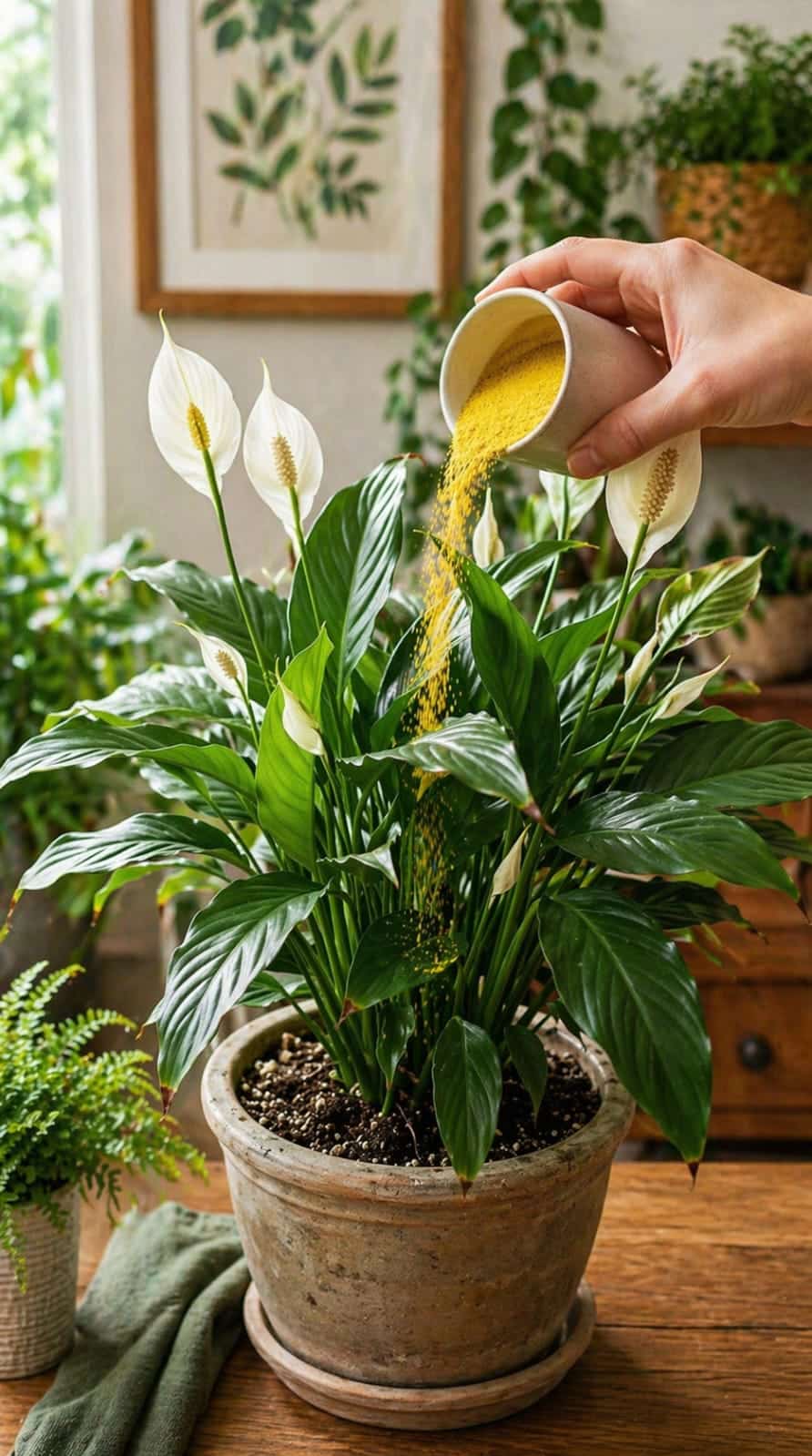
Peace lilies are loved for their rich green leaves, elegant white blooms, and calm indoor beauty. They can make a room feel brighter, softer, and more alive without demanding too much attention. But when a peace lily starts slowing down, producing fewer flowers, or looking less lush, many plant owners start searching for a simple boost.
That is where “yellow powder” plant tricks often come in.
Online, you will see people sprinkling bright yellow powders onto the soil and promising bigger blooms, greener leaves, and faster growth. It looks easy, dramatic, and almost magical.
But the real question is not whether yellow powder exists. It is whether the plant actually needs it.
In this guide, you will learn why people use powdered boosters on peace lilies, what the plant truly needs to thrive, when a yellow powder might help, and — most importantly — the proven care habits that lead to fuller growth and more beautiful blooms.
Why People Use Powdered Boosters on Peace Lilies
Many powdered plant products are meant to supply nutrients or improve soil health. Some are marketed as bloom boosters, others as natural amendments (like turmeric or cinnamon), and some are just mystery ingredients dressed up as miracle tricks.
The reason these methods get attention is simple:
· They look fast – Sprinkle and done.
· They look affordable – Often using kitchen spices or cheap supplements.
· They feel natural – No harsh chemicals, or so the claim goes.
· They promise visible results – Before‑and‑after photos look convincing.
And with a peace lily, that promise is especially tempting, because this plant responds strongly when its care improves. A peace lily that was underwatered or in low light can look dramatically better within weeks of corrected care. If a powder was sprinkled at the same time, the powder gets the credit.
What Peace Lilies Really Need to Thrive (Before Any Powder)
Before focusing on any powder or additive, it helps to remember what actually drives healthy peace lily growth. These are the non‑negotiable basics.
- Bright Indirect Light
Peace lilies can survive in lower light, but they grow fuller and flower better in bright indirect light. An east window or a south/west window with a sheer curtain is ideal. Without enough light, the plant may stay green but will rarely bloom.
- Evenly Moist but Not Soggy Soil
They like moisture, but not waterlogged roots. Soil that swings from bone dry to soaking wet stresses the plant. Aim for consistent, moderate moisture — water when the top inch of soil feels dry.
- A Pot with Drainage Holes
This is non‑negotiable. Without drainage, water collects at the bottom, roots rot, and the plant declines. If your decorative pot has no holes, use a plastic nursery pot inside it.
- Moderate Humidity
Brown leaf tips often indicate dry air. Peace lilies appreciate humidity around 40–60%. Use a pebble tray, group plants, or run a small humidifier.
- Occasional Gentle Feeding
A balanced houseplant fertilizer (10‑10‑10) diluted to half strength, applied once a month in spring and summer, supports healthy growth and blooming.
- Removal of Old Blooms and Yellow Leaves
Cutting off spent flowers and tired leaves redirects energy to new growth. This simple habit alone can make a noticeable difference.
If those basics are missing, no powder will fix the plant for long.
The Truth About Bloom Improvement (What Actually Works)
When a peace lily blooms more, it is usually because the plant is healthier overall, not because of one dramatic ingredient. More blooms usually come from:
· Better light – The #1 factor. Move your peace lily closer to a window.
· Steadier watering – Consistent moisture without extremes.
· Healthier roots – Unpot and check for rot or crowding. Repot with fresh mix if needed.
· Regular cleanup – Remove spent flowers and yellow leaves weekly.
· A slightly snug pot – Peace lilies often bloom better when slightly root‑bound.
These factors work together. No single powder can replace them.
Could a Yellow Powder Help? (Realistic Answer)
Possibly, but only if it is a proper plant‑safe product and used correctly. Some yellow powders that appear in plant videos include:
· Turmeric – Antifungal properties, not a fertilizer. Does not feed the plant.
· Sulfur powder – Used for fungal issues, not growth.
· Bloom booster fertilizer – Some granular fertilizers are yellowish. These can help if used as directed.
· Curry powder or other spices – Not beneficial and may harm the plant.
A gentle, balanced fertilizer or a slow‑release bloom booster can support growth when:
· The plant has used up nutrients in the pot (same soil for over a year).
· The soil is older and depleted.
· Growth has slowed during the active growing season (spring/summer).
· The peace lily is otherwise healthy — firm leaves, good color, no rot.
But More Is Not Better
Too much powder, especially if concentrated, can:
· Burn roots – Especially if applied directly to dry soil.
· Leave salt buildup – A white crust on the soil surface.
· Stress the plant – Instead of helping, it causes leaf tip burn.
· Make the soil chemistry less balanced – pH shifts or nutrient lockout.
That is why peace lilies respond best to light, careful feeding rather than heavy‑handed treatments.
Common Mistakes with “Miracle” Powders
Many people accidentally cause problems by:
· Sprinkling too much on the soil – A teaspoon is often too much for a small pot.
· Applying it too often – Weekly powder applications lead to buildup.
· Using unknown or non‑plant‑safe products – Kitchen spices are not fertilizers.
· Treating a root problem like a nutrient problem – If roots are rotting, fertilizer makes it worse.
· Ignoring light and watering issues – A powder will not fix a dark corner or soggy soil.
A peace lily with yellow leaves, drooping stems, or no blooms does not always need fertilizer. Sometimes it needs better drainage, more light, or less water.
Signs Your Peace Lily Needs Better Care, Not More Product
Watch for these signs. They often point to environmental or root‑zone issues first.
Symptom Likely Cause What to Do
Limp leaves even when soil is wet Overwatering, root rot Unpot, trim rotten roots, repot in fresh mix
Yellowing lower leaves Overwatering or old age Adjust watering; remove yellow leaves
Brown crispy tips Low humidity or fluoride in tap water Increase humidity; use filtered water
No new growth for long periods Too little light or pot‑bound Move to brighter spot; repot if needed
Roots circling tightly in pot Root‑bound Repot into a pot 1–2 inches larger
Sour‑smelling soil Root rot, anaerobic conditions Repot immediately with fresh, dry mix
If you see any of these, fix the underlying problem first. A powder will not help.
A Safer Way to Encourage More Blooms (No Mystery Powders)
If you want a simple, low‑risk peace lily routine that actually works, focus on this five‑step plan.
- Move It to Bright Indirect Light
This is one of the fastest ways to improve growth and bloom potential. An east window is ideal. If your only window is south or west, use a sheer curtain to diffuse harsh sun.
- Water When the Top Layer Starts to Dry
Keep the soil lightly moist, not swampy. Stick your finger in — if the top inch is dry, water. Always empty the saucer.
- Trim Old Flowers and Yellow Leaves
Cut spent blooms down at the base. Remove any leaves that are fully yellow or brown. This simple habit redirects energy to new growth.
- Feed Lightly During Active Growth
Use a balanced houseplant fertilizer (10‑10‑10) diluted to half strength. Apply once a month from March through August. Do not fertilize in fall and winter.
- Repot If Needed
If the roots are badly crowded or the soil is compacted, fresh potting mix can do more than any powder. Repot every 1–2 years with a well‑draining mix (add perlite for drainage).
Continue to Page 2
Continue to page 2 for more details about this article and the key points many readers miss on the first page.