
Want a snake plant that grows in a beautiful rosette shape? Discover the best rosette-forming varieties like ‘Hahnii’ and simple care tips to keep them looking perfect.
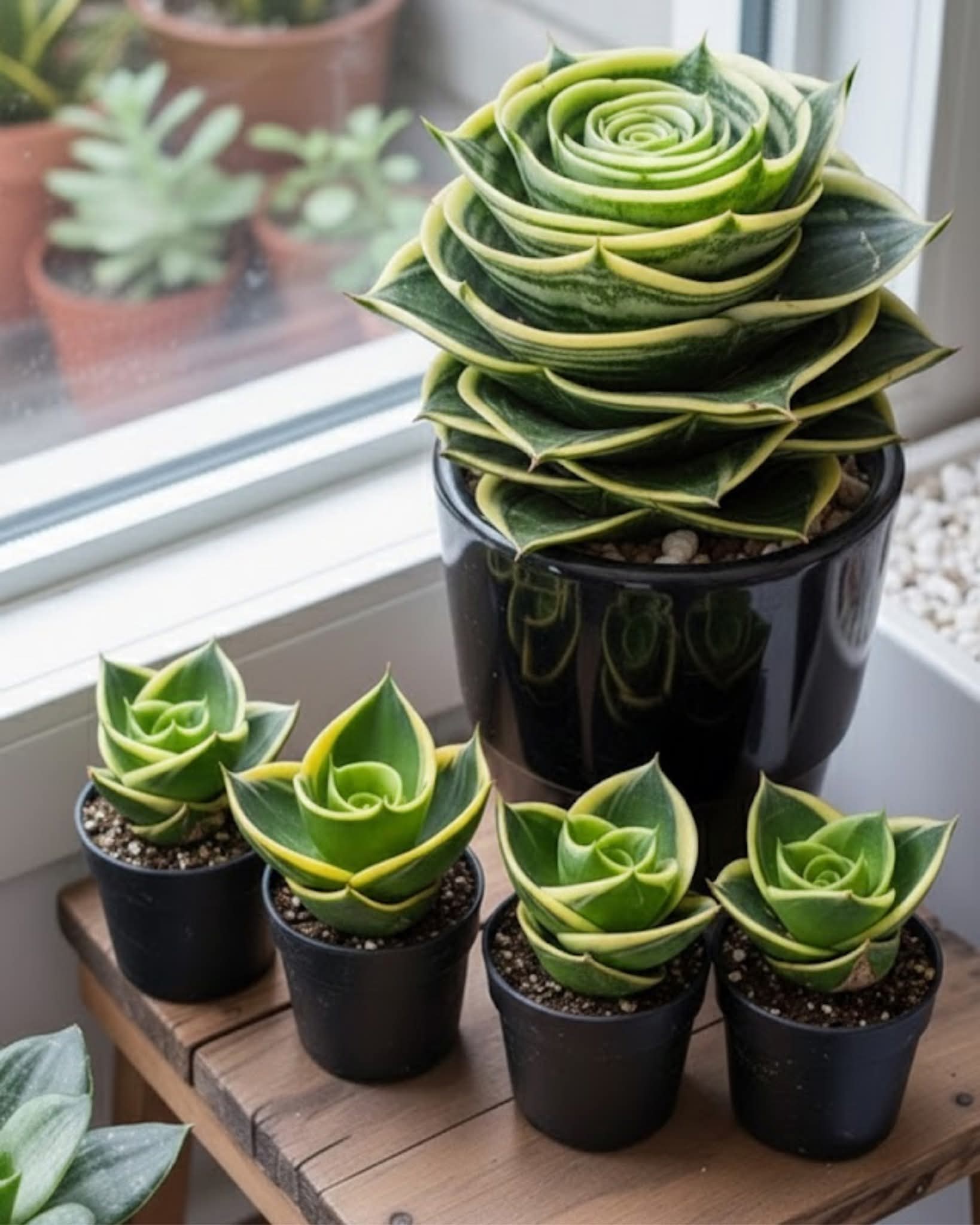
When most people picture a snake plant, they imagine tall, upright sword-like leaves reaching toward the ceiling. But there’s a whole other world of Sansevieria that grows in a completely different form—compact, low, and shaped like a perfect rosette or bird’s nest.
I discovered these charming little plants when I was looking for something to fill a small tabletop spot in my living room. The tall snake plants I had were beautiful, but they were too big for the space. Then I found a ‘Hahnii’ variety, and I was hooked. It had all the resilience of a snake plant but in a tidy, symmetrical package that looked like a little green flower blooming from the soil.
The secret to growing a rosette-shaped snake plant isn’t about training or bending leaves—it’s about choosing the right variety from the start. Some snake plants naturally grow in this beautiful form. With the right care, they’ll maintain that perfect shape for years.
In this guide, I’ll show you which snake plant varieties grow in rosettes, how to care for them, and how to encourage that gorgeous, symmetrical form.
What Is a Rosette-Shaped Snake Plant?
A rosette-shaped snake plant grows with its leaves arranged in a circular pattern from a central point, resembling a flower or a bird’s nest. Instead of shooting straight up, the leaves curve outward slightly, creating a low, lush, symmetrical clump.
The most common rosette-forming snake plant is Sansevieria trifasciata ‘Hahnii’, often called Bird’s Nest Sansevieria . It reaches only 6–12 inches tall and wide, making it perfect for tabletops, desks, and small spaces .
There are also several beautiful variegated varieties that share this same growth habit.
Best Rosette-Forming Snake Plant Varieties
Variety Appearance Mature Size Key Features
Sansevieria ‘Hahnii’ Dark green leaves with silver-grey horizontal bands 6–10 inches tall Classic bird’s nest form; forms a perfect rosette
Sansevieria ‘Golden Hahnii’ Golden-yellow margins with deep green centers 6–8 inches tall Compact, spiraling rosette; striking variegation
Sansevieria ‘Dwarf Laurentii’ Dark green leaves with bright yellow edges 4–6 inches tall Miniature version of the popular ‘Laurentii’
Sansevieria ‘Hahnii’ Jade Solid green, smooth leaves 6–8 inches tall No variegation, but forms a tight, uniform rosette
Note: Rosette-forming snake plants grow much slower than their taller relatives and rarely need repotting . Some of these compact varieties may take 2–5 years to reach their full size .
Step-by-Step: How to Grow and Maintain a Perfect Rosette
Step 1: Choose the Right Pot
The pot you choose matters more for rosette snake plants than for upright varieties.
What to use:
· A pot that is wider than it is tall—this complements the low, spreading growth habit
· Clay or ceramic pots are ideal because they’re heavier and provide stability
· Ensure the pot has drainage holes—snake plants will rot if left in standing water
What size: Choose a pot only slightly larger than the root ball. Snake plants actually thrive when slightly root-bound .
Step 2: Use the Right Soil
Rosette snake plants need soil that drains quickly. Soggy soil is their biggest enemy.
Best soil mix:
· Cactus or succulent potting mix is ideal
· You can also mix 2 parts regular potting soil with 1 part perlite or coarse sand for better drainage
· Avoid heavy garden soil or moisture-retaining mixes
Step 3: Provide Proper Light
While snake plants tolerate low light, the rosette varieties need adequate light to maintain their compact shape and variegation.
Ideal conditions:
· Bright, indirect light for 4–6 hours daily
· An east-facing window is perfect
· A few feet back from a south- or west-facing window also works well
What happens in too little light: The leaves may become stretched, the rosette may loosen, and variegated varieties may lose their yellow coloring . Growth will slow significantly.
Avoid: Direct hot afternoon sun, which can scorch the leaves .
Step 4: Water Correctly
Overwatering is the #1 killer of all snake plants, but rosette forms are especially susceptible because water can collect in the center.
Watering rules:
· Let the soil dry out completely between waterings
· In spring and summer: water every 10–14 days
· In fall and winter: water once every 3–4 weeks
· Always check the soil before watering—stick your finger in; if the top 1–2 inches are dry, it’s time to water
Crucial: Never pour water into the center of the rosette . Water around the base of the plant instead. Water sitting in the center can cause rot.
Step 5: Maintain Humidity and Temperature
These plants are adaptable but prefer certain conditions.
Temperature: Keep between 65–80°F (18–27°C). Protect from temperatures below 50°F (10°C) .
Humidity: Moderate humidity (30–50%) is ideal, but these plants tolerate dry air well. If your home is very dry, occasional misting helps .
Step 6: Fertilize Lightly
Rosette snake plants need very little food.
When to fertilize:
· Once a year in spring, or once every 4–6 weeks during the growing season
· Use a balanced liquid fertilizer (like 10-10-10) diluted to half strength
· Do not fertilize during fall and winter
Avoid: Over-fertilizing, which can cause weak, leggy growth and damage the roots .
Step 7: Prune and Maintain
Rosette snake plants require minimal pruning.
What to do:
· Remove any yellow, brown, or damaged leaves at the base
· Wipe leaves occasionally with a damp cloth to remove dust
· If the plant becomes overcrowded, you can divide it in spring
What not to do: Don’t cut the tips of healthy leaves—this can stop growth .
How to Propagate Your Rosette Snake Plant
When your rosette snake plant becomes crowded, you can divide it to create new plants. This is the easiest propagation method.
Division Method:
- Remove the plant from its pot gently
- Locate the rhizomes (thick, fleshy roots) and look for natural separations
- Gently separate a section with healthy roots and at least 2–3 leaves
- Pot up each division in a small container with well-draining soil
- Water lightly and place in bright, indirect light
New plants may take several weeks to establish .
Common Problems and How to Fix Them
Problem Likely Cause Solution
Leaves turning yellow, mushy base Overwatering, root rot Stop watering; repot in fresh, dry soil; trim rotted roots
Leaves wrinkled, tips brown Underwatering Give a deep, thorough soak; water more regularly
Rosette loosening, leaves stretching Too little light Move to brighter location with indirect sun
Variegation fading Insufficient light Provide more bright, indirect light
No growth for long periods Normal (slow grower) or low light Check light levels; be patient—these plants grow slowly
White, fluffy spots on leaves Mealybugs Wipe off with cotton swab dipped in rubbing alcohol
Frequently Asked Questions
Q: How big does a rosette snake plant get?
A: Most rosette varieties stay under 12 inches tall and wide. ‘Hahnii’ grows to about 6–10 inches, and ‘Golden Hahnii’ reaches 6–8 inches .
Q: Do rosette snake plants flower?
A: Occasionally, though rarely indoors. If they do bloom, they produce a slender stalk with small, fragrant greenish-white flowers . Blooming is more likely when the plant is slightly root-bound or mildly stressed.
Q: How often should I repot?
A: Every 2–3 years, or when roots are visibly crowded. Snake plants actually prefer being slightly root-bound, so don’t rush to repot .
Q: Can I grow these outdoors?
A: Yes, in USDA zones 10–12. They need partial shade and protection from direct sun and frost . In colder climates, keep them indoors.
Q: Are they safe for pets?
A: Snake plants are mildly toxic to cats, dogs, and humans if ingested. Keep out of reach of curious pets and children .
Q: Why is my rosette snake plant turning brown at the tips?
A: Brown tips often indicate underwatering, low humidity, or salt buildup from tap water. Switch to filtered water and check your watering routine.
The Bottom Line
Rosette snake plants are some of the most charming, low-maintenance houseplants you can grow. With their compact size, perfect symmetry, and legendary resilience, they’re ideal for tabletops, desks, and small spaces.
The secret to a beautiful rosette isn’t complicated training or constant fussing. Start with the right variety—any of the ‘Hahnii’ cultivars will naturally form that perfect bird’s nest shape. Give it bright, indirect light, let the soil dry out completely between waterings, and avoid pouring water into the center of the plant. That’s really all it takes.
What I love most about these plants is how they bring structure and elegance to any space without demanding constant attention. They’re the kind of plant that looks beautiful even when you forget about them for a few weeks—perfect for busy plant lovers.
Now it’s your turn! Have you grown a ‘Hahnii’ snake plant? What’s your favorite rosette-forming variety? Share your experience in the comments below.
And if you’re looking for more snake plant tips, check out our guides on Snake Plant Propagation, Best Soil for Sansevieria, and How to Make Snake Plants Grow Faster.
Happy growing! 🌿✨
More Recipes You Might Like
-
How to Grow a Rosette-Shaped Snake Plant
Want a snake plant that grows in a beautiful rosette shape? Discover the best rosette-forming varieties like ‘Hahnii’ and simple care tips to keep them looking perfect. When most people picture a snake plant, they imagine tall, upright sword-like leaves reaching toward the ceiling. But there’s a whole other world of Sansevieria that grows in…
-
It Rarely Blooms… But This Simple Tip Can Make It Happen And Help You Enjoy Its Fragrance Longer!
Does your fragrant plant rarely bloom? Discover the simple trick to encourage flowers and enjoy their sweet scent for weeks longer. Natural, easy, and effective. You bought it for the flowers. You were promised delicate petals and an intoxicating fragrance that would fill your home. And for a while, it delivered—or maybe it never bloomed…
-

3 Ingredient Fried Cornmeal Mush: A Classic, Crispy, Comfort Food
Learn how to make crispy, golden fried cornmeal mush with just 3 simple ingredients. This old-fashioned comfort food is perfect for breakfast, brunch, or any meal. Easy, budget-friendly, and irresistible. Let me take you back to a time when breakfast was simple, filling, and made with love. I grew up spending summers at my grandmother’s…