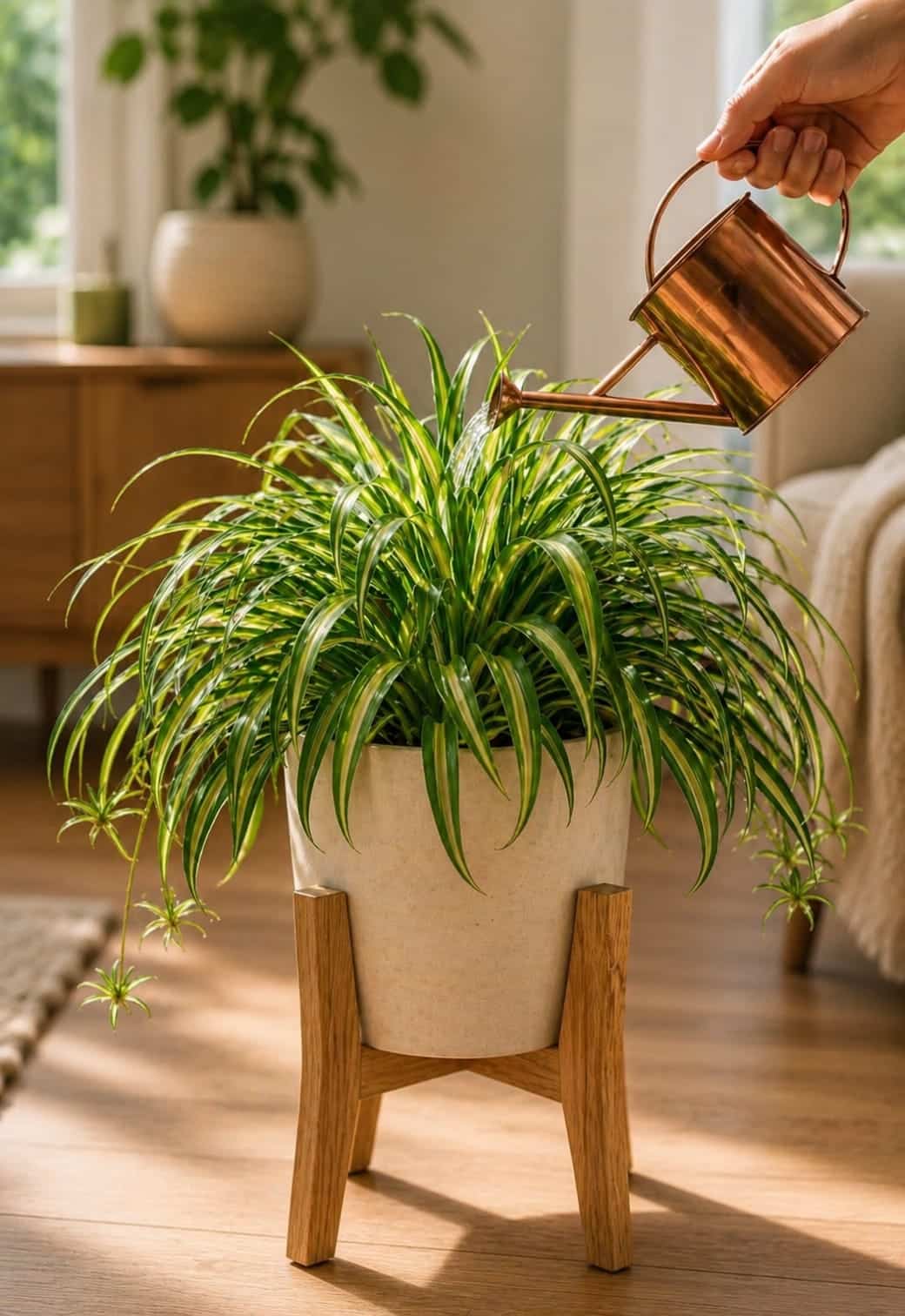
How to Encourage More Spider Plant Babies
Spider plant babies, also called plantlets or pups, usually appear on long runners after the plant is mature and healthy. If your spider plant is young, it may need time before it produces babies.
To encourage plantlets, give the plant bright indirect light, avoid overwatering, and keep it slightly snug in its pot. Spider plants often produce more runners when they are mature and a little root-bound. A plant in a very large pot may focus on root growth instead of sending out babies.
Feeding lightly during spring and summer can also help. But avoid too much nitrogen fertilizer, which may encourage leaves more than runners.
Patience matters. If your spider plant is healthy and receiving good light, the babies often come naturally.
Should You Remove Spider Plant Babies?
You can leave baby plantlets attached if you like the cascading look. They make the plant look dramatic and full. However, if the mother plant is small or stressed, too many babies can use energy.
If the mother plant looks weak, remove some plantlets and propagate them separately. This allows the main plant to focus on leaf and root growth.
To propagate a baby spider plant, wait until it has small roots forming. Then cut it from the runner and place it in water or directly into moist potting mix. Keep it in bright indirect light until it establishes.
Removing and rooting babies is one of the easiest ways to create more plants.
Repotting for Faster Growth
Spider plants have thick, fleshy roots that store water. Over time, these roots can fill the pot. A slightly root-bound spider plant can still grow well and may produce more babies, but if the roots become extremely crowded, growth may slow.
Signs your spider plant may need repotting include roots coming out of drainage holes, soil drying extremely fast, the plant lifting itself out of the pot, or slowed growth despite good light and care.
When repotting, choose a pot only one size larger. Do not move a spider plant into a huge pot. Too much extra soil can stay wet and increase the risk of root rot.
Repot in spring or early summer when the plant is actively growing. Use fresh, well-draining potting mix and water lightly afterward.
How to Divide a Spider Plant
If your spider plant is very crowded, you can divide it. Remove the plant from the pot and gently separate the root clumps. Each division should have healthy roots and several leaves.
Use clean hands or a clean knife if the roots are tightly packed. Repot each division into fresh soil. Water lightly and keep the plants in bright indirect light while they adjust.
Dividing can refresh an old plant and create several fuller plants. However, do not divide a stressed or weak spider plant unless necessary. Let it recover first.
After division, the plant may pause growth for a short time while it adjusts. This is normal.
Why Brown Tips Happen
Brown tips are very common on spider plants. They can happen because of dry air, inconsistent watering, too much fertilizer, mineral-heavy tap water, low humidity, or physical damage.
Brown tips do not always mean the plant is dying. A spider plant can be healthy overall and still have a few brown tips. However, if many tips are browning, review your care routine.
Use filtered or rested water if your tap water is harsh. Avoid overfertilizing. Keep watering consistent. Do not let the plant dry completely for too long, but do not keep it soggy either.
You can trim brown tips with clean scissors, following the natural shape of the leaf. The brown parts will not turn green again, but new leaves can grow healthier.
Why Leaves Turn Yellow
Yellow leaves can be caused by overwatering, underwatering, old leaves, poor light, root crowding, or nutrient imbalance. The first thing to check is soil moisture.
If the soil is wet and leaves are yellowing, overwatering may be the problem. Let the soil dry and check drainage. If the pot smells sour or the plant continues to decline, inspect the roots.
If the soil is very dry and leaves are limp, the plant may need water. Water thoroughly and let excess drain.
If only a few older leaves turn yellow near the base, it may be normal aging. Remove them once they are fully yellow or dry.
Do not fertilize heavily to fix yellow leaves before knowing the cause. Fertilizer cannot repair root rot or poor light.
Humidity and Spider Plant Growth
Spider plants tolerate average indoor humidity, but they often look better with moderate humidity. Very dry air can contribute to brown tips and slower growth.
You can increase humidity by grouping plants together, using a pebble tray, or placing a humidifier nearby. However, do not compensate for dry air by overwatering the soil. Humidity around the leaves and moisture around the roots are different things.
Good airflow also matters. A plant in humid but stagnant conditions can develop fungal problems. Fresh air helps leaves stay healthy and soil dry properly.
A balanced indoor environment supports stronger growth.
Temperature for Faster Growth
Spider plants prefer comfortable indoor temperatures. They grow best in warm, stable conditions. Cold drafts, freezing windows, or sudden temperature drops can slow growth and damage leaves.
Keep the plant away from cold doors, air conditioning vents, and heating vents. Hot dry air can brown leaf tips, while cold air can stress the roots and leaves.
During spring and summer, warmer temperatures and stronger light naturally encourage faster growth. During winter, growth may slow even if the plant is healthy.
Stable warmth helps the plant use water and nutrients properly.
Should You Mist a Spider Plant?
Misting is not necessary, but occasional misting may help remove dust and slightly increase local humidity for a short time. However, misting does not replace watering and does not create long-lasting humidity.
If you mist, do it lightly and make sure the plant has good airflow. Do not keep the leaves constantly wet.
A better routine is to wipe or rinse the leaves occasionally to remove dust. Clean leaves absorb light better, which supports faster growth.
For humidity, a humidifier or plant grouping is more effective than constant misting.
How to Clean Spider Plant Leaves
Spider plant leaves can collect dust, especially indoors. Dust blocks light and makes the plant look dull. Cleaning the leaves helps the plant photosynthesize more effectively.
You can wipe leaves gently with a damp cloth, though this can take time because the leaves are narrow. Another option is to place the plant in the shower and rinse it with lukewarm water. Only do this if the pot drains well.
After rinsing, let the plant drain completely. Do not leave it standing in water.
Clean leaves look brighter and help the plant grow better.
Can You Use Tap Water?
Many spider plants grow fine with tap water, but some are sensitive to chemicals or minerals. If your plant has frequent brown tips and you are not overfertilizing or underwatering, your water may be contributing.
You can try using filtered water, rainwater, distilled water, or tap water that has sat out overnight. This may reduce stress for sensitive plants.
Also flush the soil occasionally by watering thoroughly and allowing plenty of water to drain out. This can help remove mineral buildup.
If your pot does not drain, flushing is not possible, which is another reason drainage matters.
How to Make a Thin Spider Plant Fuller
If your spider plant looks thin, first improve light. A brighter location often encourages stronger leaf growth. Next, check the roots. If the plant is very root-bound or the soil is old, repotting may help.
Trim dead or damaged leaves at the base. Removing unhealthy leaves makes the plant look cleaner and allows new growth to stand out.
If the plant has many long runners but few leaves, consider removing some babies. This can help the mother plant redirect energy into foliage.
Light feeding during active growth can also support fullness. Do not overfeed. Slow, steady growth creates a healthier plant than forced growth.
Can Spider Plants Grow in Water?
Spider plant babies can root in water easily, but mature spider plants usually do better in soil. Water propagation is great for starting new plants, but long-term growth is stronger in a proper potting mix.
If you root a baby in water, wait until it has roots, then transfer it to soil. Keep the soil lightly moist while it adjusts. After it establishes, treat it like a normal spider plant.
Leaving plantlets in water forever can work for a while, but they may eventually need nutrients and stronger support.
Soil gives the plant a better foundation for fast, full growth.
Common Mistakes That Slow Spider Plant Growth
- Keeping the plant in low light – growth slows dramatically.
- Overwatering – constantly wet soil damages roots.
- Underwatering for too long – extended dryness causes stress and brown tips.
- Using too much fertilizer – excess fertilizer burns roots and tips.
- Using a pot without drainage – hidden water causes root rot.
- Leaving the plant in old compacted soil for years – fresh soil refreshes growth.
- Expecting fast growth in winter – seasonal slowing is normal.
A Simple Fast-Growth Routine for Spider Plants
- Light: Bright indirect light, near a window with filtered sun.
- Water: When top inch of soil feels dry, water thoroughly and let drain.
- Soil: Light, well-draining potting mix (add perlite if needed).
- Fertilizer: Diluted balanced fertilizer once a month in spring/summer.
- Pot: Use drainage holes; repot only when necessary.
- Maintenance: Trim brown tips, remove dead leaves, propagate babies if the mother plant is weak.
- Temperature: Warm, stable conditions, away from cold drafts.
What Results Can You Expect?
With better light, proper watering, and light feeding, a spider plant can begin producing fresh leaves within weeks during the growing season. Baby plantlets may appear when the plant is mature and happy.
Do not expect dramatic overnight growth. Spider plants can grow quickly, but they still need time. The best signs of success are new leaves from the center, brighter color, firmer growth, and new runners.
If the plant is recovering from stress, it may take longer. First it must rebuild roots, then leaves. Be patient and consistent.
Fast growth comes from steady care, not from constantly changing treatments.
Frequently Asked Questions
How can I make my spider plant grow faster?
Give it bright indirect light, water when the top inch of soil dries, use a well-draining potting mix, feed lightly during spring and summer, and keep it in a warm stable location.
How often should I water a spider plant?
Water when the top inch of soil feels dry. This may be about once a week during active growth, but it depends on your home, pot size, light, and soil.
Why is my spider plant not producing babies?
It may be too young, not receiving enough light, overwatered, overpotted, or not mature enough. Bright indirect light and a slightly snug pot often encourage plantlets.
Should I cut off spider plant babies?
You can leave them for a cascading look or remove them for propagation. If the mother plant looks weak, removing some babies can help it conserve energy.
Why are my spider plant tips brown?
Brown tips can come from dry air, inconsistent watering, overfertilizing, mineral-heavy water, or stress. Trim the brown tips and improve care conditions.
Can spider plants grow in low light?
They can survive in lower light, but they grow faster and produce more babies in bright indirect light.
What fertilizer is best for spider plants?
A balanced liquid houseplant fertilizer diluted to half strength works well during spring and summer. Use it about once a month during active growth.
Should I mist my spider plant?
Misting is optional and not very effective for long-term humidity. Moderate humidity and proper watering are more important.
🌿 Remember: Spider plants grow fastest when their roots are healthy, their light is bright, and their watering routine is consistent. Focus on the basics – light, water, drainage, and gentle feeding – and your spider plant will reward you with fuller leaves and cascading baby plantlets.