Spider plants are some of the most rewarding houseplants you can grow indoors. Their long striped leaves, graceful arching shape, and charming baby plantlets make them look fresh, lively, and easygoing. When a spider plant is healthy, it can quickly become a full, fountain-like plant that brightens shelves, plant stands, windowsills, and living rooms.
Many plant owners love spider plants because they are forgiving. They can survive missed waterings, adapt to different indoor conditions, and recover from small mistakes. But if you want your spider plant to grow faster, look fuller, and produce more baby plantlets, it needs more than random watering. It needs the right balance of light, moisture, soil, feeding, root space, and patience.
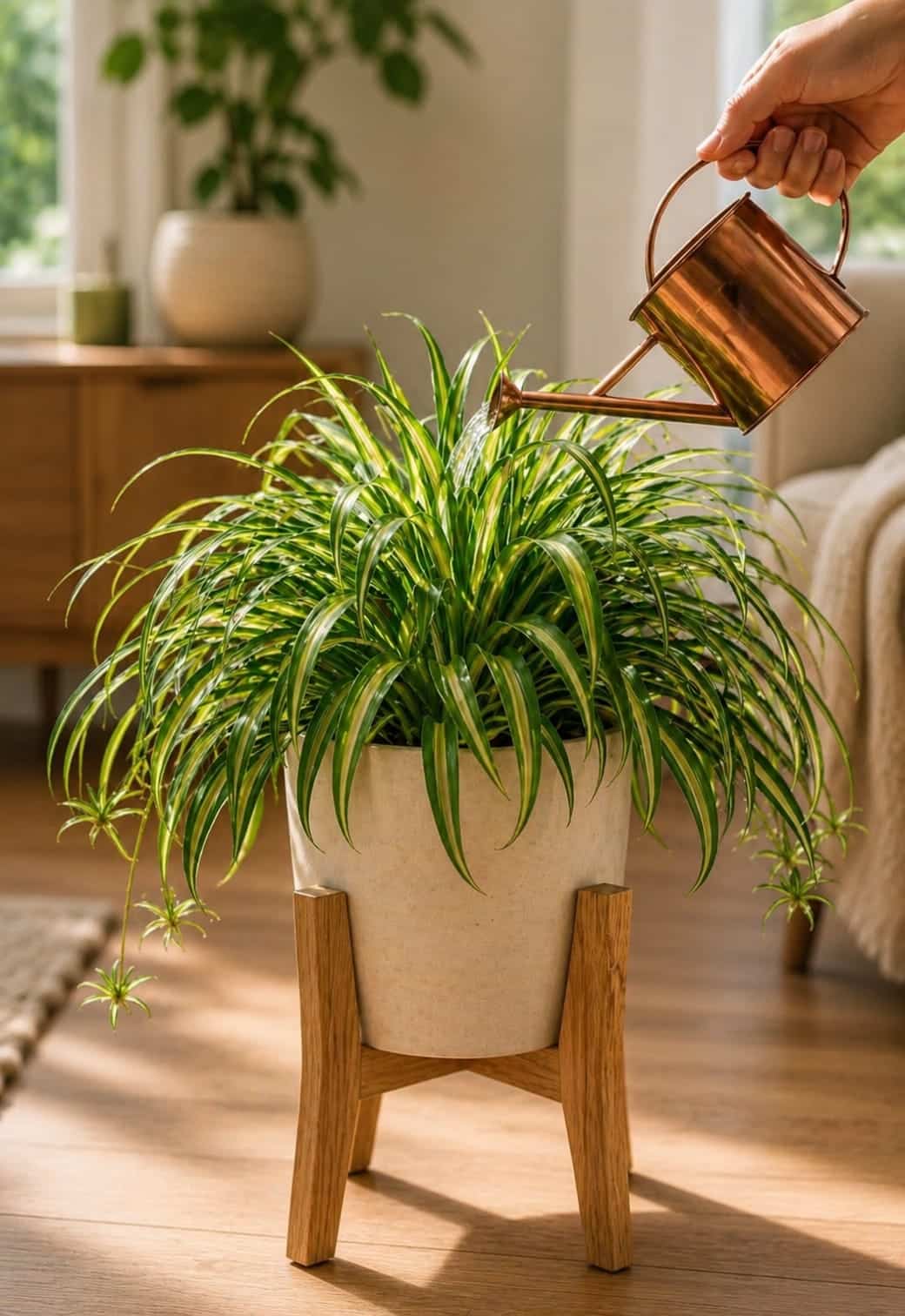
The image shows a lush spider plant being watered from above with a small watering can. The plant looks full, bright, and actively growing, with several baby spider plants hanging from long runners. This is exactly what many people want: a spider plant that does not just survive, but grows quickly and produces new shoots.
The good news is that spider plants can grow fast when their conditions are right. The mistake is thinking that more water automatically means faster growth. It does not. Too much water can damage the roots, cause yellow leaves, create brown tips, and slow the plant down. The real trick is watering deeply at the right time, giving the plant bright indirect light, feeding lightly during active growth, and keeping the roots healthy.
This guide explains how to make your spider plant grow faster in a safe and realistic way. You will learn how often to water, where to place the plant, what soil to use, how to encourage baby plants, and how to avoid the common mistakes that make spider plants slow down.
Why Spider Plants Are Naturally Fast Growers
Spider plants, also known as Chlorophytum comosum, are naturally vigorous plants when they are happy. They grow from a central crown and produce long, narrow leaves that arch outward. Mature plants can also send out long stems with small white flowers and baby plantlets. These baby plantlets are one of the most recognizable features of the spider plant.
A spider plant grows faster when it has enough light and healthy roots. The leaves collect energy from light, and the roots absorb water and nutrients. When both parts are working well, the plant can produce fresh leaves, fuller growth, and more runners.
However, spider plants do not grow at the same speed all year. They usually grow faster in spring and summer, when light is stronger and temperatures are warmer. In fall and winter, growth may slow down naturally. This does not mean the plant is unhealthy. It simply means the plant is following the rhythm of the season.
If your spider plant is not growing quickly, the first thing to check is not a secret fertilizer or a homemade trick. It is the basic environment. Light, water, and roots decide how fast the plant can grow.
The Most Important Rule: Water Well, But Do Not Overwater
Watering is one of the biggest factors in spider plant growth. A thirsty spider plant may become dull, limp, or dry at the tips. But an overwatered spider plant can suffer even more. When the soil stays constantly wet, the roots lose oxygen. This can lead to root rot, yellow leaves, and slow growth.
The best watering method is to water deeply, then let the top layer of soil dry before watering again. This gives the roots enough moisture without keeping them trapped in soggy conditions.
Do not water just because the surface looks slightly dry. Check the soil with your finger. If the top inch feels dry, the plant may be ready for water. If the soil still feels damp, wait a little longer.
When you do water, water thoroughly until moisture reaches the root zone. If the pot has drainage holes, let excess water drain out completely. Never let the pot sit in a saucer full of water for long. Standing water can suffocate the roots and slow growth.
How Often Should You Water a Spider Plant?
Most indoor spider plants need watering about once a week during active growth, but this is only a general guide. Your plant may need more or less depending on light, temperature, pot size, soil type, and humidity.
A spider plant in bright indirect light may dry out faster than one in a dim corner. A plant in a terracotta pot may dry faster than one in a plastic or glazed pot. A large pot may stay moist longer than a small pot. Warm rooms dry soil faster than cool rooms.
Instead of following a strict schedule, check the soil. Water when the top inch feels dry. In spring and summer, this may happen more often. In winter, it may take longer.
If your spider plant has many baby plantlets and is actively growing, it may use more water. If it is resting during a low-light season, it will use less. Adjust your watering routine to the plant’s actual needs.
The Best Way to Water for Faster Growth
To support faster growth, water the soil evenly around the base of the plant. Try to moisten the whole root zone, not just one small area. Pour slowly so the water has time to soak in instead of running off the surface.
If the soil is very dry and water runs straight through, water in stages. Pour a little, wait a minute, then pour again. This helps dry soil absorb moisture better.
Room-temperature water is best. Very cold water can shock roots, especially in winter. If your tap water is heavily treated or high in minerals, let it sit out overnight or use filtered water if possible. Spider plants can be sensitive to minerals and chemicals in some tap water, which may contribute to brown tips.
After watering, empty any saucer or decorative outer pot. The plant should drink what it needs, then drain freely. Healthy roots grow faster when they receive both water and oxygen.
Why Drainage Matters
A pot with drainage holes is one of the simplest ways to keep a spider plant healthy. Without drainage, water collects at the bottom of the pot, even if the top soil looks dry. This hidden water can rot the roots.
If your spider plant is in a decorative container without holes, use an inner nursery pot with drainage. Water the plant in the nursery pot, let it drain fully, then place it back into the decorative container.
Good drainage is especially important if you want faster growth. A plant with stressed roots cannot grow quickly. Roots need air pockets in the soil. When water fills all those spaces, growth slows and disease risk increases.
If your spider plant has yellowing leaves and wet soil, drainage should be one of the first things you check.
Bright Indirect Light Makes Spider Plants Grow Faster
Light is the real engine of plant growth. If you want your spider plant to grow faster, give it bright indirect light. A spot near a window with filtered sunlight is ideal. Morning sun can be helpful, but harsh afternoon sun may burn the leaves, especially the lighter variegated parts.
Spider plants can survive in lower light, but they usually grow slower there. In low light, the plant may produce fewer leaves, fewer runners, and fewer baby plantlets. It may remain alive, but it will not look as full or energetic.
If your plant is far from a window and barely growing, move it gradually to a brighter location. Do not place it suddenly in direct hot sun. Give it time to adjust.
A bright room with soft sunlight is often perfect. The leaves should look fresh and upright, not faded, scorched, or stretched.
Can Direct Sun Help?
A little gentle direct sun can help spider plants, especially morning sunlight. However, strong direct sun can scorch the leaves. Brown patches, bleached areas, or crispy tips may appear if the plant receives too much harsh light.
Variegated spider plants, with white or yellow stripes, can be more sensitive to strong sun because the lighter parts of the leaves have less chlorophyll. They still need bright light, but filtered light is safer.
If you want faster growth, choose brightness over harshness. A sunny window with a sheer curtain is often better than full direct afternoon sun.
If the leaves begin to look pale or burned, move the plant slightly back from the window.
The Best Soil for Fast Spider Plant Growth
Spider plants grow best in a light, well-draining potting mix that holds some moisture but does not stay soggy. A standard indoor potting mix can work well if it is not too heavy. You can improve it by adding perlite, coco coir, or a little orchid bark for better airflow.
The soil should feel loose, not compacted. If water sits on top of the soil for a long time before soaking in, the mix may be too dense. If the soil stays wet for many days after watering, it may need more drainage.
Healthy soil encourages healthy roots. Healthy roots support faster leaf growth and more plantlets.
If your spider plant has been in the same soil for years and growth has slowed, repotting into fresh mix may help. Old soil can become compacted, depleted, or salty from fertilizer and tap water minerals.
Should You Fertilize a Spider Plant?
Yes, light feeding during active growth can help a spider plant grow faster. Use a balanced liquid houseplant fertilizer diluted to half strength. Feed once a month during spring and summer when the plant is actively producing new leaves.
Do not overfertilize. Spider plants are not heavy feeders. Too much fertilizer can cause brown tips, salt buildup, and weak growth. More fertilizer does not always mean faster growth. It can actually stress the plant.
Do not fertilize a struggling plant with wet soil or root rot. A plant with damaged roots cannot use fertilizer properly. Fix the root environment first.
In fall and winter, reduce or stop feeding if growth slows. Feeding during low-light rest periods can lead to buildup in the soil.
Natural Feeding Options for Spider Plants
Some plant owners like natural feeding routines such as compost tea, worm casting tea, rice water, or banana peel water. These can be used carefully, but they should be mild and occasional. Spider plants do not need strong homemade mixtures.
If you use natural options, make sure they are diluted and fresh. Do not pour thick or fermented liquids into the pot. Do not bury food scraps in the soil. Fresh kitchen scraps can rot, attract gnats, smell bad, and damage roots.
A small amount of worm castings mixed into the top layer of soil can be a gentle option. A diluted balanced fertilizer is still more predictable if your goal is steady growth.
The safest rule is simple: feed lightly, not heavily.
🌿 Pro tip: If you notice brown tips, check your water quality and fertilizer strength first. Reducing fertilizer often helps more than adding something new.
Continue to Page 2
Continue to page 2 for more details about this article and the key points many readers miss on the first page.