What to Avoid (Common Mistakes)
Do Not:
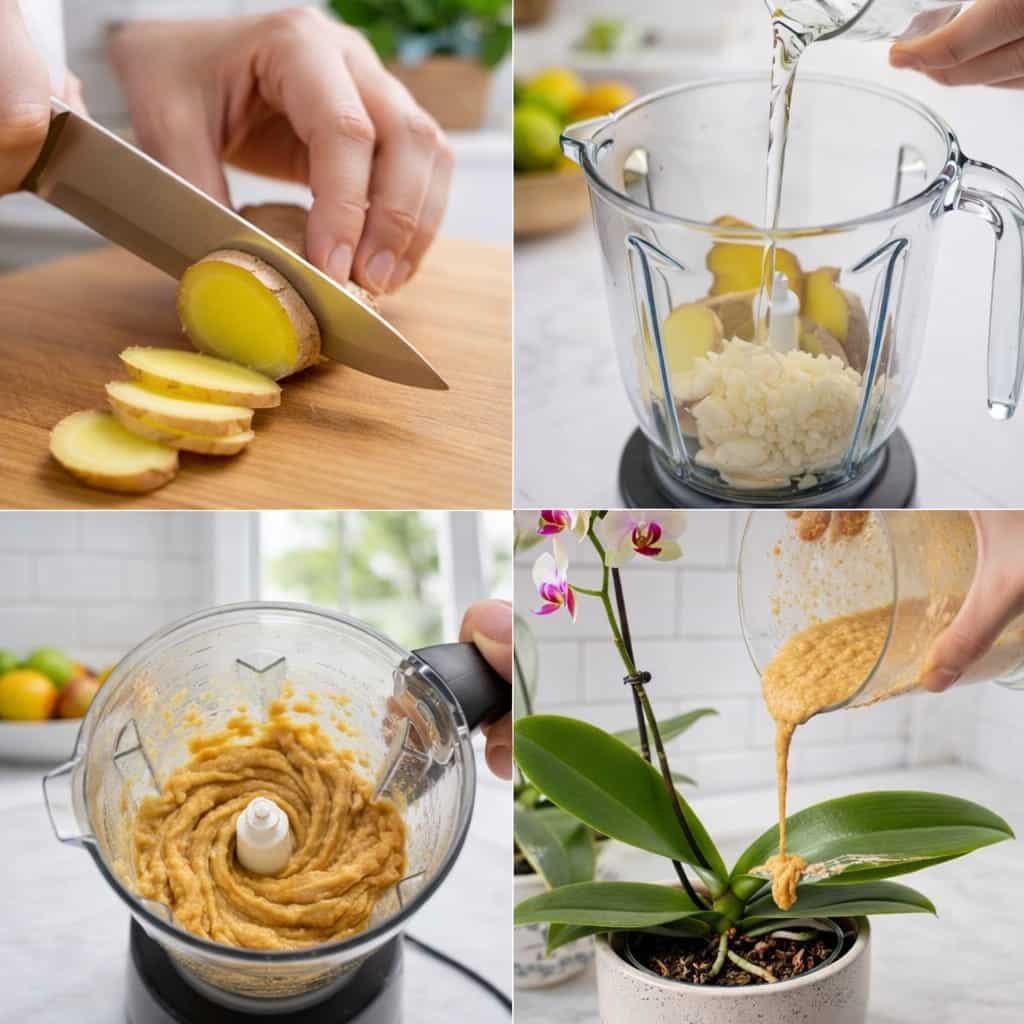
· Pour thick, unstrained paste directly into pots – This is the #1 mistake. It rots, smells, and attracts pests.
· Use undiluted ginger‑garlic liquid – It is far too strong and can burn roots.
· Use it on already sour or soggy soil – You will make the problem worse.
· Store it too long – Fresh is best. Fermented tonic can harm plants.
· Use it as your only fertilizer forever – Plants need balanced nutrition (nitrogen, phosphorus, potassium) from compost, worm castings, or a complete organic fertilizer.
· Apply before rain (outdoors) – Rain will wash it away. Apply when dry weather is expected for at least 24 hours.
Storage Warning
If the tonic smells overly strong, sour, or fermented, do not use it. It should have a fresh, pungent, garlic‑ginger smell — not rotten or putrid. When in doubt, throw it out and make a fresh batch.
Signs It May Be Helping Your Plants
A plant that responds well to a properly diluted ginger‑garlic tonic may show:
· Slightly fresher growth – New leaves emerge with good color.
· Stronger leaf color – Greens appear more vibrant.
· Better vigor during active growth – The plant seems more resilient.
· No increase in pests – In theory, the garlic may help deter some insects.
However, results are usually gentle, not dramatic. Do not expect a sick plant to transform overnight. If you see no change after 3–4 applications over 2 months, the tonic may not be beneficial for that particular plant.
Comparison: Ginger‑Garlic Tonic vs. Other Natural Fertilizers
Product Main Benefit Nutrient Content Best For
Ginger‑garlic tonic Mild root‑zone support, possible pest deterrence Very low (trace minerals) Healthy plants as a tonic
Worm castings Gentle, complete organic nutrition Moderate (NPK ~1-0-0) All houseplants, vegetables
Compost tea Beneficial microbes, trace nutrients Low to moderate Outdoor gardens, soil building
Banana peel water Potassium boost Low (potassium only) Flowering and fruiting plants
Epsom salt Magnesium for chlorophyll Very low (magnesium) Only if deficiency is present
Balanced liquid fertilizer Complete NPK with micronutrients High (e.g., 10-10-10) Active growth, blooming
Ginger‑garlic tonic is not a substitute for any of these. Use it as an occasional supplement, not a primary fertilizer.
Frequently Asked Questions (Ginger‑Garlic Fertilizer)
Can I use dried ginger or garlic powder instead of fresh?
Fresh is strongly preferred. Dried powders have different concentrations and may not blend or strain as well. If you must use dried, use 1 teaspoon of each powder per 2 cups of water, steep like a tea (no blending), strain, and dilute.
How often should I apply this tonic?
Once every 2–4 weeks during spring and summer. In fall and winter, once a month or not at all. Do not exceed this frequency.
Will this tonic kill pests?
It may help deter some pests (like aphids or fungus gnats) due to the strong smell, but it is not a reliable pesticide. For serious infestations, use neem oil, insecticidal soap, or other proven methods.
Can I use this on my vegetable garden?
Yes, but dilute well (1:10) and apply only to the soil, not to the edible parts. Wash vegetables thoroughly before eating. Stop using 2 weeks before harvest.
Why does my soil smell bad after using this?
You either used too strong a concentration, did not strain it properly, or applied it to already wet, poorly draining soil. Stop using, flush the pot with plain water, and let the soil dry out. In the future, dilute more and ensure good drainage.
Can I add other ingredients like chili pepper or cinnamon?
You can, but each additional ingredient increases the risk of burning roots or creating an unbalanced mixture. Stick to ginger and garlic first. If you want to experiment, add a small amount and test on one plant.
Is this tonic safe for seedlings?
No. Seedlings have delicate roots that can be easily damaged. Wait until plants have at least 3–4 sets of true leaves before using any homemade tonic, and then dilute at 1:20.
How long does the tonic last in the fridge?
Up to 1 week, but the smell intensifies and the effectiveness decreases. Make fresh batches whenever possible.
A Sample Application Schedule
Here is a simple schedule for using ginger‑garlic tonic alongside regular care.
Spring (March – May)
· Every 3–4 weeks, apply diluted tonic (1:10) to outdoor ornamentals and leafy houseplants.
· Continue regular watering and light fertilization.
Summer (June – August)
· Every 2–3 weeks, apply to active growers like tomatoes, peppers, and pothos.
· Skip during heatwaves (above 90°F / 32°C) to avoid stressing plants.
Fall (September – October)
· Reduce to once a month, only on plants still actively growing.
· Stop on plants preparing for dormancy.
Winter (November – February)
· Do not use. Most plants are resting and do not need extra stimulation.
Final Thoughts
A ginger and garlic liquid can be a useful homemade plant tonic when made properly: blend, strain, dilute, use lightly. That is the safest way to try it.
For maximum results, remember this: the liquid is only a helper. The real success still comes from healthy roots, proper watering, bright light, and the right growing mix. No tonic can fix a plant that is overwatered, underlit, or sitting in compacted soil.
So if you want to experiment, start with a single plant. Make a small batch. Dilute well. Apply to the soil. Wait a week. Observe. If your plant looks happy, you can continue. If not, stop and go back to basics.
Ginger and garlic have a place in the garden, but they are not miracles. Use them wisely, and they may give your healthy plants a gentle, natural boost. Use them carelessly, and you will have a smelly, messy pot and a disappointed plant.
Now go ahead — blend, strain, dilute, and watch your garden respond.
Have you tried making ginger‑garlic fertilizer? Share your experience in the comments below. And if you found this guide helpful, save it for later or send it to a friend who loves homemade plant care.