
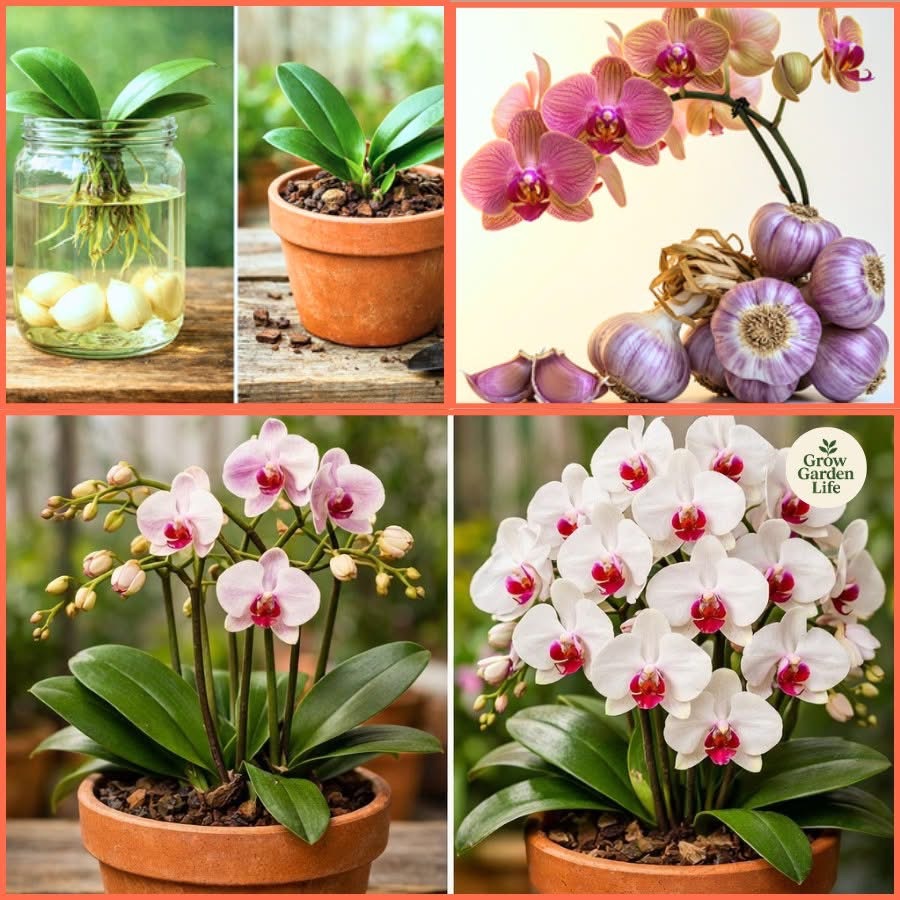
How to Propagate and Revive Orchids Using Cinnamon and Garlic 🌿🌸
Orchids are among the most beautiful houseplants, but many gardeners struggle to keep them healthy or encourage new growth. If your orchid has weak roots, slow growth, or seems to be declining, there’s a simple natural solution using cinnamon and garlic that can help revive the plant and even encourage propagation.
These two common kitchen ingredients contain natural antifungal, antibacterial, and growth-supporting compounds that can protect orchids from disease while helping them develop stronger roots and healthier leaves.
In this guide, you’ll learn how to use cinnamon and garlic to revive orchids, encourage root growth, and propagate new plants naturally.
Why Cinnamon and Garlic Work for Orchids
Many orchid problems come from fungal infections, root rot, or bacterial damage. Cinnamon and garlic naturally help prevent these issues.
Cinnamon Benefits for Orchids
Cinnamon powder is a powerful natural antifungal agent.
Benefits include:
Prevents fungal infections
Protects damaged roots
Helps wounds heal faster
Reduces the risk of rot after pruning
Gardeners often use cinnamon as a natural rooting support and plant protector.
Garlic Benefits for Orchids
Garlic contains natural sulfur compounds and antimicrobial properties that support plant health.
Garlic helps orchids by:
Fighting bacteria and fungus
Strengthening plant immunity
Encouraging root development
Protecting plants from pests
When combined, cinnamon and garlic create a powerful natural plant treatment.
Signs Your Orchid Needs Help
Before applying any treatment, check your orchid for signs of stress.
Common warning signs include:
Yellowing leaves
Soft or rotting roots
No new growth
Wrinkled leaves
Slow recovery after repotting
If you notice these symptoms, your orchid may benefit from a natural revival treatment.
Step-by-Step Method to Revive Orchids
Step 1: Remove the Orchid from the Pot
Carefully remove the orchid from its pot and inspect the roots.
Healthy roots should be:
Firm
Green or silvery
Thick and hydrated
Trim any roots that are:
Black
Mushy
Rotten
Use sterilized scissors to avoid spreading disease.
Step 2: Apply Cinnamon to Wounds
After trimming damaged roots, lightly dust cinnamon powder onto the cut areas.
This helps:
Seal the wounds
Prevent fungal infections
Speed up healing
Do not apply cinnamon directly to healthy roots, as too much can dry them.
Step 3: Prepare Garlic Water
Garlic water acts as a natural plant tonic.
Ingredients
1–2 garlic cloves
1 liter of water
Instructions
Crush the garlic cloves.
Add them to the water.
Let the mixture sit for 12–24 hours.
Strain the liquid.
The resulting solution contains beneficial compounds that support plant recovery.
Step 4: Soak the Orchid Roots
Place the orchid roots in the garlic solution for about 20 minutes.
This helps:
Kill harmful microbes
Stimulate root recovery
Strengthen the plant
After soaking, allow the roots to air dry for a short time.
Step 5: Repot the Orchid
Use fresh orchid bark or a well-draining orchid mix.
Steps:
Place the orchid in the pot.
Gently fill with orchid bark.
Keep the crown above the soil level.
Avoid compacting the bark too tightly because orchids need airflow around their roots.
How to Encourage Orchid Propagation
Orchids can produce new baby plants called keikis.
A keiki grows from the flower spike and eventually develops its own roots.
To encourage keiki growth:
Provide bright indirect light
Maintain high humidity
Feed the plant lightly
Keep temperatures stable
Using natural treatments like garlic water can help stimulate healthy growth conditions.
Extra Tips for Healthy Orchid Growth
Provide Proper Lighting
Orchids prefer bright indirect sunlight.
Too much direct sun can burn leaves, while too little light prevents flowering.
Water Correctly
Overwatering is the most common orchid problem.
Water only when the roots turn silvery gray.
Usually once every 7–10 days is enough.
Maintain Humidity
Orchids thrive in humidity levels between 50% and 70%.
You can increase humidity by:
Using a humidity tray
Grouping plants together
Running a humidifier
Use Proper Orchid Potting Mix
Never plant orchids in regular garden soil.
Use materials like:
Orchid bark
Perlite
Coconut husk
Charcoal
These provide airflow and prevent root rot.
Common Mistakes to Avoid
Even with natural treatments, mistakes can harm orchids.
Using Too Much Cinnamon
Excess cinnamon can dry roots and damage healthy tissue.
Use only a small amount on wounds.
Overwatering After Treatment
Allow the orchid time to recover before watering again.
Poor Air Circulation
Orchids need airflow around their roots and leaves.
Avoid placing them in sealed containers.
Benefits of Natural Orchid Care
Using natural ingredients like cinnamon and garlic offers several advantages.
Chemical-Free Plant Care
No harsh chemicals that could damage delicate orchid roots.
Affordable and Accessible
Most people already have these ingredients in their kitchen.
Sustainable Gardening
Natural plant care methods are better for the environment.
Final Thoughts
Orchids may seem delicate, but with the right care they can become long-lasting and incredibly rewarding plants.
Using simple natural ingredients like cinnamon and garlic can help protect orchids from disease, encourage stronger roots, and support healthy new growth.
Whether you’re trying to revive a struggling orchid or propagate new plants, this natural method offers a safe and effective solution.
With proper lighting, careful watering, and occasional natural treatments, your orchids can thrive and produce stunning blooms year after year.
FAQ
Can cinnamon help orchids grow roots?
Yes. Cinnamon helps prevent fungal infections and protects root cuts, allowing the plant to recover and grow new roots.
Is garlic water safe for orchids?
Yes, when diluted properly. Garlic water contains natural antimicrobial compounds that can protect orchids from disease.
How often should I use garlic water on orchids?
Once every 2–3 weeks is usually enough to support plant health.
Can this method save dying orchids?
If the orchid still has some healthy roots and leaves, this treatment can help revive it and encourage recovery.
If you want, I can also write you a SUPER VIRAL Facebook caption + Pinterest title + SEO keywords for this article so it brings more traffic and higher RPM to your website. 🌿📈
-

Strawberry Cream Cheese Icebox Cake: The No-Bake Dessert That Steals the Show
Discover the easiest, most elegant strawberry cream cheese icebox cake! Layers of graham crackers, creamy cheesecake filling, and fresh strawberries come together in this no-bake masterpiece. Perfect for summer entertaining. Let me tell you about the dessert that looks like you spent hours in the kitchen but actually takes about 15 minutes to assemble. I…
-

3 Ingredient Pineapple Ice Cream (5 Minutes)
Discover the easiest, healthiest ice cream you’ll ever make! Just 3 ingredients—frozen pineapple, almond milk, and Greek yogurt—create a creamy, tropical treat in 5 minutes. No machine, no sugar added! Let me tell you about the ice cream that made me a convert—no churning, no heavy cream, no sugar, and done in five minutes. I…
-

BBQ Cauliflower Bites: Crispy, Sticky, and Irresistible
Discover the best BBQ cauliflower bites—crispy baked cauliflower coated in sticky, sweet, smoky BBQ sauce. A vegan, gluten‑free appetizer that rivals chicken wings. Easy oven or air fryer recipe! Let me tell you about the appetizer that converted my meat‑loving friends into cauliflower believers. I first made BBQ cauliflower bites for a game day party,…