How to Save a Dying Orchid: The Exact Repotting Reset That Brings It Back
The proven rescue method orchid growers swear by
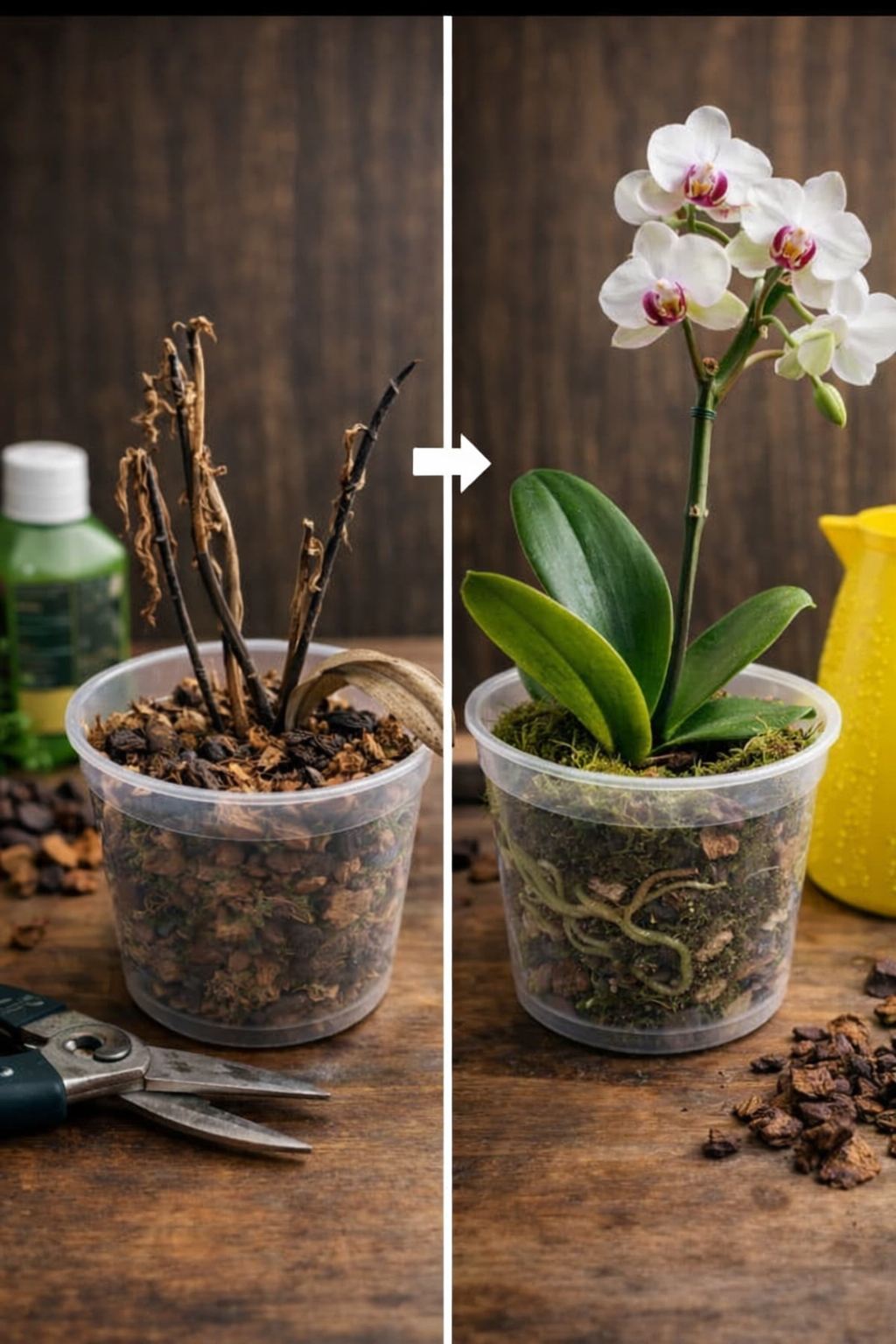
Orchids have a reputation for being delicate, dramatic, and impossible to save once they start declining. Yellow leaves, limp stems, shriveled roots, no flowers for months—sometimes years—and many people assume the plant is beyond help.
Here’s the truth:
👉 Most dying orchids aren’t actually dying.
They’re suffocating, rotting, or starving because of old potting mix and damaged roots.
This guide reveals the exact repotting reset that revives struggling orchids, stimulates new root growth, and puts the plant back on track to bloom again. This is not guesswork or folklore—it’s the same method used by professional orchid growers.
If your orchid looks hopeless, this reset can bring it back.
Why Orchids Decline in the First Place
Before fixing the problem, you need to understand it.
The #1 Reason Orchids Die Indoors
➡️ Root suffocation and rot
Most orchids sold in stores (especially phalaenopsis orchids) grow on trees in nature, not in soil. Their roots:
Need airflow
Dry quickly
Absorb oxygen as much as water
Over time, potting mix breaks down, becoming dense and wet. This causes:
Root rot
Oxygen deprivation
Nutrient lockout
Even perfect watering won’t save an orchid trapped in bad media.
Signs Your Orchid Needs the Repotting Reset
Your orchid likely needs this reset if you notice:
Limp or wrinkled leaves
Yellowing bottom leaves
Mushy or black roots
No new growth for months
Potting mix smells sour
Water sits in the pot too long
⚠️ If any of these are present, repotting is not optional—it’s urgent.
When to Repot a Dying Orchid (Timing Matters)
The best time is:
When the orchid is not blooming
Or immediately, if roots are rotting
Do not wait for a “better season” if the plant is declining. Rot spreads fast.
The Exact Repotting Reset (Step-by-Step)
This is the rescue process that brings orchids back from the brink.
Step 1: Remove the Orchid from Its Pot
Gently squeeze the pot to loosen roots. Slide the orchid out carefully.
If roots are stuck:
Use clean scissors to cut the plastic pot away
Never yank the plant
Step 2: Remove All Old Potting Mix
This step is critical.
Gently tease away every piece of old bark, moss, or sponge
Rinse roots under lukewarm water if needed
Old media harbors:
Fungi
Bacteria
Salt buildup
Leaving any behind can restart the problem.
Healthy Roots vs Dead Roots (How to Tell the Difference)
Healthy Orchid Roots
Firm
Green or silvery
Plump
Dead or Rotting Roots
Brown or black
Mushy or hollow
Smell bad
👉 If you’re unsure, squeeze gently.
Healthy roots resist pressure. Dead ones collapse.
Step 3: Cut Away All Dead Roots
Using sterilized scissors:
Remove every mushy, hollow, or black root
Cut back to firm tissue only
Yes, this can look scary—but orchids can regrow roots as long as the crown is healthy.
Step 4: Disinfect the Root System (Optional but Powerful)
This step prevents reinfection.
You may:
Rinse roots with plain water
Or lightly mist with diluted hydrogen peroxide (3% diluted 1:1 with water)
Do not soak.
The Pot Matters More Than You Think
Choose the Right Pot
Clear plastic orchid pot preferred
Multiple drainage holes
Slightly snug fit
Why clear pots help:
You can see root health
Roots photosynthesize
Easier watering control
Oversized pots = slow death.
The Only Potting Mix That Works for Recovery
Never use regular soil.
Best Orchid Rescue Mix
Medium-grade orchid bark
Optional: small amount of charcoal or perlite
Avoid:
Peat-based mixes
Garden soil
Coconut coir-heavy blends
Airflow is the goal.
Step 5: Repot the Orchid Correctly
Hold orchid so the crown sits just above the mix
Add bark gently around roots
Tap the pot to settle—do not pack tightly
Keep roots airy, not buried
The orchid should feel stable, not smothered.
The 7-Day Recovery Rule (Very Important)
🚫 Do NOT water immediately after repotting
Why?
Fresh cuts need time to seal
Watering too soon invites rot
Wait 5–7 days
, then water lightly.
This single rule saves more orchids than anything else.
Post-Repotting Care That Speeds Recovery
Light
Bright, indirect light
No direct sun
Water
Only when roots turn silvery
Never on a schedule
Humidity
Moderate (40–60%)
No misting the crown
Fertilizer
Wait 4–6 weeks
Then use weak orchid fertilizer
What Happens After the Reset (Timeline)
Week 1–2
Leaves may look unchanged
This is normal
Week 3–5
New root tips appear
Leaves begin to firm
Month 2–3
New leaf growth
Stronger root system
6–12 Months
- Flower spike possible
Patience is part of orchid care.
If Your Orchid Has No Roots Left (Yes, It Can Still Survive)
As long as the crown is firm and green:
Place orchid in bark with humidity support
Keep roots barely moist
Bright indirect light
Orchids can regrow roots from scratch.
Biggest Mistakes After Repotting
❌ Watering too soon
❌ Using decorative pots without drainage
❌ Fertilizing early
❌ Packing mix too tightly
❌ Letting water sit in the crown
Avoid these and recovery is almost guaranteed.
Why This Repotting Reset Works
This method succeeds because it:
Removes the real cause (bad roots & suffocation)
Restores oxygen flow
Eliminates pathogens
Gives the orchid a clean restart
You’re not “saving” the orchid—you’re resetting its environment.
FAQs: Saving a Dying Orchid
Can I save an orchid with yellow leaves?
Yes. Leaves can recover if roots are fixed.
Should I cut flower spikes off?
Yes, if the plant is weak. Energy must go to roots.
How often should orchids be repotted?
Every 1–2 years, even if healthy.
Final Verdict: Can a Dying Orchid Be Saved?
✅ In most cases—yes.
If the crown is alive, this repotting reset gives your orchid the best possible chance to recover, regrow roots, and bloom again.
Remember:
Orchids don’t die easily.
They decline slowly—until the environment is corrected.
Fix the roots, and the plant follows 🌸
Want Another High-RPM Plant Rescue Article?
I can also write:
“Why Orchids Stop Blooming (And the 3 Fixes That Work)”
“Ice Cubes on Orchids: Helpful or Harmful?”
“The One Watering Mistake That Kills Orchids Fast”
Send the next title anytime, and I’ll create another SEO-optimized 2000-word blog post for you.
-

My Snake Plant Was Tiny… Then This White Liquid Made It Grow Like Crazy – The Complete Guide
Is your snake plant tiny, slow, or stuck at the same size for months? Learn how a simple white liquid … Read more
-
How to Restore a Weak ZZ Plant Using a Simple Golden Liquid Method – A Complete Recovery Guide
Is your ZZ plant looking tired, yellowing, or barely growing? Learn how a simple golden liquid (diluted fertilizer or seaweed … Read more
-
Why Smart Homeowners Are Using This White Powder on Weak Orchids Indoors – A Complete Recovery Guide
Is your orchid looking weak with yellow leaves and limp blooms? Learn why smart homeowners use a gentle white powder … Read more