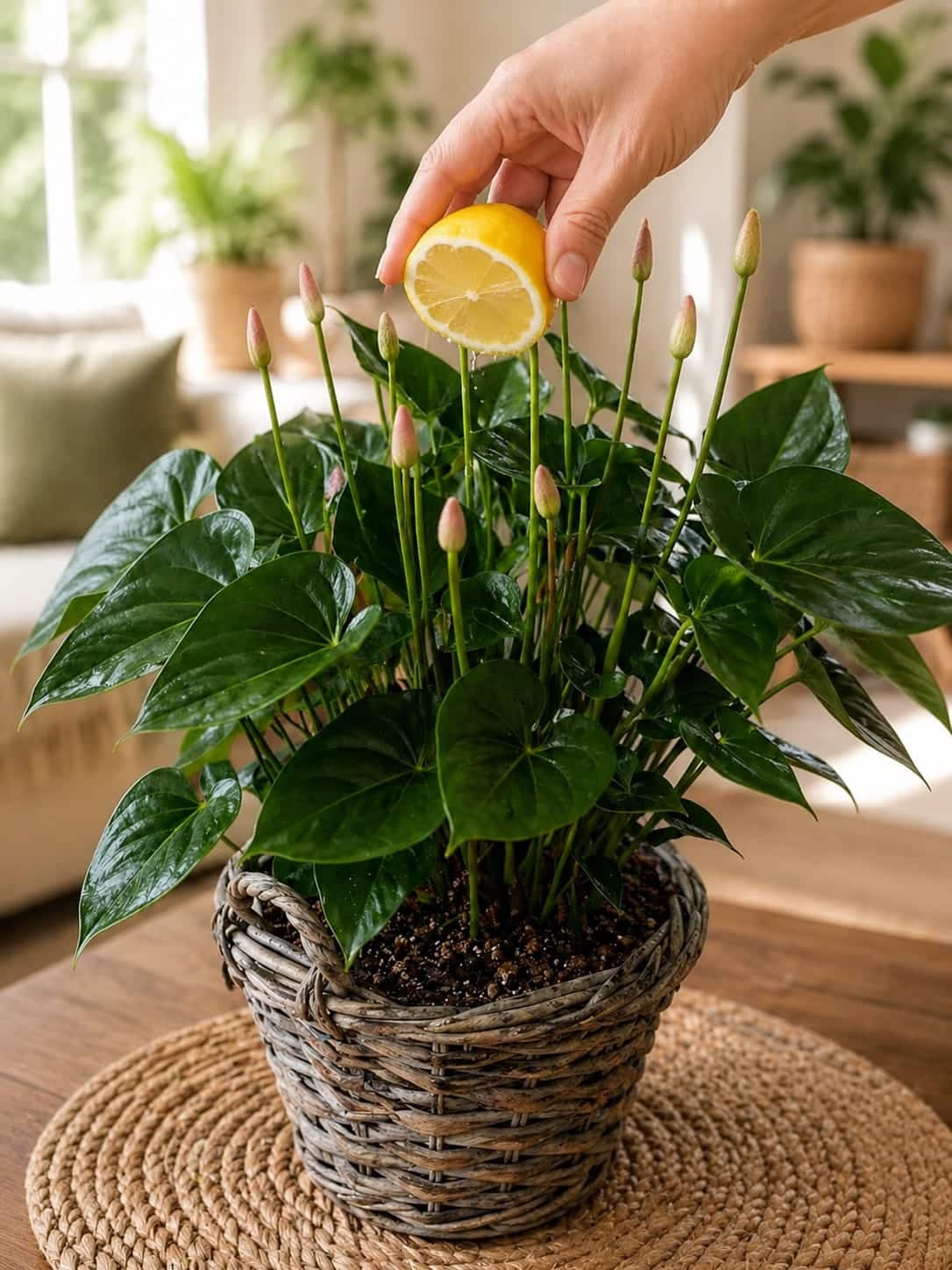
Best Soil for Anthurium
Anthuriums need a loose, airy potting mix. Dense regular potting soil often holds too much water and suffocates the roots. A better mix may include orchid bark, perlite, coco chips, peat or coco coir, and a small amount of quality potting mix.
The goal is to create a mix that holds moisture but still allows oxygen to reach the roots. When the roots can breathe, the plant grows better and blooms more consistently.
If your Anthurium is planted in heavy soil that stays wet for many days, lemon water will not fix the problem. Repotting into an airy mix is much more important.
A pot with drainage holes is essential. Decorative baskets or cachepots can be used, but the inner pot should drain fully after watering.
How to Water Anthurium Correctly
Anthuriums prefer consistent moisture, but they do not want to sit in water. Water when the top inch of the potting mix begins to dry. When you water, water thoroughly and let excess drain out.
Do not give tiny sips every day. Small frequent watering can keep the top layer damp while the deeper roots remain stressed. A thorough watering followed by partial drying is healthier.
If the leaves droop and the soil is dry, the plant may need water. If the leaves droop and the soil is wet, root stress may be the problem.
Always check the soil before watering. The plant’s needs change with season, light, temperature, humidity, and pot size.
Humidity for Glossy Anthurium Leaves
Anthuriums appreciate moderate to high humidity. Dry indoor air can cause crispy edges, dull leaves, or slower growth. Increasing humidity can help the plant look fresher and more tropical.
You can improve humidity by grouping plants together, using a pebble tray, or placing a humidifier nearby. A bright bathroom or kitchen can also work well if there is enough light.
Do not increase humidity by keeping the soil constantly wet. Humid air and wet soil are not the same. The roots still need oxygen.
Glossy leaves come from proper hydration, humidity, clean foliage, and healthy roots.
Should You Spray Lemon Water on Anthurium Leaves?
No. Lemon water should not be sprayed on Anthurium leaves. Even diluted lemon can leave residue or cause spotting if the mixture is too strong or if the plant sits in bright light afterward.
If you want to clean Anthurium leaves, use plain water and a soft cloth. Wipe gently to remove dust. Clean leaves absorb light better and look shinier.
Do not use lemon juice, milk, oil, or leaf-shine products on the leaves. These can leave residue and attract dust.
The safest leaf-care routine is simple: clean water, soft cloth, gentle handling.
Can Lemon Water Replace Fertilizer?
No. Lemon water is not fertilizer. It does not provide balanced nutrients. Anthuriums need nitrogen for foliage, phosphorus and potassium for growth and flowering, and trace elements for overall health.
During active growth, use a balanced houseplant fertilizer or a fertilizer suitable for flowering tropical plants. Dilute it according to the label, and use it lightly. Overfertilizing can burn roots and cause brown leaf tips.
Lemon water may adjust acidity slightly, but it does not feed the plant. If your Anthurium is hungry, lemon water will not solve the deficiency.
Use lemon water only as an occasional supportive rinse, not as nutrition.
How to Feed Anthurium for Better Blooms
Anthuriums benefit from gentle feeding during active growth. Use a balanced fertilizer at half strength every four to six weeks during spring and summer, or follow the product label carefully.
Do not fertilize heavily. Too much fertilizer can cause salt buildup, leaf burn, and root stress. Anthuriums prefer steady, mild nutrition.
If you use fertilizer, avoid using lemon water at the same time. Keep treatments separate so you do not overload the root zone.
Plain water between feeding sessions helps reduce buildup and keeps the potting mix cleaner.
Why Anthurium Leaves Turn Yellow
Yellow leaves can have many causes. One old lower leaf yellowing occasionally may be natural. But several yellow leaves at once can indicate a problem.
Common causes include overwatering, underwatering, low light, root rot, cold drafts, nutrient imbalance, or old soil. Before using lemon water, check the roots and soil moisture.
If the soil is wet and the leaves are yellowing, root rot may be developing. Remove the plant from the pot and inspect the roots. Rotten roots are soft, dark, mushy, or foul-smelling.
Lemon water will not turn yellow leaves green again. Focus on correcting the cause and supporting new healthy growth.
Why Anthurium Leaves Get Brown Tips
Brown tips can come from dry air, inconsistent watering, fertilizer buildup, hard water, too much direct sun, or root stress. Lemon water may help only if mineral-heavy water is part of the issue, and even then it must be very diluted.
If brown tips are caused by fertilizer burn, adding lemon water will not fix the damage. Flush the pot with plain water if it drains well, or repot if buildup is severe.
If brown tips are caused by dry air, improve humidity. If caused by direct sun, move the plant to filtered light.
Old brown tips will not turn green again. Trim them if desired, and focus on healthier new leaves.
How to Keep Anthurium Leaves Shiny
Anthurium leaves naturally shine when they are healthy and clean. Dust can make them look dull. Wipe the leaves every few weeks with a damp cloth.
Support each leaf gently while wiping. Avoid bending or cracking the leaf. Do not use oils or sticky shine products.
Healthy shine also depends on proper light. A plant in very low light may look dull and grow slowly. Bright indirect light helps maintain vibrant foliage.
Good humidity and consistent watering also help leaves stay smooth and glossy.
What to Do With Faded Anthurium Flowers
Anthurium blooms last a long time, but they eventually fade. A spathe may turn green, brown, or dry as it ages. This is normal.
When a bloom is spent, cut the flower stem near the base with clean scissors. Removing old flowers helps the plant direct energy toward new growth.
Do not pull flower stems roughly. This can damage the plant. Always use clean tools.
After removing old blooms, continue proper light, watering, and feeding. New flowers develop when the plant has enough energy.
Can Lemon Water Help With Pests?
Lemon water is not a reliable pest treatment. If your Anthurium has pests such as aphids, mealybugs, scale, or spider mites, identify the pest and treat it directly.
For many common pests, wiping leaves, isolating the plant, and using an appropriate insecticidal soap or horticultural treatment may be more effective. Always follow product directions.
Do not squeeze lemon juice onto pests on the plant. It may damage leaves and still fail to solve the infestation.
Pest control requires direct action, not acidic watering.
Warning Signs After Using Lemon Water
If leaves droop after using lemon water and the soil is wet, stop using it and let the soil dry appropriately. Inspect roots if the plant continues to decline.
If leaf edges brown suddenly, the mixture may have been too strong or the plant may already have root stress. Flush the pot with plain water if it drains well.
If the soil smells sour, repotting may be needed. Lemon water cannot fix decaying soil.
If the plant shows no improvement, do not keep repeating lemon water. The problem is likely light, roots, soil, or watering.
What to Do If You Used Too Much Lemon
If you accidentally squeezed lemon juice directly onto the soil or plant, act quickly. Remove any lemon pulp or seeds from the pot. If juice touched the leaves, wipe them gently with plain water.
If the pot has drainage holes, flush the soil with plain room-temperature water and let it drain completely. Do not let the pot sit in water afterward.
If the plant begins to decline or the soil smells bad, repot into fresh airy mix. Check the roots and remove any rotten parts.
After this, avoid lemon water for a long time. Let the plant recover with simple care.
A Simple Anthurium Bloom Routine
Place the Anthurium in bright indirect light. Water when the top inch of the potting mix begins to dry. Use an airy, well-draining mix and a pot with drainage holes.
Keep humidity moderate. Wipe leaves with plain water to keep them clean and glossy. Remove spent blooms with clean scissors.
Feed lightly during active growth with a balanced fertilizer. If hard water is a problem, use filtered water or an occasional very diluted lemon-water rinse, but only rarely.
This balanced routine is much safer and more effective than relying on lemon alone.
Common Mistakes to Avoid
- Squeezing lemon directly onto the plant – direct juice can damage leaves, flowers, and roots.
- Using too much lemon – one or two drops per cup of water is enough.
- Using lemon water too often – it should be rare, not weekly.
- Using lemon water as fertilizer – it does not provide complete nutrition.
- Applying it to a sick plant with root rot – rotten roots need trimming and fresh soil.
- Putting lemon peels, seeds, or pulp into the pot – these can rot and attract pests.
- Ignoring light – Anthuriums need bright indirect light to bloom well.
Frequently Asked Questions
Can lemon water make Anthurium bloom?
Lemon water cannot force Anthurium to bloom. It may help slightly with mineral buildup when very diluted, but blooms depend mainly on bright indirect light, healthy roots, humidity, and balanced feeding.
How much lemon juice should I use?
Use only one or two drops of fresh lemon juice in one cup of water. For one liter of water, use only a few drops. The mixture should be extremely weak.
Can I squeeze lemon directly onto the soil?
No. Direct lemon juice is too acidic and can damage roots. Always dilute it heavily in water first.
Can I spray lemon water on Anthurium leaves?
No. It is safer to clean leaves with plain water. Lemon water can leave residue or cause spotting.
How often can I use lemon water?
Use it rarely, about once every six to eight weeks if needed. Many Anthuriums do not need lemon water at all.
Can lemon water replace fertilizer?
No. Lemon water is not fertilizer. Use a balanced houseplant fertilizer during active growth if your Anthurium needs feeding.
What should I do if I used too much lemon?
Remove any pulp, wipe leaves with plain water, and flush the pot with plain water if it drains well. Repot if the plant declines or the soil smells sour.
Why is my Anthurium not blooming?
The most common reasons are low light, weak roots, poor soil, inconsistent watering, low humidity, or lack of balanced nutrients. Improve the basic care routine first.
🌿 Remember: Lemon water is a gentle occasional rinse, not a miracle cure. Bright indirect light, airy soil, proper watering, and balanced feeding are the real keys to glossy Anthurium leaves and long-lasting blooms. Use lemon water rarely and always diluted.