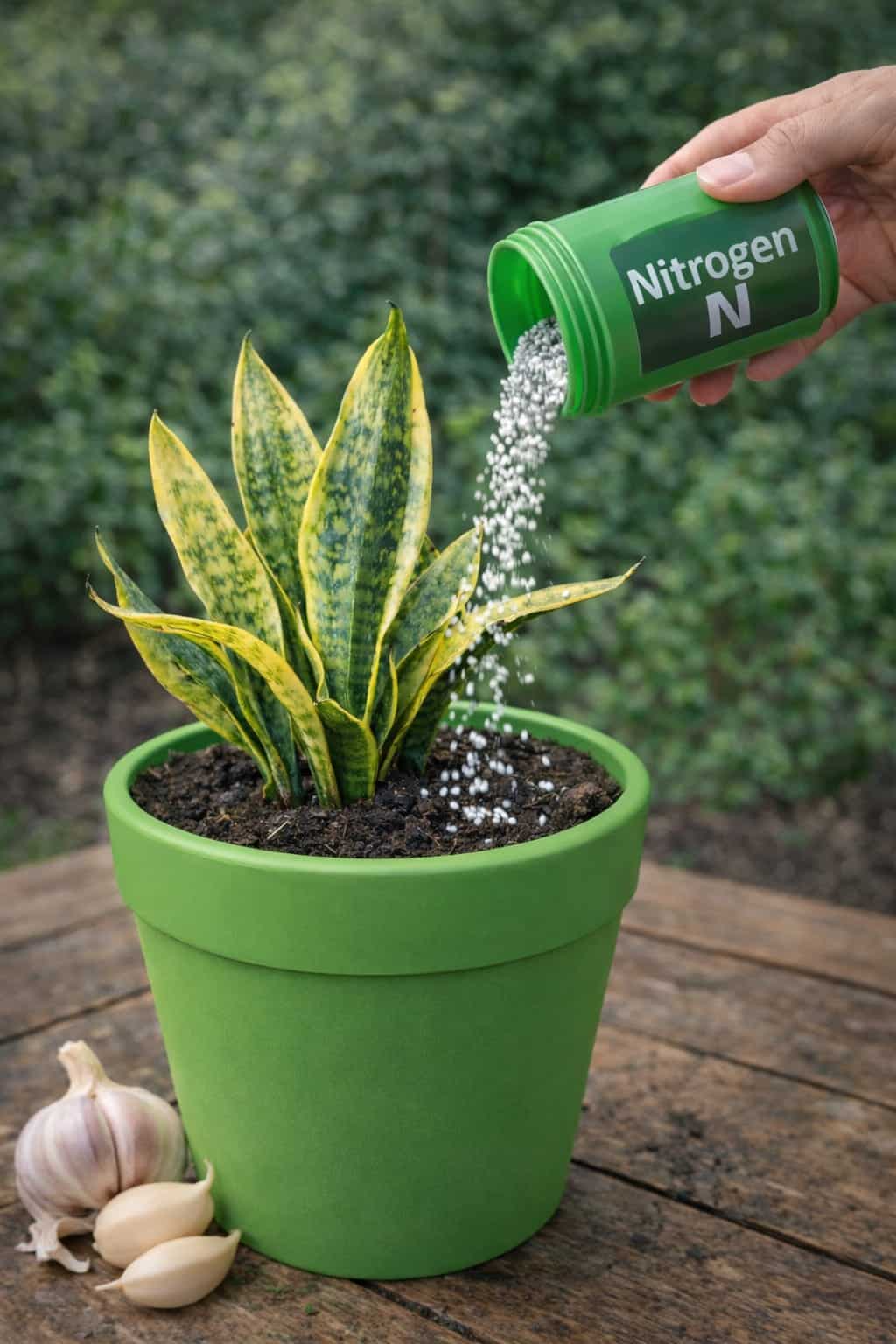
Using nitrogen incorrectly can damage your snake plant instead of helping it grow. Learn the right way to fertilize – light feeding, proper timing, and bright light – for healthy, upright leaves
But here’s what most plant owners don’t realize:
👉 Using nitrogen the wrong way can actually damage your snake plant instead of helping it grow.
Many people assume that more fertilizer means faster growth. They pour on the plant food, expecting a burst of new leaves. In reality, snake plants thrive when nutrients are used carefully and in small amounts. Over‑feeding is one of the fastest ways to stress these slow‑growing succulents.
In this guide, you’ll learn why nitrogen matters for snake plants, the most common mistakes, the right way to fertilize, the best fertilizer choices, and the signs that you’re using nitrogen wrong. Plus, you’ll discover why light is the secret to making nitrogen work. No hype, just practical plant care.
🌿 Why Nitrogen Matters for Snake Plants
Nitrogen is a key nutrient that supports:
· Strong leaf development – helps produce new leaves and maintain existing ones.
· Deep green coloration – gives snake plants their rich, vibrant look.
· Energy production – nitrogen is a component of chlorophyll, which plants use to photosynthesize.
· Overall plant strength – healthy nitrogen levels support firm, upright leaves.
For snake plants, nitrogen helps maintain their signature upright leaves and firm structure.
However, snake plants are slow growers. They have thick, fleshy leaves and underground rhizomes that store water and nutrients. Unlike a fast‑growing philodendron or pothos, a snake plant may only produce 2–4 new leaves per year under ideal conditions. This means they require very little fertilizer compared to other houseplants.
⚠️ The Most Common Mistake (Overfeeding)
One of the biggest mistakes indoor plant owners make is overusing fertilizer. Because snake plants are so forgiving, people often think “a little more can’t hurt.” But it can.
Common Overfeeding Mistakes
Mistake Why It’s Harmful
Adding too much nitrogen Excess nitrogen burns roots and causes leaf damage.
Feeding too frequently Salt buildup in soil; roots cannot absorb water.
Using strong fertilizer without dilution Concentrated chemicals burn tender root hairs.
Applying on dry soil Fertilizer salts concentrate and burn roots.
Fertilizing during winter Plant is resting; unused nutrients cause buildup.
Consequences of Overfeeding
· Yellow or faded leaves – classic sign of nitrogen burn.
· Soft, weak growth – leaves lose their upright firmness.
· Root burn from salt buildup – white crust on soil surface, brown roots.
· Brown leaf edges – salt damage.
· Slowed development – stressed plant stops growing
👉 Instead of boosting growth, overfeeding creates stress. A snake plant that is over‑fertilized may actually look worse than one that is never fertilized at all.
💧 The Right Way to Use Nitrogen (Simple & Safe Method)
To keep your snake plant healthy and thriving, follow this approach. Think of fertilizer as a light supplement, not a main course.
Continue to Page 2
Continue to page 2 for more details about this article and the key points many readers miss on the first page.