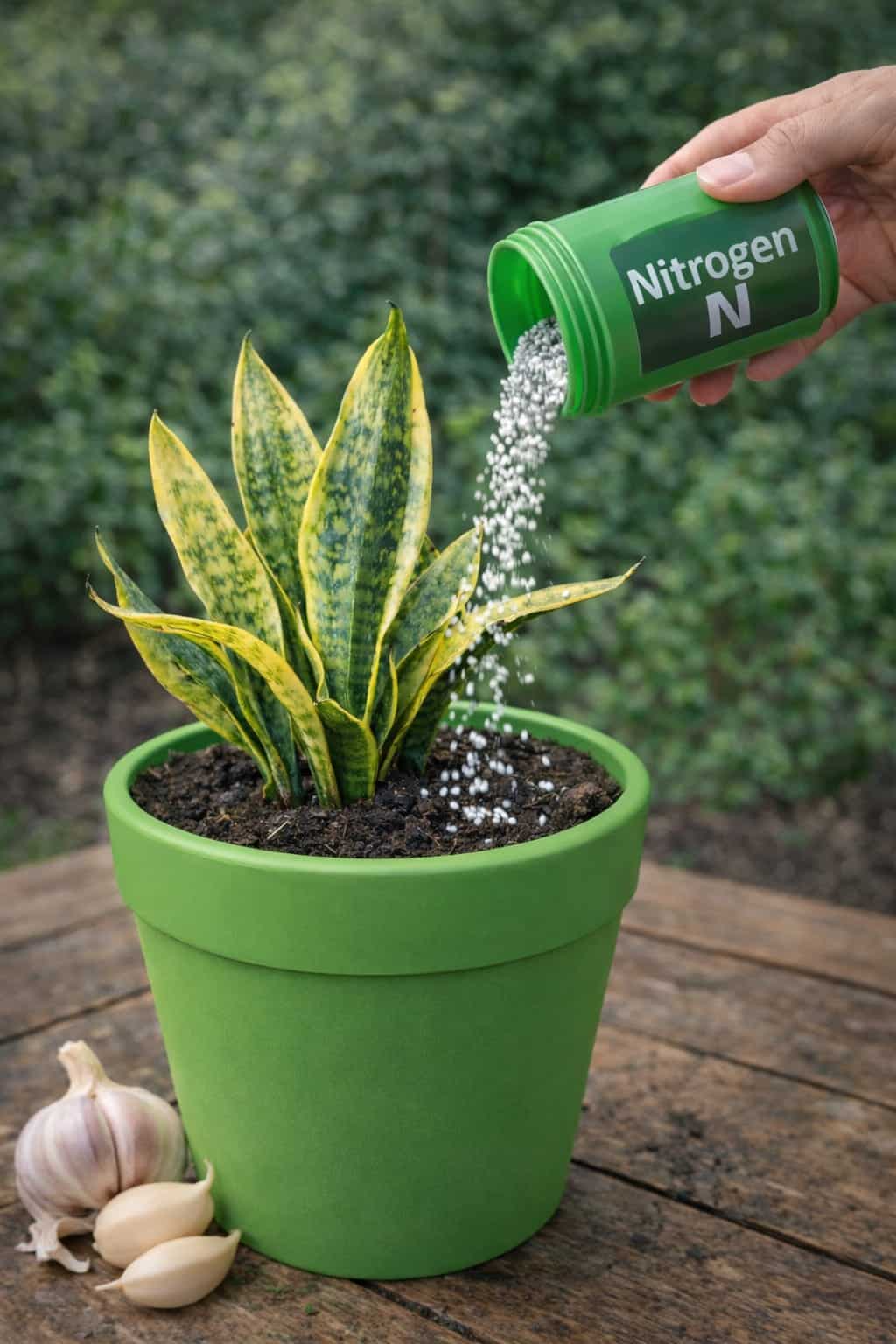
✅ Step‑by‑Step Guide
- Use a diluted liquid fertilizer – half strength or less. For a 10-10-10 fertilizer, mix ¼ teaspoon per gallon of water instead of the recommended ½ teaspoon.
- Apply only during spring and summer – the active growing season (April through August).
- Water the soil before feeding – this prevents root burn. Water with plain water first, then apply the diluted fertilizer.
- Use a small amount only – a few ounces for a standard pot is plenty.
- Repeat every 4–6 weeks – not weekly, not monthly. Give the plant time to use the nutrients.
👉 The key is light, controlled feeding. Less is more.
🌱 Best Fertilizer Choices for Snake Plants
Choosing the right type of fertilizer is essential. Not all plant foods are created equal.
Recommended Options
Fertilizer Type Why It Works
Balanced liquid fertilizer (10-10-10) Provides equal parts nitrogen, phosphorus, and potassium – gentle and predictable.
Slow‑release granules (very small quantity) Nutrients release over time; less risk of over‑feeding if used sparingly.
Organic plant nutrients (worm castings, compost tea) Very gentle; adds beneficial microbes.
Mild indoor plant feeding solutions Formulated for houseplants; usually lower concentration.
What to Avoid
· High‑nitrogen fertilizers (e.g., 30-10-10) – too strong for snake plants.
· Fertilizers designed for lawns or outdoor plants – far too concentrated.
· Miracle‑Gro or similar at full strength – always dilute to quarter or half strength.
📊 Simple Snake Plant Care Guide – Quick Reference
Factor Ideal Condition Result
Light Bright, indirect light (east/west window) Strong, upright leaves
Soil Well‑draining mix (cactus soil + perlite) Healthy roots, no rot
Water Moderate – let soil dry completely Prevents root rot
Fertilizer Light nitrogen feeding (diluted, every 4–6 weeks, spring/summer) Balanced growth
Airflow Good circulation Fewer pest and fungal issues
🔥 A Powerful Tip Most People Ignore
👉 Nitrogen only works properly when your plant gets enough light.
Without good lighting, the plant cannot absorb nutrients efficiently. Nitrogen is used in photosynthesis – the process by which plants convert light into energy. If your snake plant is sitting in a dark corner, the fertilizer you add will sit unused in the soil, potentially causing salt buildup.
Why Light Matters
Light Level Effect on Fertilizer
Low light Plant cannot use nutrients; fertilizer accumulates, burns roots.
Medium light Some absorption, but growth is slow.
Bright indirect light Optimal – plant uses nutrients efficiently, steady growth.
✔️ Always combine fertilizing with bright indirect light. An east or west window is ideal. If your snake plant is in a dim room, move it closer to a window before you start feeding.
⚠️ Signs You’re Using Nitrogen Wrong
Watch your plant closely. Snake plants will tell you when something is off.
Symptom Likely Cause Solution
Yellow leaves (especially older leaves) Too much fertilizer Stop feeding; flush soil with water.
Soft or drooping leaves Overfeeding; root stress Check roots; repot if damaged.
Brown tips Salt buildup from fertilizer Flush soil; reduce fertilizer strength.
White crust on soil surface Excess salts Scrape off; flush with water; reduce feeding.
No growth despite feeding Poor timing or lighting Wait for spring; move to brighter light.
👉 If you notice these signs, stop fertilizing immediately and flush the soil with clean water (run water through the pot for several minutes). Let the soil dry completely before the next watering.
Frequently Asked Questions (FAQs)
Q: Do snake plants need fertilizer?
Yes, but only in small amounts. They can survive without fertilizer, but a light feeding in spring and summer can support healthy growth.
Q: How often should I fertilize my snake plant?
Every 4–6 weeks during the active growing season (spring and summer). Do not fertilize in fall and winter.
Q: Can too much nitrogen kill the plant?
Yes, it can damage the roots. Over‑fertilizing causes root burn, salt buildup, and leaf damage. In severe cases, it can kill the plant.
Q: What is the safest fertilizer for snake plants?
A diluted balanced liquid fertilizer (10-10-10) at half strength is very safe. Organic options like worm castings are even gentler.
Q: Should I fertilize my snake plant in winter?
No, avoid feeding during dormancy (fall and winter). The plant rests and does not need extra nutrients.
Q: Is organic fertilizer better than synthetic?
Organic fertilizer is often safer and gentler because it releases nutrients slowly. However, any fertilizer used correctly can be fine.
Q: Why are my snake plant leaves turning yellow after fertilizing?
Overwatering or overfeeding – both are common. Check soil moisture and reduce fertilizer strength.
Q: Can nitrogen speed up snake plant growth?
Yes, but only slightly and safely. Snake plants are naturally slow growers. Fertilizer can help, but light and water are more important.
Q: Are slow‑release fertilizers good for snake plants?
Yes, if used carefully. Use a very small amount (half the recommended dose for indoor plants) and apply only once in spring.
Q: What is the biggest mistake people make with snake plant fertilizer?
Using too much fertilizer – either too strong, too often, or during the wrong season. Less is always more.
Printable Snake Plant Fertilizer Checklist
☐ Use a balanced liquid fertilizer (10-10-10)
☐ Dilute to half strength or less
☐ Water the soil with plain water first
☐ Apply fertilizer only during spring and summer (April–August)
☐ Fertilize once every 4–6 weeks
☐ Place plant in bright, indirect light (east/west window)
☐ Do not fertilize in fall and winter
☐ Watch for signs of overfeeding: yellow leaves, brown tips, white crust
☐ If overfed, flush soil with clean water and stop fertilizing for 2–3 months
Final Thoughts – Light Feeding, Bright Light, Slow Growth
Using nitrogen the right way for snake plants is simple: diluted fertilizer, light feeding, only in spring and summer, and always combined with bright indirect light. Never assume that more fertilizer means more growth. Snake plants are not heavy feeders; they thrive on neglect, not pampering.
If you want a healthy, upright snake plant with deep green leaves, focus on the basics first: well‑draining soil, proper watering (let it dry completely), and adequate light. Then, use a light, diluted fertilizer as a small boost – not as a main event.
Remember: a snake plant that is never fertilized will still live for years. A snake plant that is over‑fertilized may not survive the season. Less is always more.
Now it’s your turn! Have you ever over‑fertilized a snake plant? What signs did you see? Drop a comment below – I’d love to hear your experience.
And if you found this guide helpful, share it with a friend who loves snake plants. Pin it for later, and subscribe to our newsletter for more practical plant care.
Stay bright, stay dry, and feed lightly. 🌿✨