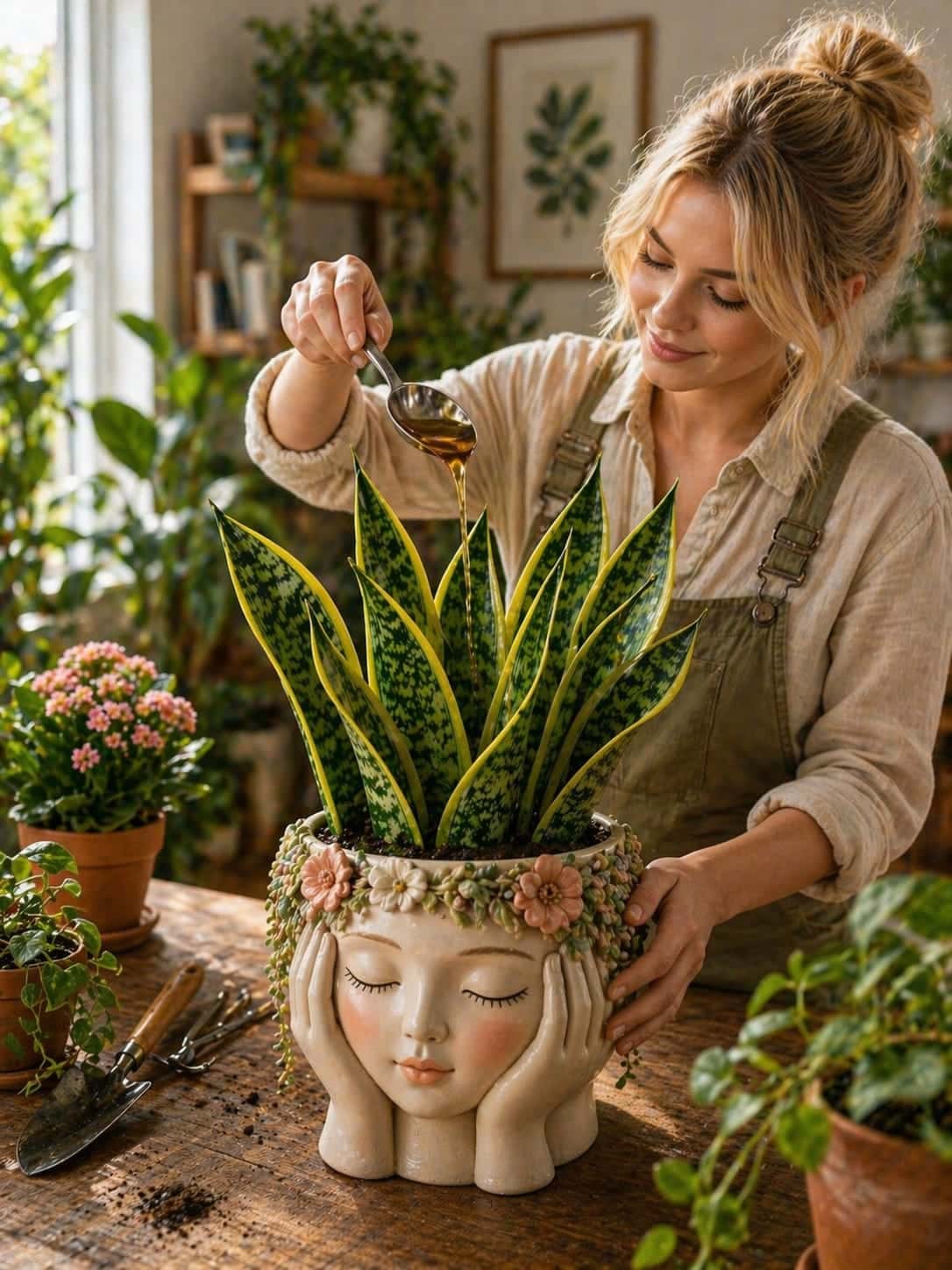
Snake plants are known for being tough, stylish, and almost impossible to ignore in indoor spaces. Their upright leaves, bold patterns, and low‑maintenance nature make them one of the most popular houseplants for homes, apartments, and offices. But while most people grow snake plants for their foliage, many are surprised to learn that these plants can bloom too.
That is why so many plant lovers get excited when they see a simple “bloom booster” being used from the kitchen. The idea is appealing: something easy, familiar, and already at home could help encourage stronger growth and maybe even support flowering. It feels affordable, natural, and convenient. For many homeowners, that kind of simple plant care trick is hard to resist.
But when it comes to helping a snake plant bloom, the real secret is not just one ingredient. It is the full care routine behind the plant’s health. A strong snake plant is far more likely to bloom when it is mature, well‑rooted, getting enough light, and not being overwatered. Any extra booster only works well if the plant’s basic needs are already being met.
In this guide, you will learn what that common kitchen bloom booster is, how to use it safely, and — most importantly — the proven care habits that actually encourage snake plants to produce those rare, fragrant flowers.
Why Snake Plant Blooms Are So Special
Snake plants (Dracaena trifasciata, formerly Sansevieria) are not famous for their flowers, which is exactly why blooms feel so rewarding. When they do flower, the blooms are often delicate, pale white or cream, and lightly fragrant, especially at night. They usually appear on slender stalks that rise above the foliage, adding an unexpected elegance to the plant’s architectural form.
Because blooming is relatively rare indoors, people are always searching for ways to increase their chances. A kitchen‑based bloom booster sounds like an easy answer, especially when it looks rich and effective. But blooming is usually a sign of overall plant maturity and balanced care, not just one dramatic treatment.
What Snake Plant Flowers Look Like
· Small, tubular, lily‑like blossoms
· Clustered along a tall spike
· White or cream with subtle green accents
· Sweet, jasmine‑like fragrance, strongest at night
· Bloom stalk can grow several inches in a week
Seeing your snake plant bloom is a reward for years of patient, consistent care. And the good news is that you can increase your chances by understanding what the plant truly needs.
Why This “At‑Home Booster” Gets So Much Attention
Home remedies attract attention for a simple reason: they feel accessible. If a person already has the ingredient in the kitchen, it seems easier than buying a specialty product. It also creates the impression that plant care can be both simple and clever.
For snake plants, these home boosters are often presented as something that can:
· Encourage stronger growth
· Support healthier roots
· Help the plant look greener
· Increase the chance of blooming
That kind of promise is powerful. But snake plants respond best to moderation. Anything added to the soil should be used carefully, because these plants do not like excess moisture, heavy soil, or overly rich feeding.
What Is That “Bloom Booster” Most People Already Have?
In many plant videos and articles, the common kitchen bloom booster for snake plants is Epsom salt (magnesium sulfate). It is a white, crystalline powder found in most homes or easily bought at any drugstore. Epsom salt provides magnesium, which is a key component of chlorophyll, and sulfur, which aids in enzyme function.
Some gardeners also mention diluted black coffee (for nitrogen) or banana peel water (for potassium). However, Epsom salt is the most frequently cited “bloom booster” because magnesium deficiency can cause yellowing leaves and poor growth, and correcting that deficiency can help the plant thrive.
But here is the truth: Epsom salt is not a fertilizer. It does not contain nitrogen, phosphorus, or potassium. It only provides magnesium and sulfur. If your snake plant already has healthy green leaves, adding Epsom salt will not trigger blooming. It will only help if your plant is actually deficient.
What Snake Plants Really Need Before They Bloom
Before thinking about any booster, it helps to understand what actually encourages a snake plant to bloom. A blooming snake plant is usually:
· Mature rather than young (3–5 years old or more)
· Growing in bright, indirect light (not a dark corner)
· Slightly root‑bound (snug in its pot)
· Watered sparingly (soil dries completely between waterings)
· Planted in fast‑draining soil (cactus mix with perlite)
· Not stressed by constant repotting (re‑potted every 2–3 years at most)
In other words, the plant has to be healthy and stable first. Snake plants often bloom when they are comfortable but slightly challenged, especially when they are getting the right light and are not sitting in wet soil.
The Importance of Light (The #1 Bloom Trigger)
Light is one of the biggest factors in whether a snake plant simply survives or truly thrives. While snake plants can tolerate low light, they usually perform much better in brighter conditions. A plant placed near a bright window with filtered light often grows stronger, shows better color, and has a better chance of reaching blooming maturity.
Ideal Light for Blooming
· East‑facing window – gentle morning sun
· South or west window with a sheer curtain – bright indirect light
· 10–12 hours of light daily – consider a grow light in darker months
Without enough light, the plant may stay alive for years but remain slow, weak, and unlikely to flower. So before trying any extra trick, improving light conditions is often the smartest move.
Why Overwatering Stops Good Results
If there is one mistake that ruins more snake plants than anything else, it is overwatering. These plants store moisture in their leaves and do not need constantly damp soil. Too much water can lead to root rot, weak growth, yellowing leaves, and an overall tired appearance.
A plant struggling below the soil line is not going to bloom well. That is why careful watering matters more than fancy treatments.
Watering Rules for Bloom Encouragement
· Let the soil dry out completely between waterings.
· Water deeply but infrequently – every 2–4 weeks in spring/summer, once a month or less in winter.
· Always use a pot with drainage holes – empty the saucer after watering.
· Signs of overwatering – yellow leaves, soft mushy base, foul smell.
When you water correctly, the plant experiences mild dry stress that can actually encourage blooming. Too much water keeps the plant in a constant vegetative state, focused on leaves, not flowers.
Soil and Pot Choice Matter Too
Snake plants prefer soil that drains quickly. Heavy, compacted soil can trap too much moisture and make the roots unhappy. A cactus or succulent mix is often a better option than dense regular potting soil.
Best Soil for Blooming
· Cactus/succulent potting mix – readily available
· DIY mix: 2 parts all‑purpose potting soil + 1 part perlite + 1 part coarse sand
The pot also matters. Snake plants often do well when slightly snug in their containers. A pot that is too large can stay wet for too long, while a well‑sized pot helps keep the moisture balance more stable.
Pot Size Guidelines
· Choose a pot only 1–2 inches larger than the root ball.
· Terracotta pots are ideal (they wick away moisture).
· Repot only every 2–3 years.
A slightly root‑bound snake plant is more likely to bloom than one in an oversized pot.
Continue to Page 2
Continue to page 2 for more details about this article and the key points many readers miss on the first page.