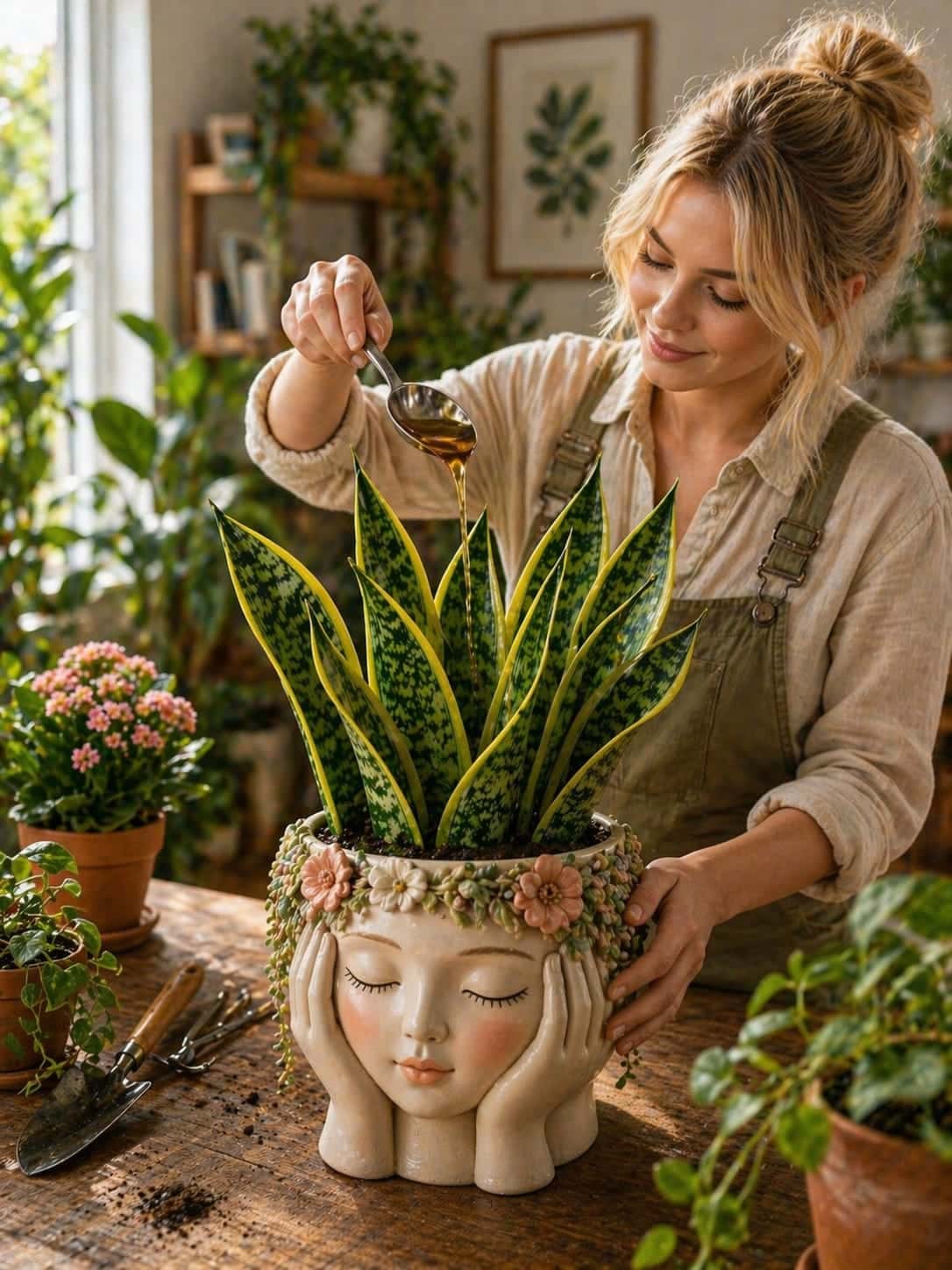
Can a Simple Home Booster (Like Epsom Salt) Help?
A mild, carefully used home booster may support a healthy plant, but it should never replace proper care. If the plant is already in the wrong light, being watered too often, or growing in poor soil, no booster will fix the deeper problem.
How to Use Epsom Salt Safely for Snake Plants
If you want to try Epsom salt as a potential support, follow these steps:
- Check for signs of magnesium deficiency – yellowing between leaf veins on older leaves. If your plant is uniformly green, it likely does not need Epsom salt.
- Dilute properly – Mix 1 teaspoon of Epsom salt per gallon of water. Stir until dissolved.
- Apply during active growth – Use once a month in spring and summer only.
- Water as usual – Pour the solution onto the soil, not the leaves. Let it drain.
- Do not overuse – More than once a month can cause salt buildup and damage roots.
What to Expect
· If your plant was magnesium‑deficient, you may see greener leaves after a few weeks.
· If your plant was healthy, you may see no change at all.
· Epsom salt will not force blooms on its own.
The best way to think about these methods is as optional support, not magic. The strongest results come when the plant already has healthy roots, good drainage, balanced watering, enough light, and stable conditions.
How to Encourage a Snake Plant to Bloom Naturally
If your goal is to give your snake plant the best chance of blooming, focus on these proven habits.
- Give It Bright Indirect Light
More light usually means better growth and stronger energy reserves. Move your plant closer to a window.
- Use Fast‑Draining Soil
Avoid heavy mixes that stay wet for too long. Cactus mix is your friend.
- Water Sparingly
Let the soil dry out completely before watering again. When in doubt, wait another week.
- Avoid Frequent Repotting
A slightly root‑bound plant may be more likely to bloom. Repot only when necessary.
- Feed Lightly During the Growing Season
Use a balanced, half‑strength succulent fertilizer once in spring and once in summer. Too much fertilizer can do more harm than good.
- Provide a Cool, Dry Rest Period in Winter
In fall and winter, reduce watering further and allow nighttime temperatures to drop slightly (50–60°F / 10–15°C). This mimics the plant’s natural seasonality.
- Be Patient
Blooming usually happens on mature plants, not young ones. It may take 3–5 years or more.
Why Mature Snake Plants Are More Likely to Flower
One reason people get frustrated is that they expect blooms too soon. Snake plants usually need time. A young plant may look healthy and attractive, but it may still not be ready to bloom. Mature plants have stronger root systems, more energy, and a better chance of producing flower stalks.
Patience is part of the process. Sometimes the best “bloom booster” is simply allowing the plant to grow steadily under the right conditions.
A Beautiful Snake Plant Is Valuable Even Without Flowers
Even if your snake plant never blooms, it still adds enormous value to a room. It brings height, structure, and color without requiring constant attention. It works in modern interiors, minimalist spaces, home offices, bedrooms, and small apartments. Its strong upright form adds visual order, while its patterned leaves keep it from looking plain.
That is part of why people care so much about making snake plants look their best. A healthy one can instantly make a room feel more polished.
Frequently Asked Questions (Snake Plant Bloom Booster)
Can I use Epsom salt on my snake plant every week?
No. Once a month at most during spring and summer is plenty. Overuse causes salt buildup and can harm roots.
Will coffee grounds help my snake plant bloom?
Coffee grounds add organic matter and a little nitrogen, but they can compact the soil and acidify it. A thin sprinkle once every few months is safe, but they are not a reliable bloom booster.
How do I know if my snake plant is magnesium deficient?
Yellowing between the veins of older leaves (interveinal chlorosis) is a classic sign. Uniformly green leaves mean no deficiency.
How long does it take for a snake plant to bloom after using Epsom salt?
Epsom salt does not directly trigger blooms. If the plant was deficient, correcting that deficiency may improve overall health, which could eventually lead to blooming over the following year. Do not expect overnight results.
Can I use banana peel water instead?
Banana peel water provides potassium. It can be used occasionally, but it is not a complete fertilizer. Strain it well and dilute. It will not force blooms on its own.
Why is my snake plant not blooming even though it looks healthy?
Most likely, it is not getting enough light or not experiencing a seasonal rest period. Move it to a brighter spot and reduce watering in winter. Also, ensure it is mature enough (3–5 years old).
Should I cut the flower stalk after blooming?
Yes, once the flowers fade and the stalk dries, you can cut it off at the base. This tidies the plant and redirects energy.
Is Epsom salt safe for all snake plants?
Yes, when used sparingly. Avoid using it on newly repotted plants or plants with root rot. Always dilute.
A Simple Year‑Round Snake Plant Care Routine for Blooms
Use this monthly guide to maximize your snake plant’s blooming potential.
Spring (March – May)
· Light: Bright indirect light. Move closer to window.
· Water: When soil is completely dry (every 2–3 weeks).
· Fertilizer: Begin light feeding (half‑strength succulent fertilizer) once a month. Optional: one Epsom salt watering.
· Other: Do not repot unless necessary.
Summer (June – August)
· Light: Bright indirect light. Can move outdoors to shaded patio.
· Water: Water when dry (every 2–3 weeks). Let soil dry thoroughly.
· Fertilizer: Continue once‑a‑month feeding.
· Other: Wipe leaves to remove dust.
Fall (September – November)
· Light: Still bright light, but days shorten – maximize exposure.
· Water: Reduce watering to once a month.
· Fertilizer: Stop feeding completely.
· Other: Allow cooler nights (50–60°F / 10–15°C) if possible.
Winter (December – February)
· Light: Bright indirect light (consider grow light).
· Water: Water very sparingly (once every 4–6 weeks).
· Fertilizer: None.
· Other: This rest period is essential for future blooms.
Late Winter (February – March)
· Watch for signs of bloom stalks (thin green spike emerging from center).
· If a stalk appears, continue rest period care. Do not change watering.
· Enjoy the fragrance when flowers open.
The Bottom Line: Boosters Help, But Basics Bloom
The idea of using a simple at‑home bloom booster for a snake plant is definitely attractive. It feels easy, affordable, and exciting. But the truth is that blooming starts with the basics. Light, soil, watering, drainage, maturity, and stability are what matter most.
Epsom salt or other kitchen remedies may support a healthy plant, but they will not fix a plant that is overwatered, underlit, or growing in poor soil.
If you want your snake plant to bloom, focus first on building a healthy plant. Give it bright light, avoid overwatering, keep it in well‑draining soil, and let it mature naturally. Provide a cool, dry winter rest. Any extra booster should only be a small part of the routine, never the whole strategy.
In the end, the healthiest snake plants are usually the most beautiful ones, whether they bloom or not. And when they do bloom, those rare, fragrant flowers become a well‑earned reward.
Have you used a kitchen booster on your snake plant? Share your experience in the comments below. And if you found this guide helpful, save it for later or send it to a friend who wants to see their snake plant do something extraordinary.
This article is for informational purposes only. Growing conditions vary. Always observe your plant and adjust care as needed. When in doubt, focus on light, soil, and water before any supplement.