
Growing a snake plant hydroponically in LECA clay pebbles and water is easier than you think. Learn how to transition your plant from soil to a clean, low‑maintenance hydroponic setup that promotes healthy roots and modern style.
Let’s be honest: snake plants are beloved for their tough, forgiving nature. But even the easiest houseplant can come with annoyances – messy soil, mysterious fungus gnats, and the constant guessing game of “is it time to water yet?”
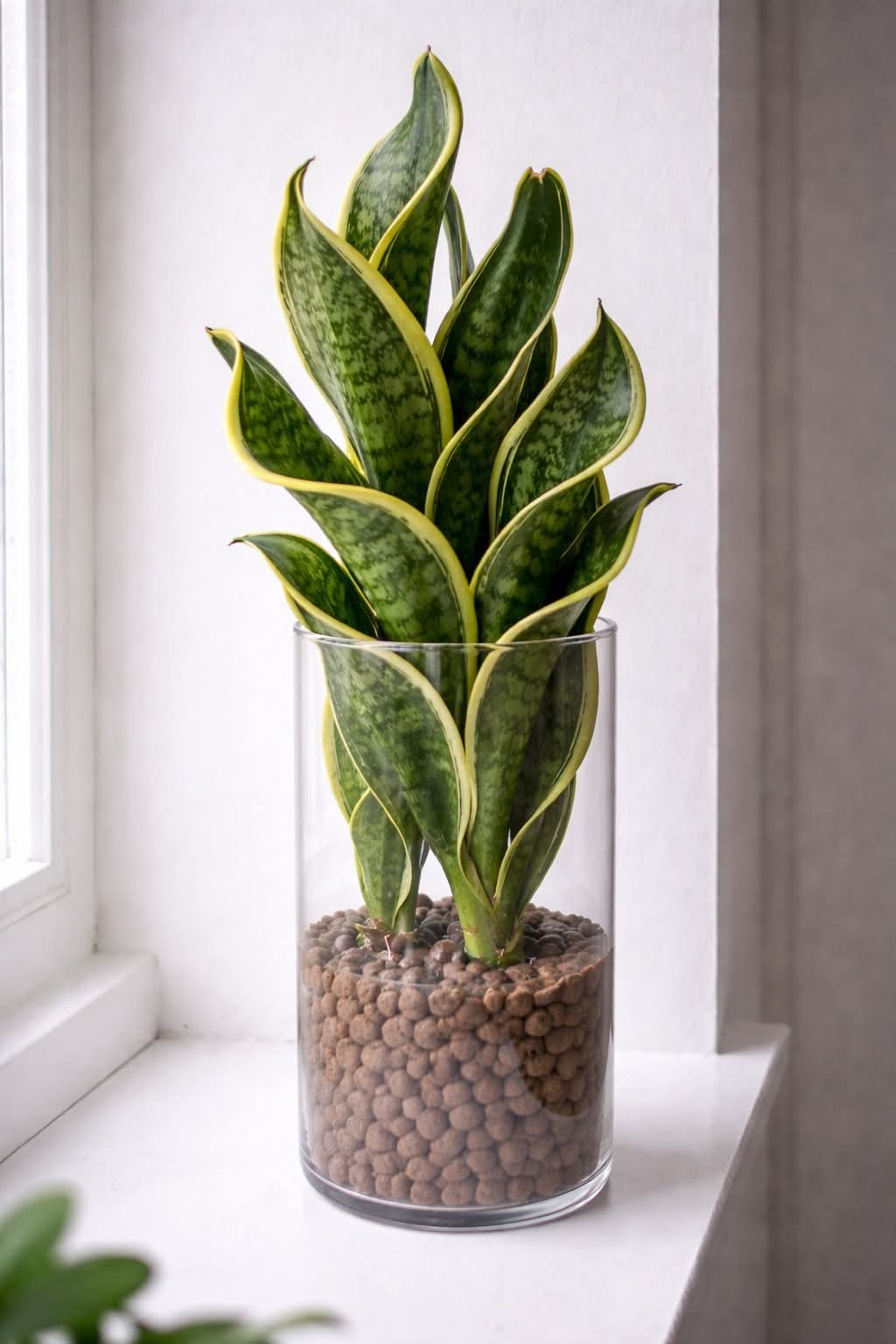
I decided to try something different with my snake plant. Instead of planting it in soil, I gently rinsed the roots and placed it in a clear glass vase filled with clay pebbles and water. No dirt. No drainage holes. No soggy potting mix.
At first, I wasn’t sure what to expect. Would the roots rot? Would the plant go into shock? Would it even survive?
Over time, this simple setup turned into one of the easiest and cleanest ways I’ve ever grown a houseplant. The snake plant adapted beautifully, pushing out new roots and even new leaves. And the best part? I could finally see exactly what was happening below the surface – healthy, white roots, no guesswork.
In this guide, I’ll walk you through exactly how to set up your own hydroponic snake plant, what materials you need, how to transition from soil safely, and how to maintain the system for long‑term success. No prior hydroponic experience required. Just a willingness to try something different.
Let’s grow soil‑free.
What Is a Hydroponic Snake Plant?
Hydroponics is a method of growing plants without soil. Instead of relying on soil to anchor roots and provide nutrients, the plant sits in an inert growing medium (like clay pebbles), while water and a diluted nutrient solution deliver everything the plant needs directly to the roots.
For a snake plant – a succulent that naturally stores water in its leaves – hydroponics might sound counterintuitive. But when done correctly, it works beautifully.
Why Snake Plants Can Thrive Hydroponically
Trait Why It Works in Hydroponics
Thick, fleshy roots Can tolerate periods of water exposure without rotting (if managed correctly)
Slow growth Requires minimal maintenance and infrequent nutrient changes
Low nutrient needs Thrives with very diluted fertilizer, reducing risk of algae or salt buildup
Adaptable nature Snake plants are resilient and can transition from soil to water with proper care
The result? A cleaner, low‑maintenance growing system that looks modern and allows you to monitor root health at a glance.
Why I Chose LECA (Clay Pebbles) – The Perfect Growing Medium
The clay pebbles in the vase – often called LECA (Lightweight Expanded Clay Aggregate) – aren’t just for looks. They play several critical roles:
Function How LECA Helps
Physical support Keeps the plant upright and stable, even with tall leaves
Air circulation The porous pebbles create air pockets around roots, preventing suffocation
Moisture regulation LECA wicks water upward while allowing excess to drain away, preventing stagnant water
Prevents root rot Roots are not fully submerged; only the lower portion sits in water
This balance of air and water is key to healthy root growth. Unlike soil, which can become compacted and waterlogged, LECA provides consistent structure and drainage.
Other Medium Options (And Why LECA Wins)
Medium Pros Cons
LECA Reusable, porous, great aeration Initial cost; needs rinsing
Perlite Cheap, excellent drainage Floats; dusty; not aesthetically pleasing
Gravel Heavy, stable Poor water wicking; can crush roots
No medium (just water) Simplest No support; roots can tangle; algae risk
For a snake plant in a decorative glass vase, LECA is the ideal choice.
How I Set Up My Hydroponic Snake Plant – Step by Step
Here’s exactly what I did. The whole process took about 15 minutes.
Materials Needed
Item Purpose
Healthy snake plant Start with a pest‑free, disease‑free plant
Sharp scissors or pruners For trimming damaged roots
LECA (clay pebbles) Growing medium
Clear glass vase or jar Container (clear allows root monitoring)
Distilled or filtered water Avoids chlorine and chemicals
Diluted liquid fertilizer (optional) For long‑term nutrition
Step 1: Remove the Snake Plant from Soil
Gently tip the pot and slide the plant out. If the roots are tightly bound, squeeze the pot or tap the sides. Do not yank the plant by the leaves.
Step 2: Remove All Soil from the Roots
This is the most important step. Any remaining soil can rot in water and introduce bacteria.
· Hold the root ball under lukewarm running water.
· Use your fingers to gently tease apart the roots, removing as much soil as possible.
· For stubborn clumps, soak the roots in a bowl of water for 10–15 minutes, then rinse again.
· Trim away any dead, mushy, or rotting roots with clean scissors.
Pro tip: Be patient. Soil left on roots will cloud the water and can lead to root rot.
Step 3: Prepare the LECA
LECA comes dusty from manufacturing. Rinse it thoroughly in a colander under running water until the water runs clear. Soak the pebbles in water for 1–2 hours before use – this allows them to absorb water, preventing them from drawing moisture away from the roots after planting.
Step 4: Place the Plant in the Container
Choose a clean glass vase or jar. Add a 1–2 inch layer of pre‑soaked LECA to the bottom. Position the snake plant so that the roots are spread out naturally. Gently add more LECA around the roots, shaking the vase occasionally to settle the pebbles. The plant should sit firmly, with the base of the leaves (the crown) above the pebbles – never buried.
Step 5: Add Water
Pour distilled or filtered water into the vase until it reaches the lower third of the roots. The majority of the roots should be in the moist air gap between the pebbles, not fully submerged. For most setups, this means water about 1–2 inches deep at the bottom of the vase.
Critical rule: Never submerge the entire root ball. Only the bottom roots should touch water. This prevents rot and allows the upper roots to access oxygen.
Step 6: Place in Bright, Indirect Light
Set the vase in a location with bright, indirect sunlight – near an east or west window. Avoid harsh afternoon sun, which can heat the water and promote algae growth.
Benefits I Noticed After Switching to Hydroponics
After the transition, I saw several immediate and long‑term improvements.
Benefit What Changed
No messy soil indoors No more dirt on the windowsill, no spilled potting mix, no fungus gnats.
Easier to monitor root health Clear glass lets me see roots at a glance – white and firm is good, brown and mushy is bad.
Less frequent watering Water lasts 1–2 weeks without drying out. No more guessing soil moisture.
Cleaner, modern look The combination of clear glass, green leaves, and terracotta‑colored pebbles is visually striking.
Plant adapted faster than expected Within 2 weeks, I saw new root growth. Within a month, a new leaf emerged.
The plant not only survived – it thrived.
Maintenance – How to Keep Your Hydroponic Snake Plant Healthy
Hydroponics isn’t “no maintenance,” but it’s lower maintenance than soil for a snake plant. Follow these simple rules.
💧 Change the Water Every 1–2 Weeks
· Why: Stagnant water loses oxygen and can grow bacteria, algae, or mold.
· How: Pour out the old water, rinse the vase and LECA if you see buildup, then refill with fresh distilled water (or tap water that has sat out overnight to dechlorinate).
· Pro tip: If the water becomes cloudy or develops an odor, change it immediately.
🌿 Add Diluted Fertilizer Occasionally
Snake plants have low nutrient needs, but they still need some food.
Schedule Fertilizer Type Strength
Once a month during spring/summer Balanced liquid houseplant fertilizer (10-10-10) Diluted to ¼ strength
No fertilizer in fall/winter – –
Important: Never add fertilizer to a dry plant. Always add it to fresh water.
🧼 Clean Algae if It Appears
Algae growth is common in clear glass containers with light exposure.
· Prevention: Change water regularly; use an opaque container if algae is persistent.
· Removal: Empty the vase, scrub the inside with a soft brush and mild soap (rinse thoroughly), rinse the LECA, and refill with fresh water.
✂️ Prune Dead Leaves and Roots
· Trim any yellow or dead leaves at the base.
· During water changes, inspect roots. Trim away any brown, mushy, or slimy roots with clean scissors.
🔄 Refresh LECA Every 1–2 Years
Over time, LECA can accumulate mineral deposits. Rinse thoroughly between uses. For long‑term health, replace the pebbles every 1–2 years.
Common Problems and How to Fix Them
Problem Likely Cause Solution
Root rot (brown, mushy roots) Water level too high (roots fully submerged) Lower water level; trim rotten roots; change water more frequently
Algae in vase Too much light + stagnant water Clean vase; move out of direct sun; change water weekly
Leaves turning yellow Overwatering (even in hydro) or root rot Check water level; ensure only lower roots touch water; trim rot
No new growth Too little light or lack of nutrients Move to brighter spot; add diluted fertilizer in growing season
White crust on LECA Mineral buildup from tap water Switch to distilled water; rinse LECA thoroughly
Foul smell from vase Stagnant water, bacteria, or rot Change water immediately; clean vase; inspect roots
Who Should Try This Hydroponic Setup?
This soil‑free method is perfect if you:
| ✔️ Want a low‑maintenance indoor plant | ✔️ Prefer a clean, soil‑free environment |
| ✔️ Enjoy modern, decorative plant displays | ✔️ Tend to overwater plants in soil |
| ✔️ Like being able to see root health | ✔️ Have had trouble with fungus gnats |
| ✔️ Want to try hydroponics without complex equipment | ✔️ Need a plant setup that’s easy to move |
It’s also a great project for beginners curious about hydroponics. No pumps, no timers, no pH meters – just a jar, pebbles, and water.
What About Long‑Term Health? Will a Snake Plant Live Forever in Water?
Yes, with proper care, a snake plant can live for years in a hydroponic setup. However, there are a few considerations:
· Nutrients: Over time, water alone lacks essential micronutrients. Use diluted fertilizer during the growing season.
· Root space: As the plant grows, roots may fill the vase. Repot into a larger container or trim roots back by ⅓.
· Water quality: Always use clean, dechlorinated water. Distilled or filtered is best.
I’ve had my hydroponic snake plant for over a year, and it’s still going strong – new leaves, healthy roots, no rot.
Frequently Asked Questions (FAQs)
Q: Can I put a snake plant in water without LECA?
Yes, but you’ll need to support the plant with a collar or narrow vase neck. Without pebbles, the roots are fully exposed, and the plant may tip over. LECA provides stability and better aeration.
Q: How much water should I put in the vase?
Only enough to cover the bottom 1–2 inches of roots. The majority of the root mass should be in the moist air space above the water line.
Q: Can I use tap water?
Yes, but let it sit out overnight to allow chlorine to evaporate. If your tap water is very hard (high mineral content), consider using distilled or filtered water to prevent white mineral buildup on the LECA.
Q: Will my snake plant grow faster in hydroponics?
Not necessarily faster, but growth can be more consistent because water and oxygen are always available at optimal levels. The plant doesn’t have to struggle through dry spells or waterlogged soil.
Q: Can I transition a snake plant from soil to hydroponics if it’s already root bound?
Yes. In fact, a root‑bound plant is easier to transition because the roots are dense and hold together. Just be extra thorough when rinsing away soil.
Q: Why are my roots turning green?
Green roots are not rot – they are algae growing on the root surface. This happens when light hits the water. It’s generally harmless but can be reduced by changing water more frequently or using an opaque container.
Q: Can I put multiple snake plants in one hydroponic vase?
Yes, as long as the vase is large enough and the plants aren’t crowded. Roots will intertwine, but that’s fine. Separate them if you ever need to divide.
Q: How do I fertilize without causing algae?
Use a clear, synthetic fertilizer (not organic, which feeds algae). Dilute to ¼ strength. Apply only once a month during active growth. Change the water 1 week after fertilizing to prevent buildup.
Final Thoughts – Changing the Method, Not the Plant
Switching my snake plant to a hydroponic setup was easier than I expected – and honestly, it made plant care simpler.
No guessing with soil moisture. No messy dirt. No fungus gnats. Just a clean, controlled environment where I can see exactly what’s happening with the roots. And the plant? It adapted beautifully, pushing out new roots and new leaves like it had been growing in water its whole life.
Sometimes, changing the method – not the plant – makes all the difference. If you’ve ever struggled with overwatering, fungus gnats, or just want a cleaner, more modern way to display your snake plant, give hydroponics a try. You might be surprised at how simple it really is.
Now it’s your turn! Have you tried growing a snake plant in water or LECA? What was your experience? Drop a comment below – I’d love to hear your story.
And if you found this guide helpful, share it with a friend who’s tired of messy potting soil. Pin it for later, and subscribe to our newsletter for more simple, soil‑free plant care ideas.
Stay clean, stay curious, and keep growing. 🌿💧✨
More Ideas You Might Like
-
My Hydroponic Snake Plant Setup: A Simple Soil-Free Method That Actually Works
Growing a snake plant hydroponically in LECA clay pebbles and water is easier than you think. Learn how to transition your plant from soil to a clean, low‑maintenance hydroponic setup that promotes healthy roots and modern style. Let’s be honest: snake plants are beloved for their tough, forgiving nature. But even the easiest houseplant can…
-
My Snake Plant Started Growing Better After This Simple Indoor Trick – And It’s Not What You Think
Is your snake plant just surviving, not thriving? The secret isn’t milk or magic potions – it’s fixing the basics. Learn the simple indoor adjustment that finally made my snake plant grow faster and healthier. Let’s be honest: for the longest time, my snake plant just… existed. It wasn’t dying – the leaves were green,…
-
The Snake Plant Growth Trick Smart Homeowners Are Using Indoors — And the Difference Shows Faster Than You’d Think
Want your snake plant to grow faster and look healthier? The real trick isn’t a secret potion – it’s consistent care. Learn the simple indoor adjustments that produce visible results in weeks. Let’s be honest: snake plants (Sansevieria, now Dracaena) have a reputation for being nearly indestructible. They survive low light, infrequent watering, and general…