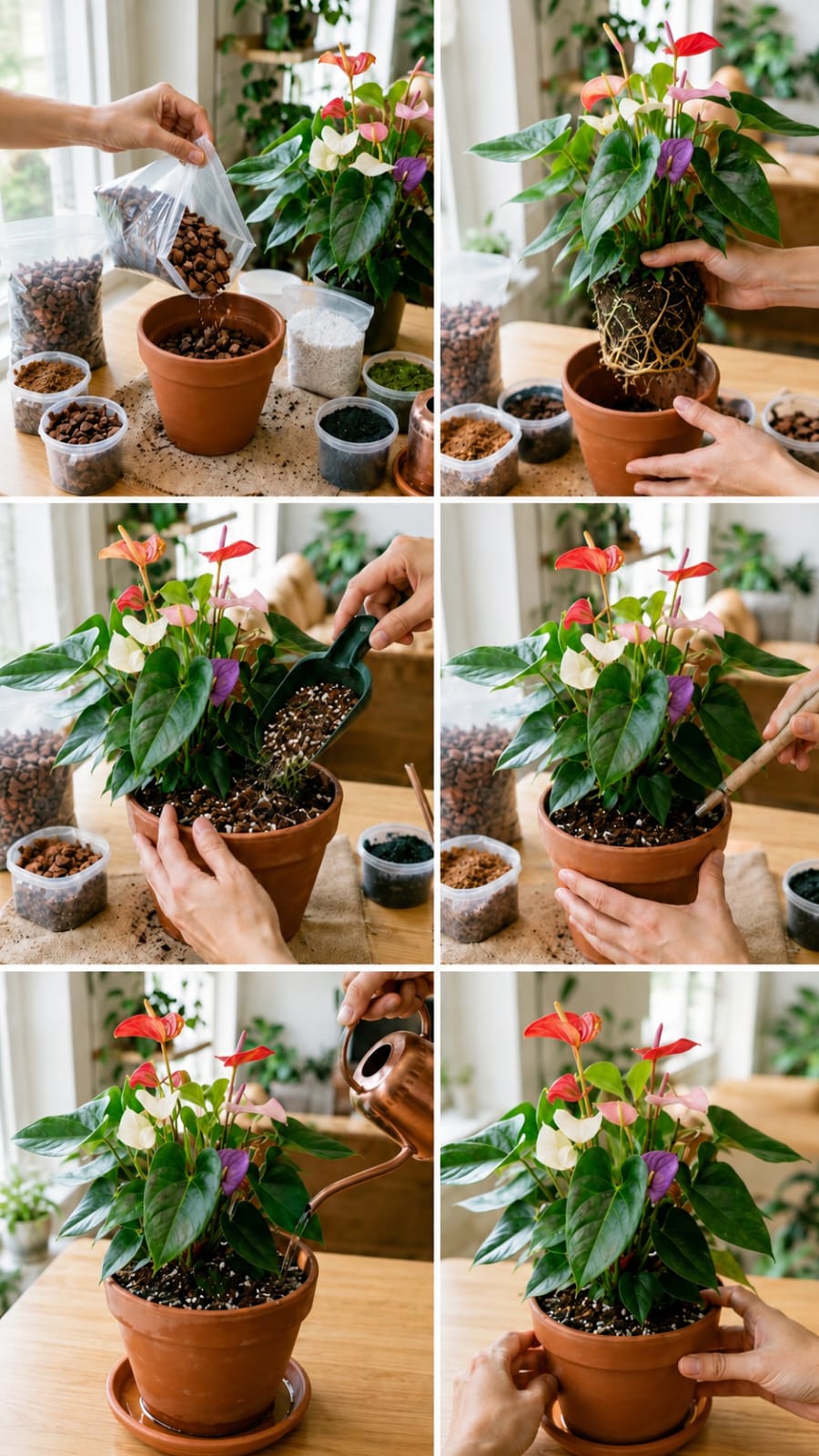
Seasonal Anthurium Care
Spring
Spring is the best time to repot, divide, refresh soil, and begin light feeding. New growth becomes stronger as light increases.
Summer
Keep the plant in bright indirect light. Water when the top layer dries. Feed lightly if the plant is growing.
Fall
Reduce feeding as growth slows. Move the plant closer to light if daylight becomes weaker.
Winter
Water less often. Keep away from cold windows and drafts. Avoid fertilizing unless the plant is actively growing in a warm bright room.
Weekly Care Routine
- Check soil moisture.
- Look for yellow leaves or brown tips.
- Empty saucer water.
- Remove faded flowers.
- Check for pests.
- Wipe dusty leaves if needed.
- Keep in bright indirect light.
Monthly Care Routine
- Inspect the potting mix.
- Check roots if the plant looks weak.
- Feed lightly during active growth.
- Refresh the top layer if compacted.
- Rotate the pot for even growth.
- Review humidity levels.
- Flush the mix if fertilizer buildup appears.
Frequently Asked Questions
What is the best soil for anthuriums?
The best soil is chunky, airy, and well-draining. A mix of potting soil, orchid bark, perlite, and coco coir works well.
Do anthuriums need drainage holes?
Yes. Drainage holes are very important because anthurium roots can rot in standing water.
Why is my anthurium not blooming?
The most common reason is not enough bright indirect light. Move it closer to a bright filtered window and keep care consistent.
Should I water after repotting?
Water lightly after repotting if roots are healthy. If many roots were trimmed, wait a few days before watering heavily.
Can I use orchid bark for anthuriums?
Yes. Orchid bark is excellent because it creates air pockets and supports healthy roots.
How often should I repot?
Every 2 to 3 years is common, or sooner if the soil breaks down or roots become crowded.
Why are leaves turning yellow?
Yellow leaves can come from overwatering, poor drainage, low light, old leaves, or root stress.
Final Thoughts
Potting is one of the most important parts of anthurium care. If the roots are healthy, the whole plant looks better. The leaves become glossier, the stems become stronger, and the colorful spathes last longer.
The best anthurium potting routine is simple. Use a pot with drainage holes. Choose a chunky mix with orchid bark and perlite. Keep the crown above the soil line. Water gently and let the pot drain. Place the plant in bright indirect light. Feed lightly during active growth and avoid heavy fertilizer.
With the right potting setup, your anthurium can grow into a lush tropical plant with vibrant flowers and beautiful glossy leaves. A healthy root system is the real secret behind every bright, colorful bloom.