Tip 7: Divide Only When Necessary
If your plant is already large and crowded, you can divide it when repotting. This is one of the easiest ways to create more ZZ plants (propagation). However, if your goal is to make one pot look fuller, it is often better to let the plant stay together and keep sending up new shoots naturally.
When to Divide:
· The pot is cracking or bulging.
· Roots are circling densely at the bottom.
· You want to create multiple plants from one.
How to Divide:
- Unpot the ZZ plant and gently shake off soil.
- Locate natural divisions – clumps of rhizomes with their own stems.
- Use a clean, sharp knife to cut between clumps.
- Let cut surfaces dry for a few hours (callus over).
- Repot each division into fresh cactus mix.
Dividing gives you more plants, but it temporarily reduces fullness in the original pot. For a fuller single pot, leave the plant intact.
Tip 8: Avoid Random Hacks (No Powders, Tablets, or Miracles)
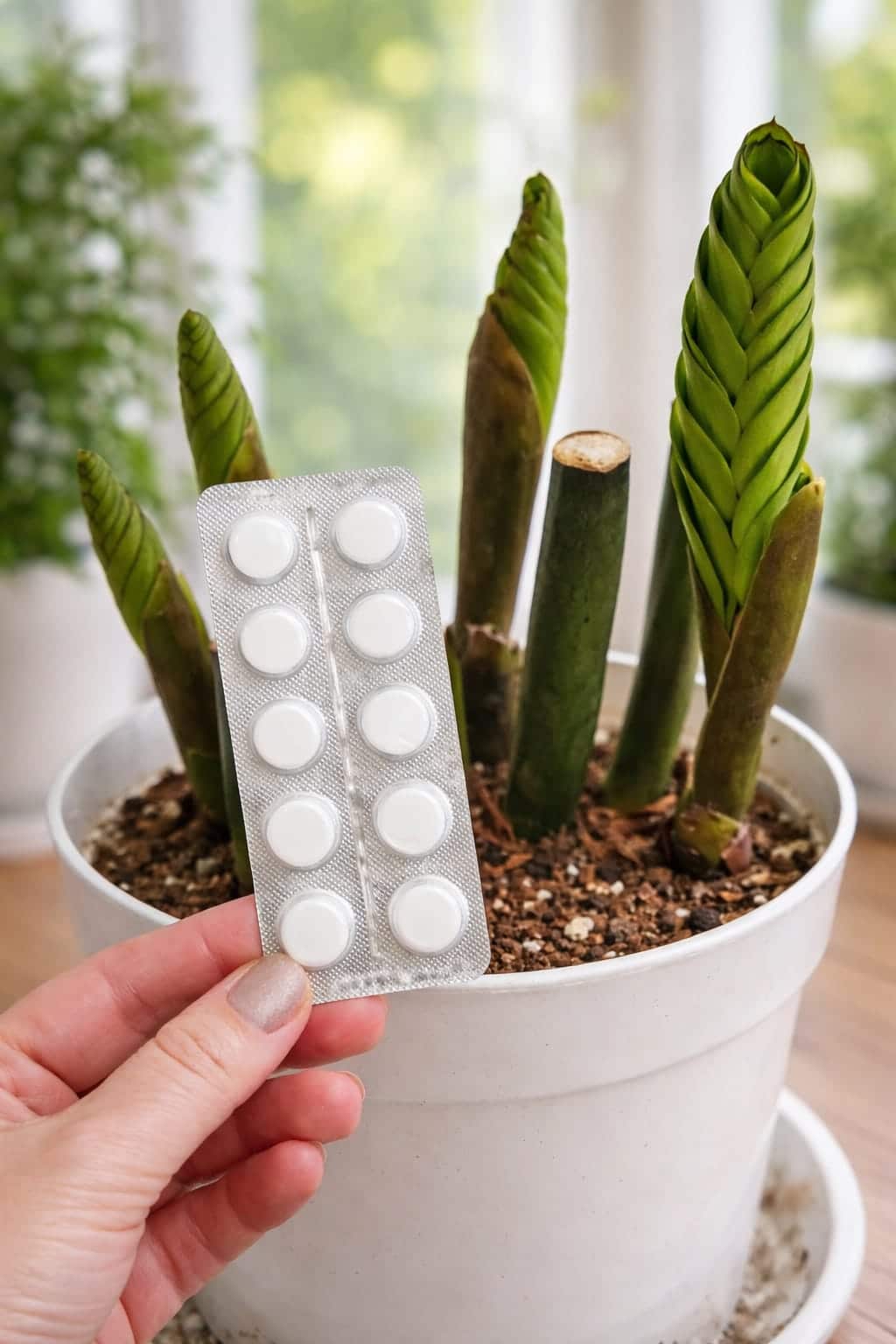
Photos and videos often show tablets, powders, or homemade tricks being added to ZZ plant soil. Some may be harmless, but many are unnecessary or exaggerated. A ZZ plant does not need mystery products to multiply.
What Does NOT Work (Despite Viral Claims):
· Coffee grounds – Can compact soil and acidify it.
· Epsom salt – Only helpful if a magnesium deficiency exists; otherwise adds salt.
· Cinnamon – Antifungal, not a fertilizer or growth stimulant.
· Baking soda – Alters soil pH, can harm roots.
· Rice water – Very mild tonic, not a multiplication booster.
What Actually Works:
· Healthy roots
· Good light
· Balanced watering
· Airy soil
· Time
That is what really fills the pot. Save your kitchen ingredients for cooking.
Signs Your ZZ Plant Is Happy and Ready to Multiply
A happy ZZ plant usually shows:
· Firm, glossy leaves – No wrinkles, no yellowing.
· Strong upright stems – Not drooping or leaning.
· New shoots emerging from the soil – Light green, pointed tips.
· Steady growth during warm months – Several new stems per year.
· Rich, healthy color – Deep green, not pale.
If you see new shoots, your care routine is working. Do not change anything abruptly — just continue with consistent light, water, and occasional feeding.
A Complete ZZ Plant Care Routine for Multiplication
Here is a simple weekly and seasonal plan to maximize fullness.
Weekly (Quick Check)
· Feel the soil. Water only if completely dry.
· Wipe leaves with a damp cloth to remove dust.
· Rotate the pot slightly for even light.
Monthly
· Inspect for pests (mealybugs, spider mites).
· Remove any dead or yellow leaves.
· Check that drainage holes are clear.
Spring & Summer (Active Growth)
· Bright indirect light (10–12 hours).
· Water every 2–4 weeks (when dry).
· Feed with half‑strength balanced fertilizer once every 6–8 weeks.
· Watch for new shoots.
Fall & Winter (Resting Period)
· Still bright light, but days are shorter — consider a grow light.
· Water once a month or less.
· No fertilizer.
· Keep away from cold drafts (below 50°F).
Annually
· Refresh the top inch of soil with fresh cactus mix.
· Repot every 2–3 years if roots are crowded or soil is compacted.
· When repotting, check rhizomes for rot. Trim any soft, dark areas.
Frequently Asked Questions (ZZ Plant Multiplication)
How long does it take for a ZZ plant to produce new shoots?
It can take anywhere from 2–6 months after improving care. Young plants (under 2 years old) may not shoot at all. Be patient — ZZ plants are naturally slow.
Why is my ZZ plant not growing new shoots even though it looks healthy?
Most likely not enough light. Move it to a brighter spot. Also check that the pot is not too large and that you are not overwatering.
Can I use Epsom salt to help my ZZ plant multiply?
Epsom salt provides magnesium. If your plant shows signs of magnesium deficiency (yellowing between leaf veins), a diluted solution (1 teaspoon per gallon) once a month may help overall health. It is not a direct multiplication trigger.
What is the best fertilizer for ZZ plant multiplication?
A balanced liquid fertilizer (10‑10‑10) diluted to half strength, applied once every 6–8 weeks in spring and summer. Organic options include diluted worm casting tea.
Should I cut the leaves to encourage more shoots?
No. Cutting leaves does not stimulate rhizome activity. It only removes foliage. Focus on root and rhizome health instead.
How do I know if my ZZ plant’s rhizomes are healthy?
Healthy rhizomes are firm, plump, and light brown to white inside. Unhealthy rhizomes are soft, mushy, black, or shriveled. Check during repotting.
Can I propagate a ZZ plant from a single leaf?
Yes, but it takes patience. Place a leaf with its petiole in moist soil. Keep lightly moist. A small rhizome and roots will form in 4–6 months. New shoots may take another 6–12 months.
Why are my ZZ plant leaves turning yellow?
Usually overwatering. Check the soil. If it is wet, let it dry out completely. Also possible: old age (lower leaves naturally yellow), or too much direct sun.
The Bottom Line: No Shortcuts, Just Good Care
If you want your ZZ plant to multiply and fill the pot beautifully, focus on the basics that matter most:
· Bright indirect light – Energy for growth.
· Fast‑draining soil – Cactus mix with perlite.
· Dry periods between waterings – Let soil dry completely.
· Light feeding during active growth – Half‑strength fertilizer every 6–8 weeks.
· A slightly snug pot – Not too large, not too tight.
· Patience – ZZ plants grow slowly, but they reward consistency.
That is the real formula.
Because the fullest, most beautiful ZZ plants are not built with shortcuts or mystery powders. They are built slowly, from strong rhizomes upward, until one day the pot looks lush, balanced, and wonderfully full.
So move your ZZ plant closer to the window. Water it less often. Repot it into fresh cactus mix. And then give it time. Before you know it, those little green shoots will start appearing — and your plant will be on its way to becoming the dense, stunning centerpiece you have always wanted.
Have you successfully multiplied your ZZ plant? Share your experience in the comments below. And if you found this guide helpful, save it for later or send it to a friend who wants a fuller, bushier ZZ plant.