Yellow Leaves and Drooping Growth
Yellow leaves after repotting can happen from stress. A few older leaves may continue to yellow as the plant adjusts. This is not always a failure. But if many leaves yellow quickly, check watering and roots again. Wet soil and yellow leaves usually mean the plant is too wet or the roots are damaged. Dry soil and limp leaves usually mean the plant needs water.
Drooping can also happen while the plant adjusts to fresh soil. If the soil is lightly moist and the crown is firm, give it time. If the crown feels soft, smells bad, or collapses, rot may be present. A firm center is a good sign.
Remove fully yellow or dead leaves cleanly. Keep any leaves that still have healthy green tissue. Recovery is measured by new growth, not by the old damaged leaves becoming perfect.
How Long Recovery Takes
A spider plant does not recover overnight. After repotting and root work, it may take several weeks before you see strong improvement. The plant may pause while it rebuilds roots. This is normal. During this time, avoid strong fertilizer, frequent moving, and overwatering.
The first sign of recovery is usually fresh green growth from the center. New leaves should look firmer and cleaner than the old damaged leaves. Over time, you can trim away more old leaves as new growth replaces them. If the plant produces baby spider plants later, that is a strong sign that it has regained energy.
Patience is important. Many plant owners damage recovering plants by trying too many treatments at once. Keep the care simple and steady.
Final Thoughts
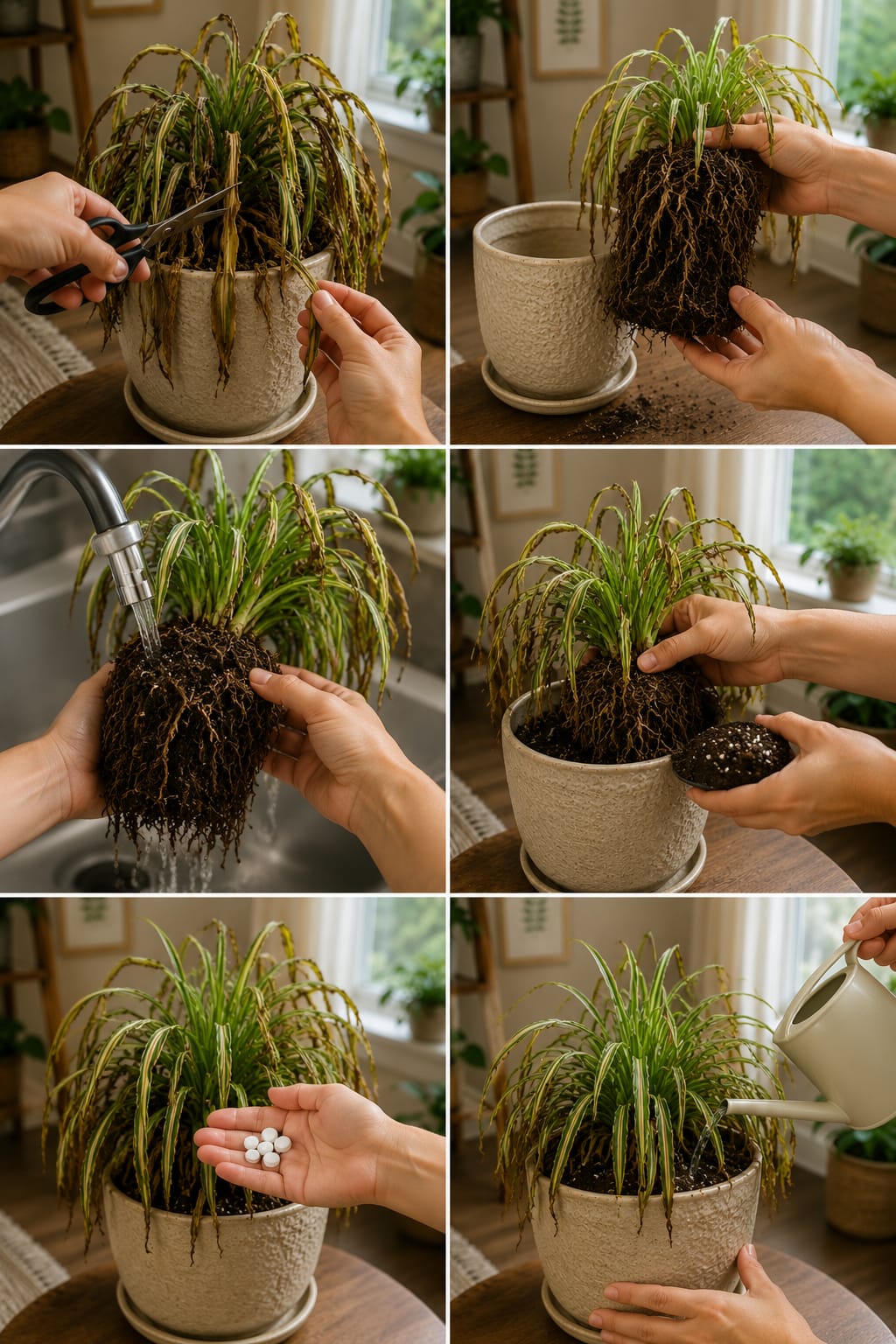
A tired spider plant with brown, drooping leaves can often be saved if the crown and roots are still alive. The rescue process shown in the image is based on practical plant care: remove dead leaves, inspect the roots, rinse away bad soil, repot into fresh airy mix, avoid unknown strong treatments, and water carefully. This gives the plant a clean new start.
The most important thing is not the tablets or any secret booster. The real rescue comes from healthy roots, fresh soil, drainage, correct watering, and bright indirect light. Once the plant is stable and growing again, gentle feeding can help, but it should not be used as an emergency cure.
With calm care, a spider plant can grow back from a sad, tired shape into a fresh, arching plant full of striped leaves. Give it time, protect the roots, keep the soil lightly moist but never soggy, and watch the new center growth. That fresh growth is the sign that your spider plant is coming back to life.