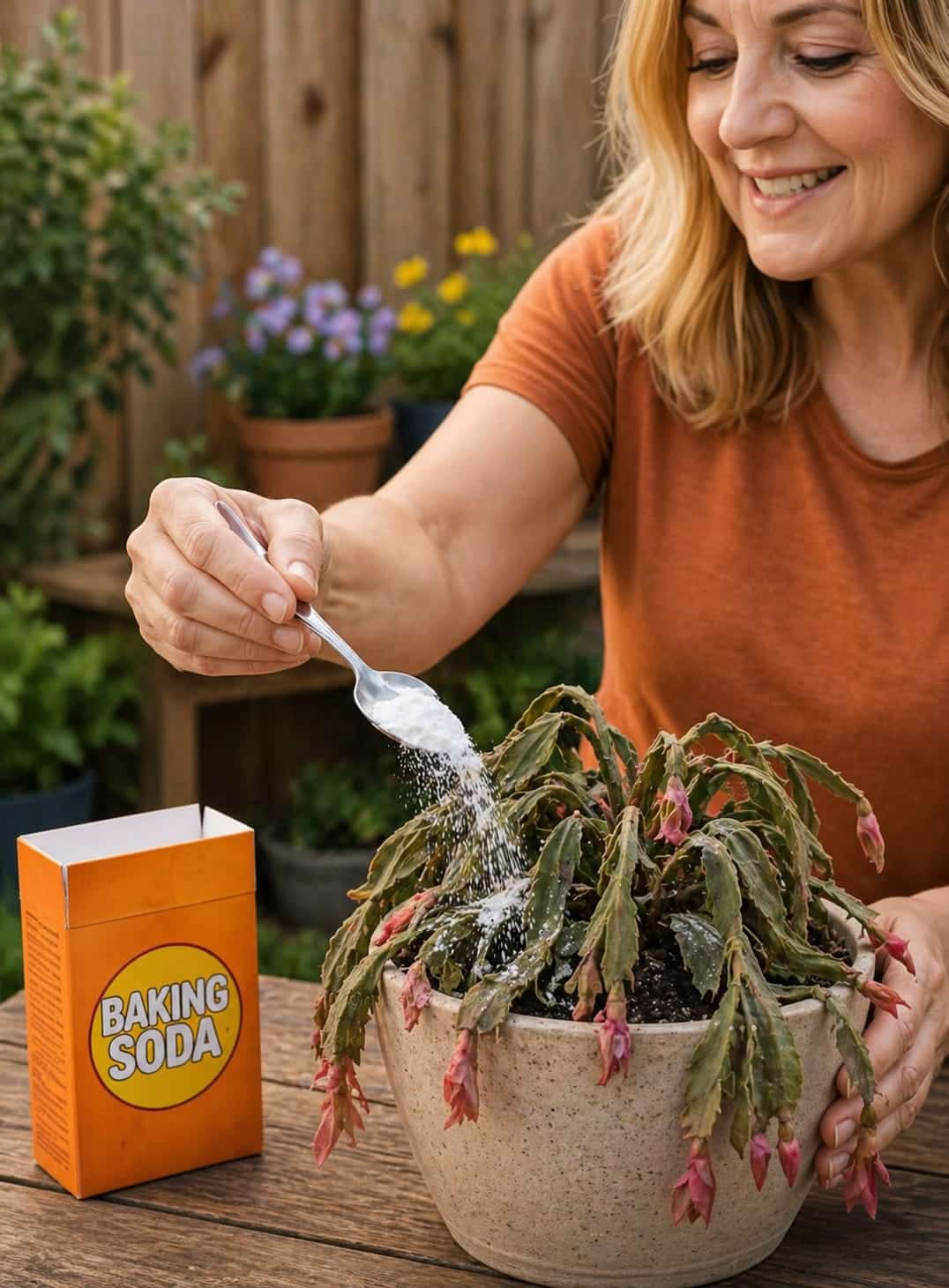
If the Stems Look Shriveled
Shriveled stems can mean the plant is dry, but they can also mean the roots are damaged. Check the soil. If the soil is dry, water properly. If the soil is wet, inspect roots.
A Christmas cactus can become shriveled after long neglect. In that case, rehydrate gradually. Water thoroughly, then let excess drain. Do not keep the pot soaking wet for days.
If the plant is badly dehydrated, it may not become plump immediately. Give it time. Avoid fertilizing or using baking soda until it stabilizes.
If the Soil Smells Sour
A sour smell usually means the soil is staying too wet or organic matter is breaking down without enough air. Baking soda may mask odor briefly, but it will not solve the underlying problem.
Remove the plant from the pot and inspect the roots. Replace the old soil with fresh, airy mix. Check that the pot has drainage holes. Avoid overwatering after repotting.
A healthy Christmas cactus pot should smell earthy and fresh, not sour, rotten, or swampy.
The Best Soil for Christmas Cactus
Christmas cactus needs soil that holds some moisture but drains well. It does not want dry sand, and it does not want dense mud. A light, airy mix is ideal.
A good Christmas cactus mix can include:
- 2 parts indoor potting mix
- 1 part perlite or pumice
- 1 part orchid bark or coco coir
This type of mix gives the roots moisture and air. It also helps prevent the surface mold and sour soil problems that make people reach for baking soda.
If your plant is in old compacted soil, repotting may be more helpful than any powder. Old soil can hold water too long and suffocate roots.
The Best Pot for Christmas Cactus
A Christmas cactus should always be in a pot with drainage holes. This is one of the most important rules. Without drainage, water can collect at the bottom, even if the top looks dry.
The plant often blooms well when slightly rootbound, so do not rush to move it into a huge pot. A pot that is too large holds extra soil, and extra soil holds extra moisture. This can lead to root problems.
If you use a decorative pot with no holes, keep the plant in a nursery pot inside it. Remove the inner pot when watering, let it drain completely, and then place it back.
Good drainage is far more important than baking soda for long-term health.
How to Water Christmas Cactus Correctly
Water when the top inch of soil feels dry. During active growth and blooming, Christmas cactus likes steady moisture but not soggy soil. During its rest periods, it needs less water.
When watering, water thoroughly until excess drains from the bottom. Empty the saucer. Do not leave the pot sitting in water.
Do not water by calendar alone. Temperature, light, pot size, soil mix, and season all affect how quickly the pot dries.
If you recently used baking soda on the soil surface, avoid overwatering. Water can carry the powder deeper into the soil. This is another reason to use only a tiny amount.
Best Light for Christmas Cactus
Christmas cactus prefers bright indirect light. It can tolerate some gentle morning sun, but harsh direct afternoon sun can stress the stems. Too much sun may make the stems turn red or yellowish.
An east-facing window is often excellent. A bright north-facing room can work. A south- or west-facing window may need a sheer curtain or some distance from the glass.
Light is especially important for blooming. During the day, the plant needs brightness. In fall, it also needs long dark nights to trigger buds. Too much artificial light at night can prevent blooming.
Baking soda cannot help a Christmas cactus bloom if the light rhythm is wrong.
How to Make Christmas Cactus Bloom Again
The true bloom trick is not baking soda. It is the fall rest period. About six to eight weeks before you want blooms, give the plant 12 to 14 hours of darkness each night. Keep nights cooler, around 55 to 65 degrees Fahrenheit if possible. Reduce watering slightly and stop fertilizing.
During the day, give bright indirect light. At night, keep the darkness uninterrupted. Even lamps and bright room lights can interfere with bud formation.
Once buds appear, keep the plant stable. Avoid moving it, overwatering it, or exposing it to drafts.
This seasonal routine is what makes Christmas cactus bloom year after year. Baking soda does not trigger flowers.
How to Prevent Future Weakness
To prevent your Christmas cactus from becoming weak again, focus on consistency. Keep it in bright indirect light. Water when the top inch of soil dries. Use a well-draining mix. Avoid leaving water in the saucer. Keep it away from heating vents, cold drafts, and sudden temperature swings.
Feed lightly during spring and summer with a balanced houseplant fertilizer diluted to half strength. Stop feeding in late summer or early fall before the bloom-trigger period.
Prune lightly after blooming to encourage branching. More branches can mean more stem tips, and flowers form at the tips.
Use baking soda only if there is a specific surface issue, and use it sparingly. Prevention is better than rescue.
Baking Soda vs. Cinnamon for Christmas Cactus
Cinnamon is another common kitchen powder used in houseplant care. It is often used as a dry dusting on pruning cuts or mild surface mold. Compared with baking soda, cinnamon is less alkaline and does not contain sodium in the same way. For cut surfaces, cinnamon is often the gentler choice.
Baking soda is more commonly associated with diluted fungal sprays or deodorizing. But for Christmas cactus, neither powder should be used heavily.
If you prune your Christmas cactus, a tiny dusting of cinnamon on a cut may be more useful than baking soda. If you have a mild soil surface smell, a tiny pinch of baking soda may help temporarily, but the real fix is better drainage and watering.
Baking Soda vs. Fertilizer
Baking soda is not fertilizer. It does not contain the balanced nutrients Christmas cactus needs for healthy growth. It should never replace plant food.
During spring and summer, a Christmas cactus may benefit from a balanced houseplant fertilizer at half strength once a month. You can also use a fertilizer formulated for blooming houseplants, but keep it gentle.
Stop fertilizing before the fall rest period. Too much fertilizer late in the season can encourage green growth instead of buds.
If your plant is weak from nutrient deficiency, use proper fertilizer during the right season, not baking soda.
Baking Soda vs. Repotting
If the soil is old, compacted, sour, or slow to drain, repotting is better than baking soda. A tiny surface treatment cannot fix bad soil structure.
Repot after blooming, usually in late winter or spring. Choose a pot only slightly larger than the current one. Use a loose, well-draining mix. Avoid repotting right before bud formation unless the plant is in serious trouble.
After repotting, let the plant settle. Do not add baking soda or fertilizer immediately. Simple water and stable light are enough while roots adjust.
What If You Already Used Too Much Baking Soda?
If you accidentally sprinkled a lot of baking soda over your Christmas cactus, remove as much as possible. Use a soft brush to remove it from the stems. Scoop excess powder from the soil surface with a spoon.
If a large amount has mixed into the soil, it is safest to remove the top layer and replace it with fresh mix. If you used a very heavy amount throughout the pot, consider repotting into fresh soil.
After cleanup, water only when the plant needs it. Do not flush repeatedly unless the pot drains well and the plant is not already too wet. Too much water can create another problem.
Can Baking Soda Hurt Buds and Flowers?
Yes, it can if applied directly. Buds and flowers are delicate. Powder can dry on them, leave residue, and cause stress. A baking soda spray can also damage petals if too strong.
Do not apply baking soda to a Christmas cactus that is covered in buds or flowers unless absolutely necessary, and even then, avoid the blooms. During bud and bloom time, stability is more important than treatments.
If flowers are fading naturally, remove them gently after they dry. Do not treat normal flower aging with baking soda.
Can Baking Soda Help With Pests?
Baking soda is not a reliable pest-control method for common Christmas cactus pests. Mealybugs, scale, spider mites, and fungus gnats need specific responses.
For mealybugs, remove visible pests with a cotton swab dipped in rubbing alcohol. For scale, gently scrape or wipe the insects and monitor closely. For spider mites, increase humidity and use appropriate pest treatment. For fungus gnats, let the soil dry more and use sticky traps.
Baking soda may help with some fungal surface issues, but it is not the best pest solution. Identify the pest before treating.
Can Baking Soda Freshen Stale Soil?
A tiny pinch may temporarily reduce a surface smell, but stale soil usually means deeper issues. The pot may be too wet, the soil may be old, or the roots may be struggling. Masking the smell is not enough.
If the soil smells stale, sour, or rotten, check moisture and drainage. If the smell continues, repot into fresh mix. Healthy soil should not need deodorizing.
Use baking soda only as a minor surface helper, not as a way to hide a serious root problem.
How to Rescue a Severely Weak Christmas Cactus
If your Christmas cactus looks very weak, follow a full rescue routine instead of relying on baking soda.
- Check the soil moisture.
- If the soil is wet, stop watering and inspect the roots.
- Trim rotten roots with clean scissors.
- Repot into fresh, airy, well-draining mix.
- Use a pot with drainage holes.
- Place the plant in bright indirect light.
- Keep it away from heat vents and cold drafts.
- Water only when the top inch dries.
- Avoid fertilizer until new growth appears.
- Use baking soda only if there is a small surface issue.
This routine addresses the real problems. A weak Christmas cactus needs healthy roots and stable conditions more than any powder.
How to Keep Christmas Cactus Blooming Year After Year
Once your plant recovers, follow a seasonal routine. In spring and summer, give bright indirect light, regular watering when the top inch dries, and light feeding. After blooming, prune lightly if needed to encourage fullness.
In late summer or early fall, stop fertilizing. In fall, give long dark nights and cooler temperatures for six to eight weeks. Water a little less. Once buds form, keep the plant steady and avoid moving it.
In winter, enjoy the blooms. Keep the soil lightly moist, avoid drafts, and do not overfeed.
This yearly rhythm is what makes the plant reliable. Baking soda may appear in a rescue trick, but seasonal care is the true bloom secret.
Common Mistakes With the Baking Soda Trick
Using Too Much Powder
A spoonful is usually too much. Use only a tiny pinch if treating a small surface issue.
Using It as Fertilizer
Baking soda does not feed Christmas cactus. Use proper fertilizer during active growth.
Applying It to Wet, Rotten Soil
Wet, rotten soil needs repotting and root care. Baking soda cannot fix rot.
Coating Buds and Flowers
Buds and flowers are delicate. Keep baking soda away from them.
Ignoring the Real Cause
Drooping, bud drop, and weak growth usually come from light, water, roots, or temperature issues.
Using It Repeatedly
Repeated use can create buildup. Baking soda should not be a regular routine.
Signs the Plant Is Recovering
A recovering Christmas cactus will gradually look firmer. The stem segments may become less wrinkled. New growth may appear during the active season. The soil should smell fresh and dry at a normal rate. Buds may form during the proper season if the plant receives long nights and cool temperatures.
Recovery may take weeks or months depending on the problem. Do not keep adding treatments because you want faster results. Stability is better.
If the plant produces new healthy segments, that is a good sign. If roots are firm and the plant stops declining, it is on the right path.
Signs You Should Stop Using Baking Soda
Stop using baking soda if the stems show spotting, dryness, residue, or irritation. Stop if the soil develops crusting. Stop if the plant continues to decline. Stop if the pot smells worse or stays wet too long.
Return to basic care. Check roots, soil, pot, light, and watering. If needed, repot the plant.
Homemade tricks should never make the plant harder to manage. If a trick creates new problems, it is not worth continuing.
A Safe Baking Soda Routine for Christmas Cactus
If you still want to include baking soda carefully, use this rule:
- Use baking soda only for a specific issue, not as routine feeding.
- Use a tiny pinch on soil surface issues only.
- Use a very diluted spray only after testing a small area.
- Never coat the whole plant.
- Never apply it heavily to buds or flowers.
- Do not use it on wet, rotten soil.
- Do not repeat often.
- Fix watering, light, and drainage first.
- Repot if the soil smells bad or stays wet.
- Stop immediately if the plant reacts badly.
This routine keeps the trick from becoming harmful.
Frequently Asked Questions
Can I put baking soda on my Christmas cactus?
You can use a tiny amount only for specific surface issues, but it should not be sprinkled heavily over the plant. Too much baking soda can stress the soil and leave residue.
Can baking soda save a drooping Christmas cactus?
No. Drooping usually comes from watering, root, light, or temperature problems. Check the soil and roots first.
Does baking soda make Christmas cactus bloom?
No. Christmas cactus blooms are triggered by long dark nights, cooler temperatures, proper watering, and seasonal rest.
Can baking soda kill mold on soil?
It may help with very mild surface mold, but the real fix is better airflow, less moisture, and fresh well-draining soil.
How much baking soda should I use?
Use only a tiny pinch for a small surface area. Do not use spoonfuls on a potted Christmas cactus.
Can I spray baking soda water on the plant?
A very weak spray can be tested on a small area, but avoid buds, flowers, and heavy soaking. Stop if the plant reacts badly.
Is baking soda fertilizer?
No. It does not provide balanced plant nutrients. Use diluted houseplant fertilizer during spring and summer if needed.
Can baking soda hurt Christmas cactus roots?
Too much can disturb the soil environment and create sodium buildup. Use it sparingly or avoid it.
What should I do if I used too much?
Brush it off the stems, remove excess from the soil, replace the top layer, or repot if a large amount mixed into the pot.
What is better than baking soda for a weak Christmas cactus?
Correct watering, fresh airy soil, drainage, bright indirect light, stable temperatures, and a proper fall rest period are much more important.
Final Thoughts
The baking soda Christmas cactus trick is eye-catching because it looks like a quick rescue for a tired plant. A white powder sprinkled over drooping stems can make it seem as if the plant is receiving an instant cure. But Christmas cactus care is more delicate than that.
Baking soda can be used only in very small amounts for certain surface issues, such as mild soil mold or mustiness. It should never be treated as fertilizer, bloom booster, or root-rot cure. Too much baking soda can create residue, disturb the soil, and stress the plant.
If your Christmas cactus is weak, the first step is diagnosis. Check whether the soil is dry or wet. Look for root rot. Make sure the pot has drainage. Move the plant to bright indirect light. Keep it away from drafts and heat vents. Use fresh, airy soil if the old mix is compacted. Water when the top inch dries, not on a careless schedule.
For yearly blooms, give the plant the seasonal rhythm it needs: growth in spring and summer, a cool dark rest period in fall, stable care when buds appear, and a short rest after flowering. That rhythm is far more powerful than any kitchen powder.
Used wisely, baking soda can be a tiny helper in a larger care routine. Used heavily, it can become another problem. The best Christmas cactus comeback comes from healthy roots, balanced moisture, soft bright light, and patient seasonal care. Give your plant those basics, and it can recover from a tired, drooping pot into a full holiday cactus that blooms beautifully year after year.