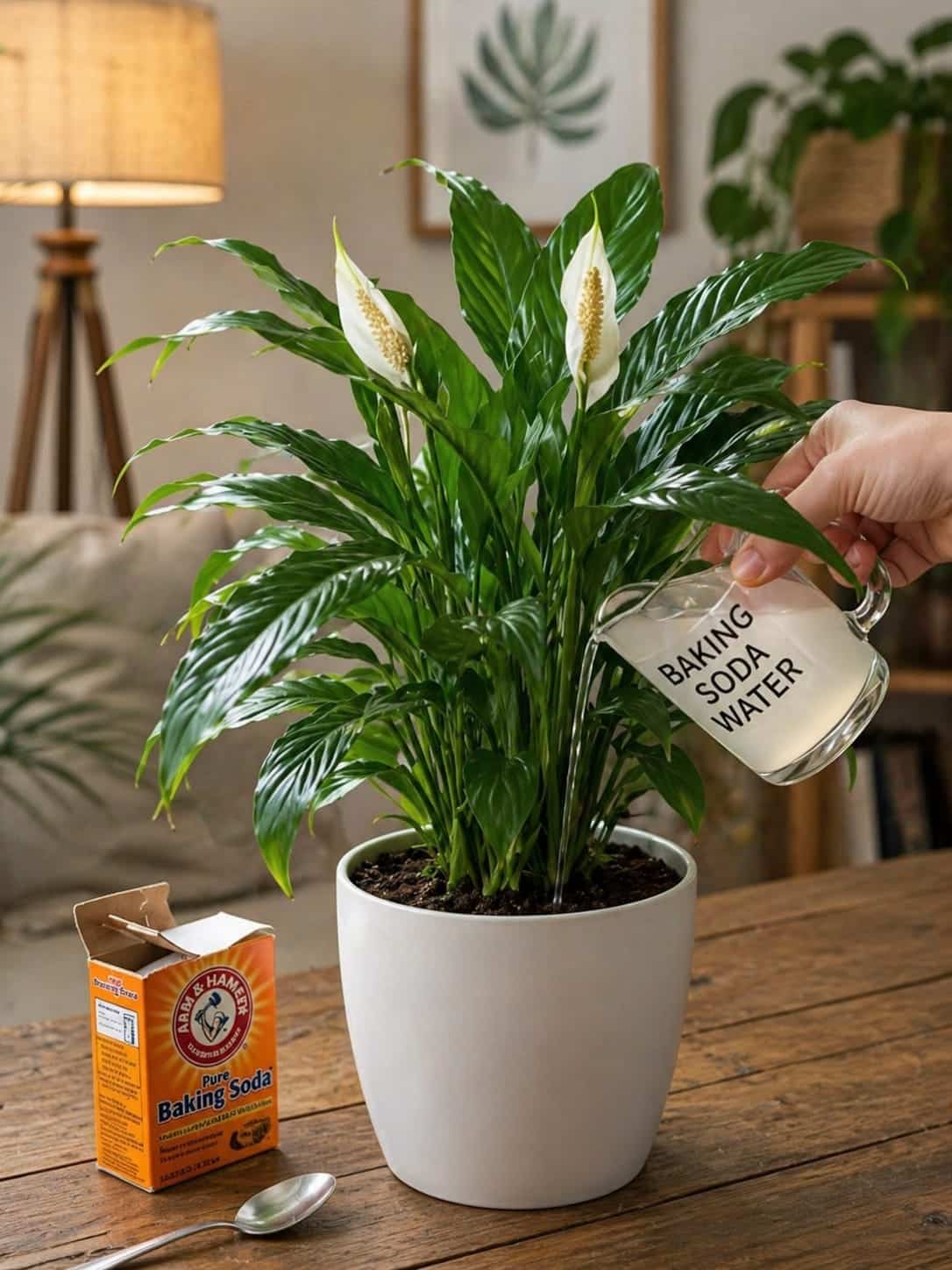
Can Baking Soda Water Help Brown Tips?
No, baking soda water usually does not fix brown tips. Brown tips on peace lilies can be caused by dry air, inconsistent watering, mineral buildup, fertilizer stress, low humidity, too much direct sun, or old leaf aging.
Once a tip turns brown, it will not turn green again. You can trim brown tips with clean scissors if you want the plant to look neater. Cut along the natural shape of the leaf.
To prevent more brown tips, improve humidity, water consistently, avoid overfertilizing, and consider using filtered water if your tap water is harsh. Keep the plant away from heating vents and direct hot sun.
Baking soda water may worsen mineral-related stress if overused, so it is not a brown-tip remedy.
Can Baking Soda Water Help Yellow Leaves?
Yellow leaves are usually a sign of water stress, root issues, old age, low light, or nutrient problems. Baking soda water is rarely the solution.
If one older lower leaf turns yellow, it may simply be aging. Remove it when it is fully yellow. If many leaves yellow at once, check the soil and roots. Wet soil plus yellow leaves often points to overwatering or poor drainage.
If the soil is dry and the plant is drooping, water properly. If the soil is wet, stop watering and inspect roots if the problem continues.
Do not use baking soda water on a yellowing peace lily until you know the cause. Adding the wrong treatment can make recovery harder.
Can Baking Soda Water Make Leaves Shinier?
Baking soda water should not be used as a leaf shine product. Peace lily leaves are naturally glossy when clean and healthy. If they look dull, they may simply be dusty.
Use a soft damp cloth with plain water to wipe the leaves. Support each leaf with one hand while wiping with the other. Avoid using baking soda water, milk, oil, mayonnaise, or commercial shine products unless they are specifically safe for houseplants.
Baking soda residue on leaves can look chalky. If too strong, it may irritate leaf surfaces. Plain water is better for cleaning.
What to Do If You Used Too Much Baking Soda Water
If you accidentally used a strong baking soda mixture, do not panic, but act carefully. If the pot has drainage holes and the soil is not already soggy, flush the soil with plain water and let it drain completely. Empty the saucer.
If the soil is already very wet, do not keep flushing repeatedly. Too much water can cause root problems. Instead, let the soil dry and monitor the plant. If leaves droop, yellow, or the soil develops crusting, consider repotting into fresh mix.
If you spilled baking soda powder on the leaves, wipe it off with a damp cloth. If a thick layer is sitting on top of the soil, scoop it off and replace the top layer with fresh soil.
After a mistake, return to simple care: bright indirect light, careful watering, and no extra treatments for a while.
The Real Secret to a Healthy Peace Lily
The real secret to a healthy peace lily is not baking soda. It is balanced care. Peace lilies like consistency. They want moisture, but not soggy soil. They want light, but not harsh sun. They like humidity, but they also need airflow.
A healthy peace lily routine starts with bright indirect light. Place the plant near a window where it receives plenty of brightness without strong direct afternoon sun. Low light may keep it alive, but brighter indirect light encourages blooms.
Next, use a pot with drainage holes. This prevents water from sitting around the roots. If your decorative pot has no holes, use it as a cover pot only.
Then, use a well-draining potting mix. Peace lilies like moisture-retentive soil, but it should not become heavy and muddy.
Finally, water when the top inch of soil begins to dry. Do not let the plant sit in standing water. Feed gently during active growth. Clean the leaves. Remove old blooms. Keep it away from drafts and heat vents.
This routine does more for your peace lily than any kitchen trick.
Best Light for Peace Lilies
Peace lilies are often sold as low-light plants, but they bloom better in bright indirect light. A plant in deep shade may have green leaves but few flowers. If your peace lily has not bloomed in months, light is the first thing to improve.
An east-facing window is often ideal. It provides gentle morning sun and bright indirect light. A north-facing window can work if the room is bright. South- or west-facing windows may be too intense unless filtered with a sheer curtain.
Direct hot sun can scorch leaves, causing pale patches, crispy spots, or curled edges. If that happens, move the plant back from the window.
Bright indirect light is the sweet spot. It supports glossy leaves, stronger growth, and more blooms.
Best Soil for Peace Lilies
Peace lilies need soil that holds some moisture but drains well. Regular indoor potting mix can work, but it is often improved with extra aeration.
A simple peace lily mix can include:
- 2 parts indoor potting mix
- 1 part perlite
- 1 part orchid bark, coco coir, or fine bark
This creates a balance between moisture and airflow. The roots can stay hydrated without sitting in soggy conditions.
If your peace lily soil smells sour, stays wet for many days, or becomes compacted, repotting is better than using baking soda water. A fresh mix solves the root-zone problem more effectively.
Best Pot for Peace Lilies
A peace lily pot should have drainage holes. This is essential. Without drainage, water collects at the bottom and roots may rot. A no-drainage pot makes every watering mistake more serious.
Choose a pot that is only slightly larger than the root ball. A pot that is too large holds extra soil, and extra soil holds extra moisture. This can lead to overwatering problems.
If you use a decorative cover pot, remove the inner pot when watering. Let the water drain fully before putting it back. Never let the plant sit in a pool of water inside the decorative container.
Good drainage makes peace lily care much easier and reduces the need for soil-freshening tricks.
How to Water Peace Lilies Correctly
Peace lilies like consistent moisture, but they do not like soggy soil. Water when the top inch of soil feels dry. If the plant droops and the soil is dry, water thoroughly. If the plant droops and the soil is wet, do not water again until you check what is happening.
When watering, pour slowly until water drains from the bottom. Empty the saucer. This ensures the root ball is evenly moistened without leaving the plant in standing water.
Do not water a little bit every day. Frequent small sips can keep the surface wet and encourage gnats or mold. Water deeply, then let the top layer dry slightly before watering again.
If using baking soda water, treat it as a watering. Do not add it between normal waterings.
How to Fertilize Peace Lilies
Peace lilies benefit from gentle feeding during spring and summer. Use a balanced liquid houseplant fertilizer diluted to half strength every four to six weeks while the plant is actively growing.
Do not overfertilize. Too much fertilizer can cause brown tips, weak growth, or salt buildup in the soil. If you notice white crust on the soil or pot edge, flush with plain water if drainage is good.
Do not replace fertilizer with baking soda water. Baking soda is not plant food. If your peace lily needs nutrients, use a product designed for plants.
In fall and winter, reduce feeding because growth slows.
How to Encourage More Peace Lily Blooms
To encourage more blooms, move the plant to brighter indirect light. This is the most important step. Peace lilies kept in very low light often produce leaves but no flowers.
Keep the soil evenly moist, but not waterlogged. Feed lightly during active growth. Remove old blooms by cutting the flower stalk near the base. Keep the plant warm and away from cold drafts.
Do not expect baking soda water to create blooms. It is not a bloom booster. A peace lily blooms when it has enough energy and healthy roots.
Patience matters too. Some peace lilies bloom more in certain seasons than others.
How to Clean Peace Lily Leaves
Peace lily leaves are large, glossy, and beautiful, but they collect dust. Dust blocks light and makes the plant look dull. Cleaning the leaves is one of the easiest ways to improve the plant’s appearance.
Use a soft damp cloth with plain water. Wipe each leaf gently from base to tip. Support the leaf from underneath so it does not tear. Avoid harsh cleaners, oils, or baking soda residue.
Clean leaves absorb light better and look instantly fresher. This simple step can do more for appearance than any special liquid.
Humidity and Peace Lily Health
Peace lilies enjoy humidity. Dry air can cause brown tips, curled edges, and drooping. This is especially common in winter when indoor heating dries the air.
To increase humidity, group plants together, place the pot near a pebble tray, or use a humidifier. If using a pebble tray, make sure the bottom of the pot is not sitting directly in water.
Misting can make leaves look fresh for a short time, but it does not raise humidity for long. If you mist, do it lightly and make sure the plant has airflow.
Better humidity supports lush leaves and reduces stress. Baking soda water does not replace humidity.
Common Peace Lily Problems and What to Do
Drooping Leaves
Check the soil. If dry, water thoroughly. If wet, stop watering and inspect for root issues.
Brown Tips
Improve humidity, avoid overfertilizing, water consistently, and consider filtered water if your tap water is harsh.
Yellow Leaves
Check for overwatering, old leaves, poor drainage, or low light. Remove yellow leaves when they decline.
No Blooms
Move the plant to brighter indirect light and feed gently during active growth.
Soil Mold
Remove the moldy top layer, improve airflow, water less often, and use a tiny amount of baking soda water only if needed.
Fungus Gnats
Let the top layer dry more, remove decaying material, use sticky traps, and avoid keeping the soil constantly wet.
Baking Soda Water vs. Plain Water
Plain water is better for regular care. It hydrates the plant without adding sodium or changing the soil chemistry. Most peace lilies should receive plain water most of the time.
Baking soda water is only for occasional, specific use. It is not better simply because it looks special or cloudy. A healthy plant does not need frequent baking soda.
If your plant looks good, keep the routine simple. Bright light, correct watering, and gentle fertilizer are enough.
Baking Soda Water vs. Fertilizer
Fertilizer feeds plants. Baking soda water does not. A balanced fertilizer provides nitrogen, phosphorus, potassium, and micronutrients. Baking soda provides none of these in a useful balanced way.
If your peace lily needs stronger growth, use diluted fertilizer during spring and summer. If the soil surface smells musty, fix moisture and airflow. These are different problems with different solutions.
Do not use baking soda water and fertilizer together on the same day. Keep treatments simple.
Baking Soda Water vs. Milk Water
Milk water is another popular peace lily trick, usually promoted as a calcium boost. Like baking soda water, it must be diluted heavily and used rarely. Milk can smell sour and attract pests if overused.
Baking soda water is more of a soil-freshening idea, while milk water is presented as a mild nutrient idea. Neither should replace proper fertilizer or correct care.
For most peace lilies, plain water and balanced fertilizer are more reliable than either kitchen trick.
Baking Soda Water vs. Rice Water
Rice water is the cloudy liquid from rinsing rice. Some plant owners use it as a mild organic rinse. Compared with baking soda water, rice water may be less likely to alter soil alkalinity, but it can still ferment or attract pests if used too often.
Rice water should also be diluted and used occasionally. Baking soda water should be used even more cautiously because of sodium and pH concerns.
Both are optional. Neither is required for peace lily success.
A Safe Peace Lily Routine With Baking Soda Water
If you want to include baking soda water carefully, use this simple routine:
- Use plain water for normal watering.
- Use baking soda water only for a specific soil surface issue.
- Mix it very weakly: 1/8 teaspoon in 4 cups water.
- Apply only when the plant needs watering.
- Pour on the soil, not the leaves or blooms.
- Let the pot drain fully.
- Use rarely, no more than once every two to three months.
- Stop if leaves yellow, tips brown, or soil crusts.
- Repot if soil smells sour or stays wet too long.
- Use proper fertilizer during active growth instead of relying on baking soda.
This keeps the trick gentle and reduces the chance of harming your plant.
Signs the Trick Is Helping
If baking soda water is helping with a minor surface issue, the soil may smell fresher and mild surface mold may not return as quickly, especially if you also improve airflow and reduce overwatering.
The plant itself should remain stable. Leaves should stay firm and green. The soil should dry normally. There should be no white crust, no sour smell, no yellowing from stress, and no drooping caused by wet roots.
Remember that baking soda water will not create dramatic growth. Any improvement in leaves or blooms is more likely from better overall care.
Signs You Should Stop Using Baking Soda Water
Stop immediately if you notice white crust on the soil, worsening brown tips, yellowing leaves, drooping after application, sour soil smell, fungus gnats, or soil that stays wet too long.
Return to plain water. Check drainage. Improve light and airflow. If the soil looks damaged or smells bad, repot into fresh mix.
A plant trick should never make care more complicated. If your peace lily does not respond well, skip the trick completely.
Frequently Asked Questions
Can I water my peace lily with baking soda water?
You can use a very weak mixture rarely, but it should not be used as regular watering. Plain water is better for normal care.
How much baking soda should I use?
Use no more than 1/8 teaspoon in 4 cups of water. Stronger mixtures can stress the soil and roots.
Can baking soda water make peace lilies bloom?
No. Blooms come from bright indirect light, healthy roots, consistent watering, and gentle feeding.
Can baking soda water fix brown tips?
No. Brown tips are usually caused by dry air, inconsistent watering, minerals, fertilizer stress, or light problems.
Can baking soda water kill fungus gnats?
It is not the best gnat treatment. Let the soil dry more, improve drainage, and use sticky traps.
Can I spray baking soda water on peace lily leaves?
It is better not to spray the whole plant. If testing for a specific issue, use a very weak solution on one small area first. Clean leaves with plain water instead.
Can baking soda hurt peace lilies?
Yes, if used too strongly or too often. It can cause buildup and disturb the soil environment.
Should I use baking soda water after repotting?
No. Newly repotted peace lilies should receive gentle care and plain water while roots adjust.
What should I do if I used too much?
Flush with plain water if drainage is good, remove crusted top soil, or repot if a large amount mixed into the pot.
What is better than baking soda water for peace lilies?
Bright indirect light, proper watering, humidity, good drainage, fresh soil, and diluted houseplant fertilizer are much better for long-term health.
Final Thoughts
The baking soda water peace lily trick is eye-catching because it looks like a clean, simple secret. A cloudy white liquid being poured around a glossy blooming peace lily makes it seem like an easy answer for stronger leaves and more flowers. But the truth is more careful: baking soda water is not a fertilizer, not a bloom booster, and not a cure for root problems.
Used rarely and very weakly, baking soda water may help freshen a minor musty soil surface or discourage light surface mold after you correct the moisture problem. But too much can stress peace lily roots, create buildup, and make the soil less balanced.
The real secret to a beautiful peace lily is consistent care. Give it bright indirect light, a pot with drainage, well-draining soil, steady moisture, humidity, warmth, and gentle fertilizer during active growth. Clean the leaves with plain water. Remove old blooms. Watch the soil before watering. Keep it away from drafts and heat vents.
If you try baking soda water, use only a tiny amount in plenty of water, apply it only to the soil, and use it only when there is a specific reason. Do not use it every week. Do not pour strong mixtures into the pot. Do not use it on wet, drooping plants with possible root rot.
A peace lily does not need complicated tricks to look beautiful. It needs the right balance. Baking soda water may be the surprising method that gets attention, but your careful routine is what keeps the plant glossy, green, and blooming year after year.