Can You Use Worm Casting Pellets Instead of Fertilizer?
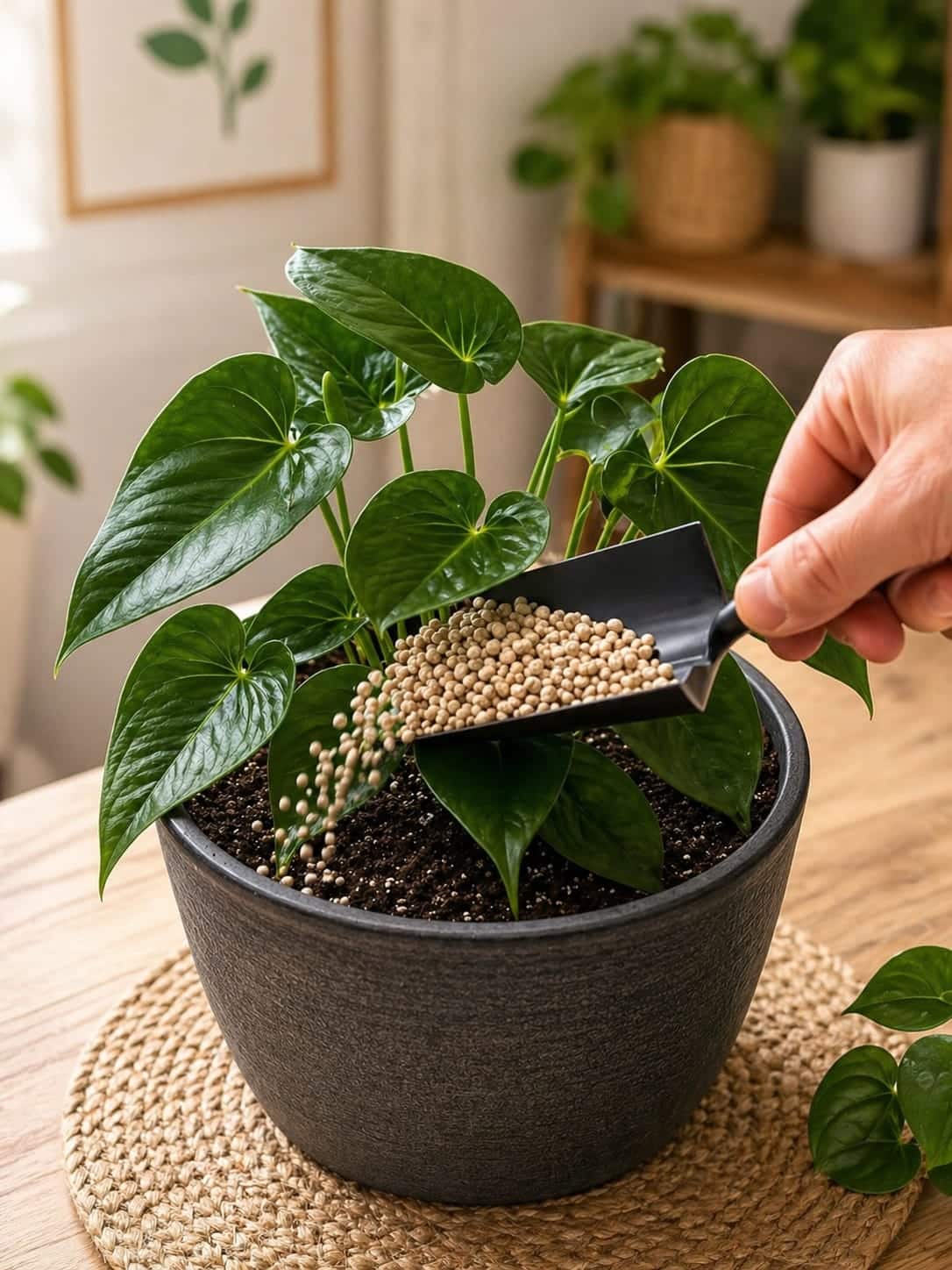
Yes, worm casting pellets can be a good gentle option. They are usually milder than synthetic fertilizer pellets and may support the soil environment. They can be sprinkled lightly on the surface and gently mixed into the top layer.
Worm castings are not always as strong or complete as fertilizer, so they may not produce dramatic results. But for anthuriums, gentle is often good. If your plant is already healthy, worm casting pellets can be a safe way to support steady growth.
Use clean, high-quality worm casting pellets. Avoid products that smell sour or seem contaminated. Store them dry.
Can You Use Leca Balls as Pellets?
Leca balls, or expanded clay balls, are not fertilizer. They are used as a growing medium or drainage/aeration material. They may look like beige pellets, but they do not feed the plant.
If the image reminds you of leca, understand that leca has a different purpose. It can be used in semi-hydroponic growing systems or as part of a chunky potting mix, but it does not provide nutrients. Plants grown in leca need a separate nutrient solution.
For the beige pellet feeding trick, use actual plant food or worm casting pellets, not plain clay balls.
Can You Use Granular Orchid Fertilizer?
Some orchid fertilizers may work for anthuriums because both plants often enjoy airy root conditions and gentle feeding. However, always check the product label. If it is a slow-release granular fertilizer suitable for potted plants, use a light dose.
Anthuriums and orchids are not identical, but they both dislike heavy soggy soil and strong fertilizer. A weak orchid fertilizer can be useful, especially if your anthurium is planted in a bark-heavy mix.
Use caution and watch the plant’s response. Brown tips or yellowing after feeding may mean the dose was too strong.
What If the Pellets Attract Fungus Gnats?
Some organic pellets can attract fungus gnats if they stay wet or are applied too heavily. Fungus gnats love moist organic material. If you notice gnats after applying pellets, stop feeding and let the top layer dry more between waterings.
Remove excess pellets from the surface. Use sticky traps to catch adult gnats. Improve airflow. Make sure the potting mix is not staying soggy. If the problem continues, replace the top layer of mix.
Synthetic slow-release pellets are less likely to attract gnats than rich organic granules, but overwatering can still cause gnats with any potting mix.
What If Leaves Turn Brown After Using Pellets?
Brown tips after pellet use may indicate fertilizer stress, mineral buildup, underwatering, low humidity, or a combination of issues. First, remove extra pellets from the soil surface. Then flush the pot with plain water if drainage is good.
Check humidity. Anthuriums like moderate to high humidity, and dry air can cause brown tips even without fertilizer issues. Check watering too. If the plant dries too much between waterings, tips can brown.
If brown tips appeared soon after feeding, the dose may have been too strong. Avoid feeding again until the plant produces healthy new growth.
What If Leaves Turn Yellow After Using Pellets?
Yellow leaves can happen from overwatering, root stress, fertilizer burn, low light, or natural aging. If many leaves yellow after applying pellets, check the soil moisture and roots.
If the soil is wet, stop watering and inspect drainage. If the pot smells sour, root rot may be present. Fertilizer on stressed roots can worsen yellowing.
Remove excess pellets and return to plain water. If the plant continues declining, repot into fresh chunky mix and trim damaged roots.
One old yellow leaf is not always a problem. Many yellow leaves at once require attention.
The Real Secret to Glossy Anthurium Leaves
The real secret to glossy leaves is not only fertilizer. It is the full care routine. Anthuriums need bright indirect light, clean foliage, good humidity, airy soil, and proper watering.
Place the plant near a bright window but out of harsh direct sun. Wipe dust from leaves with a damp cloth. Keep humidity higher if your home is dry. Use a chunky potting mix so roots can breathe. Water when the top inch begins to dry.
When these basics are correct, the plant can use fertilizer well. New leaves will open healthier and shinier. Without these basics, pellets may not help much.
The Real Secret to Anthurium Blooms
For blooms, light is the most important factor. Anthuriums need bright indirect light to produce colorful spathes. A plant kept too far from a window may grow leaves but rarely bloom.
Move the plant to a brighter location, but avoid scorching sun. Feed lightly during active growth. Keep the roots healthy. Maintain warmth and humidity. Remove old faded blooms by cutting the stems near the base.
A flowering fertilizer or slow-release pellet may help, but it cannot replace light. If your anthurium is not blooming, improve light before increasing fertilizer.
A Safe Beige Pellet Routine for Anthuriums
Here is a simple routine for using the beige pellet trick safely:
- Choose a plant-safe slow-release fertilizer or worm casting pellets.
- Use only a small amount.
- Apply during spring or summer when the plant is actively growing.
- Sprinkle pellets around the outer soil surface.
- Keep pellets away from the crown and stems.
- Water normally, only when the mix begins to dry.
- Let the pot drain completely.
- Do not combine with strong liquid fertilizer.
- Stop or reduce feeding in winter.
- Remove excess pellets if brown tips, yellowing, or crust appears.
This routine gives the plant steady support without overwhelming the roots.
Common Mistakes With the Beige Pellet Trick
Using Too Many Pellets
A large scoop may look impressive, but it can overfeed the plant. Use a light dose.
Using Unknown Pellets
Only use pellets made for plants. Random granules may be unsafe.
Feeding a Sick Plant
If the plant has root rot or wet soil, fertilizer can make things worse. Fix roots first.
Applying Pellets Too Close to Stems
Concentrated fertilizer near the crown can stress the plant. Keep pellets around the outer soil area.
Using Pellets in a No-Drainage Pot
Fertilizer needs drainage. Without drainage, buildup can harm roots.
Combining Pellets With Strong Liquid Feed
Using both can overfertilize the plant. Choose one gentle feeding method.
Signs the Pellet Trick Is Helping
If the trick is helping, the plant should continue producing healthy new growth. New leaves may open firm and glossy. The plant may look fuller over time. If light is strong enough, blooms may appear more regularly during active growth.
The soil should smell fresh. There should be no white crust, no sour odor, no gnats, no sudden yellowing, and no brown tips caused by fertilizer stress.
Good results are gradual. Anthuriums do not transform overnight. Look for steady improvement over weeks and months.
Signs You Should Stop Using Pellets
Stop using pellets if you notice brown leaf tips, yellowing leaves, white crust on the soil, fungus gnats, sour smell, drooping after watering, or slow decline after feeding. Remove excess pellets and return to plain water.
If the plant continues struggling, inspect the roots. Repot into fresh chunky mix if the soil is compacted or unhealthy.
Do not keep adding more fertilizer to a plant that is stressed. More food is not always the answer.
Frequently Asked Questions
What are the beige pellets used on anthuriums?
They are usually slow-release fertilizer pellets, controlled-release plant food, worm casting pellets, or mild organic fertilizer granules.
Can beige pellets make anthuriums grow faster?
They can support growth during the active season, but growth also depends on light, roots, watering, humidity, and soil quality.
Can pellets make anthurium leaves glossier?
They can support healthy new leaves, but gloss comes from overall care, clean foliage, bright indirect light, humidity, and healthy roots.
Can pellets make anthuriums bloom?
They may help indirectly, but blooms depend mostly on bright indirect light, root health, warmth, and gentle feeding.
How much should I use?
Use a tiny pinch for small pots, 1/4 to 1/2 teaspoon for medium pots, and about 1 teaspoon for large pots, depending on product strength.
How often should I apply them?
Follow the product label, but for indoor anthuriums, a light application every three to four months during active growth is often enough.
Can I use leca as fertilizer pellets?
No. Leca is expanded clay and does not feed the plant. It is used for aeration or semi-hydro growing.
Can I use worm casting pellets?
Yes. Worm casting pellets are a gentle organic option and can be used lightly as a top-dressing.
Should I use pellets after repotting?
Wait four to six weeks after repotting unless the plant is actively growing and the product is safe for new transplants.
What should I do if I used too many?
Remove excess pellets, flush with plain water if drainage is good, and avoid feeding again for several months. Repot if the plant declines badly.
Final Thoughts
The beige pellet anthurium trick is a clean, simple, and convenient way to support anthurium growth, but it must be used gently. The safest pellets are plant-safe slow-release fertilizer, controlled-release houseplant food, worm casting pellets, or mild organic granules. They should be applied lightly, mainly during spring and summer when the plant is actively growing.
These pellets can help support stronger roots, fuller leaves, and better blooming potential, but they are not magic. Anthuriums need bright indirect light, an airy chunky potting mix, a pot with drainage, steady moisture, warmth, and humidity. Without those basics, fertilizer pellets cannot create lasting health.
Use less than you think. Keep pellets away from the crown. Water normally and let the pot drain. Do not combine pellets with strong liquid fertilizer. Stop feeding if brown tips, yellowing, crust, or gnats appear.
With the right routine, your anthurium can produce glossy heart-shaped leaves, strong upright stems, and beautiful tropical blooms. The beige pellets may be the little trick that makes feeding easier, but your steady care is what truly keeps the plant lush, healthy, and beautiful over time.