What Pot Size Should You Use?
Start with a small pot. A pot that is 3 to 4 inches wide is usually enough for one rooted spider plant baby. If you are planting several babies together for a fuller look, you can use a slightly wider pot.
Small plants in oversized pots are easy to overwater. The extra soil stays wet for too long because the small root system cannot use the moisture quickly. This can cause root rot.
A pot with drainage holes is essential. After watering, excess water must be able to escape. If you use a decorative pot without holes, place the spider plant in a plastic nursery pot inside it and remove it for watering.
As the plant grows and fills the pot with roots, you can repot into a larger container.
Can You Plant Several Spider Plant Babies Together?
Yes. Planting several rooted babies together is a great way to create a fuller pot quickly. One baby plant can look small at first, but three to five babies in one pot can create a lush display much faster.
If you want a hanging basket look, plant multiple babies evenly around the pot. As they grow, the leaves will arch outward and fill the container beautifully.
Make sure each baby has enough room for its roots. Do not pack them too tightly. Use a pot that is wide enough for the number of plantlets, but not so large that the soil stays wet for too long.
After planting, water gently and keep the pot in bright indirect light. The babies may pause for a short time while they adjust, then begin producing new leaves.
Can You Root Spider Plant Babies Without Cutting Them Off?
Yes. This is another easy method. You can place a small pot of soil beside the mother plant, set the baby plant on top of the soil while it is still attached to the runner, and pin it down gently. Once it roots into the soil, you cut the runner.
This method is very safe because the baby continues receiving support from the mother plant while it develops roots. It is especially useful for small or weak plantlets.
You can also do this with water by placing the attached baby into a small jar while the runner remains connected. Once roots grow, cut it from the mother plant and pot it up.
The attached method is slower to arrange but very reliable. The cut-and-jar method is simpler when you want to propagate several babies at once.
Water Propagation vs. Soil Propagation
Both methods work well for spider plants. Water propagation is more visual and fun because you can watch the roots grow. It is also reassuring for beginners because you know roots are forming before you plant.
Soil propagation is more direct. You cut the baby and plant it into moist soil right away. The plant grows soil roots from the beginning, so it does not need to transition from water to soil later.
Water propagation is best if you enjoy watching roots, want to display jars, or are unsure whether the baby will root. Soil propagation is best if you want fewer steps and faster long-term establishment.
Many people use both. Spider plants are easy enough that you can experiment and see which method you prefer.
Can Spider Plants Live in Water Permanently?
Spider plants can live in water for a while, but they usually do better long-term in soil. Water alone does not provide the same support or nutrients as a good potting mix. Over time, plants grown only in water may need added nutrients, regular water changes, and careful cleaning.
If you want to keep spider plants in water as decoration, use clean jars, change the water often, and add a very weak hydroponic fertilizer once the plant is established. Do not use regular strong houseplant fertilizer in a small jar without knowing the dose.
For most people, water is best used as a rooting stage. Once roots are developed, move the babies into soil for stronger growth.
Why Are My Spider Plant Cuttings Rotting in Water?
Rot usually happens when too much of the plant is submerged, the water is dirty, the jar is not clean, or the plantlet was too small or damaged. The base may turn brown, mushy, or smell bad.
To prevent rot, submerge only the base and root area. Keep leaves above water. Use clean jars. Change the water regularly. Choose healthy plantlets with firm bases.
If a cutting starts to rot, remove it from the water. Trim away any mushy part if possible. Rinse the remaining healthy section and place it in fresh water. If the baby is too damaged, discard it and try another.
Spider plants root easily, so losing one baby is not a disaster. The mother plant will likely make more.
Why Are the Leaves Turning Brown During Propagation?
Brown tips can happen from water quality, too much direct sun, low humidity, or stress from being separated from the mother plant. A few brown tips are not unusual and do not mean the propagation has failed.
If the leaves are browning badly, move the jar out of direct sun. Change the water. Use filtered water if your tap water is harsh. Make sure the base is not rotting.
If only the tips are brown but roots are growing, the baby plant is probably fine. You can trim brown tips later if they bother you.
New growth after planting is the best sign of success.
Why Are There No Roots Yet?
If your spider plant baby has not rooted yet, give it more time. It may be too small, the room may be cool, or the light may be too low. Move it to a brighter indirect location and keep the water fresh.
Check the base. If it is firm and healthy, wait. If it is mushy, the cutting may be rotting.
Some plantlets take longer than others. Babies with visible root bumps root fastest. Tiny babies without root bumps can take longer.
You can also try rooting another plantlet at the same time. Since spider plants usually produce many babies, it is easy to propagate several and choose the strongest.
Should You Add Fertilizer to the Water?
Do not add fertilizer while the baby is just beginning to root. Tender new roots do not need strong nutrients. Fertilizer can encourage algae and may burn delicate roots if the dose is too high.
Once the plant has roots and is moved into soil, wait a few weeks before feeding. Fresh potting mix usually has enough nutrients for the beginning stage.
After the plant is established and growing, you can feed lightly during spring and summer with a balanced houseplant fertilizer diluted to half strength.
Spider plants do not need heavy fertilizer. Too much feeding can cause brown tips or weak growth.
How to Care for Newly Planted Spider Plant Babies
After moving a rooted baby into soil, give it gentle care. Keep it in bright indirect light. Keep the soil lightly moist for the first week or two. Do not let it dry completely right away because the roots are adjusting from water to soil.
After the plant settles, begin letting the top inch of soil dry before watering. Spider plants like even moisture but do not like sitting in soggy soil.
Avoid strong fertilizer at first. Let the plant establish. Once you see new leaves, you can begin light feeding during the growing season.
Do not panic if the plant looks slightly limp for a few days after planting. Transplant adjustment is normal. Stable care will help it recover.
How Much Light Do Young Spider Plants Need?
Young spider plants need bright indirect light. Too little light slows growth and may make the variegation less bright. Too much direct sun can scorch the leaves.
A bright windowsill with filtered light is ideal. Morning sun is usually gentle enough. Harsh afternoon sun should be avoided, especially for young plants.
If the leaves become pale or scorched, move the plant farther from the window. If the leaves become floppy and dark with little growth, give it more light.
Good light helps new spider plants grow fuller and stronger after propagation.
How Often Should You Water New Spider Plants in Soil?
For the first week after planting, keep the soil lightly moist. After that, water when the top inch begins to dry. Do not keep the soil constantly wet.
Spider plants have fleshy roots that store some moisture. Once established, they can tolerate a little dryness. Overwatering is more dangerous than slight underwatering.
Use a pot with drainage holes and empty the saucer after watering. If the soil stays wet for many days, the pot may be too large or the mix may be too dense.
As the plant grows, it will use water faster. Adjust your routine based on the plant and season.
When Will a Propagated Spider Plant Make Babies?
A young spider plant needs time to mature before producing its own babies. In good conditions, it may begin making runners within several months to a year. The timing depends on light, pot size, nutrition, and overall health.
Spider plants are more likely to produce babies when they are slightly rootbound and receiving bright indirect light. A plant in a huge pot may focus on root growth for a while before sending out runners.
Do not rush it. First, let the baby plant grow strong leaves and roots. Once mature, it can become a mother plant and produce its own plantlets.
This is how one spider plant can turn into many generations of plants.
How to Make a Fuller Spider Plant From Propagated Babies
If you want a fuller plant quickly, plant several babies together in one pot. Choose rooted babies of similar size and space them evenly. This creates a lush look from the beginning.
Pinch off damaged leaves as the plant grows. Rotate the pot every week or two so all sides receive light. Feed lightly during active growth. Keep the soil evenly moist but not soggy.
As the plants grow, their leaves will arch outward and fill the pot. Over time, the group will look like one full mature spider plant.
This is a great way to create a gift plant or a new hanging basket.
How to Display Spider Plant Propagation Jars
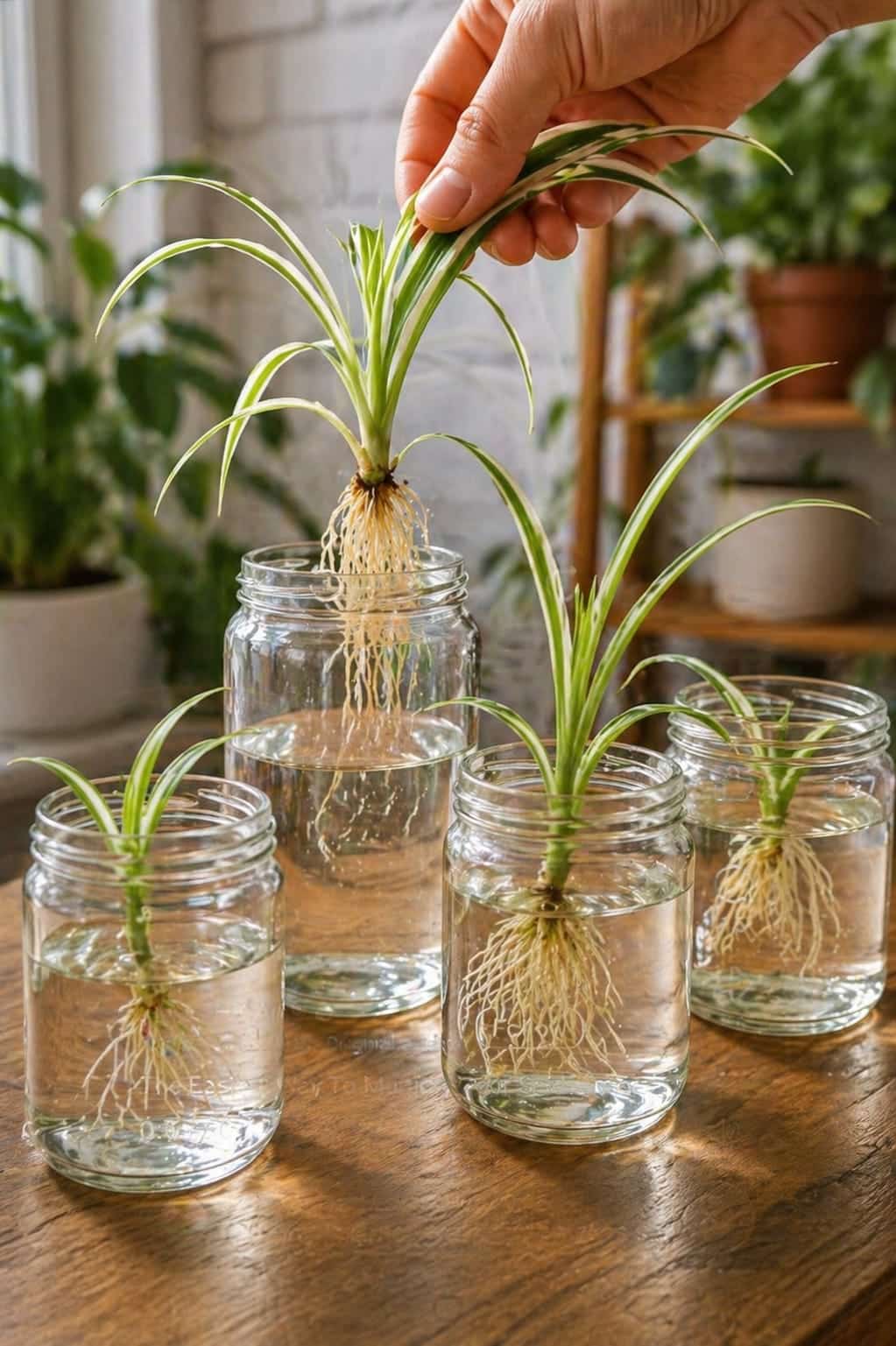
One of the prettiest parts of water propagation is the display. Clear jars with white roots look fresh and decorative. You can line them on a windowsill, place them on a wooden tray, or group them on a plant shelf.
Use jars of different sizes for a charming look. Small jars work well for tiny babies, while larger jars support bigger plantlets. Keep the jars clean so the display stays attractive.
A row of spider plant babies in water can also make a beautiful kitchen or office decoration. It is practical and decorative at the same time.
Just remember that the jars are temporary if you want strong long-term plants. Once the roots are ready, pot them up.
Can You Propagate Spider Plants From Leaves?
No, spider plants do not propagate successfully from single leaves. A leaf placed in water will not grow into a new plant. You need a plantlet with a crown and base, or you need to divide a mature plant at the roots.
This is different from some plants that can grow from leaf cuttings. Spider plants multiply through babies or division.
If your plant does not have babies yet, wait until it matures or divide the main plant if it has multiple crowns.
Can You Divide a Spider Plant Instead?
Yes. Mature spider plants can be divided if they have several clumps or crowns. Remove the plant from the pot, gently separate the root ball into sections, and repot each section into its own container.
Division creates larger plants instantly compared with baby propagation. However, it is more stressful for the mother plant than removing babies.
Water propagation of babies is easier and gentler. Division is useful when a spider plant is overcrowded or rootbound.
Common Mistakes With Spider Plant Water Propagation
Submerging the Whole Baby
Only the base and roots should be in water. Leaves sitting underwater can rot.
Using Dirty Jars
Dirty jars encourage bacteria. Always start with clean containers.
Never Changing the Water
Old water becomes cloudy and low in oxygen. Change it regularly.
Putting Jars in Direct Hot Sun
Hot sun can heat the water and stress the roots. Use bright indirect light.
Planting Too Late
If roots become too long and tangled, transplanting can be harder. Move to soil when roots are 1 to 2 inches long.
Using Oversized Pots
Small babies need small pots. Big pots stay wet too long.
Fertilizing Too Soon
New roots do not need strong fertilizer. Wait until the plant is established.
Signs Your Propagation Is Working
The first sign is fresh white root growth. You may see tiny points at the base, then longer roots reaching into the water. The leaves should remain green and firm. The plantlet should not smell bad or become mushy.
After planting in soil, new leaf growth is the next sign of success. The plant may pause for a short time while adjusting, but eventually it should begin producing new leaves from the center.
If the roots are white and the leaves look healthy, you are doing well.
Signs Something Is Wrong
If the base turns brown and mushy, the plantlet is rotting. If the water smells bad, change it and clean the jar. If the leaves collapse, the baby may have been too small or damaged. If roots turn slimy, rinse them and refresh the water.
If the plantlet does not root but remains green, give it more time and better light. If it dries out, check that the base is still touching water.
Most problems are easy to fix early. The key is to check the jars often.
A Simple Weekly Routine for Propagation Jars
To keep your spider plant babies healthy in water, follow this simple weekly routine:
- Check the water level every few days.
- Top up water if roots are exposed.
- Change the water every three to five days.
- Rinse the jar if it looks cloudy.
- Remove any yellow or dead leaves.
- Keep jars in bright indirect light.
- Watch for roots reaching 1 to 2 inches long.
- Move rooted babies into soil when ready.
This routine takes only a few minutes and keeps the process clean and successful.
Frequently Asked Questions
Can spider plant babies root in water?
Yes. Spider plant babies root very easily in water, especially if they are mature enough and have tiny root bumps at the base.
How long does it take spider plant babies to root?
Many root within one to two weeks, but some may take longer depending on light, temperature, and size.
Should I cut the baby from the mother plant first?
You can cut it first and place it in water, or you can root it while it is still attached. Both methods work.
How long should roots be before planting?
Roots should be about 1 to 2 inches long before moving the baby into soil.
Can spider plants stay in water forever?
They can survive in water for a while, but they usually grow stronger long-term in soil.
How often should I change the water?
Change the water every three to five days, or at least once a week. Change it sooner if it becomes cloudy.
Can I use tap water?
Yes, spider plants usually tolerate tap water, but filtered water may be better if your tap water is very hard or treated.
Why is my cutting rotting?
Rot can happen if too much of the plant is underwater, the jar is dirty, the water is old, or the plantlet was too small or damaged.
Can I propagate spider plants from a leaf?
No. You need a baby plantlet with a base, or you can divide a mature plant.
Can I plant several babies together?
Yes. Planting several rooted babies in one pot creates a fuller spider plant faster.
Final Thoughts
Multiplying spider plants in water is one of the easiest and most satisfying houseplant projects you can try. It is simple enough for beginners, fun enough for experienced plant lovers, and beautiful enough to display while the roots grow. With just a few jars of clean water and healthy spider plant babies, you can turn one mother plant into many new plants.
The process is easy: choose healthy plantlets, cut them with clean scissors, place the base in water, keep the leaves above the surface, change the water regularly, and wait for roots. Once the roots are 1 to 2 inches long, move the babies into small pots with well-draining soil.
The most important things are clean water, bright indirect light, and patience. Do not submerge the leaves. Do not leave the water dirty. Do not rush to fertilize. Do not plant tiny babies in huge pots. Keep the process gentle, and spider plants will usually do the rest.
Before long, those little jars will be full of white roots, and each baby will be ready to become its own beautiful plant. You can keep them, gift them, group them into a fuller pot, or start a new hanging basket. That is the magic of spider plants: once you have one, you can keep growing more and more with almost no cost at all.
If you want a houseplant trick that truly works and does not require complicated supplies, this is it. Water propagation is clean, simple, and reliable. It turns spider plant babies into strong new plants and gives you the joy of watching roots grow day by day. With this method, your spider plant collection can multiply faster than you ever expected.