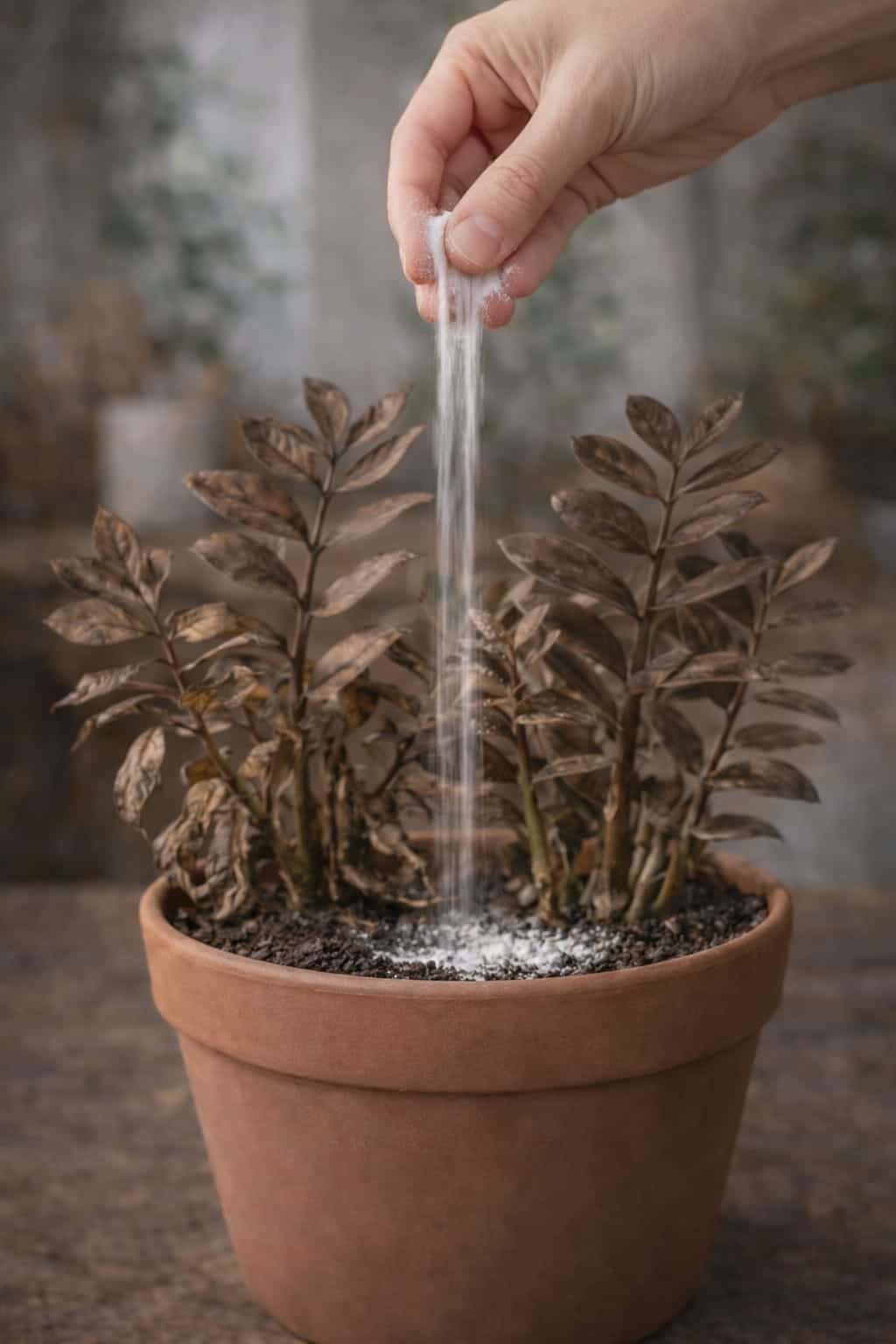
Why the Powder Sometimes Seems to “Work”
A powder can occasionally help a little if it is the right product used in the right amount. For example:
· A light fertilizer powder may support new growth if the plant already has healthy roots.
· Cinnamon may be used on dry, damaged areas after trimming to prevent rot.
· A fungicide may help if a fungal issue is present on the soil surface.
But these only help when the main problem is also being fixed. If the plant is still sitting in soggy soil, no powder will save it. The powder gets the credit, but the real hero is the improved care that often happens alongside it — repotting, better watering, more light.
Signs Your ZZ Plant Is Recovering
A recovering ZZ plant usually shows these signs over several weeks:
· Firmer stems – Stems feel solid, not soft or wrinkled.
· Richer green leaves – Leaves regain their deep, glossy color.
· New light‑green shoots – Fresh growth emerging from the soil.
· Stronger upright growth – Stems stand tall, not flopping over.
· Less wrinkling at the base – Rhizomes are rehydrating.
Recovery is usually gradual. The best changes happen over weeks, not overnight. If you see new shoots, your plant is on the right track.
Common Mistakes to Avoid
If your ZZ plant looks weak, avoid these common errors.
Watering on a Schedule Instead of Checking the Soil
A calendar does not know if the soil is still wet. Always check first.
Leaving It in Dense, Wet Mix
Heavy soil is a slow death sentence. Repot into cactus mix.
Putting It in a Pot Without Drainage Holes
Non‑negotiable. ZZ plants must have drainage.
Using Heavy Amounts of Mystery Powder
More is not better. Too much powder can burn roots or create residue.
Assuming “Natural” Always Means Safe
Cinnamon, coffee grounds, and Epsom salt can harm if overused. Research before sprinkling.
Expecting Instant Transformation
Recovery takes weeks to months. Be patient.
Ignoring the Rhizomes
If the rhizomes are rotten, no amount of top‑dressing will fix the plant. You must remove rot.
The Low-Key ZZ Plant Method Summary
Here is the entire method in a simple checklist.
When Your ZZ Plant Looks Weak:
- Unpot and inspect – Check rhizomes and roots. Cut away rot.
- Repot in fresh cactus mix – Use a pot with drainage, not too large.
- Water only when soil is completely dry – Usually every 2–4 weeks.
- Move to brighter indirect light – East or north window, or south with sheer curtain.
- Do not fertilize for 4–6 weeks – Let roots settle.
- After recovery begins, feed lightly – Half‑strength balanced fertilizer every 6–8 weeks in spring/summer.
What to Avoid:
· No schedule watering
· No heavy, wet soil
· No oversized pots
· No mystery powders without knowing what they are
· No direct sun (burns leaves)
That is it. That is the method more plant lovers are noticing. It is not flashy. It is not complicated. But it works.
Frequently Asked Questions (ZZ Plant Recovery)
Can I save a ZZ plant with no roots?
If the rhizomes are still firm, you can try. Cut away all rot, let the rhizome dry for a day, then pot in barely damp cactus mix. Water very sparingly (once a month). New roots may take 2–3 months. If the rhizome is soft, propagate leaf cuttings instead.
How do I propagate a ZZ plant from a leaf?
Cut a healthy leaf with a small piece of stem (petiole). Let it dry for a few hours. Place in moist cactus mix or water. Roots form in 4–6 weeks. A new rhizome and shoots take 6–12 months. Be patient.
What is the best soil for ZZ plants?
Cactus or succulent potting mix. You can also mix 2 parts all‑purpose soil + 1 part perlite + 1 part coarse sand.
How often should I water a ZZ plant?
Only when the soil is completely dry. In most homes, every 2–3 weeks in spring/summer, every 4–6 weeks in fall/winter.
Why are my ZZ plant leaves turning yellow?
Usually overwatering. Check the soil. If it is wet, let it dry out completely. Also possible: old age (lower leaves naturally yellow and drop), or too much direct sun.
Can I use coffee grounds on my ZZ plant?
Not recommended. Coffee grounds can compact the soil, hold moisture, and acidify the mix — all things ZZ plants dislike.
Is Epsom salt good for ZZ plants?
Only if the plant has a magnesium deficiency (yellowing between leaf veins). Even then, use sparingly (1 teaspoon per gallon of water, once a month). It is not a general fertilizer.
How do I make my ZZ plant grow faster?
Give it brighter indirect light, use fast‑draining soil, water only when dry, and feed lightly in spring and summer. ZZ plants are naturally slow growers — patience is key.
What Plant Lovers Are Really Noticing
The reason this method is getting attention is simple: people are realizing that ZZ plants do not need dramatic rescue hacks. They need less water, healthier roots, and a calmer routine.
That is the low-key method.
It is not flashy. It is not complicated. But it works.
You do not need to buy expensive products. You do not need to follow viral trends. You just need to understand what your ZZ plant actually needs — and then give it those things consistently.
Final Thoughts
If your ZZ plant looks like it is fading, do not focus only on the white powder in the video. Do not chase one‑ingredient miracles.
Focus on what actually brings it back:
· dry‑down between waterings (let soil dry completely)
· fast‑draining soil (cactus mix, not heavy potting soil)
· brighter indirect light (east window or south with sheer curtain)
· healthy rhizomes (check and trim rot)
· gentle feeding only when needed (half‑strength fertilizer in spring/summer)
That is what restores strength.
And once the roots recover, the rest of the plant usually follows — fuller stems, deeper color, and fresh new growth from the base. No powder required.
So put down the mystery sprinkles. Pick up a pot with drainage. Buy a bag of cactus mix. And give your ZZ plant the simple, honest care it has been waiting for.
Your plant will thank you — with glossy leaves, upright stems, and that quiet, steady growth that makes ZZ plants such a joy to own.
Have you tried the low‑key ZZ plant method? Share your experience in the comments below. And if you found this guide helpful, save it for later or send it to a friend who is struggling with a tired‑looking ZZ plant.