Snake plants are among the most reliable indoor plants you can grow. Their upright leaves, bold green patterns, and sculptural shape make them perfect for living rooms, bedrooms, offices, and bright corners. They can tolerate neglect better than many houseplants, and they often keep looking beautiful even when you forget to water them for a while.
But even a tough snake plant is not indestructible. Leaves can stop growing, tips can turn brown, pups may stop appearing, and the whole plant can look frozen in time. When this happens, many plant owners search for a simple trick to wake the plant up and encourage stronger growth. One popular homemade idea is using aspirin water.
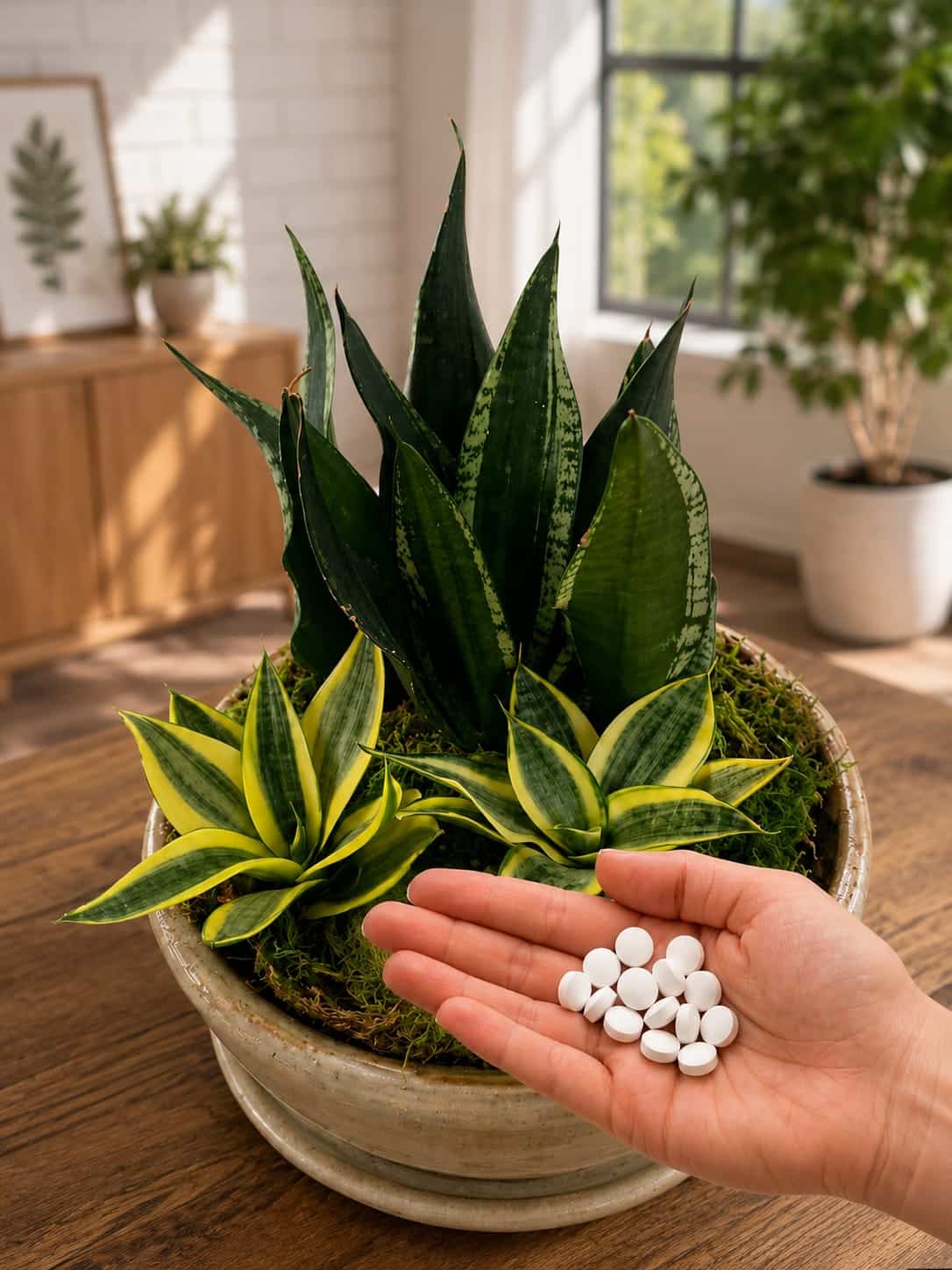
The image shows a healthy arrangement of snake plants with several white tablets in a hand. This suggests a simple tablet-based plant routine. Aspirin water is often discussed by gardeners as a stress-support treatment because aspirin contains acetylsalicylic acid, a compound related to salicylic acid, which is involved in plant stress responses. However, aspirin is not a miracle fertilizer, and it should not be pushed directly into the soil or used frequently.
Used carefully, aspirin water may be used as a very occasional support for a snake plant that is mildly stressed or slow-growing. But it cannot replace the basics. The real reason a snake plant grows strong is proper light, a fast-draining soil mix, correct watering, healthy roots, and patience. If the plant is overwatered, rotting, sitting in dense soil, or kept in a very dark corner, aspirin water will not fix the problem.
This guide explains how to use aspirin water safely for snake plants, when it may help, when to avoid it, and what care steps actually encourage upright leaves, stronger roots, and healthy new pups.
What Aspirin Water Is Used For in Plant Care
Aspirin water is made by dissolving a plain aspirin tablet in water and using that diluted solution on plants. Some gardeners use it as a mild stress-support treatment after transplanting, pruning, environmental shock, or a period of weak growth. The idea is that a very weak solution may help support the plant’s natural defense and recovery process.
However, aspirin water is not plant food. It does not contain the balanced nutrients a plant needs for long-term growth. It does not replace nitrogen, phosphorus, potassium, calcium, magnesium, or trace elements. It is not the same as fertilizer.
For snake plants, aspirin water should be treated as optional. Many snake plants never need it. A healthy snake plant can grow for years with only proper light, good soil, and careful watering.
The danger comes when people treat aspirin like a magic tablet. Placing tablets directly into the soil, using strong solutions, or applying aspirin water every week can stress the plant and disturb the roots. Snake plants are slow-growing and do not need constant treatments.
Can Aspirin Water Make Snake Plants Grow Faster?
Aspirin water cannot force a snake plant to grow fast. Snake plants naturally grow slowly, especially indoors. Their growth depends mainly on light, season, temperature, roots, and watering. A plant in bright indirect light during spring or summer may produce new leaves or pups. A plant in low light during winter may barely grow at all.
Aspirin water may support a mildly stressed plant, but it will not create instant pups. If your snake plant is not growing, check the basics first. Is it getting enough light? Is the soil too wet? Is the pot too large? Are the roots healthy? Is it winter? These questions matter more than any tablet.
If the plant is already healthy and actively growing, a very weak aspirin-water treatment may be used occasionally as a gentle support. But the main work still comes from correct care.
Think of aspirin water as a small possible helper, not the engine of growth. Light and healthy roots are the real engine.
Why You Should Not Put Tablets Directly Into the Pot
The image shows tablets in a hand near the plant. This can make the method look easy: just place tablets on the soil and wait. But this is not the safest way to use aspirin for houseplants.
A tablet placed directly in the pot can dissolve unevenly. The soil around the tablet may become too concentrated, and nearby roots may receive a stronger dose than intended. Snake plant roots are not heavy feeders, and they do not need strong chemical exposure in one spot.
Another issue is that tablets contain inactive ingredients, binders, or coatings. These are not plant nutrients. Leaving tablets in the soil can add unnecessary residue.
The safer method is to dissolve a small amount of plain aspirin in a large amount of water, stir well, and use only a small portion when the plant is already due for watering.
For snake plants, dilution is everything. A weak solution is safer than a strong tablet sitting in the soil.
The Safest Aspirin-Water Ratio for Snake Plants
A cautious beginner-friendly ratio is one plain aspirin tablet dissolved in one gallon of water. This creates a weak solution that is much safer than dissolving a tablet in a small glass.
If your snake plant is small or sensitive, make the solution even weaker. You can dissolve half a tablet in one gallon of water instead. With snake plants, less is better.
Do not use flavored tablets, sweetened tablets, pain relievers that are not aspirin, or combination medications. Avoid tablets with caffeine, cold medicine, sleep aids, or extra active ingredients. Only plain aspirin should be considered.
After mixing, use only enough solution to water the plant lightly. Do not pour the whole gallon into one pot. Any leftover solution can be discarded.
The plant should not receive aspirin water often. One careful application is enough in most cases.
When Aspirin Water May Be Useful
Aspirin water may be useful when a snake plant has experienced mild stress but is not rotting. For example, if the plant was recently moved, repotted, divided, or exposed to a temporary change in conditions, a very weak aspirin-water solution may be used once after the plant has stabilized.
It may also be considered if the plant looks slightly stressed after pruning damaged leaves or separating pups. Again, it should be weak and rare.
The plant should have firm leaves, dry or mostly dry soil, and no signs of rot. A snake plant that is healthy but slow-growing may tolerate this treatment during the active growing season.
The best time is spring or summer, when the plant is more likely to grow. During winter, snake plants often slow down naturally. Using aspirin water during a slow, cold, low-light period is usually unnecessary.
⚠️ Important: Aspirin water is not a substitute for proper watering, light, or soil. Always check soil moisture and root health before using any treatment.
When You Should Avoid Aspirin Water
- Do not use if the soil is wet. Snake plants are highly sensitive to overwatering. If the soil is damp, wait. Adding more liquid can cause root problems.
- Do not use if the leaves are soft, mushy, yellowing at the base, or collapsing. These are possible signs of root rot. A rotting snake plant needs drying, trimming, and fresh soil, not aspirin.
- Do not use if the pot has no drainage holes. Drainage is essential for snake plants. Without drainage, water collects at the bottom and can rot the roots.
- Do not use aspirin water weekly. It is not fertilizer and not a regular watering routine.
- Do not place tablets directly on the moss, soil, or leaf bases. Tablets can create concentrated spots and may leave residue.
Step-by-Step Aspirin-Water Routine for Snake Plants
Step 1: Check the Soil First
Before using any treatment, check the soil. Snake plants should dry out well between waterings. Push your finger into the potting mix, or use a wooden stick to test deeper moisture. If the soil is still damp, do nothing.
Never use aspirin water on wet soil. This is one of the most important safety rules.
Step 2: Inspect the Leaves
Healthy snake plant leaves should feel firm and upright. If the leaves are soft, wrinkled while the soil is wet, yellowing from the base, or falling over, inspect the roots before adding anything.
Aspirin water should only be used on a plant that is stable enough to handle it.
Step 3: Prepare a Weak Solution
Dissolve one plain aspirin tablet in one gallon of room-temperature water. Stir until fully dissolved. For a smaller or sensitive plant, use half a tablet per gallon.
Do not dissolve a tablet in a small cup and pour it into the pot. That is too concentrated.
Step 4: Apply to the Soil Only
Pour a small amount of the weak solution onto the soil, not onto the leaves. Avoid the central leaf base where moisture can collect.
Use only enough to lightly water the plant. Do not flood the pot.
Step 5: Let the Pot Drain
If water drains from the bottom, let it drain completely. Empty the saucer afterward. Snake plants should never sit in standing water.
Step 6: Wait and Observe
Do not repeat the treatment quickly. Watch the plant for several weeks. If it remains firm and stable, return to normal care. If it declines, the issue is likely not something aspirin can solve.
How Often Should You Use Aspirin Water?
Aspirin water should be rare. For snake plants, one application during a mild stress period is usually enough. If you choose to repeat it, wait at least two or three months, and only use it during active growth when the soil is dry and the plant is healthy.
Do not use it every week. Do not use it every time you water. Do not use it as a substitute for fertilizer.
Snake plants grow slowly and prefer simple routines. Too many treatments can cause more harm than good.
If your snake plant is already healthy and producing pups, it probably does not need aspirin water at all.
Continue to Page 2
Continue to page 2 for more details about this article and the key points many readers miss on the first page.