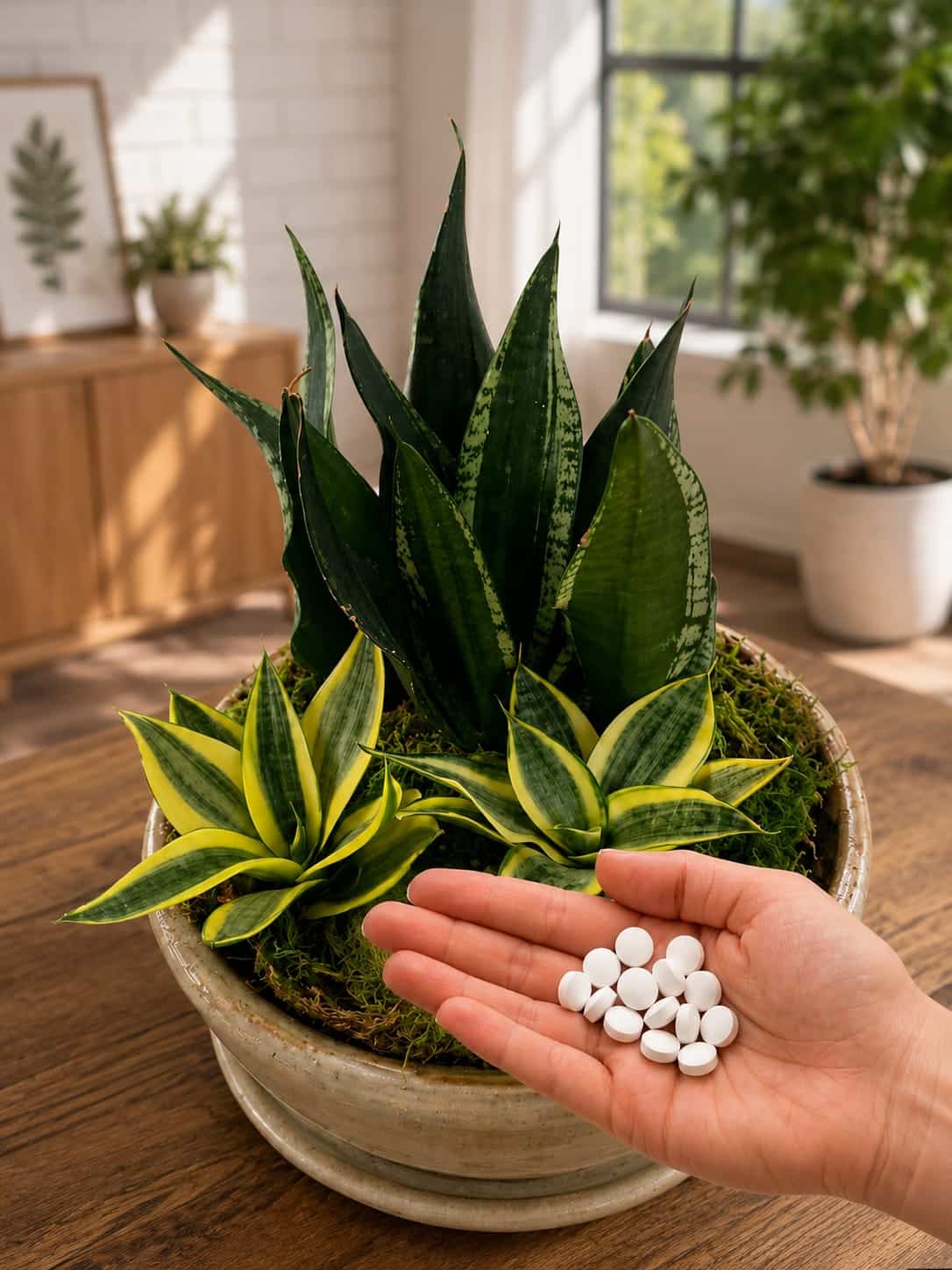
The Real Secret to More Snake Plant Pups
Snake plant pups come from underground rhizomes. These rhizomes produce new shoots when the plant has enough energy and a healthy root system. Aspirin water does not directly create pups. The best way to encourage pups is to improve the growing conditions.
Bright indirect light is one of the biggest factors. Snake plants can survive in low light, but they usually grow better and produce pups more often in brighter conditions.
A snug pot can also help. Snake plants often produce pups when they are established and slightly root-bound. A pot that is too large can hold too much wet soil and slow visible growth.
Correct watering is essential. Let the soil dry before watering again. Overwatering can damage the rhizomes that produce pups.
Healthy pups come from healthy roots, not from tablets placed in the pot.
Best Light for Snake Plants
Snake plants are often called low-light plants, but that can be misleading. They tolerate low light, but they do not grow their best in it. If you want stronger leaves and more new shoots, give the plant bright indirect light.
A spot near a window is ideal. Morning sun can be helpful. Harsh direct afternoon sun may burn leaves if the plant is not used to it, so adjust gradually.
If the plant leans, stretches, or grows very slowly, it may need more light. Move it closer to a bright window over time.
Light gives the plant energy. No aspirin routine can replace that energy.
Best Soil for Snake Plants
Snake plants need fast-draining soil. A cactus or succulent mix is a good starting point. You can improve it by adding perlite, pumice, coarse sand, or small bark chips.
The soil should not stay wet for long periods. Dense indoor potting soil can hold too much moisture and increase the risk of root rot.
If your snake plant is in a decorative arrangement with moss on the surface, be careful. Moss can look beautiful, but it may hide soil moisture. It can also keep the top layer damp. Check below the moss before watering.
If the soil smells sour, stays wet too long, or the plant has soft leaf bases, repot into a drier, airier mix.
How to Water Snake Plants Correctly
Water only when the soil is dry. This may mean watering every two weeks, every three weeks, or even less often depending on the season and your home.
When you water, water thoroughly and let excess drain out. Then wait until the soil dries again. Avoid giving small sips every few days. Frequent small watering can keep the root zone unhealthy.
During winter or low-light periods, water much less. Snake plants use less moisture when growth slows.
If you are unsure whether to water, wait a few more days. Snake plants usually tolerate dryness better than excess water.
Why Drainage Is Essential
A snake plant pot must have drainage holes. Without drainage, water collects at the bottom, even if the top looks dry. This hidden moisture can rot roots and rhizomes.
If your plant is in a decorative bowl or ceramic container, check whether it has drainage. If it does not, place the snake plants in nursery pots with drainage and set those inside the decorative container. Remove them for watering and let them drain before putting them back.
Aspirin water should never be used in a no-drainage pot. Any extra liquid trapped around the roots is risky.
Drainage matters more than any homemade plant trick.
Can Aspirin Water Fix Brown Tips?
No. Aspirin water will not reverse brown tips. Brown tips can be caused by inconsistent watering, low humidity, mineral buildup, physical damage, too much fertilizer, cold drafts, or stress.
Once a tip is brown, it will not turn green again. You can trim it with clean scissors if it bothers you. Follow the natural shape of the leaf for a cleaner look.
To prevent more brown tips, focus on stable watering, good light, avoiding overfertilizing, and protecting the plant from cold or harsh sun.
Aspirin water is not a cosmetic repair treatment.
Can Aspirin Water Fix Yellow Leaves?
Yellow leaves on snake plants are often a warning sign. If a lower older leaf slowly yellows, it may be natural aging. But if leaves yellow from the base, become soft, or collapse, root rot may be present.
Aspirin water cannot turn yellow leaves green again. It also cannot repair rotten rhizomes. If yellowing is spreading, remove the plant from the pot and inspect the roots.
Healthy roots and rhizomes should be firm. Rotten parts are soft, dark, mushy, or foul-smelling. Remove rotten tissue with clean tools, let cut areas dry, and repot into fresh dry soil.
Do not feed or treat a rotting plant. Fix the roots first.
Should You Fertilize Snake Plants?
Snake plants are not heavy feeders, but they can benefit from light feeding during active growth. A diluted cactus or succulent fertilizer used once or twice in spring and summer is usually enough.
Do not fertilize in winter if the plant is not actively growing. Do not fertilize a sick or rotting plant.
Aspirin water is not fertilizer. It does not replace balanced nutrients. If your plant needs food, use a proper fertilizer lightly.
Too much fertilizer can cause weak growth, salt buildup, and brown tips. Keep feeding simple.
What to Do If You Already Put Tablets in the Soil
If you placed aspirin tablets directly into the pot, remove them if they are still visible. If they have already dissolved, flush the pot with plain water only if the pot has drainage and the soil is not already too wet.
If the soil is wet, do not flush immediately. Let it dry and monitor the plant. If the plant begins to yellow or soften, inspect the roots.
If the pot has no drainage, repotting may be safer. Remove the plant, replace the soil, and use a proper draining pot.
After correcting the issue, avoid aspirin for a while. Let the plant stabilize with basic care.
What Results Can You Realistically Expect?
Realistic results from aspirin water are subtle. A mildly stressed snake plant may stabilize. It may continue growing normally after a move or division. But you should not expect overnight growth, instant pups, or dramatic color changes.
Snake plants grow slowly. New shoots can take weeks or months to appear. Healthy growth is usually gradual.
The best signs of success are firm leaves, no soft bases, fresh pups during the growing season, and soil that dries properly between waterings.
If the plant looks healthy already, the best result may simply be continued stability.
Warning Signs After Using Aspirin Water
If leaves become soft or yellow after aspirin water, check the soil moisture immediately. The plant may be staying too wet.
If the soil smells sour, root rot may be developing. Remove the plant and inspect the roots.
If leaf tips brown suddenly, the solution may have been too strong or the plant may be reacting to stress. Flush the pot with plain water if drainage is excellent and the soil is not already soggy.
If nothing improves, do not keep adding aspirin. Diagnose light, water, roots, and soil instead.
A Simple Monthly Snake Plant Care Plan
Once a week, look at the plant and check the soil. Do not water unless the soil is dry. Rotate the pot occasionally so the leaves grow evenly toward the light.
Once a month, wipe the leaves with a damp cloth to remove dust. Clean leaves absorb light better and look healthier.
During spring and summer, consider one light fertilizer application if the plant is actively growing. Aspirin water is optional and should be used only rarely, if the plant has experienced mild stress.
During fall and winter, reduce watering and avoid extra treatments unless the plant is still actively growing in a warm, bright spot.
Common Mistakes to Avoid
- Placing tablets directly in the soil – dissolve in plenty of water first.
- Making the solution too strong – a full tablet in a small cup is too concentrated.
- Using aspirin water too often – it is not a regular plant food.
- Using it on wet soil – snake plants need dry periods.
- Using it on a rotting plant – root rot needs trimming, drying, and fresh soil.
- Ignoring light – snake plants tolerate low light, but they grow better in bright indirect light.
- Assuming pups come from one trick – pups come from healthy rhizomes and steady care.
Frequently Asked Questions
Can aspirin water help snake plants grow?
It may support a mildly stressed plant, but it cannot force fast growth. Strong growth comes from light, healthy roots, proper soil, and correct watering.
Can I put aspirin tablets directly into the pot?
It is safer not to. Tablets can dissolve unevenly and create concentrated spots. Dissolve one plain aspirin tablet in one gallon of water instead.
How often should I use aspirin water?
Use it rarely. One application during mild stress is usually enough. If repeated, wait two to three months and only use it during active growth.
Can aspirin water make snake plants produce pups?
No. Pups come from healthy underground rhizomes. Bright indirect light, a snug pot, good soil, and careful watering are more important.
Is aspirin water fertilizer?
No. Aspirin water is not fertilizer. It does not provide balanced nutrients. Use a diluted cactus or succulent fertilizer during active growth if needed.
Can aspirin water save a dying snake plant?
No. A dying snake plant needs diagnosis. Check for overwatering, root rot, poor drainage, cold damage, or low light. Aspirin water is not a rescue cure.
Should I spray aspirin water on snake plant leaves?
No. Apply it to the soil only if used. Clean leaves with plain water and a soft cloth.
What should I do if I used too much aspirin?
Remove any visible tablets. If the pot drains well, flush with plain water only if the soil is not already soggy. Repot if the plant shows signs of root stress.
🌿 Remember: Aspirin water is a gentle occasional support, not a miracle growth trick. Strong snake plants come from bright indirect light, fast-draining soil, careful watering, and patience. Use aspirin only rarely and never as a substitute for basic care.